Benefits of Pilates Reformer Workout: Full Guide
TL;DR:
Pilates reformer workouts are resistance-based exercises that enhance core strength, flexibility, and posture. Regular practice leads to significant pain reduction, improved body composition, and mental well-being within 8 to 12 weeks.
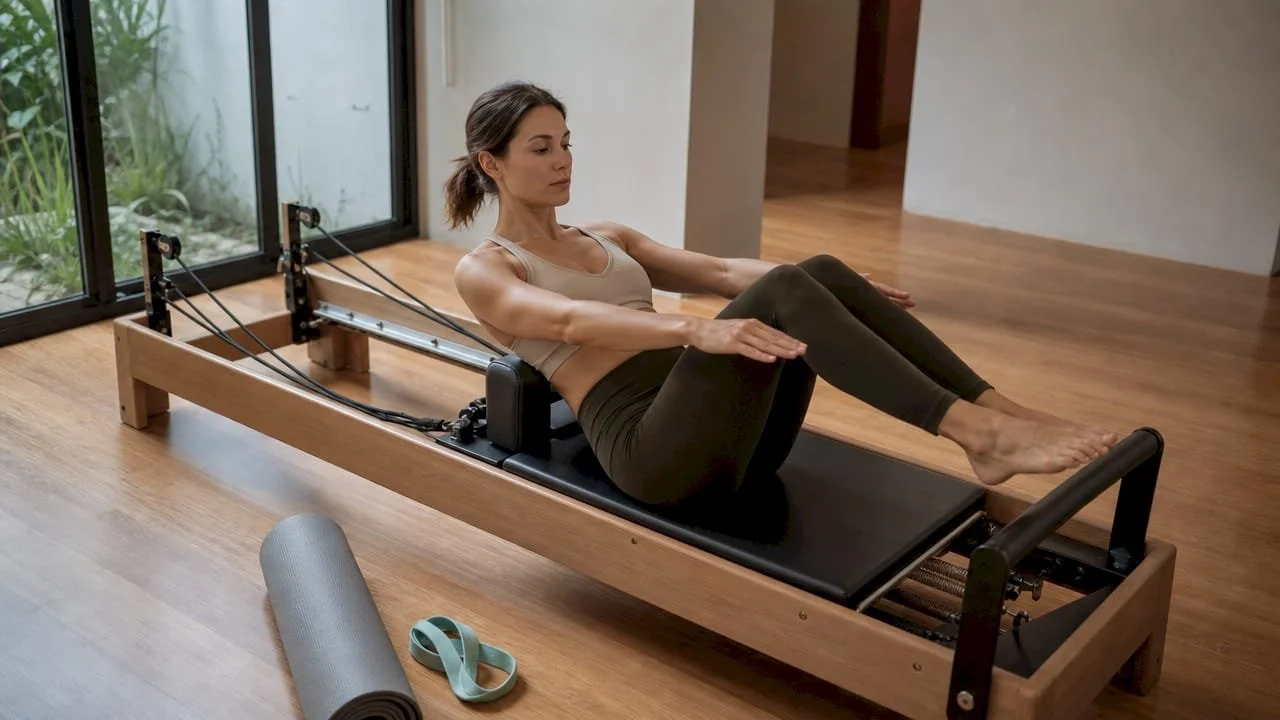
Pilates reformer workouts are defined as resistance-based, low-impact exercise sessions performed on a spring-loaded carriage machine that builds core strength, increases flexibility, reduces chronic pain, and supports full-body conditioning. The reformer machine uses adjustable spring tension to create controlled resistance across every movement, making it far more versatile than mat Pilates alone. Clinical research confirms that structured reformer programs of 8–12 weeks produce consistent improvements in pain, posture, balance, and body composition. Whether you are recovering from an injury, managing back pain, or simply looking for a sustainable fitness method, the benefits of pilates reformer workout practice extend well beyond what most people expect.
How does Pilates reformer improve core strength and stability?
The reformer activates deep core muscles, specifically the transverse abdominis and multifidus, in ways that conventional floor exercises rarely reach. These muscles sit beneath the visible surface muscles and act as the spine's internal support system. When they are weak, the spine compensates with poor movement patterns that lead to injury over time.
Reformer exercises place the body in functional positions, such as kneeling, standing, and lying on a moving surface, which forces the deep stabilizers to engage continuously. Spinal alignment and posture improve within 4–6 weeks of regular practice because the deep muscles learn to hold the spine correctly during movement, not just at rest. That is a meaningful distinction from crunches or planks, which train surface muscles in static positions.
Compared to conventional core training, reformer Pilates produces superior functional gains because the spring resistance is adjustable and the movement patterns mimic real life. A person recovering from surgery can work at low spring tension, while a trained athlete can load the same exercise heavily. This adaptability is what makes the reformer a clinical tool as much as a fitness tool.
Key advantages for core strength include:
Transverse abdominis activation during every exercise, not just dedicated "core" moves
Multifidus recruitment that supports vertebral stability at each spinal segment
Progressive resistance via spring adjustment, allowing safe overload over time
Functional movement patterns that transfer directly to daily activities like lifting and bending
Pro Tip: Start with lighter spring resistance and focus on feeling the deep abdominal muscles draw inward before adding load. Most beginners rush to heavier springs and miss the core activation entirely.
What impact does Pilates reformer have on flexibility and posture?
Reformer Pilates improves flexibility through controlled, full-range movements that lengthen muscles under load rather than passive stretching. This method, called eccentric loading, produces more durable flexibility gains than static stretching because the muscle learns to control its length rather than simply tolerate it.
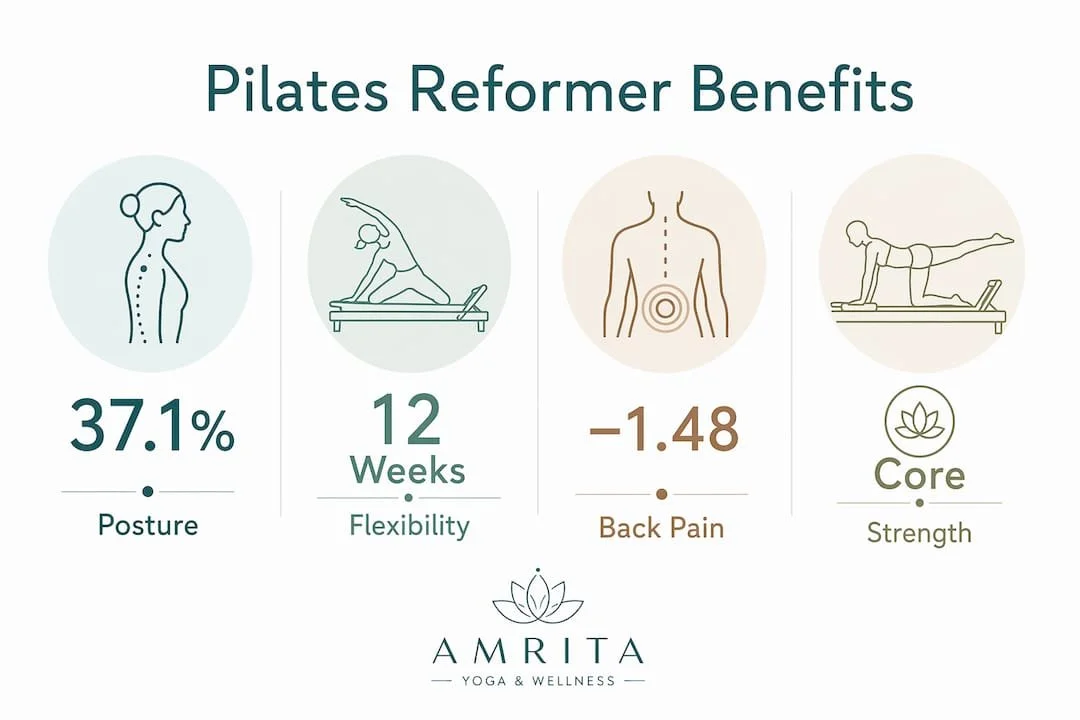
A controlled study with 30 participants found that a 12-week reformer program improved postural symmetry by 37.1% and reduced pain by 50%. That level of postural change is clinically significant. It means the body is not just feeling better but moving differently, with measurable symmetry between left and right sides.
Postural asymmetries are common in people who sit for long hours or favor one side during repetitive activities. The reformer corrects these imbalances because each exercise can be performed unilaterally, isolating one side at a time. This makes it particularly effective for desk workers, athletes with sport-specific imbalances, and people in post-surgical rehabilitation.
| Benefit | What the research shows |
|---|---|
| Postural symmetry | 37.1% improvement after 12 weeks of reformer practice |
| Pain reduction | 50% reduction in pain scores in the same 12-week study |
| Range of motion | Improved joint mobility through eccentric loading across all major joints |
| Spinal alignment | Measurable correction of forward head posture and anterior pelvic tilt |
Pro Tip: Ask your instructor to photograph your posture at the start of a 12-week program. Comparing images at week 4 and week 12 gives you concrete evidence of progress that motivates continued practice.
How does Pilates reformer assist in pain reduction and rehabilitation?
Pilates is one of the most evidence-supported non-pharmacological treatments for chronic low back pain. A meta-analysis of 438 participants across 9 randomized controlled trials found a standardized mean difference of −1.48 for pain reduction compared to control groups. That is a large effect size by clinical standards, placing Pilates among the most effective conservative interventions available.
An 8-week supervised Pilates program reduced pain by 30% and improved functional capacity by 13.4% in women with chronic low back pain compared to usual care. Functional capacity means the ability to perform daily tasks like walking, bending, and carrying. A 13.4% gain in that measure translates directly into quality of life.
One nuance that practitioners and patients both need to understand: symptom relief often arrives before measurable tissue changes. A 4-week Pilates intervention did not significantly alter core muscle tone or stiffness at the tissue level, yet participants still reported meaningful pain and function improvements. This tells us that Pilates improves neuromuscular control and movement quality first, and structural tissue changes follow with longer practice.
"Pilates improves control before complete structural restoration. Pain relief and functional gain appear first, and biomechanical normalization follows with sustained practice." — Clinical research synthesis on Pilates and chronic low back pain
This sequence matters for managing expectations. If you start a reformer program for back pain and feel better within two weeks, that is real and valid. Do not stop there. The deeper tissue and structural benefits require the full 8–12 week commitment to take hold.
Rehabilitation protocols typically use the reformer's spring system to offload body weight during exercises, making movements accessible for people who cannot yet perform them on the floor. The footbar and straps allow precise positioning that protects injured joints while still loading the surrounding muscles. This is why physical therapists and sports medicine clinicians increasingly incorporate reformer Pilates into post-surgical and chronic pain programs.
What are the holistic wellness and mental health benefits of Pilates reformer workouts?
Reformer Pilates is a mind-body practice, not just a physical one. The breath coordination required in every exercise activates the parasympathetic nervous system, which lowers cortisol and shifts the body out of the stress response. That physiological shift is measurable and meaningful, particularly for people managing anxiety, burnout, or chronic stress.
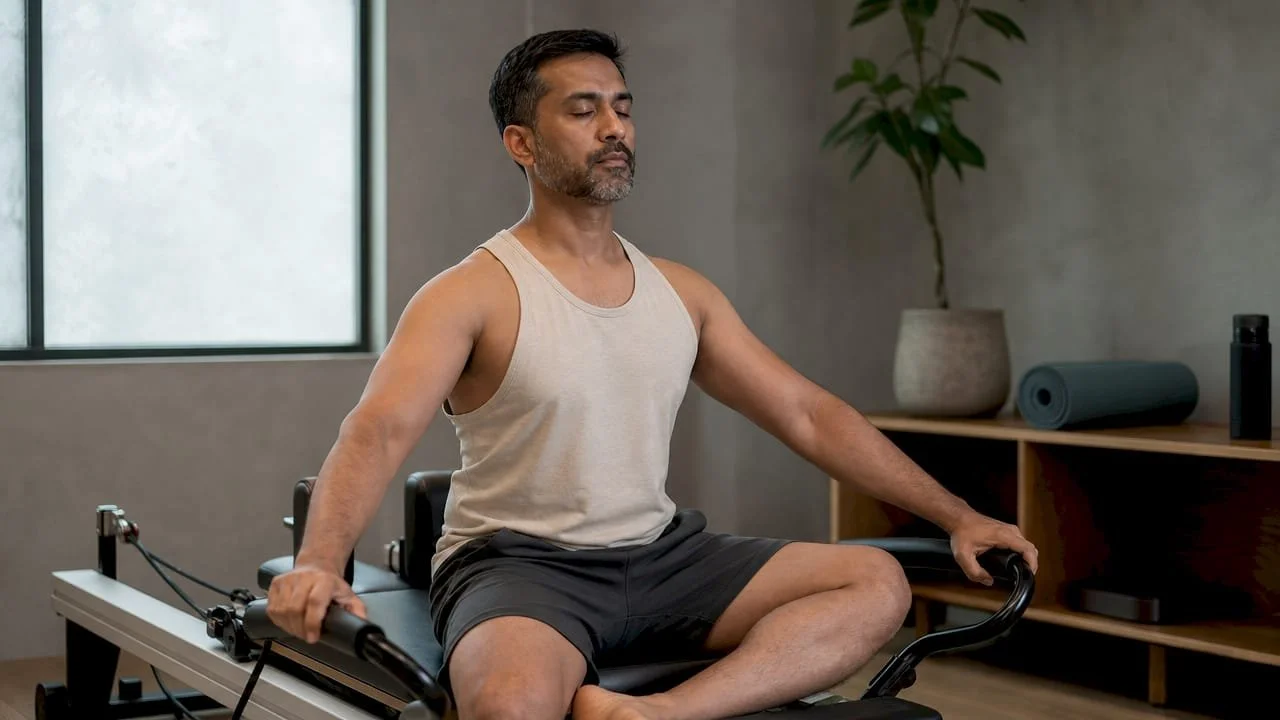
The mental focus required during reformer sessions functions similarly to meditation. You cannot think about your to-do list while coordinating breath, spring resistance, and precise limb movement simultaneously. That enforced presence is one reason practitioners consistently report improved mood and mental clarity after sessions.
Additional wellness benefits include:
Stress reduction through parasympathetic activation during breath-coordinated movement
Improved sleep quality linked to reduced cortisol and physical fatigue from low-impact exertion
Meditative focus that builds mental resilience alongside physical strength
Long-term sustainability because the low-impact format protects joints, making it appropriate for older adults and people with chronic conditions
Improved quality of life scores documented in clinical studies measuring both physical and mental health outcomes
The low-impact nature of reformer Pilates is one of its most underrated advantages. High-impact exercise accumulates joint stress over years. Reformer Pilates builds strength and cardiovascular conditioning without that cumulative wear, which means you can practice it consistently for decades. For older adults especially, that longevity of practice produces compounding wellness benefits that no short-term high-intensity program can match.
How do body measurements change with a structured reformer plan?
A structured reformer Pilates program produces measurable changes in body circumference, not just subjective feelings of being leaner. A 12-week, thrice-weekly program with female participants showed significant reductions in waist, chest, hips, thighs, arms, and leg circumferences. The greatest reductions occurred in the first month, indicating that initial fat loss and toning happen quickly with consistent practice.
These circumference reductions carry cardiometabolic significance beyond aesthetics. Waist circumference reduction specifically correlates with decreased visceral fat, which is the metabolically active fat surrounding internal organs. Reducing visceral fat lowers risk markers for cardiovascular disease and metabolic syndrome. Reformer Pilates, practiced three times per week, produces this effect without the joint stress of high-impact cardio.
| Measurement site | Outcome from 12-week reformer program |
|---|---|
| Waist | Significant reduction, greatest in first 4 weeks |
| Hips | Measurable circumference decrease across program duration |
| Arms | Toning effect with reduced circumference |
| Thighs and legs | Consistent reduction linked to lower body resistance work |
The beginner Pilates guide at Amritayogawellness outlines how to structure those first weeks to maximize early results while building the technique foundation needed for long-term progress.
Key Takeaways
Pilates reformer workouts deliver clinically proven improvements in core strength, posture, pain reduction, body composition, and mental well-being when practiced consistently for 8–12 weeks.
| Point | Details |
|---|---|
| Core strength gains | Deep stabilizers like the transverse abdominis activate in every reformer exercise, improving spinal support. |
| Posture improvement | A 12-week program produces 37.1% better postural symmetry, measurable and lasting. |
| Pain relief comes first | Symptom relief precedes tissue changes; commit to the full program for structural benefits. |
| Body composition changes | Waist, hip, arm, and leg circumferences decrease significantly within 12 weeks of three-weekly sessions. |
| Mental health benefits | Breath coordination activates the parasympathetic nervous system, reducing cortisol and stress. |
What I have learned from watching people use the reformer
Most people walk into their first reformer session expecting gentle stretching. They leave surprised by how hard it is. That gap between expectation and reality is actually the reformer's greatest strength. It meets you exactly where you are physically, then challenges you precisely enough to produce change without injury.
What I have observed consistently is that the people who get the most from reformer Pilates are not the most athletic. They are the most consistent. Showing up three times per week for 12 weeks, even at moderate intensity, produces results that sporadic intense sessions never will. The 2026 beginner guide at Amritayogawellness captures this principle well: structure and repetition matter more than effort level in the early weeks.
The rehabilitation angle also gets underestimated. People assume reformer Pilates is for healthy people who want to look better. Clinical evidence says otherwise. The spring offloading system makes it one of the few exercise modalities where someone with acute back pain can train safely on day one of a program. That is not a small thing.
My honest recommendation: treat the reformer as a long-term practice, not a short-term fix. The 8–12 week evidence base is a floor, not a ceiling. The people who practice for years build a physical resilience that genuinely changes how they age.
— Juiced
Pilates reformer classes at Amrita Yoga & Wellness
Amrita Yoga & Wellness, Philadelphia's community wellness studio, offers Pilates reformer classes alongside yoga, barre, tai chi, and massage therapy. The studio serves practitioners at every level, from first-timers managing back pain to experienced movers building strength and flexibility.
Whether your goal is pain relief, better posture, or a sustainable fitness practice that protects your joints for the long term, Amrita Yoga & Wellness has a class structure that fits. The studio's wellness offerings reflect a commitment to whole-person health, not just physical conditioning. Visit amritayogawellness.com to browse the class schedule and find the right starting point for your practice.
FAQ
What does a Pilates reformer do for your body?
The reformer builds deep core strength, improves flexibility, corrects posture, and reduces chronic pain through adjustable spring resistance. Clinical studies show consistent improvements in pain, function, and body composition within 8–12 weeks of regular practice.
How soon do you see results from reformer Pilates?
Pain relief and functional improvements often appear within 4–8 weeks. Body composition changes like circumference reductions are measurable after a 12-week, three-times-weekly program.
Is reformer Pilates good for back pain?
Yes. A meta-analysis of 9 randomized controlled trials found Pilates produces a standardized mean difference of −1.48 for pain reduction in chronic low back pain patients, making it one of the most effective conservative treatments available.
Can beginners use a Pilates reformer?
Beginners can start reformer Pilates safely by using lighter spring resistance and working with a qualified instructor. The spring system allows full load adjustment, making every exercise accessible regardless of fitness level.
How is reformer Pilates different from mat Pilates?
The reformer adds adjustable spring resistance and a moving carriage, which activates deep stabilizing muscles more effectively than mat work alone. It also allows exercises in standing and kneeling positions that mat Pilates cannot replicate.