Iyengar yoga teacher training, certification, and community

TL;DR:
Iyengar yoga teaching requires anatomical precision, prop mastery, and lifelong dedication beyond just certification. Aspiring teachers in Philadelphia should build a strong personal practice, seek mentorship, and engage in ongoing community learning to develop essential skills and sustain growth. Continual education, peer support, and active community involvement are vital for long-term success and mastery in Iyengar teaching.
Most aspiring yoga teachers walk into their first Iyengar class expecting something like a gentle fitness workout. They walk out realizing they've encountered an entirely different discipline — one that demands anatomical precision, prop mastery, and years of structured mentorship before a student ever earns the right to teach. If you're drawn to Iyengar yoga teaching in Philadelphia, this guide will show you exactly what the path looks like, from your first foundational steps through certification, continuing education, and building the kind of community that sustains you long-term.
Table of Contents
Key Takeaways
| Point | Details |
|---|---|
| Rigorous teacher training | Iyengar yoga teachers complete extensive training and certification for instructional mastery. |
| Ongoing education required | Continuing education and skill development are mandatory for all Iyengar instructors. |
| Community is essential | Connecting with mentors and peers significantly strengthens your teaching and personal growth. |
| Cost-saving options exist | Philadelphia offers scholarships and volunteer programs to reduce training expenses. |
| Holistic practices enhance teaching | Incorporating yoga therapy and wellness modalities supports long-term teacher success. |
What makes Iyengar yoga teaching unique?
To understand what you're signing up for, you need to know what sets this method apart from every other style on the market. Iyengar yoga is renowned for its focus on alignment, precision, and use of props — and that's not just marketing language. It's the engine that drives every teaching decision you'll make.
Here's what makes Iyengar teaching distinct from other yoga traditions:
Prop-based learning. Blocks, bolsters, straps, blankets, and even ropes mounted to walls allow students of all abilities to experience correct alignment without injury risk. As a teacher, you'll learn how and when to introduce each prop with real intentionality.
Micro-level alignment cues. Rather than offering general direction like "open your chest," Iyengar teachers give precise anatomical instructions such as "rotate your outer upper arm back and down." This requires deep knowledge of the body.
Progressive sequencing. Courses and classes are deliberately structured so that foundational poses build toward more advanced ones. You won't rush anyone into a pose their body hasn't been prepared for.
Individualized teaching. Iyengar instructors are trained to observe each student's unique body and adapt the practice accordingly. One cue will never fit every body in the room.
Integration with holistic wellness. Many Iyengar teachers also draw from yoga therapy benefits and mind-body practices to support students dealing with chronic conditions, stress, or injury recovery.
B.K.S. Iyengar himself put it clearly:
"Yoga teaches us to cure what need not be endured and endure what cannot be cured."
That philosophy shapes every teaching interaction. You're not just cueing poses — you're reading people, listening to their bodies, and responding with intelligence and care.
Pro Tip: Always begin your own teaching sessions with foundational poses. Rushing students toward advanced asanas before they've internalized basic alignment undermines both safety and long-term progress.
Steps to becoming an Iyengar yoga teacher in Philadelphia
Now that you understand the Iyengar approach, here's exactly how the teacher training journey works in Philadelphia. The path is rigorous, but it's also well-defined — and that structure is one of the things that makes Iyengar certification so respected.
Step-by-step roadmap:
Build a consistent personal practice. Most programs require at least two to three years of regular Iyengar classes before you can enter teacher training. This isn't arbitrary — you need to understand the method from the inside.
Find a qualified senior teacher. Early mentorship with an Introductory or Intermediate certified teacher shapes your understanding of how sequences work and how alignment is observed.
Complete foundational study. You'll study B.K.S. Iyengar's books, particularly Light on Yoga and Light on Pranayama, as part of your preparation for the assessment process.
Register for an Introductory assessment. The Iyengar Yoga National Association of the United States (IYNAUS) governs certification in three main stages: Introductory, Intermediate, and Advanced. Introductory I and II are where most aspiring teachers begin.
Log supervised teaching hours. You must demonstrate your teaching skills in front of senior assessors. Practice teaching real students, and seek feedback regularly.
Pursue Intermediate and Advanced levels over time. Each successive level opens more poses and sequences you're authorized to teach, and each requires additional preparation and mentorship.
Philadelphia offers structured training paths and cost-saving opportunities that many aspiring teachers don't know about until they look. Scholarships, volunteer programs, and studio partnerships can significantly reduce your out-of-pocket cost.
Here's a general comparison of training program structures available in the Philadelphia area:
| Program type | Duration | Estimated cost | Primary focus |
|---|---|---|---|
| Studio-based mentorship | 1 to 2 years | $800 to $2,500 | Personal practice, cueing |
| Intensive training program | 6 to 12 months | $1,500 to $4,000 | Sequencing, anatomy, assessment prep |
| Volunteer assistantship | Ongoing | Reduced or free | Hands-on teaching practice |
| Online supplemental courses | Self-paced | $200 to $700 | Anatomy, philosophy, props |

You can also explore teacher training programs locally to compare options and find the structure that fits your schedule and learning style.
Pro Tip: Volunteer assistantships are one of the most underused tools for aspiring teachers. Assisting senior teachers in live classes gives you real-time feedback, builds teaching instincts, and often significantly reduces tuition costs.
Essential skills and continuing education for Iyengar teachers
Completing certification is just the beginning. The teachers who earn lasting respect in the Iyengar community are those who treat learning as a lifelong practice, not a destination. Let's look at the core competencies you need to develop and how to keep building them after you earn your credentials.
Core teaching competencies for Iyengar instructors:
Precise verbal cueing. Your words must guide students through anatomical adjustments without physical contact when necessary. Clear, layered language is a skill you'll practice constantly.
Compassionate hands-on adjustment. Iyengar teachers are trained to use touch thoughtfully, respecting personal boundaries and individual physical differences.
Observational intelligence. You'll learn to read posture, breathing patterns, and compensation habits across an entire room at once — a skill that takes years to refine.
Anatomy and injury awareness. Understanding joint mechanics, common injury patterns, and contraindications for each pose protects both your students and your teaching reputation.
Stress management and breathwork. Pranayama, the formal practice of breath regulation, is integral to the Iyengar method and requires separate study and certification over time.
Continuing education is vitalfor instructors, especially in wellness or clinical settings. Iyengar certification requires ongoing professional development to maintain credentials, and the smartest teachers treat workshops and study not as obligations but as fuel.
Here's a sample framework for continuing education hours that certified teachers commonly use:
| Education type | Hours per year | Common provider | Teaching impact |
|---|---|---|---|
| Advanced asana workshop | 10 to 20 | Senior Iyengar teachers | Refines cueing and sequencing |
| Anatomy and physiology course | 8 to 15 | Yoga school or university | Improves injury prevention |
| Pranayama intensive | 6 to 12 | Certified pranayama teacher | Deepens class programming |
| Peer study group sessions | 10 to 20 | Self-organized local groups | Builds accountability and skill |
| Online yoga philosophy course | 5 to 10 | IYNAUS or affiliated schools | Strengthens teaching philosophy |
The peer study group model deserves special attention. Many experienced Iyengar teachers in Philadelphia credit these informal groups as the single most impactful factor in their development after certification. You learn differently when you're practicing with colleagues rather than just attending workshops.
Pro Tip: Form or join a peer study group within the first six months of your certification. Regular practice with fellow teachers accelerates growth faster than solitary study and keeps you motivated through the inevitable plateaus.
Building your Iyengar community and ongoing support
With professional skills in place, let's focus on building lasting support through the Iyengar community in Philadelphia. Isolation is one of the most underestimated risks in a new teacher's career. The technical skills matter enormously, but community is what keeps you practicing and growing over the long run.
Practical ways to build and maintain meaningful community connections:
Attend local Iyengar events and workshops. Philadelphia's yoga scene includes regular workshops led by visiting senior teachers. These are prime opportunities for professional development and relationship building.
Join online networks. IYNAUS maintains national networks for certified and aspiring teachers. Regional Facebook groups and dedicated forums connect you with peers across the country.
Collaborate with local studios. Offer to co-teach, substitute, or assist in classes outside your home studio. Cross-studio relationships expand your reach and your perspective.
Participate in mentorship programs. Seek out a senior Iyengar teacher willing to offer ongoing guidance beyond your formal training. This relationship often becomes the most formative of your teaching career.
Integrate holistic modalities. Blending yoga therapy resources and related practices into your continuing development builds resilience and enriches the experience you bring to your students.
Explore yoga for healing. Teachers who engage with yoga for healing practices often find their own relationship with the body and breath deepens in ways that translate powerfully into their instruction.
One teacher in the Philadelphia community described the shift this way:
"I thought earning my Introductory certification would be the arrival point. What I didn't understand was that community is where the real teaching begins. My study group, my mentors, and the students who challenge me every week — they are my practice now."
This perspective reflects something deeply true about the Iyengar path. The community is not an add-on to the technical training. It is the training. Every interaction with a fellow teacher or a curious student is a chance to see the practice more clearly.
Why true mastery for Iyengar yoga teachers goes beyond certification
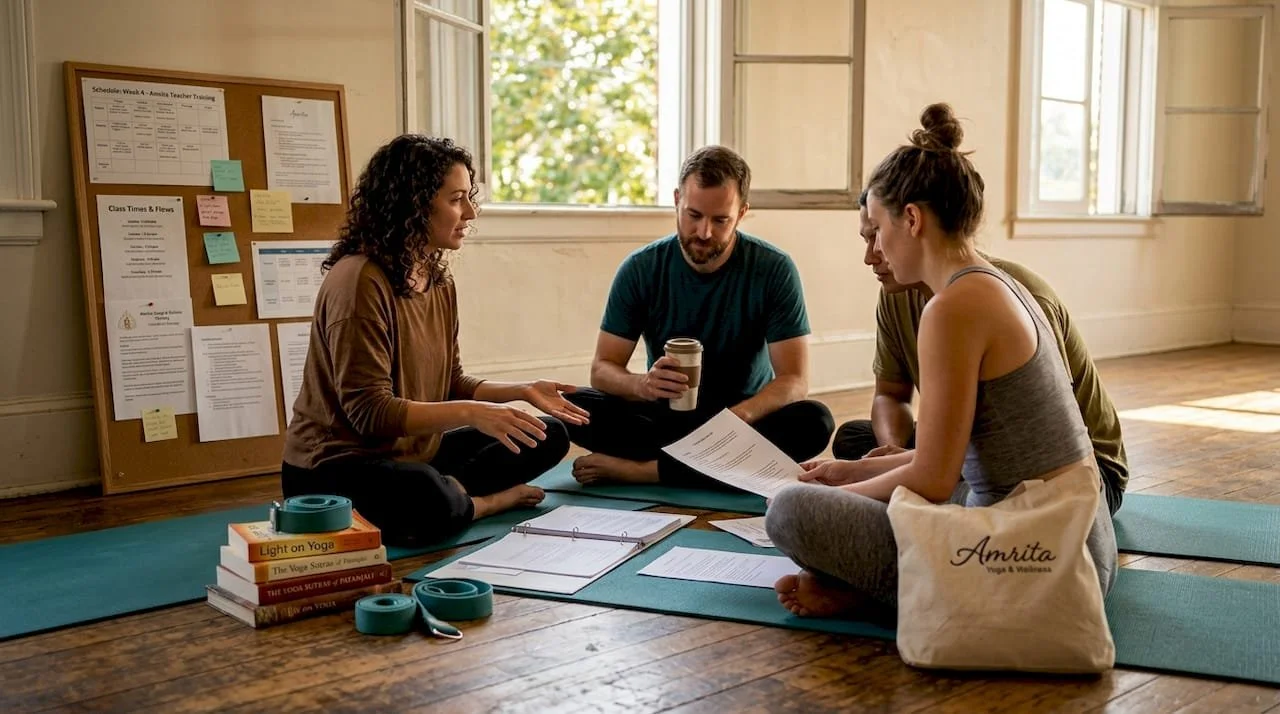
Here's something most teacher training programs don't say out loud: certification alone does not make you a great Iyengar teacher. It makes you a credentialed one. Those are meaningfully different things.
A pattern shows up repeatedly in the Iyengar community. Teachers invest enormous energy preparing for their assessments, pass them with strong marks, and then quietly coast. The workshops slow down. The personal practice becomes more routine than investigative. The mentorship relationship, once so central, fades into occasional check-ins. And gradually, without anyone noticing, the teaching loses its edge.
The antidote isn't more ambition. It's more humility. The teachers who keep growing are often the ones who return to beginner-level study sessions voluntarily, who sit in the back of senior teachers' classes and take notes, who openly admit to colleagues when they don't know why a particular cue isn't landing. That willingness to not-know is genuinely rare, and it's what allows real learning to continue.
Think of it like tuning a finely calibrated instrument. You can spend years learning how to play it, but the moment you stop listening to how it actually sounds in different rooms and conditions, you start to drift. The instrument doesn't lie. Neither does a room full of students whose bodies are giving you real-time feedback about your teaching.
The most formative growth often comes not from workshops or assessments, but from showing up consistently to the free yoga teacher training events, peer gatherings, and community study groups that don't carry formal credentials but carry tremendous insight. That's where self-inquiry actually happens — in conversation, in shared practice, and in the willingness to be a student again.
Commit to lifelong learning not because the certification requires it, but because your students deserve a teacher who is still genuinely curious.
Explore resources to support your Iyengar yoga teacher journey
For aspiring and certified Iyengar teachers in Philadelphia, finding the right support structure makes all the difference between a teaching path that stagnates and one that keeps evolving.
Amrita Yoga & Wellness offers a range of workshops, one-on-one sessions, and integrative wellness experiences designed to support teachers at every stage of their journey. Whether you're refining your alignment knowledge, exploring the intersection of yoga and holistic healing, or simply looking for a grounded community of practitioners, the resources here are built for exactly that. Even something as unexpected as tarot readings can offer a fresh lens of self-reflection for new teachers navigating the emotional demands of the profession. The path to teaching excellence is rarely linear, and Amrita Yoga & Wellness is here to support every dimension of it.
Frequently asked questions
How long does it take to become an Iyengar yoga teacher?
It usually takes two to three years of dedicated practice and study to meet the requirements for certification as an Iyengar yoga teacher, though many teachers continue building credentials for a decade or more.
Are there free or low-cost Iyengar teacher training programs in Philadelphia?
Yes, Philadelphia offers structured training paths and cost-saving programs for volunteers and scholarship applicants, which can reduce tuition by as much as 30%.
What is the main difference between Iyengar yoga teaching and other styles?
Iyengar yoga focuses on alignment, props, and progressive learning, making it far more detail-oriented and systematic than most other yoga styles taught today.
Do Iyengar teachers need to complete continuing education?
Yes, ongoing education through workshops and accredited courses is required to maintain Iyengar certification and keep teaching skills current.