Practical right mindfulness examples for yoga and wellness
TL;DR:
Right mindfulness is a Buddhist practice that cultivates clear awareness of body, feelings, mind, and mental objects to reduce suffering. Incorporating mindful breathing, body scans, and walking meditations into daily routines helps develop sustainable awareness beyond just stress relief. Unlike secular mindfulness, right mindfulness emphasizes ethical integration and long-term transformation rooted in ancient teachings.
You roll out your mat, take a deep breath, and within two minutes your mind is already running through your grocery list, your inbox, or what you said in that meeting yesterday. If this sounds familiar, you are not alone. Staying truly present during yoga and wellness practices is one of the most common struggles adults face, no matter how long they have been practicing. Right mindfulness, the seventh factor of the Buddhist Noble Eightfold Path, offers a structured, time-tested approach to developing genuine awareness of body, feelings, mind, and mental objects. This article shares actionable right mindfulness examples, compares traditional and secular approaches, and helps you figure out what will actually work in your daily routine here in Philadelphia.
Table of Contents
Key Takeaways
| Point | Details |
|---|---|
| Right mindfulness defined | Right mindfulness is a Buddhist practice of clear, non-judgmental awareness for deep personal transformation. |
| Practical daily examples | Simple activities like focused breathing and mindful walking can introduce right mindfulness into your wellness routine. |
| Evidence-backed stress relief | Studies show mindfulness practices can moderately reduce perceived stress. |
| Deeper than secular mindfulness | Right mindfulness integrates ethics and purpose beyond typical mindfulness trends or mobile apps. |
| Local community support | Philadelphia offers yoga studios and wellness resources to help integrate right mindfulness into everyday life. |
What is right mindfulness and why does it matter for yoga?
Right mindfulness, known in Pali as samma sati, is one of the core pillars of the Noble Eightfold Path in Buddhist teaching. It is not a trendy wellness buzzword. It is a precise, intentional practice of directing clear and non-judgmental awareness toward present experience across four distinct areas called the Four Foundations of Mindfulness from the Satipatthana Sutta: body, feelings, mind, and mental objects (also called dharmas).
This matters because most people confuse right mindfulness with simply "paying attention" or "clearing your mind." Neither of those is accurate. Right mindfulness means observing experience as it unfolds, without clinging to pleasant sensations or pushing away uncomfortable ones.
Here is what sets right mindfulness apart from other awareness practices:
Body awareness: Noticing physical sensations, breath, posture, and movement exactly as they are
Feeling tone: Recognizing whether each experience registers as pleasant, unpleasant, or neutral, without reacting automatically
Mind states: Observing qualities of the mind itself, such as whether it feels scattered, dull, calm, or restless
Mental objects: Noticing thoughts, beliefs, habits, and mental patterns as they arise and pass
"Right mindfulness differs from secular mindfulness in a crucial way. While secular mindfulness prioritizes stress relief, right mindfulness aligns with an ethical path aimed at ending suffering at its root."
This depth is exactly why mindfulness for yoga becomes so much more powerful when it draws on the right mindfulness framework. Instead of just calming down for an hour on the mat, you are training your mind to perceive reality more clearly, which carries over into every part of your life. For those exploring different mindfulness techniques, understanding this distinction is the first step toward a practice with real staying power.
5 actionable right mindfulness examples for daily practice
Now that you understand right mindfulness, here are practical, actionable examples you can integrate into your yoga or wellness routine today. Each one targets a different moment in your day so that right mindfulness becomes woven into your life rather than limited to a single meditation session.
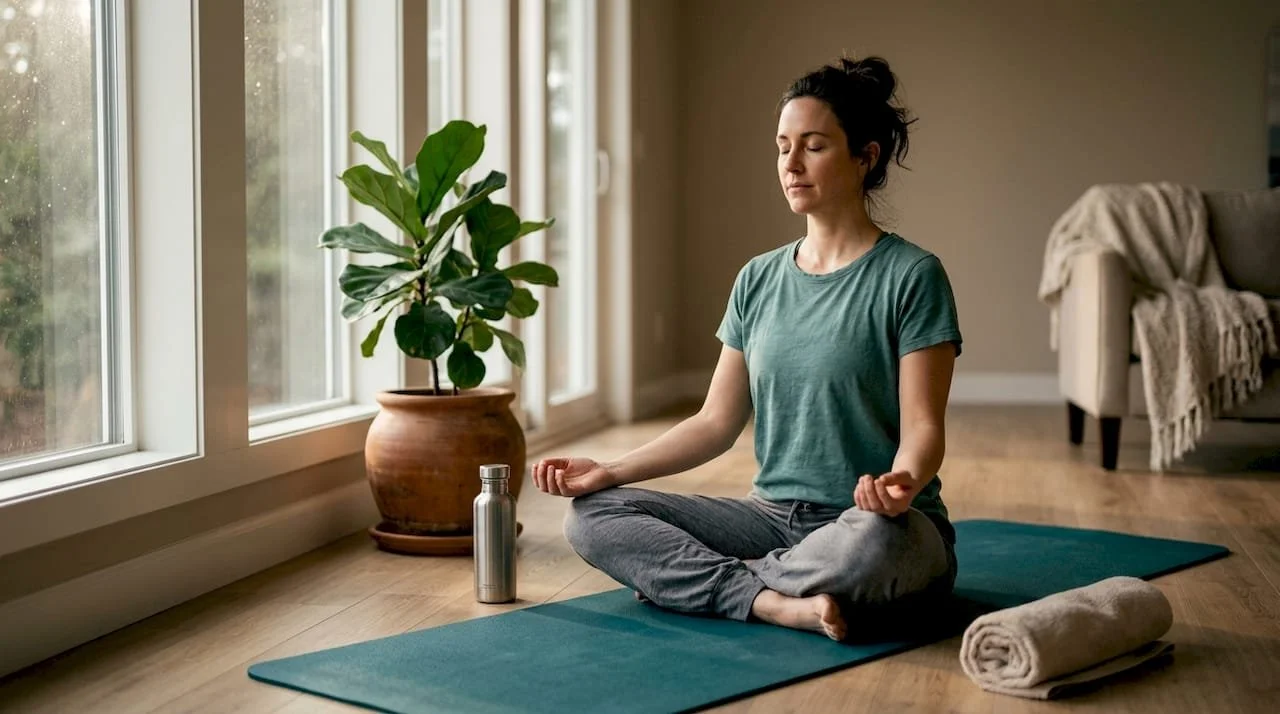
Mindful breathing during yoga poses. Focus entirely on the quality and rhythm of each inhale and exhale as you move through postures. Notice the slight pause between breaths. When your mind wanders, you do not punish yourself. You simply return awareness to breath, posture, or the task at hand. Do this during every pose, not just seated meditation. This is the single most foundational right mindfulness practice available on a yoga mat.
Body scan in Savasana. Most people treat Savasana (the resting pose at the end of class) as a nap or a mental break. Instead, use it as a structured body scan. Move your attention slowly from the soles of your feet upward, pausing to notice warmth, tension, tingling, or numbness. You are not trying to relax the body. You are simply observing it with honest, non-judgmental curiosity.
Noting thoughts and feelings between poses. During transitions, the mind tends to rush ahead to the next shape or drift to external concerns. Practice noting the quality of what arises: "planning," "worrying," "judging." This labeling technique comes directly from Theravada Buddhist insight practice and is one of the most effective ways to develop meta-awareness, which means awareness of your own mental activity.
Walking meditation before class. Rather than scrolling on your phone in the lobby or parking lot, take five minutes to walk slowly and deliberately. Feel each foot contact the ground. Notice the air temperature. Observe street sounds without labeling them as good or bad. This is a particularly valuable tool for Philadelphians arriving to class straight from a hectic commute on SEPTA or after navigating Center City traffic.
Mindful eating after yoga. Right mindfulness extends beyond the mat. After practice, eat your first meal or snack slowly. Observe the texture, taste, and temperature of each bite. Chew deliberately. Notice hunger and fullness signals without rushing. This is a direct application of the feeling-tone foundation, observing pleasant, unpleasant, and neutral sensations as they arise during eating.
Pro Tip: If you want to see how these practices translate across different disciplines, check out these yoga and Pilates mindfulness examples that show right mindfulness in action across multiple movement modalities. You can also explore specific mindfulness for Pilates resources and mindfulness tips to customize your approach.
How right mindfulness reduces stress: The evidence
With these practical exercises in mind, let's explore why right mindfulness is so effective for stress, especially when backed by solid science.
Here is a finding that should stop you mid-scroll: mindfulness interventions reduce perceived stress with a standardized mean difference (SMD) of negative 0.53 post-intervention. Within-group studies show an even larger reduction, with SMD reaching 0.93. In plain language, mindfulness practice produces a moderate to large measurable decrease in how stressed people feel.
For Philadelphia adults, that data has very real implications. Urban life here brings its own particular brand of stress:
Commute pressure: SEPTA delays, parking scarcity, and dense traffic add daily unpredictability
Work intensity: Many Philadelphia residents work in healthcare, finance, education, and tech sectors with high cognitive demands
Noise and sensory overload: City density means constant background stimulation that taxes the nervous system
Social comparison and pace: The expectation to stay productive and "on" at all times creates chronic low-grade tension
Right mindfulness addresses stress differently than a breathing app or a quick meditation video. It trains you to meet difficult experience without automatically amplifying it. Instead of adding a layer of "I hate this traffic" on top of the traffic itself, right mindfulness teaches you to observe "this is unpleasant" and move on. That is a fundamentally different neurological habit.
Supporting your mindfulness for stress journey with consistent mindfulness practice at a studio is one of the most effective ways to see these numbers show up in your own life rather than just in a journal.

Comparing right mindfulness with secular mindfulness approaches
Since not all mindfulness is created equal, let's see how right mindfulness stacks up against its secular counterparts.
| Feature | Right mindfulness | Secular mindfulness |
|---|---|---|
| Origin | Buddhist Noble Eightfold Path | Clinical/psychological research |
| Primary goal | End suffering and cultivate wisdom | Reduce stress and improve well-being |
| Ethical framework | Yes, integrated with Right Speech, Action, and Livelihood | Generally absent |
| Scope of awareness | Four Foundations: body, feelings, mind, mental objects | Often breath or body focused |
| Integration with yoga | Deep, philosophical alignment | Functional, technique-oriented |
| Sustainability | Long-term transformation | Short-term symptom relief |
The contrast is worth sitting with. Right mindfulness is oriented toward ending suffering and requires ethical integration with the broader path, while secular mindfulness focuses on stress relief and does not require any Buddhist context whatsoever.
Neither approach is wrong. Many people benefit enormously from secular mindfulness programs. But if you find that stress-reduction techniques give you temporary relief and then the tension just comes back the next day, the deeper structure of right mindfulness may be exactly what your practice is missing.
For those curious about building a more intentional mindfulness workflow, or looking for a broader spectrum of mindfulness practices for better health, the distinction between these two approaches becomes a genuinely useful compass.
Best ways to integrate right mindfulness into your Philadelphia yoga and wellness routine
Let's bring it all home with ways to find support and integrate right mindfulness examples right here in Philadelphia.
Philadelphia has a surprisingly rich wellness ecosystem, and using it intentionally makes a real difference in how consistently you practice. Here is how to make right mindfulness a living part of your week:
Attend right mindfulness-focused yoga classes. Look for classes that explicitly weave in body scanning, breath awareness, and mental noting rather than just flowing through shapes. When instructors cue awareness of sensation or emotional tone during poses, that is right mindfulness in action.
Join group meditation sessions. Practicing alone is valuable, but community accountability matters. Group sessions at local studios create a container that makes showing up easier, especially on days when motivation is low.
Use Philadelphia's green spaces for mindful walking. Fairmount Park, Clark Park in West Philly, and Penn Treaty Park in Fishtown are all excellent locations for walking meditation. Nature settings reduce baseline stress even before you begin the formal practice.
Build a home practice between classes. Even ten minutes of body scan or mindful breathing before bed anchors what you learn in studio sessions into your nervous system over time.
Pro Tip: If you practice Pilates alongside yoga, there are specific Pilates mindfulness exercises that apply the same right mindfulness framework to core-based movement. The precision required in Pilates actually makes it an ideal setting for the body-awareness foundation of right mindfulness.
Philadelphia yoga studios and wellness centers blend right mindfulness with yoga practices in ways that make the tradition accessible without requiring years of study. You do not need to know Pali or read ancient texts to start. You just need to show up with an intention to observe rather than react.
Why true right mindfulness is deeper than most apps and tips suggest
After exploring practical tools, here is our take on what truly sets right mindfulness apart, beyond the surface-level trends.
Most mindfulness apps deliver value. Timers, guided recordings, streak counters, these things help people show up. But here is the uncomfortable truth: the app model of mindfulness strips out the very elements that make right mindfulness transformative. It isolates the awareness technique and discards the ethical container that gives that awareness its purpose.
Right mindfulness requires integration with Right Effort and Right Concentration and is directed at ending suffering, not self-improvement. That is not a small distinction. Right Effort means you are actively working to release harmful mental patterns, not just observe them passively. Right Concentration means you are building the sustained mental stability that makes deep insight possible. Without those two components, mindfulness becomes a nice habit rather than a genuine tool for change.
We see this in practice all the time. People spend months doing breath awareness and feel calmer, which is genuinely good. But the moment a big stressor hits, the old patterns flood right back. That is because awareness alone, without the ethical and concentrative framework, has limited depth.
The mindfulness tips that actually create lasting change are the ones that treat right mindfulness as a complete system rather than a standalone technique. Think of it this way: if you only practice one chord, you might recognize music when you hear it, but you cannot play a song. Right mindfulness, embedded in its full context, is the whole instrument.
Start with the practical examples in this article. They are genuinely useful entry points. But stay curious about the broader tradition, because the deeper you go, the more you will find that right mindfulness is not about achieving a calm mind. It is about understanding the mind clearly enough that you stop creating unnecessary suffering in the first place.
Ready to deepen your mindfulness practice?
Inspired to bring these examples into your routine? Here is how Amrita Yoga & Wellness can help.
At Amrita Yoga & Wellness in Philadelphia, we offer classes and workshops that go beyond basic stress relief to help you build a practice with real depth and staying power. Our instructors weave right mindfulness principles into yoga sessions across all levels, from beginner-friendly flows to more advanced practices.
If you are ready to explore the spiritual dimension of mindfulness alongside movement, consider pairing your yoga practice with one of our Tarot readings at Amrita, a reflective tool that complements right mindfulness beautifully by bringing unconscious patterns into clear view. Whether you are brand new to mindfulness or looking to take your existing practice to a deeper level, our Philadelphia community is here to support every step of your journey.
Frequently asked questions
What is the simplest right mindfulness practice anyone can start with?
Focusing attention on your breath or body sensations and gently returning to them each time your mind drifts is the most accessible starting point, as right mindfulness emphasizes noticing breath and sensation without judgment.
How does right mindfulness differ from basic mindfulness meditation?
Right mindfulness is rooted in Buddhist teachings and emphasizes ethical awareness and liberation from suffering, while secular mindfulness focuses primarily on stress relief. The goal and depth differ significantly between the two traditions.
Can right mindfulness help with stress or only spiritual development?
Right mindfulness supports both. Research shows mindfulness reduces perceived stress with a moderate-to-large effect size, while also laying the groundwork for deeper personal transformation over time.
Are there local options in Philadelphia to learn right mindfulness?
Yes, several Philadelphia yoga and wellness centers offer classes and workshops that blend right mindfulness with yoga, making it easy to begin with experienced local guidance rather than self-studying alone.
What is the role of the Four Foundations in right mindfulness practice?
The Four Foundations structure right mindfulness by identifying exactly what to observe: body, feelings, mind, and mental objects. This framework, drawn from the Satipatthana Sutta awareness teaching, gives practitioners a clear and organized map for non-judgmental observation.