The Amrita Journal
Explore thoughtful stories, practical wellness guidance and inspiring ideas to support your movement, mindfulness and everyday wellbeing at Amrita.
Free Yoga Teacher Training Philadelphia: 30% Cut Costs
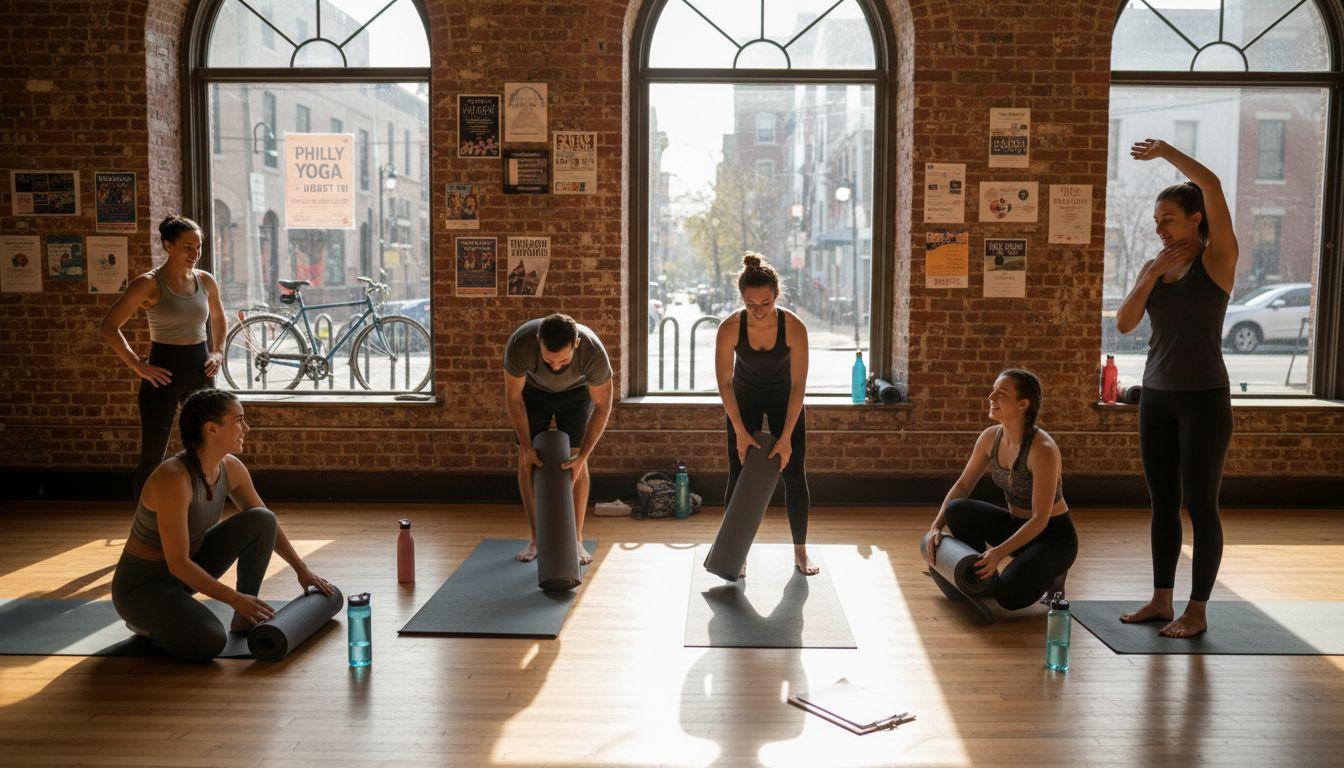
The high cost of yoga teacher training keeps many aspiring instructors in Philadelphia from pursuing their passion. Traditional 200-hour programs can run $2,000 to $4,000, creating a significant barrier. Free and scholarship-supported training options exist locally, offering credible pathways into teaching without financial strain. This guide walks you through finding, qualifying for, and succeeding in accessible yoga teacher training programs across Philadelphia.
Table of Contents
Key Takeaways
| Point | Details |
|---|---|
| Free options exist | Scholarship and donation-based programs in Philadelphia eliminate or drastically reduce training costs while maintaining certification standards. |
| Prerequisites matter | You need 6-12 months of consistent practice and the ability to commit to 3-6 months to intensive training. |
| Verify credentials | Confirm Yoga Alliance accreditation before enrolling to ensure your certification holds professional value. |
| Avoid common pitfalls | Time mismanagement and passive participation are the top reasons students struggle to complete free programs. |
| Career support available | Networking and credential recognition help graduates transition into paid teaching roles within 1-2 months. |
Understanding Free Yoga Teacher Training in Philadelphia
Free yoga teacher training isn't a myth. Several models make quality instruction accessible without traditional tuition fees. Donation-based programs ask students to contribute what they can afford, while scholarship programs cover full or partial costs for qualified applicants. Some studios offer work-exchange arrangements where you assist with classes or administrative tasks in return for training.
Scholarships and donation-based modelsreduce training costs to as low as $0 while maintaining Yoga Alliance standards. Philadelphia hosts multiple studios embracing these accessible models, from community yoga centers in West Philadelphia to donation-based programs in Center City. These trainings deliver the same 200-hour curriculum required for Yoga Alliance certification.
Yoga Alliance accreditation ensures your certification meets industry standards recognized nationwide. Even free programs can achieve this designation when they follow the required curriculum covering anatomy, philosophy, teaching methodology, and practicum hours. This credential opens doors to teaching opportunities at studios, gyms, and wellness centers.
Free training benefits extend beyond cost savings. You join a community of students committed to yoga rather than those who might view it as a luxury purchase. Instructors in these programs often prioritize accessibility and social mission, creating supportive learning environments. The diversity of students enriches discussions and peer teaching experiences.
Key benefits of free training programs:
Zero or minimal financial investment removes economic barriers
Same curriculum and certification as paid programs
Community-focused environment with mission-driven instructors
Opportunities for work-exchange and ongoing studio relationships
Access to finding free or low-cost training options in Philadelphia
Pro Tip: Before committing, attend a few classes at the studio offering free training. Connect with current students and recent graduates to understand program culture, instructor teaching style, and actual time demands beyond advertised hours.
Prerequisites and Preparation Before Training
Yoga teacher training demands more than enthusiasm. Most programs require 6-12 months of regular practice before you apply. This foundation ensures you understand basic postures, breathing techniques, and class flow. Without it, you'll struggle to keep pace with curriculum expectations while learning to teach others.

Physical readiness matters. You don't need advanced flexibility or strength, but you should practice comfortably for 60-90 minutes without significant pain or limitation. Be honest about injuries or conditions that might require modifications. Quality programs accommodate various abilities but need you to communicate needs upfront.
Essential preparation factors:
Consistent practice attending 2-3 classes weekly for at least six months
Familiarity with common pose names and basic alignment principles
Understanding of yoga philosophy beyond physical exercise
Physical stamina to practice and study for extended periods
Awareness of personal injuries or limitations requiring accommodation
Scheduling commitment often surprises applicants. Training spans 3-6 months with 10-20 hours weekly of class time, homework, and personal practice. Weekend intensive formats compress this timeline but demand full Saturday and Sunday availability. Basic yoga practice essentials for beginners help build the foundation you need.
Mental preparation deserves equal attention. You'll study anatomy, philosophy, and teaching methodology while confronting personal growth challenges. Training pushes you beyond physical practice into examining why you want to teach and what you'll offer students. This introspection can feel uncomfortable but proves essential for authentic teaching.
Pro Tip: Start a practice journal three months before applying. Track poses you find challenging, questions about alignment or philosophy, and observations from classes you attend. This record helps you articulate your goals in applications and identifies areas needing extra attention during training.
Finding and Enrolling in Free or Low-Cost Training Programs
Discovering legitimate free programs requires research beyond simple web searches. Start with these trusted sources:
Contact Philadelphia yoga studios directly and ask about scholarship or work-exchange options
Check Yoga Alliance's teacher training directory and filter by location, then investigate each program's financial assistance
Join local yoga Facebook groups and community boards where studios announce scholarship opportunities
Attend yoga events and workshops to network with teachers who know about accessible programs
Review scholarship and donation-based training programs offering reduced costs
The enrollment process typically follows these steps. First, submit an inquiry expressing interest and asking about free or subsidized options. Many studios don't advertise these publicly to maintain program integrity. Second, complete a formal application detailing your practice history, teaching motivation, and financial need if applying for scholarship support. Third, attend an interview or audition where instructors assess your readiness and cultural fit.
Verifying Yoga Alliance accreditation protects your investment of time and energy. Visit the Yoga Alliance website and search their registered school directory. Look for the specific program name and location. Accredited schools display an RYS designation with their registration number. Contact the school directly if you can't find them listed, as some legitimate programs are in the accreditation process.
Required application materials typically include:
Personal statement explaining your yoga journey and teaching goals
Practice history documenting regular class attendance
References from current yoga teachers familiar with your practice
Financial need statement for scholarship applications
Photo or video submission for some competitive programs
| Program Type | Cost Range | Schedule Format | Yoga Alliance Status | Application Timeline |
|---|---|---|---|---|
| Full Scholarship | $0 | Weekends, 6 months | RYS 200 Accredited | 2-3 months before start |
| Donation-Based | Pay what you can | Evenings/Weekends, 4-5 months | RYS 200 Accredited | Rolling admission |
| Work-Exchange | $500-1000 + 10 hrs/week service | Flexible hybrid, 6 months | RYS 200 Accredited | 1-2 months before start |
| Subsidized Community | $800-1200 | Weekend intensive, 3 months | RYS 200 Accredited | 6-8 weeks before start |
Explore Philadelphia studio options for training to compare local programs. Some Philadelphia studios offer scholarship or donation-based programs reducing costs while maintaining Yoga Alliance standards. Apply early, as free and subsidized spots fill quickly, often 2-3 months before programs begin.
What to Expect: Curriculum, Certification, and Training Timeline
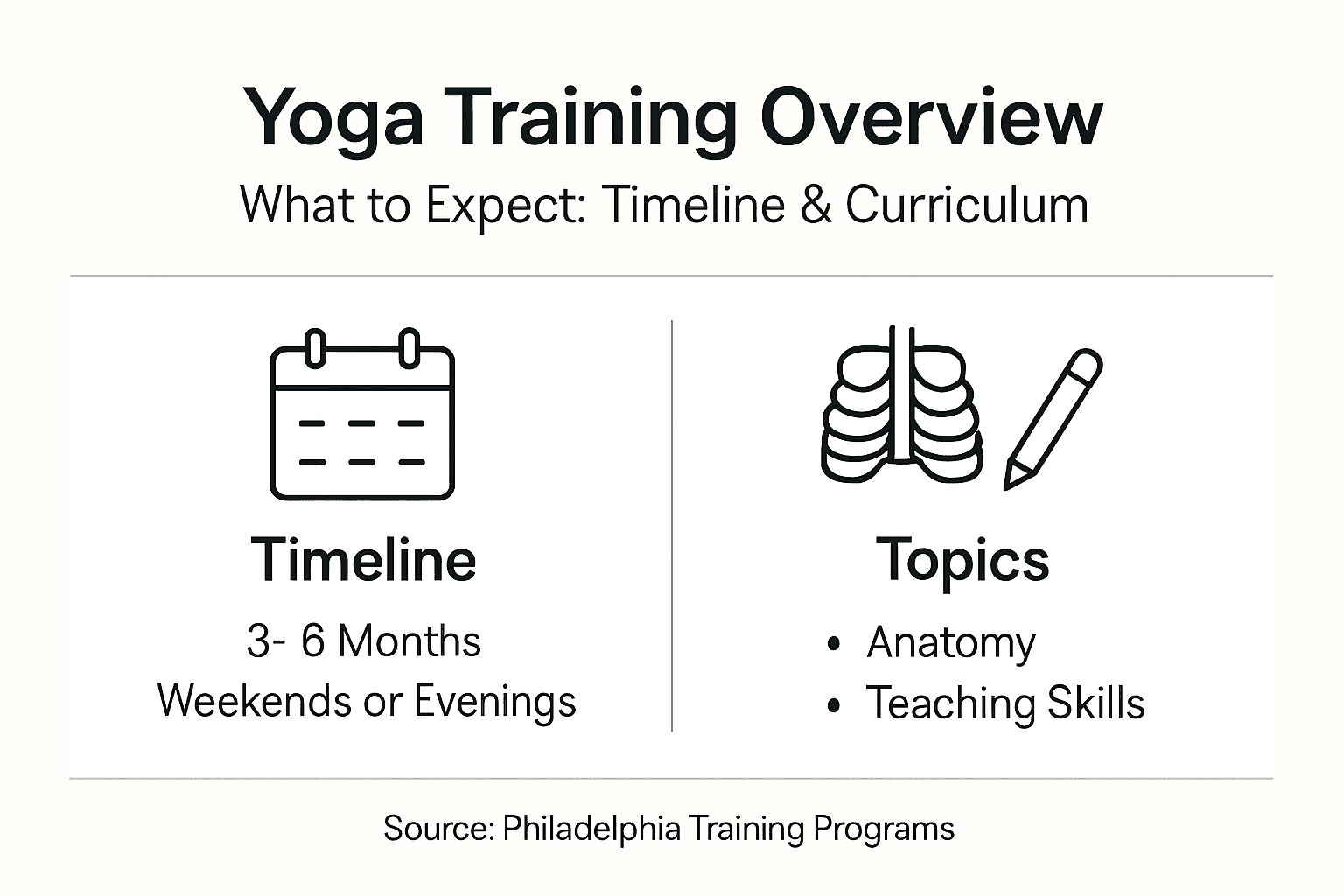
Yoga teacher training curriculum follows Yoga Alliance standards regardless of cost. You'll study four main areas that build comprehensive teaching skills. These components work together to transform your personal practice into teaching expertise.
Core curriculum subjects include:
Yoga philosophy and history exploring classical texts and modern applications
Anatomy and physiology focused on movement, injury prevention, and body systems
Teaching methodology covering class sequencing, cueing, and student adjustment
Practicum with peer teaching, feedback sessions, and observation hours
Ethics and professional development for building a sustainable teaching career
Certification earned through free programs carries the same weight as paid training. Most programs offer the foundational 200-hour credential recognized by Yoga Alliance as RYT 200. This designation allows you to register as a yoga teacher and teaches at studios requiring certified instructors. Some extended programs offer 300 or 500-hour credentials for deeper study.
Training duration typically spans 3-6 months depending on format. Weekend programs meet Saturdays and Sundays for 8-10 hours each day. Weeknight formats spread training across multiple evenings weekly. Intensive programs compress everything into 3-4 weeks of full-time study. Each format totals 200 contact hours plus homework and personal practice requirements.
The curriculum builds progressively. Early modules focus on personal practice refinement and foundational knowledge. Mid-training shifts to teaching methodology and practicum where you lead short segments for classmates. Final weeks involve teaching full classes, integrating philosophy and anatomy into instruction, and completing certification requirements.
Yoga certification recognition and credential valuedepends on completing all requirements, including attendance minimums, homework assignments, and final teaching demonstrations. Most programs require 90% attendance and successful completion of written and practical exams.
Balancing Training with Life: Time Management Strategies
Managing yoga teacher training alongside work, family, and personal commitments challenges even organized students. The 10-20 hour weekly time investment includes class attendance, homework, personal practice, and peer teaching prep. Philadelphia programs increasingly offer flexible options recognizing these demands.
Weekend and hybrid formats provide the most flexibility for working students. You attend classes Saturday and Sunday, then complete readings and practice during the week on your schedule. Some programs blend in-person weekend sessions with online modules you complete at your convenience. Evening programs meet 2-3 weeknights for 3-4 hours, better for those with weekend obligations.
Effective time management strategies:
Block training time on your calendar as non-negotiable appointments
Communicate your commitment to family and employers before starting
Batch homework and reading during dedicated weekly study sessions
Integrate personal practice into your morning or evening routine
Form study groups with fellow trainees for accountability and support
Open communication with instructors prevents small scheduling conflicts from derailing your progress. Most programs allow occasional absences for emergencies when you communicate proactively and complete makeup work. Instructors can provide reading materials in advance if you know you'll miss a session, helping you stay current with curriculum.
Integrating yoga into daily life rather than treating it as separate activity helps you progress faster. Practice poses while watching TV, listen to philosophy podcasts during commutes, or review anatomy flashcards during lunch breaks. This continuous engagement reinforces learning without requiring additional dedicated time blocks.
Pro Tip: Use digital calendar reminders for assignment deadlines and practice tracking. Set weekly recurring tasks for reading chapters, journaling about teaching observations, and scheduling peer teaching sessions. These automated prompts prevent last-minute cramming and maintain steady progress throughout training.
Common Mistakes During Free Yoga Teacher Training and How to Avoid Them
Free program students face unique challenges that derail completion rates. Understanding these pitfalls helps you navigate training successfully and earn your certification without unnecessary setbacks.
Underestimating time commitment ranks as the top mistake. Students assume "free" means "easy" or "less rigorous" than paid programs. The opposite often proves true, as free programs maintain high standards to protect their reputation and accreditation. Treat your free training with the same seriousness as a $3,000 investment.
30% of free program students face completion hurdles due to time mismanagement and underestimating the weekly hour commitment required for homework, practice, and attendance.
Common mistakes and solutions:
Mistake: Skipping peer teaching practice sessions to save time. Solution: These sessions build actual teaching skills; attend every one and volunteer to teach frequently.
Mistake: Failing to verify program accreditation before enrolling. Solution: Check Yoga Alliance registry and confirm RYS status in writing before starting.
Mistake: Not engaging in group discussions or philosophy readings. Solution: Active participation deepens understanding and builds teaching authenticity.
Mistake: Comparing yourself to more experienced students. Solution: Focus on your growth trajectory; everyone starts at different points.
Mistake: Neglecting self-care during intensive training periods. Solution: Maintain sleep, nutrition, and rest as priorities, not luxuries.
Passive participation shows up as attending class physically while mentally checking out. You sit in lectures without taking notes, avoid asking questions, and minimize peer teaching opportunities. This approach wastes your time investment even if the program is free. Instructors notice disengagement and may question your readiness for certification.
Common training pitfalls and budgeting challengesextend beyond time management into financial planning for incidental costs. Even free programs require expenses for books, props, liability insurance, and Yoga Alliance registration fees totaling $200-400. Budget for these costs upfront to avoid surprises derailing your completion.
Expected Outcomes and Career Transition After Training
Completing yoga teacher training transforms you from student to instructor, but the transition requires intentional steps beyond earning certification. Most graduates feel ready to teach beginner classes within 1-2 months after finishing their program. This timeline allows you to practice teaching friends or donation-based community classes while building confidence.
Yoga Alliance credential provides immediate professional credibility. Studios, gyms, and wellness centers require RYT 200 certification for teaching positions. Register with Yoga Alliance within 90 days of completing your training to activate your credential and appear in their teacher directory. This registration costs $115 annually but proves essential for professional opportunities.
Steps to transition from graduate to active teacher:
Register with Yoga Alliance and create your professional teacher profile
Develop a signature class style based on your training and personal practice
Offer free or donation-based classes to gain teaching experience and build following
Network at local yoga events, workshops, and teacher meetups
Apply to teach at studios, gyms, corporate wellness programs, and community centers
Create social media presence showcasing your teaching philosophy and style
Pursue continuing education to deepen skills and maintain certification
Networking within Philadelphia's yoga community accelerates your teaching career more than any other factor. Attend workshops, volunteer at yoga events, and build relationships with established teachers who can refer students or recommend you for teaching positions. The instructors from your training program often become valuable mentors connecting you to opportunities.
Ongoing learning maintains certification and teaching quality. Yoga Alliance requires continuing education hours to renew your registration every three years. These workshops and trainings deepen your expertise in areas like anatomy, specific populations, or advanced philosophy. Many teachers pursue 300-hour advanced training within 2-3 years to expand teaching capabilities and career options.
Community engagement through assisting experienced teachers, attending local classes, and participating in Philadelphia yoga networks keeps you connected and learning. Teaching yoga becomes more fulfilling when you're part of a supportive community rather than working in isolation. These relationships provide ongoing inspiration, problem solving support, and professional development opportunities throughout your teaching career.
Discover Yoga Classes and Community Support at Amrita Yoga & Wellness
Whether you're preparing for teacher training or recently certified, continuing your practice strengthens your teaching foundation. Amrita Yoga & Wellness offers diverse classes across all levels, helping you refine techniques and explore different styles. Regular practice at a supportive studio builds the skills and confidence essential for teaching success.
Our workshops provide opportunities to deepen specific aspects of practice, from alignment principles to philosophy discussions. These focused sessions complement teacher training by exploring topics in greater depth than typical classes allow. You'll connect with yoga workshops for deepening practice and fellow practitioners committed to growth.
Philadelphia's yoga community thrives through connection and shared learning. Participating in local yoga community events helps you build the network essential for a successful teaching career. When you find yoga classes in Philadelphia that resonate with your practice, you discover the support system that sustains long-term teaching.
Frequently Asked Questions
What prerequisites are typically needed for free yoga teacher training?
Most programs require 6-12 months of consistent yoga practice, attending classes 2-3 times weekly. You should understand basic poses, breathing techniques, and have physical readiness to practice 90 minutes comfortably. Programs also expect you can commit 10-20 hours weekly for 3-6 months to training, homework, and practice.
Are free yoga teacher training programs in Philadelphia recognized by Yoga Alliance?
Yes, many free or subsidized Philadelphia programs maintain Yoga Alliance accreditation ensuring certification credibility. These programs meet the same curriculum and hour requirements as paid trainings. Always verify accreditation by checking the Yoga Alliance recognized free programs registry before enrolling to confirm RYS 200 status.
How can I balance work and training commitments effectively?
Choose weekend or evening class formats that fit your work schedule, and communicate your training commitment to employers upfront. Use digital calendars to block training time as non-negotiable appointments and set reminders for homework deadlines. Form study groups with fellow trainees for accountability, and integrate practice into daily routines rather than treating it as separate time blocks.
What are common mistakes to avoid during free yoga teacher training?
Avoid underestimating the 10-20 hour weekly time commitment, which causes 30% of students to struggle with completion. Don't skip peer teaching sessions, as they build essential instruction skills. Always verify Yoga Alliance accreditation before starting, and engage actively in all discussions and philosophy study rather than passively attending classes.