Physical Flexibility: 9 Benefits for Adults, From Sleep to Balance
Physical flexibility improves everyday mobility, posture, joint health, and athletic performance, lowers injury risk, and helps you unwind after stress. Cleveland Clinic and Mayo Clinic both back regular stretching, and we teach beginner-friendly classes at Amrita Yoga & Wellness in Philadelphia if you want guided practice.
TL;DR:
Warm up with five to ten minutes of movement, then hold static stretches gently for about 30 seconds after exercise; stop if pain occurs.
Range of motion gains fade without maintenance, so stretch briefly each day or schedule dedicated flexibility sessions two to three times weekly.
Aim for similar mobility on both sides rather than extreme flexibility, because imbalances can make your body compensate and increase injury risk.
Stretching supports circulation and can ease movement, but it does not replace aerobic exercise; add it alongside strength and cardio, not instead.
Amritayogawellness
Build Flexibility With Guided Practice
Amrita Yoga & Wellness offers beginner-friendly yoga classes in Philadelphia, supporting a regular practice for mobility and flexibility.
Table of Contents
1. Nine flexibility benefits you can expect
1. Easier daily mobility. Greater range of motion makes reaching, bending, and stooping less straining. Think of grabbing a pan from a high shelf or tying a shoe without a grunt. Adults who sit most of the day notice it first. Cleveland Clinic links flexibility to easier everyday movement.
2. Better athletic performance. Moving through a fuller range lets you generate power more efficiently. A golfer swinging a club or a recreational pitcher throwing a ball needs hips and shoulders that rotate freely. Cleveland Clinic cites both examples. Weekend athletes and gym regulars benefit most.
3. Lower injury risk. Muscles and tendons that move through a full range handle load without excessive strain. UC Davis Health notes that flexible hamstrings help stabilize the knee and can help prevent ACL tears. Runners and field-sport players should pay attention here.
4. Better posture and alignment. Hours at a desk shorten hip flexors and chest muscles and pull the spine out of line. Lengthening those tight muscles helps the spine stack more naturally and eases the aches that follow. Office workers and drivers gain the most.
5. Healthier joints. Stretching boosts blood flow and the quantity of synovial fluid, the natural lubricant inside joints. Hips and knees, which carry your weight all day, benefit most. UC Davis Health describes this effect directly.
6. Faster recovery and less soreness. Improved circulation helps muscles return to their resting state after hard work. A gentle post-workout stretch is a simple example. Anyone who trains regularly can use it.
7. Better balance and fall prevention. Flexible ankles, hips, and calves let you recover when you stumble. Harvard Health says flexibility exercises can help prevent balance problems and back pain. Older adults may especially benefit.
8. Stress relief and mental clarity. Slow stretching with steady breathing calms the nervous system and gives your mind something quiet to focus on. A brief evening session may work for people with busy, noisy days.
9. Greater comfort in daily function. Fewer stiff mornings, less tension in the neck and lower back, and easier movement through ordinary tasks add up. Everyone from new parents to retirees feels the difference.
2. How flexibility produces these benefits
Flexibility is a joint's ability to move through its full range of motion, as the National Institute on Aging puts it. When muscles lengthen well, joints glide instead of grinding against tight tissue, which is why daily movement feels easier.
Stretching also increases blood circulation and nutrient supply to joint structures, and it boosts synovial fluid, according to UC Davis Health. Think of that fluid as oil for the hinges you use most.
There is a coordination piece too. Mayo Clinic stresses that symmetry matters more than extreme flexibility: even mobility on both sides is the goal, because imbalances are a risk factor for injury. If your left hip opens far more than your right, your body compensates somewhere else.
3. When and how often should you stretch?
Current guidance separates two jobs. Harvard Health favors dynamic movement for warm-ups and static stretching as a cool-down, when muscles are warm and supple. Mayo Clinic's stretching basics agree and add that you should warm up first, hold gently for about 30 seconds, and skip the bouncing.
Consistency decides whether gains last. Mayo Clinic warns that range-of-motion improvements can start fading quickly without maintenance, so aim for brief daily stretches or dedicated sessions two to three times weekly.
Warm up with 5–10 minutes of leg swings, arm circles, and easy marching before activity.
Hold static stretches for about 30 seconds after exercise, breathing slowly.
Add regular flexibility sessions to your routine.
Stop at mild tension. Pain means ease off.
4. Simple ways to add flexibility work to your week
You do not need a big block of time. The American Heart Association notes that yoga combines stretching and relaxation and improves balance, strength, and flexibility, and it also points to pilates as a good option. Four formats that work:
Yoga classes for breath-led stretching you can scale to your level.
Pilates, mat or reformer, for controlled range of motion.
Dynamic mobility drills before workouts.
Static stretching after workouts.
Try these micro-routines. At your desk, try neck rotations, a seated spinal twist, and a standing calf stretch (the NHS shows several you can do at home). After a workout, stretch your hamstrings, hips, chest, and shoulders. Always warm up first, breathe steadily, and keep your movements smooth. For pose ideas, browse our yoga poses library.
5. Does flexibility help circulation and your heart?
Stretching raises blood flow to the muscles and joints you are working, and UC Davis Health notes it can also help with blood pooling. After a long flight or a day on your feet, that gentle pump helps your legs feel lighter.
The cardiovascular link is mostly indirect, and we want to be straight about that. Flexibility work is not a substitute for aerobic exercise. What it does is make it easier to stay active. When your hips, calves, and shoulders move comfortably, walking, cycling, and swimming feel better, and you are more likely to keep doing them. The American Heart Association recommends varied activity, with flexibility work alongside strength and cardio rather than instead of them.
A practical way to use this: finish a brisk walk with calf, hamstring, and hip flexor stretches while your heart rate settles. The slow pace gives your body a gradual transition from effort to rest, and the habit tends to stick because it feels good.
6. How flexibility supports breathing
Your ribcage, chest, shoulders, and spine all move every time you inhale. When your upper back is stiff and your chest muscles are tight, from hours hunched over a laptop, for example, your breathing often turns shallow and stays high in the chest.
Posture is the bridge here. Cleveland Clinic explains that lengthening tight muscles helps align the spine, and a more open, upright frame leaves more room for the ribs to expand. Many people notice they can take a fuller breath after a few minutes of chest and upper-back stretching.
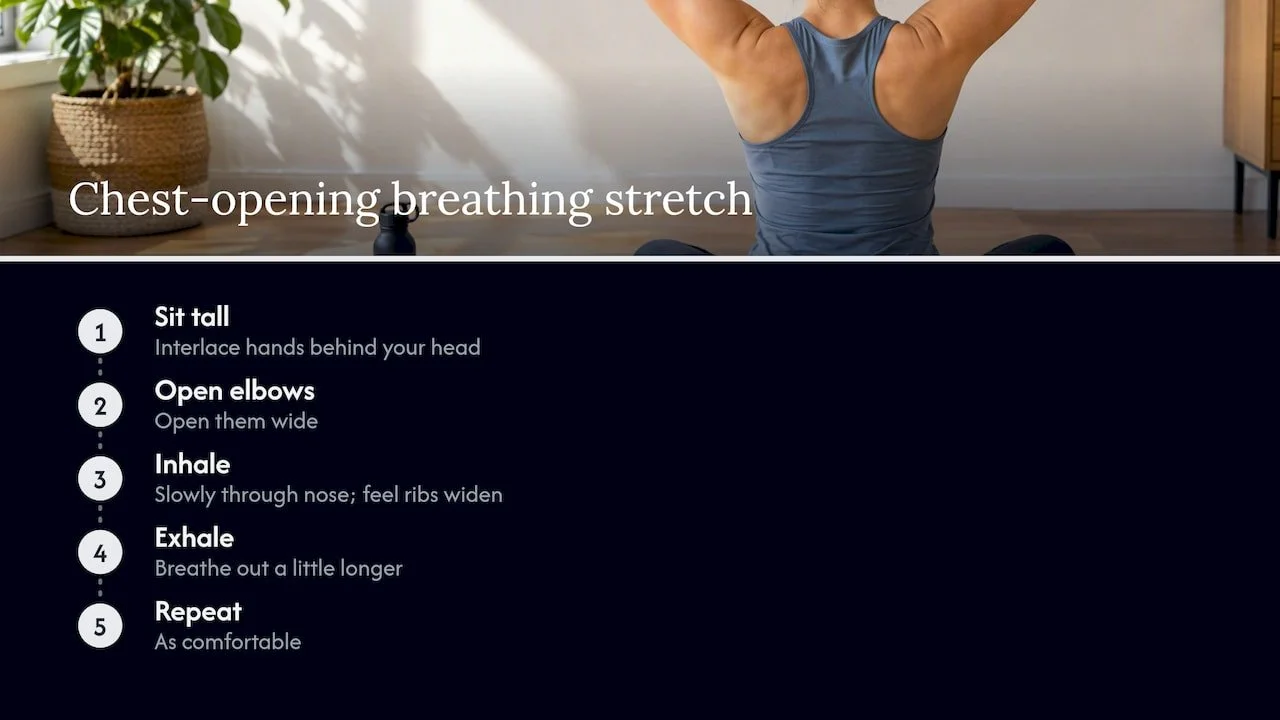
Mayo Clinic also advises practicing breathing during stretches. Try this: sit tall, interlace your hands behind your head, and open your elbows wide. Inhale slowly through the nose and feel your ribs widen sideways, then exhale for a little longer. Repeat as comfortable.
None of this treats a lung condition. If you have asthma or another respiratory issue, talk with your clinician before changing your routine. For healthy adults, though, combining open-chest stretches with slow breathing is an easy way to feel less cramped.
7. Can stretching help you sleep better?
Evening stretching will not replace good sleep habits, but it fits well into a wind-down routine. Slow, gentle holds paired with deep breathing give your body a signal that the day is over, and they ease the muscle tension that builds up from sitting, lifting, or stress.
Alberta Health Services describes stretching as a mindfulness practice that connects mind and body, promotes relaxation, and helps manage stress. Since stress is a common reason people lie awake, that calming effect is the most plausible route to better rest.
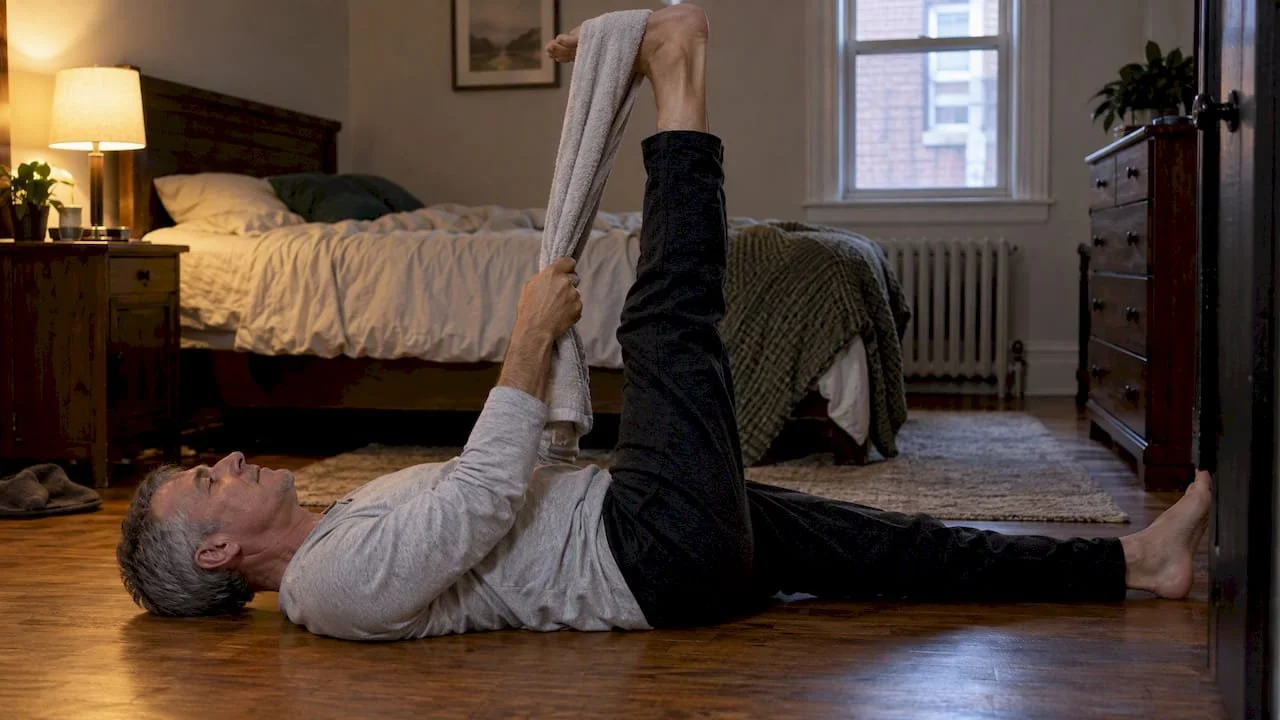
A simple bedtime sequence could include: a reclined hamstring stretch with a strap or towel, a gentle knees-to-chest hold, a supine spinal twist on each side, and child's pose. Keep the lights low and your breath slow, and stay within comfortable range. Skip anything intense, since vigorous effort close to bedtime can have the opposite effect.
If you like to add sound, mindfulness tips for yogis pair well with a quiet evening practice.
8. How stretching builds the mind-body connection
When you hold a stretch, you cannot rush it. You notice where tension lives, how your breath responds, and when your body says enough. That attention to sensation is the core of mindfulness, and stretching delivers it without any special equipment.
Alberta Health says stretching can improve mental health through this mind-body connection, in addition to loosening tight muscles and improving range of motion. People often report that the clearest-headed moment of their day comes right after a slow stretching session.
Yoga is the most familiar way to practice this, because it pairs movement with breath and a calm focus. If your mind tends to race, try counting your exhales during each hold, or silently naming the muscle you feel releasing. Both give your thoughts something simple to do.
We cover related ideas in our post on mindfulness activities for stress relief and clarity, and our guide to meditation for stress relief pairs naturally with a flexibility routine. Together they can turn a brief habit into a reset for both body and mind.
9. Why flexibility matters for healthy aging
Independence depends on ordinary movements: getting out of a chair, reaching a high cabinet, stepping into a car, turning your head to check traffic. Each one needs a certain amount of mobility, and that range tends to shrink if you do not use it.
The NHS says strength and flexibility exercises together help maintain bone density, improve balance, and reduce joint pain, and that flexibility supports everyday tasks and may reduce fall risk. Harvard Health likewise ties flexibility exercises to fewer balance problems and less back pain. Alberta Health adds that regular stretching is needed for lasting benefits, so the habit matters more than any single session.
The encouraging part is that it is never too late to begin. Gentle, supported practice works well for older adults, and our blog on senior yoga exercises offers a starting point. For classes aimed at joint comfort and range of motion, see our guides on yoga for mobility.
10. Community and consistency make flexibility stick
The people we see keep their gains are rarely the ones who stretch the hardest. They are the ones who show up, week after week, to a room where nobody is judging how far they can reach. Props, modifications, and a friendly teacher make a beginner feel welcome, and that welcome is what keeps people coming back.
— Juiced
11. Build flexibility with us at Amrita Yoga & Wellness
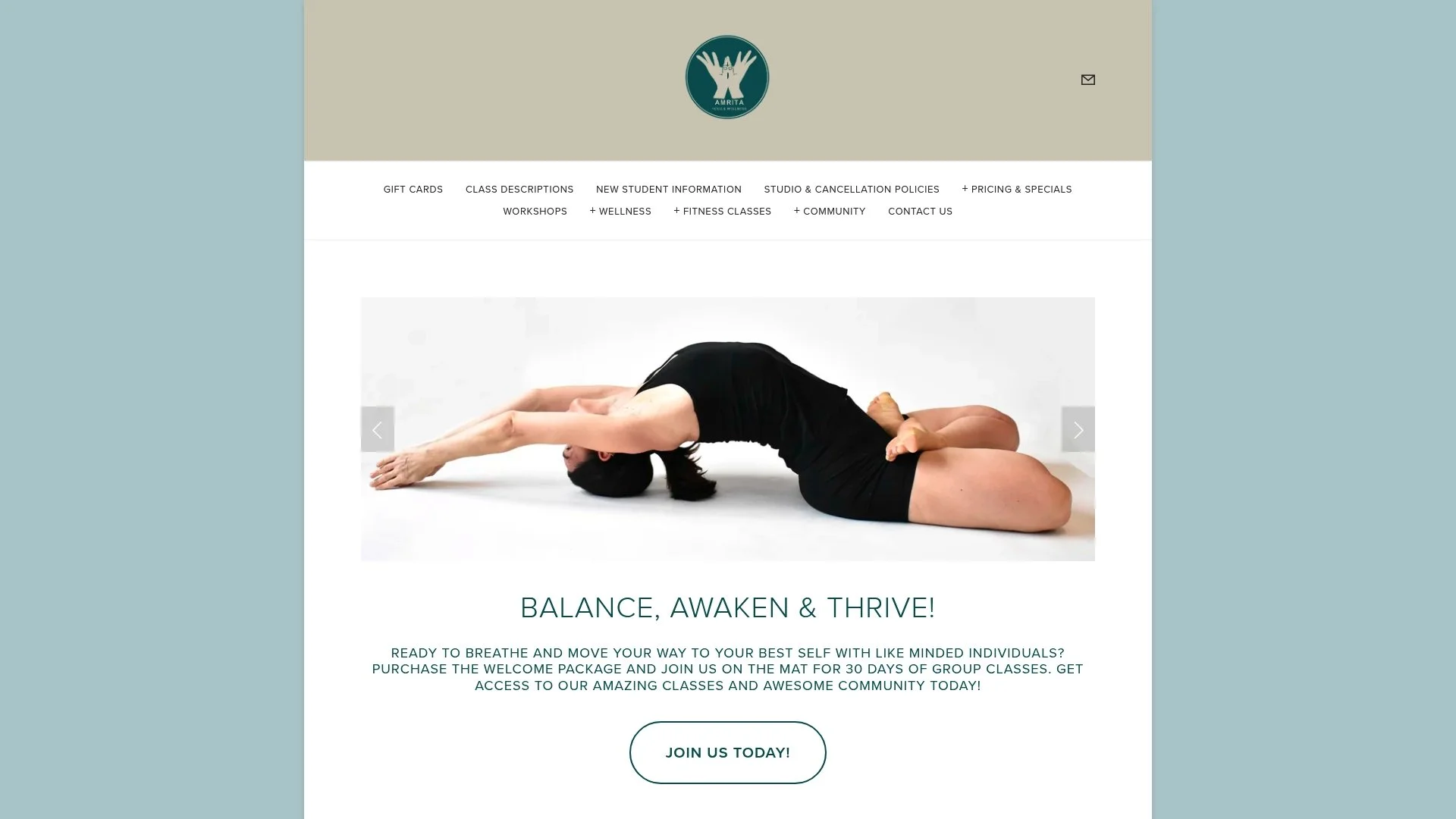
We offer group yoga and pilates classes with modifications for every level, plus private sessions when you want one-on-one attention. Ready to start?
Browse our class schedule and pick a time that fits your week.
Book a drop-in or membership on our in-studio group page.
FAQ
What are the main benefits of being flexible?
Flexibility improves range of motion, which makes daily movement easier and helps lower injury risk. It also supports better posture, joint health, balance, and recovery after exercise. Harvard Health says flexibility exercises can prevent injuries, back pain, and balance problems.
What is flexibility exercise?
Flexibility exercise is any movement that lengthens muscles and increases how far your joints can move, such as stretching, yoga, or pilates. The American Heart Association lists yoga and pilates among activities that keep the body fit. Warm up first and avoid bouncing.
How often should I stretch for lasting results?
Brief daily stretching or dedicated sessions at least two to three times a week works best. Mayo Clinic warns that gains can fade quickly without maintenance, so steady practice beats occasional long sessions.
Should I stretch before or after exercise?
Use dynamic movements like leg swings to warm up, then save static stretches for after your workout or a separate session. Harvard Health recommends static stretching when muscles are warm and supple.
Is there a benefit to being flexible if I am not an athlete?
Yes. Everyday tasks like reaching, bending, and sitting comfortably all depend on mobility. Cleveland Clinic says better flexibility makes these movements easier and less straining and supports better posture.