Reformer Classes Boost Flexibility: Active Control Backed by Trials
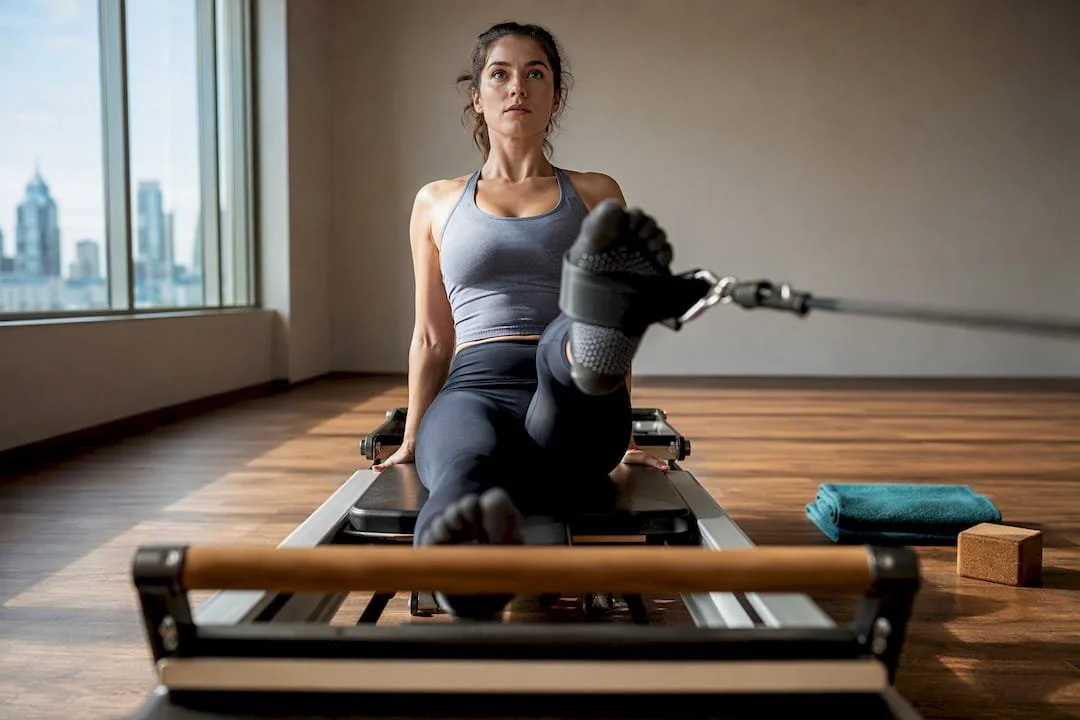
Reformer Pilates can improve your functional flexibility by training strength and control at end range while spring resistance protects your joints along the way. That distinction between merely stretching a muscle and actually controlling it at its longest length is why reformer work holds up better over time than passive stretching alone. Progress is real but gradual, and it depends on showing up consistently and working with a qualified instructor who adjusts spring tension to your body, not the other way around.
TL;DR:
Reformer Pilates improves active flexibility by training strength at end range with adjustable spring resistance, unlike passive stretching that does not teach control.
Clinical evidence shows that consistent reformer training over six to eight weeks can lead to measurable gains in trunk flexibility, muscle strength, and body composition.
Active flexibility exercises on the reformer focus on slow, controlled movements and eccentric loading, which enhances strength and mobility simultaneously.
Most practitioners see meaningful progress with two to three sessions per week, paired with off-day mobility exercises, over several weeks.
Beginners with joint or spinal issues should seek medical clearance and work with qualified instructors to modify spring tension and avoid injury.
Amritayogawellness
Build Flexibility With Reformer Pilates
Explore Amrita Yoga & Wellness for Pilates classes supporting strength, mobility, posture, and flexibility in a community-based Philadelphia studio.
Table of Contents
How Reformer Class Benefits Flexibility Through Machine Mechanics
Active Flexibility vs. Passive Stretching: Why the Reformer Wins Here
Who Gets the Most Out of Reformer Work, and When to Check With a Doctor First
How Often You Need to Practice and What Progress Actually Looks Like
Studio Perspective: Teaching Flexibility With Precision, Not Guesswork
How Reformer Class Benefits Flexibility Through Machine Mechanics
The reformer's sliding carriage, adjustable springs, and foot straps let you move through a joint's full range while resistance meters the effort in both directions. That last part matters more than most people realize. A free-weight stretch or a static hold on the floor gives you gravity and nothing else to work against. The reformer gives you tension you can dial up or down, which means you can hold a deep hip opener or a hamstring stretch under load instead of just sinking into it.
That control is the whole reason reformer class benefits flexibility differently than a typical stretching routine. Healthline's overview of reformer Pilates points to the carriage and spring system as the mechanism behind safe, progressive range-of-motion work, particularly for people who need a joint-friendly option. A 2026 Medscape review takes a more measured stance: reformer training shows real benefits for mobility and core strength, but the evidence base is still thinner than the marketing suggests, and its biggest advantage may simply be the precision and support it offers compared to unsupervised stretching.
The clinical data backs the basic claim. An 8-week reformer program in a randomized controlled trial on overweight women produced measurable gains in trunk flexibility alongside improvements in muscle strength and body composition, using sessions two to three times a week.
What this looks like in practice:
A beginner starts on medium spring tension for leg circles, building control before range.
Over several weeks, the instructor reduces spring tension slightly to demand more active muscular effort at the same stretch depth.
Eccentric-focused sequences, like slowly lowering into a stretch instead of dropping into it, teach the nervous system to tolerate that end-range position under load.
Reformer flexibility signal: The RCT cited above ran participants through sessions multiple times weekly over a period and recorded improved trunk flexibility alongside strength and body composition changes, not flexibility gains in isolation.
Active Flexibility vs. Passive Stretching: Why the Reformer Wins Here
Passive stretching is what most people picture when they think "flexibility." You sit on the floor, reach for your toes, and let gravity and time do the work. It lengthens tissue, but it doesn't teach your body to use that new range.
Active flexibility is different. It's your ability to generate force and maintain control at the outer edge of a joint's range, and it's the kind of flexibility that actually shows up when you're reaching overhead, stepping into a lunge, or twisting to grab something behind you. Reformer springs are built for exactly this. Instead of passively holding a stretch, you're pushing or pulling against resistance while your body is already at a lengthened position, which trains strength and mobility at the same time.
A few exercises illustrate it well:
Long stretch series, where you hold a plank-like position on the carriage while controlling its slide, building strength through shoulder and hip extension.
Footwork with straps, which trains hamstring and hip flexor length while your core stays engaged against spring pull.
Short spine massage, a classic reformer sequence that moves the spine through flexion and extension under light resistance.
Pro Tip: Focus on slowing down the return phase of each movement, not just the push. That eccentric control is where most of the active flexibility gains actually happen.
What a Reformer Class Actually Looks Like
A typical class runs through a predictable arc, and knowing it ahead of time makes the first session far less intimidating.
Warm-up (5 to 10 minutes). Light footwork and pelvic curls on lower spring tension to prepare joints and activate the core.
Technique drills. Instructors cue alignment on foundational moves like the hundred or leg circles before adding range.
Flexibility-focused sequences. This is where longer holds, straps, and deeper carriage slides come in, often paired with breathing cues to help you relax into the stretch without losing control.
Cool-down. Gentler stretches, sometimes assisted by the instructor, to bring heart rate down and reinforce the range gained during class.
Instructors regularly adjust spring tension and range for beginners, older adults, or anyone rehabbing an injury. A newer student might stay on a higher spring setting for stability, while someone with more experience gets pushed toward lower tension and a longer range of motion. The Amrita Yoga & Wellness beginner's guide to reformer classes walks through exactly what a first session tends to involve.
Who Gets the Most Out of Reformer Work, and When to Check With a Doctor First
Reformer classes tend to suit a specific set of people especially well.
Anyone recovering general mobility after a sedentary stretch, since spring resistance offers support that free-weight stretching doesn't.
People managing chronic, non-acute back pain who need controlled core engagement rather than aggressive stretching.
Athletes who need active range of motion for sport-specific movement, not just static flexibility.
Older adults who want low-impact resistance work without pounding joints.
That said, reformer isn't a blanket fix for everyone. Clinical guidance on reformer safety flags certain conditions that need a green light from a doctor first: an unstable spine, recent spinal or joint surgery, uncontrolled cardiovascular conditions, or neurological issues affecting balance and coordination. None of these rule out reformer work permanently, but they do mean you need a clinician's sign-off and a certified instructor who can modify accordingly, not a drop-in class with no supervision.
How Often You Need to Practice and What Progress Actually Looks Like
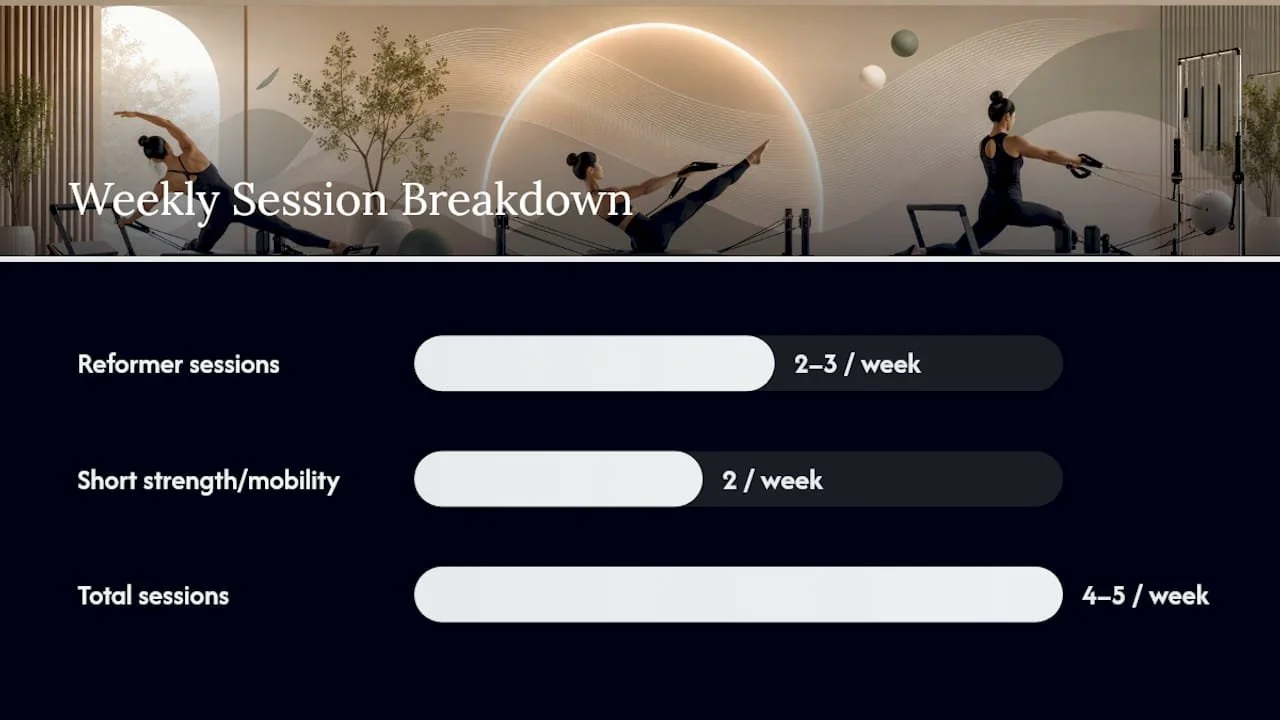
Most clinical and practitioner guidance suggests regular sessions multiple times a week, around half an hour to an hour each, sustained over multiple weeks before consistent changes appear. Balanced Body's guidance on reformer practice backs this cadence for building both strength and mobility, and it lines up with the eight-week trial window used in the Uzun et al. RCT, which recorded flexibility and strength gains on a twice-to-thrice-weekly schedule.
Progress rarely feels dramatic week to week. Look for these signals instead:
Reduced morning stiffness or easier movement into a deep squat or lunge.
A noticeably longer reach in strap-based hamstring or hip flexor work.
Less effort needed to hold form at the end of a stretch sequence.
Pairing reformer sessions with two short strength or mobility sessions elsewhere in your week tends to speed things along, since stronger surrounding muscles support a joint through its new range instead of just passively allowing it.
Getting the Most Out of Every Session
A few habits separate people who see real flexibility gains from those who plateau.
Tell your instructor about any injury or limitation before class starts. They'll adjust spring settings accordingly, and conservative tension at first is almost always the right call.
Move slowly into end range and control the way back out. Depth without control just teaches your body to brace, not to lengthen safely.
Add five to ten minutes of active mobility work at home on off days. Hip openers, ankle circles, and thoracic rotations reinforce what class builds.
Pro Tip: Breathe out as you move deeper into a stretch position. Holding your breath tightens the exact muscles you're trying to lengthen.
Studio Perspective: Teaching Flexibility With Precision, Not Guesswork
Flexibility-focused reformer work is built around precision and accessibility rather than pushing people into ranges they aren't ready for. Progressive programming, where spring tension and range increase gradually over weeks, protects joints while still building the active flexibility that actually transfers to daily movement. Beginners get the most value from starting with an intro session and letting an instructor assess where their range and control currently stand. Studio blog resources on reformer benefits offer a deeper look at how that programming works in practice.
— Juiced
Book an Intro Reformer Class or Join Karma Yoga Club
If everything above has you curious about trying reformer work yourself, the most direct path is an intro-to-reformer session, where an instructor can look at your current range and build a plan around it instead of guessing. This hands-on start is important because flexibility gains depend on getting spring tension and form right from day one, not on pushing hard in a single class.
For anyone planning to make reformer a regular part of their week, the Karma Yoga Club is the practical next step. It's built as an ongoing path to classes and workshops rather than a one-off visit, which matters given that most flexibility gains show up after weeks of consistent practice, not after one session. If you're ready to start, book your intro reformer class through Karma Yoga Club and get paired with an instructor who can tailor spring settings and range to where your body is right now.
Sources
The claims in this article draw on a Medscape review of reformer evidence, Healthline's practical overview, Medical News Today's summary of benefits and limits, and a randomized controlled trial on reformer outcomes. Talk with a clinician first if you have any condition that affects spinal stability or joint health.
FAQ
Does Reformer Pilates Actually Improve Flexibility?
Yes. Clinical trials and reviews show reformer training improves trunk flexibility and joint mobility, particularly when combined with strength work over six to twelve weeks of consistent practice.
How Is Reformer Different From Mat Pilates for Flexibility?
Reformer uses adjustable spring resistance to load a joint at its end range, building active flexibility, while mat Pilates relies mostly on bodyweight and gravity, which some reviews note produces similar overall outcomes depending on your goals and budget.
How Many Reformer Classes Per Week for Flexibility Gains?
Most guidance points to two to three sessions a week, 30 to 60 minutes each, sustained for at least six weeks before changes become noticeable.
Is Reformer Pilates Safe for Beginners With Tight Hips or a Stiff Back?
Generally yes, since spring resistance offers support that unassisted stretching doesn't, but anyone with an unstable spine, recent surgery, or a cardiovascular condition should get medical clearance first.
Where Can I Try a Reformer Class to See if It Fits My Goals?
Amrita Yoga & Wellness offers intro-to-reformer sessions built for beginners, with ongoing access available through the Karma Yoga Club.