Energy Healing: 4 Steps and Evidence for Philadelphia Beginners

Energy healing is a group of hands-on and hands-off practices built on the idea that the body has an energy field that can be balanced. For beginners, the realistic payoff is relaxation and some symptom support, not a cure. Major health authorities treat these methods as complementary, meaning they work best alongside conventional medical care.
TL;DR:
Client reports from Zoom sessions showed statistically significant gains in relaxation and wellbeing and lower pain, supporting remote appointments when local care is unavailable.
Reiki trials suggest possible relief for pain, anxiety, and depression alongside standard care, but most studies are low quality and outcomes are not guaranteed.
At least 113 Member States use acupuncture; improper treatment can cause infection or organ injury, so choose a trained practitioner who uses sterile needles once.
Choose by goal: qigong or tai chi for self directed movement and breath, acupuncture or massage for pain, and Reiki for gentle stress support.
Try one session, note how you feel that evening and next morning, and leave if a practitioner promises cures or tells you to stop medication.
Amritayogawellness
Explore Gentle Movement in Philadelphia
Amrita Yoga & Wellness offers tai chi, yoga, and other classes for people exploring movement and wellbeing in Philadelphia.
Table of Contents
What types of energy healing are there?
Energy healing is an umbrella, and the methods under it look quite different. Here are the ones you will meet most often:
Reiki: A practitioner places their hands on or just above your body to direct what they describe as healing energy. Some traditions include an "attunement," a ceremony in which a teacher passes the practice to a student.
Acupuncture: A needle-based technique from traditional Chinese medicine, inserted at specific points. It is one of the most widely used methods and is often sought for pain.
Qigong and tai chi: Slow movement, posture, and breath work meant to cultivate qi, the life energy these traditions describe. You do these yourself rather than receiving them.
Therapeutic Touch, Healing Touch, and pranic healing: Noninvasive biofield therapies in which the practitioner works in or near your energy field, often without direct contact.
Other modalities: Crystal healing, sound healing, EFT (tapping), polarity therapy, and reflexology. Many practitioners blend several of these in a single session.
The simplest way to sort them is by who does the work. In Reiki and biofield therapies, you receive. In qigong and tai chi, you practice. Acupuncture sits in the middle: a trained person treats you, but the method is procedural rather than purely energetic. If you want a gentle movement route into the same ideas, our guide to types of meditation practices shows how breath and attention work connect to these traditions.
What happens during an energy healing session?
Most sessions follow a predictable arc, whatever the method:
Intake and intention-setting. The practitioner asks what brings you in and what you hope to feel afterward.
Centering. They take a quiet moment to settle themselves, and you get comfortable, usually lying down or seated and fully clothed.
Energy work. Hands, sound, or other tools are used for the main portion, which can vary in length.
Closing and grounding. The practitioner signals the end, and you rest, sip water, and talk through what you noticed.
Distance matters less than you might expect. A study of client experiences with virtual energy healing found that sessions delivered over Zoom produced statistically significant increases in relaxation and well-being and decreased pain. Participants described relaxation, release, and a sense of connection, so a video session can be a reasonable way to start if no good practitioner is nearby.
Common sensations include warmth, heaviness, tingling, deep calm, or an emotional release. Some people feel nothing dramatic, and that is normal. Afterward, drink water, eat lightly, and give yourself a quiet hour if you can.
What does the evidence say, and how safe are these methods?
The honest summary is encouraging but modest. The National Center for Complementary and Integrative Health (NCCIH) describes Reiki as a complementary approach that directs healing energy through the practitioner's hands. Clinical trials suggest it may help manage symptoms such as pain, anxiety, and depression alongside conventional care, but most studies are not of high quality, and Reiki has not been shown to cure physical disease.
Evidence for acupuncture, yoga, tai chi, massage, and relaxation techniques shows promise for some pain conditions, though trial quality and safety reporting vary, according to an NCCIH-summarized review. In plain terms, the signals are real enough to take seriously and weak enough that you should not expect guaranteed results.
Safety depends on the method:
Noninvasive practices such as Reiki, sound work, and tai chi carry low physical risk. The main danger is skipping needed medical care.
Acupuncture is a procedure. The World Health Organization's 2019 global report notes it is used in at least 113 Member States and stresses sterile, single-use needles and trained practitioners. Infection and injury to internal organs are possible when it is done improperly.
Medical conditions deserve a conversation with your primary care provider first. Energy work should add to treatment, never replace it.
For people managing serious illness, NCCIH's digest on cancer symptoms points out that some complementary approaches may ease symptoms and treatment side effects when used in addition to standard care, and it cautions against swapping standard treatment for unproven methods.
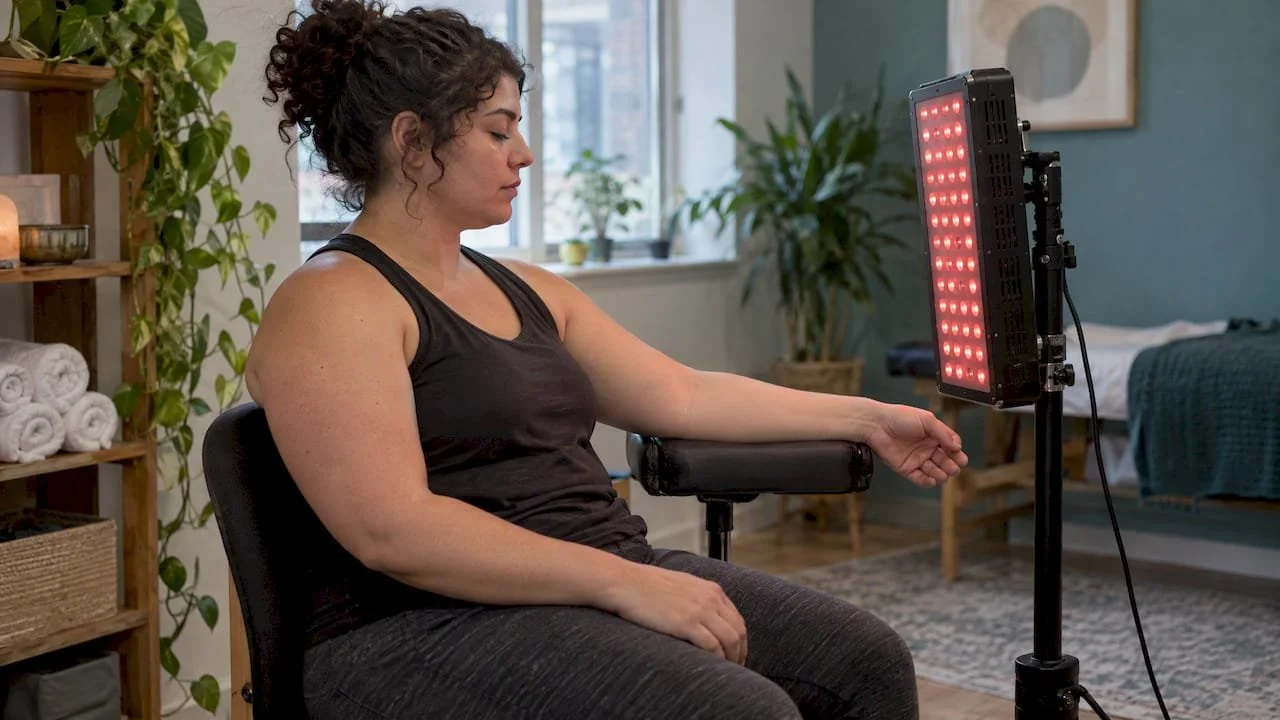
Device-based options exist too. A partner clinic explains the basics of photobiomodulation and related light sessions if you are curious how technology-assisted approaches differ from hands-on ones.
How do you choose a method or practitioner?
Start with your goal, then filter by practical details.
Stress reduction: Reiki or another gentle biofield session.
Movement and breath: Qigong or tai chi, which you can practice daily on your own.
Pain support: Acupuncture or massage, discussed with your doctor first.
Emotional release: EFT tapping or therapeutic touch.
Then check cost, session length, local versus virtual availability, and the practitioner's training. Hygiene matters most for needle-based work. Ask before you book: What training do you have? What will the session involve? What outcomes are realistic? How do you work alongside medical care?
Pro Tip: Book one session, write down how you feel that evening and the next morning, and decide afterward whether to continue.
That single-session trial keeps the stakes low and your expectations honest. If a practitioner promises to cure a disease or tells you to stop medication, treat that as a reason to walk away.
Why we treat energy work as one part of a wider practice
We are committed to wellness that is accessible and inclusive, and that shapes how we see energy healing. For most newcomers, the doorway is not a dramatic ritual. It is learning to slow down, breathe, and notice the body. Breathwork, massage, Ayurvedic experiences, and beginner-friendly classes all build that skill, and they pair naturally with energy-focused sessions. If you are curious about combining them, ask our staff, and our notes on mindfulness practice are a good place to begin.
— Juiced
Where can you try relaxing, energy-aware care in Philadelphia?
If you want to explore in a calm, welcoming setting, we offer several complementary options. Shirodhara and Abhyanga are Ayurvedic experiences designed for deep relaxation, with Shirodhara at $90 per session and Abhyanga at $120 per session. We also run breathwork classes and offer massage therapy. These are wellness practices for relaxation and self-care, not medical treatments. Browse our class schedule or book directly through the ayurvedic therapies page.
This article is general information, not a substitute for advice from a qualified doctor. Consult a qualified healthcare professional about your own circumstances before acting on anything here.
FAQ
What types of energy healing are there?
The most common types are Reiki, acupuncture, qigong and tai chi, and biofield therapies like Therapeutic Touch and pranic healing. Others include crystal healing, sound healing, EFT, polarity therapy, and reflexology. Many practitioners combine several in one session.
How much is an energy healing session?
Prices vary widely by method, practitioner, and location, so ask for the cost before you book. Our own Ayurvedic sessions are listed at $90 for Shirodhara and $120 for Abhyanga.
How do you do energy work?
Beginners usually start with a guided practice such as tai chi, qigong, or breathwork, which you can learn in a class and repeat at home. For hands-on methods like Reiki, you book a session with a trained practitioner. NCCIH notes Reiki is best used alongside conventional care.
Is energy healing safe?
Noninvasive methods carry low physical risk, but they should never replace medical treatment. Acupuncture requires a trained practitioner and sterile, single-use needles, according to the WHO global report.