The Amrita Journal
Explore thoughtful stories, practical wellness guidance and inspiring ideas to support your movement, mindfulness and everyday wellbeing at Amrita.
Pilates breathing exercises boost core strength by 40%
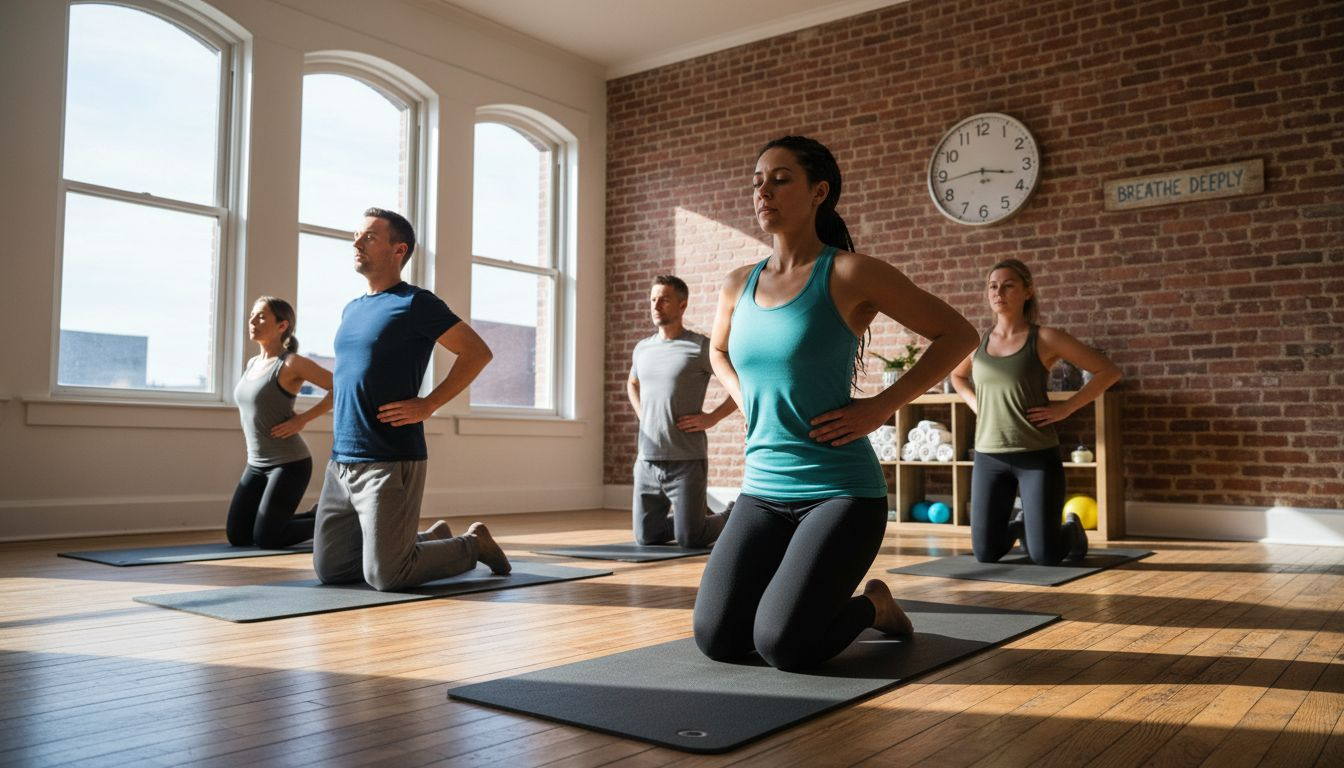
Many people believe Pilates breathing is simple belly breathing, but misconception prevalence estimated at 60% among Pilates beginners shows this confusion is widespread. Proper Pilates breathing uses lateral rib cage expansion to activate deep core muscles far more effectively than traditional methods. This guide clarifies the technique, explains quantified benefits for core strength and flexibility, and shows you how to practice correctly for optimal wellness in Philadelphia's supportive community environment.
Table of Contents
Key takeaways
| Point | Details |
|---|---|
| Lateral rib cage expansion activates deep core muscles | Pilates breathing involves expanding your ribs sideways, not just filling your belly. |
| Core muscle activation increases up to 40% | Proper technique significantly boosts transverse abdominis engagement compared to normal breathing. |
| Stress reduction improves by 20% | Mind-body connection from controlled breathing lowers perceived stress and enhances wellness. |
| Common myths block progress | Believing Pilates breathing is just belly breathing reduces effectiveness by up to 50%. |
| Community classes boost adherence by 40% | Practicing with others in Philadelphia enhances motivation and sustains long-term benefits. |
Understanding Pilates breathing: principles and physiology
Pilates breathing focuses on lateral thoracic expansion, meaning you widen your rib cage sideways as you inhale rather than pushing your belly out. This technique promotes deeper oxygenation and engages the transverse abdominis muscle, which wraps around your midsection like a natural corset. The transverse abdominis and diaphragm work together to stabilize your spine and pelvis during movement.
When you breathe laterally, you create internal pressure that supports your core from all angles. Your diaphragm descends as you inhale, while your ribs expand outward to make room for your lungs. This coordinated action maintains spinal alignment and prevents excessive stress on your lower back. The result is a stable foundation for every Pilates movement you perform.
Physiologically, this breathing pattern delivers several measurable benefits. Enhanced oxygen flow reaches your muscles more efficiently, improving endurance during exercise. Increased muscular engagement throughout your core creates functional strength that transfers to daily activities. Improved spinal support reduces injury risk and enhances posture over time.
Core muscles engaged during lateral rib expansion include:
Transverse abdominis: deepest abdominal layer providing spinal stability
Internal and external obliques: side muscles enabling rotation and lateral flexion
Pelvic floor muscles: supporting organs and maintaining continence
Multifidus: small spinal muscles controlling vertebral movement
Diaphragm: primary breathing muscle creating intra-abdominal pressure
This enhanced engagement aids flexibility by allowing controlled movement through full ranges of motion. When your core stays stable, your limbs can move freely without compromising spinal alignment. Understanding Pilates breathing techniques forms the foundation for all other Pilates exercises you'll learn. Research on core muscle activation continues to validate these physiological mechanisms.
How Pilates breathing enhances core strength and flexibility
Scientific studies demonstrate that activation of transverse abdominis increases by 30-40% during Pilates breathing compared to regular breathing patterns. This dramatic improvement translates directly to functional core strength you can feel in everyday movements. Your ability to maintain neutral spine position improves, reducing strain during lifting, bending, and twisting activities.
Spinal flexibility shows quantified improvements as breathing exercises release tension in your back muscles. When you practice lateral breathing consistently, your intercostal muscles between your ribs become more supple. This increased rib cage mobility allows for deeper breaths and better spinal rotation. Track your progress by measuring how far you can comfortably rotate your torso while maintaining proper alignment.
Research shows Pilates breathing reduces perceived stress by approximately 20% through enhanced mind-body connection. The focused attention required to breathe laterally shifts your nervous system toward parasympathetic dominance. This physiological state promotes recovery, digestion, and overall wellness beyond just physical fitness gains.
Pro Tip: Practice Pilates breathing for just 5 minutes each morning before other activities to establish consistent technique and maximize cumulative benefits throughout your day.
Physical and mental benefits you can expect include:
Reduced muscle tension in shoulders and neck from proper breathing mechanics
Improved concentration during work tasks requiring sustained focus
Enhanced cardiovascular efficiency from optimized oxygen exchange
Greater body awareness leading to better movement patterns
Increased vitality and energy levels throughout the day
These Pilates practice benefits extend into multiple areas of your wellness journey. Combined with other healthy habits, proper breathing technique supports comprehensive lifestyle improvements that compound over time. Studies on stress reduction validate the psychological advantages of mindful breathing practices integrated with physical exercise.
Common misconceptions about Pilates breathing debunked
About 60% of beginners incorrectly believe Pilates breathing is identical to belly breathing used in relaxation exercises. This fundamental misunderstanding prevents proper core activation from the start. When you only breathe into your belly, your transverse abdominis remains relatively inactive, missing the primary benefit of the technique.
Incorrect breathing patterns reduce core muscle activation by up to 50% compared to proper lateral breathing. This massive difference means you could practice for months without achieving the strength gains you expect. The confusion stems from conflicting advice across different exercise traditions and incomplete instruction in some fitness settings.
Top misconceptions and the truth behind them:
Myth: Any conscious breathing during Pilates automatically strengthens your core. Fact: Only lateral thoracic breathing with proper rib expansion activates deep stabilizing muscles effectively.
Myth: Pilates breathing should feel completely relaxing like meditation breathing. Fact: It requires muscular effort to expand ribs laterally while maintaining core engagement, creating productive tension.
Myth: Belly breathing and Pilates breathing are interchangeable techniques. Fact: Belly breathing bypasses transverse abdominis activation, offering minimal core strengthening benefits compared to rib expansion.
Misunderstanding the distinction between belly expansion and lateral rib expansion directly hinders your progress toward core strength goals. Many practitioners spend weeks wondering why they don't feel their abs working, when the issue is simply breathing into the wrong area. Visual feedback from a mirror or hands placed on your ribs helps correct this error quickly.
Assuming all breath during Pilates movements automatically boosts core strength leads to disappointment and plateaus. Without deliberate focus on lateral expansion synchronized with exercise phases, you miss the neuromuscular patterning that creates lasting strength. Proper guidance from experienced instructors prevents these common Pilates breathing errors from becoming ingrained habits.
Research documenting Pilates breathing misconceptions emphasizes the importance of correct initial instruction. Starting with accurate technique saves time and frustration compared to later relearning proper mechanics.
Comparing Pilates breathing with other breathwork techniques
Different breathing methods serve distinct purposes in fitness and wellness practices. Pilates breathing emphasizes core muscle activation for functional strength, while yoga pranayama typically focuses on energy balance and mental clarity. Understanding these differences helps you choose techniques aligned with your specific goals.
| Aspect | Pilates Breathing | Yoga Pranayama |
|---|---|---|
| Primary mechanism | Lateral rib cage expansion | Varied techniques including alternate nostril, belly, and chest breathing |
| Core activation level | 30-40% increase in transverse abdominis engagement | Generally lower core focus, emphasizing relaxation |
| Main purpose | Spinal stabilization and functional core strength | Stress relief, energy regulation, mental focus |
| Typical practice duration | Integrated throughout exercise sessions | Standalone practice of 10-20 minutes |
| Physical strength results | Measurable core strength gains within 4-6 weeks | Minimal direct strength benefits, primarily flexibility |
Research indicates Pilates breathing generates up to 15% more core activation than yoga breathing techniques when measured during similar movement patterns. This difference reflects the deliberate design of Pilates breathing to maximize transverse abdominis engagement through specific rib mechanics.
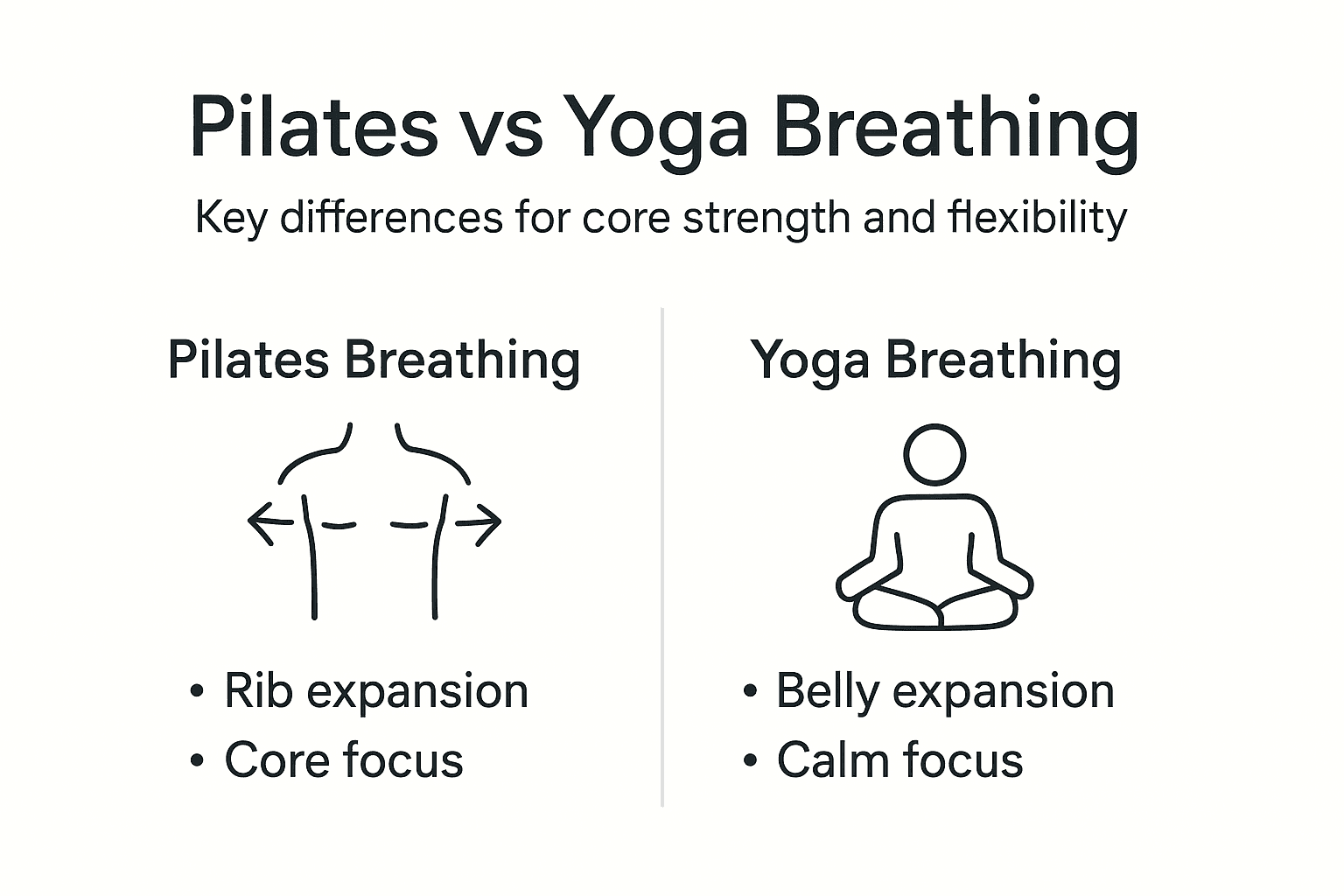
Yoga breathwork excels at calming your nervous system and preparing your mind for meditation or deep stretching. The slower pace and varied nostril patterns create different physiological responses than the consistent lateral expansion used in Pilates. Neither approach is superior overall, but each aligns better with particular fitness objectives.
Distinct benefits of Pilates breathing for core strength goals:
Faster measurable improvements in abdominal muscle thickness and strength
Direct transfer to functional movements like lifting and carrying objects
Seamless integration with dynamic exercises requiring spinal stability
Consistent breathing pattern easy to maintain during physical exertion
Quantifiable metrics for tracking progress through strength assessments
If your priority is building core strength and improving posture quickly, Pilates breathing offers advantages over other breathwork methods. For stress management and mental wellness without strength focus, yoga pranayama might better suit your needs. Many practitioners benefit from incorporating both approaches at different times. This breathwork comparison helps clarify which technique to emphasize based on your current wellness priorities.
Stepwise guide to learning Pilates breathing exercises
Mastering Pilates breathing follows a logical progression from basic rib mechanics to complex movement integration. Starting with foundational skills prevents frustration and ensures proper technique from your first practice session.
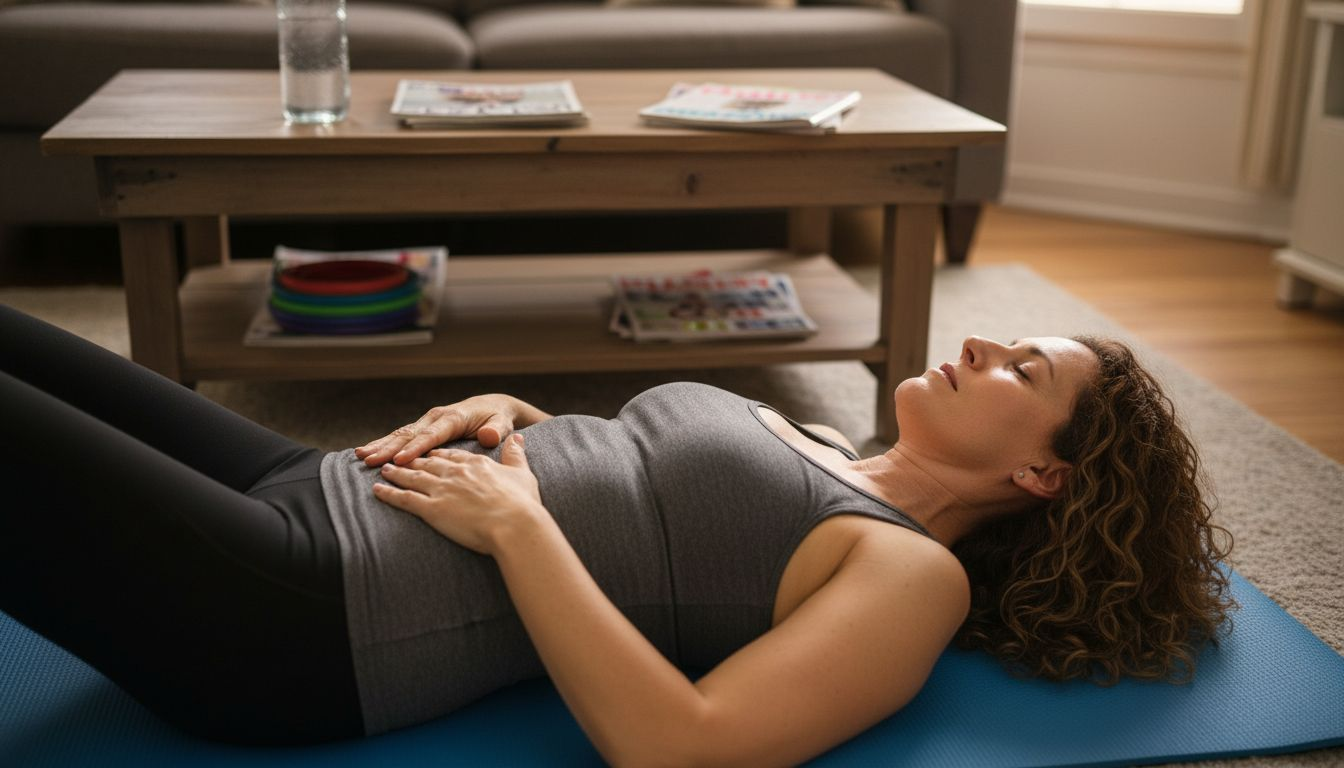
Learn lateral rib cage expansion while lying supine. Place your hands on the sides of your ribs with fingertips touching at the center of your chest. Inhale slowly, focusing on pushing your hands apart as your ribs expand sideways. Your fingertips should separate as your rib cage widens. Exhale completely, feeling your ribs return to starting position. Practice this isolated breathing for 2 minutes daily until the sensation becomes natural and you can expand ribs without belly movement.
Synchronize breath with basic Pilates movements once rib expansion feels automatic. Start with simple exercises like pelvic tilts or arm raises. Inhale during the preparation phase, maintaining rib expansion. Exhale during exertion phases when muscles work hardest, using breath to deepen core engagement. The coordination challenges your brain initially but becomes intuitive with repetition.
Progressively increase practice duration and movement complexity as coordination improves. Add 1 minute weekly to breathing practice sessions. Incorporate more challenging Pilates exercises requiring sustained core stability through multiple breath cycles. Gradually work toward 10-15 minute dedicated breathing practice sessions combined with full Pilates routines.
Pro Tip: Practice in front of a mirror to watch your ribs expand laterally without excessive shoulder elevation, or record short videos to review your breathing mechanics and identify areas needing adjustment.
Common beginner pitfalls include holding breath during difficult movements, reverting to belly breathing under fatigue, and breathing too shallowly to engage intercostal muscles fully. Pause and reset your breathing pattern whenever you notice these errors. Quality repetitions with proper technique outweigh quantity of movements with compromised breathing.
Gradual progression prevents burnout and allows neuromuscular patterns to solidify before adding complexity. Rushing through learning stages leads to ingrained bad habits requiring later correction. Most practitioners need 2-3 weeks of consistent practice to make lateral breathing feel natural during exercise.
Explore this stepwise Pilates breathing guide for additional visual demonstrations and troubleshooting tips. Resources on Pilates breathing benefits provide motivation to maintain consistent practice through the initial learning curve.
Incorporating Pilates breathing into your wellness routine and community
Community practice settings provide accountability and social support that dramatically improve adherence to new wellness habits. Practicing alongside others in Philadelphia Pilates classes creates positive peer pressure and shared learning experiences that solo practice cannot replicate.
Studies show community classes increase adherence by 40% compared to individual home practice. The scheduled commitment and social connections formed during group sessions help you maintain consistency even when motivation wavers. Instructors provide real-time feedback on your breathing technique, correcting errors before they become habits.
Strategies to incorporate Pilates breathing into daily wellness routines:
Schedule brief 5-minute breathing practice sessions immediately after waking
Join weekly Pilates classes to maintain proper technique and build community
Track breathing practice frequency and subjective energy levels in a simple journal
Combine lateral breathing with morning stretching routines for comprehensive benefits
Set phone reminders to practice breath awareness during work breaks
Accessible Philadelphia Pilates class options cater to various fitness levels and schedules. Morning, lunch, and evening sessions accommodate different work arrangements. Beginner-friendly classes emphasize proper breathing foundation before advancing to complex movements. The supportive atmosphere in community settings reduces performance anxiety common when learning new physical skills.
Regular breathwork combined with Pilates exercise improves energy levels and reduces afternoon fatigue that many adults experience. The enhanced oxygenation and core engagement creates sustained vitality rather than the crash following caffeine or sugar consumption. Over time, you'll notice improved stamina during daily activities requiring physical exertion.
Social engagement through Pilates community practice enhances both enjoyment and long-term results. The relationships formed in classes provide emotional support extending beyond fitness goals. Many practitioners report that community connections motivate continued attendance even during busy life periods when solo practice would likely be abandoned.
Explore accessible Pilates and yoga classes in Philadelphia
Amrita Yoga & Wellness offers accessible Pilates and yoga classes throughout Philadelphia designed specifically for adults seeking to master breathing techniques in a supportive community environment. Our experienced instructors provide hands-on guidance to ensure you develop proper lateral breathing mechanics from your first session.
Community classes at our Philadelphia studio create the ideal setting for learning Pilates breathing correctly while building lasting wellness habits. Group energy and instructor feedback accelerate your progress beyond what home practice alone can achieve. You'll connect with others sharing similar health goals, forming friendships that extend beyond the studio.
Explore our comprehensive schedule of beginner-friendly Pilates sessions where breathing technique receives dedicated attention. We also offer workshops combining breathwork with flexibility training and stress management strategies. Find and join yoga classes near you to experience how community support transforms your wellness journey.
Our Pilates practice resources and welcoming yoga community provide everything you need to develop sustainable breathing practice. Visit our studio to discover how proper technique and social connection work together to enhance your core strength, flexibility, and overall wellness in 2026.
Frequently asked questions about Pilates breathing exercises
What is the best position to start Pilates breathing exercises?
Lying on your back with knees bent and feet flat on the floor provides the ideal starting position for learning Pilates breathing. This supine position eliminates balance challenges and allows you to place hands on ribs for tactile feedback. Once lateral expansion feels natural lying down, progress to seated and standing positions.
How long should I practice Pilates breathing each day to see benefits?
Practice Pilates breathing for 5-10 minutes daily to establish proper technique and begin experiencing core strength improvements within 3-4 weeks. Consistency matters more than duration, so brief daily sessions outperform longer sporadic practice. Gradually increase to 15-20 minutes as breathing coordination improves and you add more complex movements.
Can Pilates breathing improve my posture and reduce back pain?
Yes, proper Pilates breathing strengthens deep core muscles that support your spine, leading to improved posture and reduced lower back pain over time. The enhanced transverse abdominis activation stabilizes your pelvis and maintains neutral spinal alignment during daily activities. Most practitioners notice posture improvements within 6-8 weeks of consistent practice.
Is Pilates breathing suitable for all fitness levels including beginners?
Pilates breathing is completely suitable for beginners and requires no prior fitness experience to learn effectively. The technique starts with simple rib expansion practiced while lying down, which anyone can perform regardless of current strength or flexibility. Instructors modify exercises to match your individual abilities while teaching proper breathing mechanics.
What should I do if I struggle with synchronizing breath and movement?
If synchronization feels difficult, return to isolated breathing practice without movement until lateral rib expansion becomes automatic. Use verbal cues like saying "expand" during inhale and "engage" during exhale to reinforce timing. Most practitioners need 2-3 weeks before breath and movement coordination feels natural, so patience with the learning process is essential.