The Pilates chair builds strength, balance and control at the same time. It is a small spring-loaded piece of equipment, and you work against its resistance while keeping your body steady. The result is a short, demanding, low-impact workout that trains the core, legs, arms and posture together. If you live in Philadelphia and want those results with an instructor watching your form, our mat Pilates, group reformer and private sessions train the same skills: control, alignment and breath.
Below you will find what a Pilates chair is, what it can do for you, who it suits, how to practice safely, and how to get started.
Amritayogawellness
Build Strength With Pilates
Explore Pilates sessions at Amritayogawellness in Philadelphia, with options including mat Pilates, group reformer and private sessions.
TL;DR
A Pilates chair is a compact apparatus with a pedal and adjustable springs. A "chair Pilates" class may also mean Pilates-style moves using an ordinary chair for support.
Regular Pilates practice can help improve posture, muscle tone, balance and joint mobility, and relieve stress and tension.
The spring and pedal make you control both the push and the return, which is where the balance and coordination work comes from.
A chair also helps people who find it hard to get down to and up from the floor.
Learn the apparatus with an instructor. Our private Pilates sessions start from $85 per hour.
Table of Contents
What a Pilates chair is, and what chair Pilates means
The main benefits of the Pilates chair
Chair exercises by level
Who gets the most from it
Using the chair safely
Getting the same benefits in Philadelphia
Start with a session built around you
Our perspective
FAQ
Sources
What a Pilates chair is, and what chair Pilates means
Two different things go by the name, and it helps to separate them.
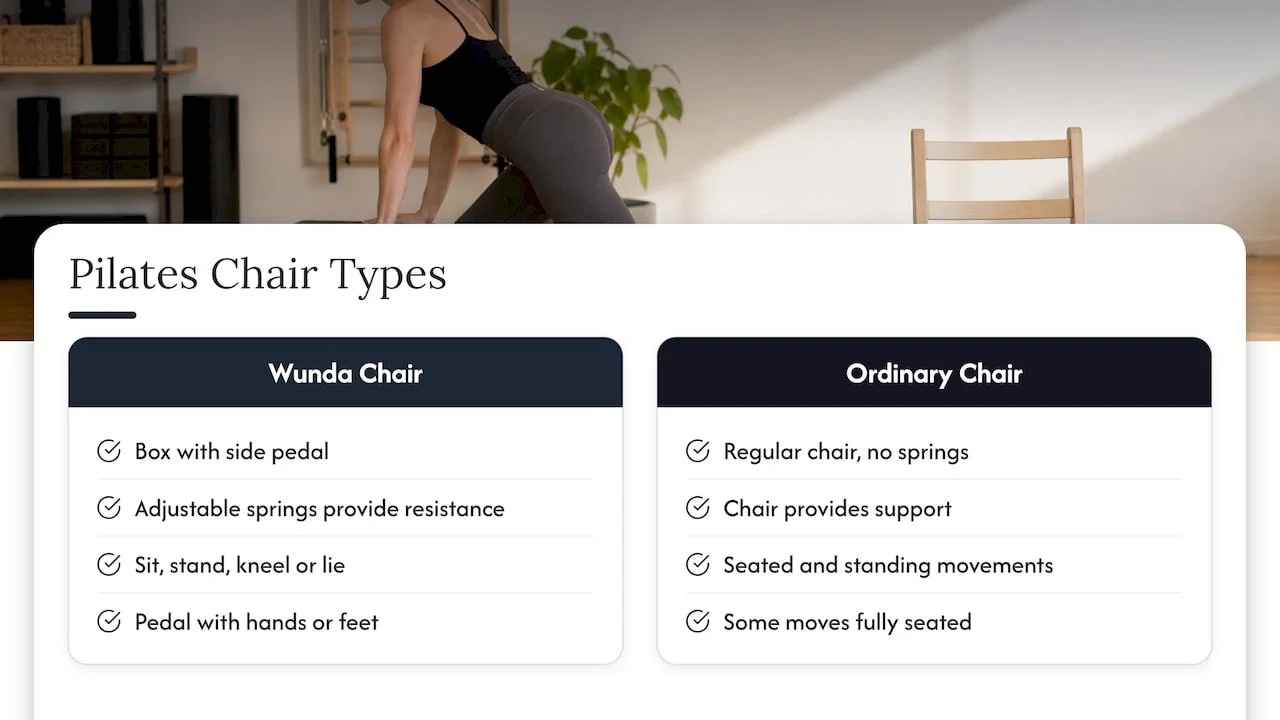
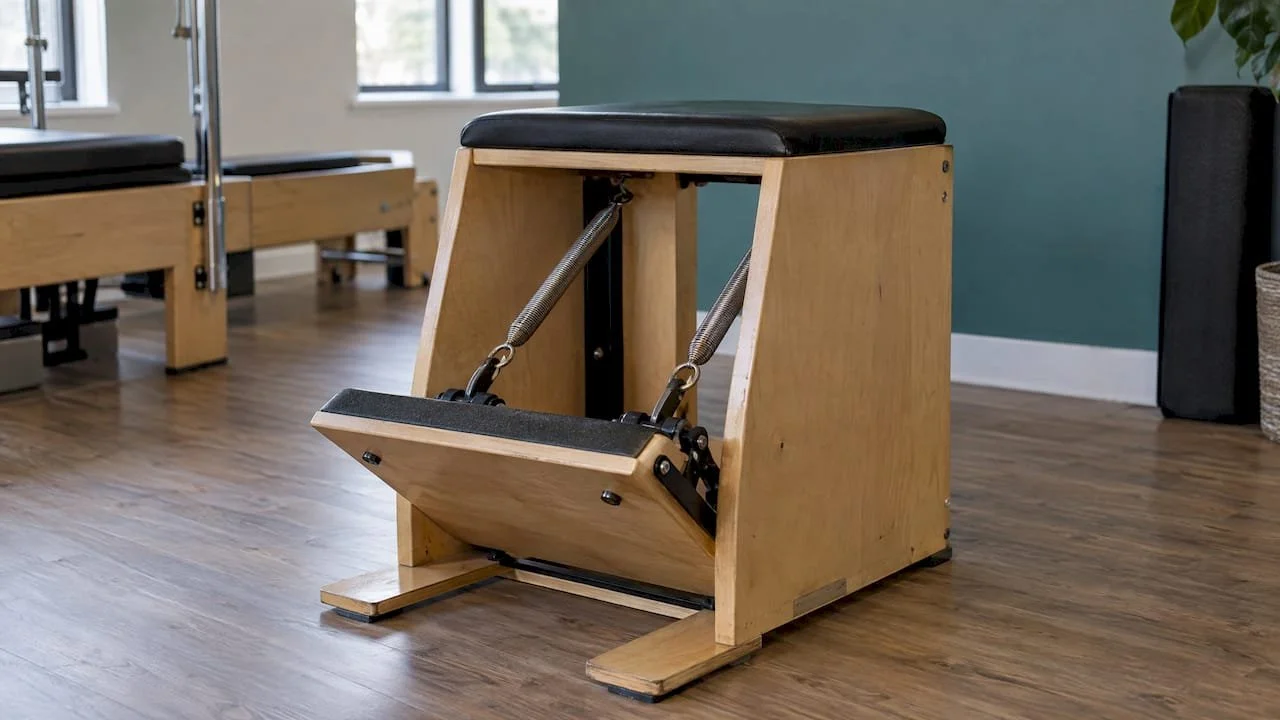
The Pilates chair (Wunda Chair). This is a small box-shaped apparatus with a pedal on one side. The pedal moves against adjustable springs, which supply the resistance. According to Balanced Body's Contrology Wunda Chair guide, spring settings run from the lightest at 1 to the heaviest at 3, and attaching the spring higher gives stronger resistance. You can sit, stand, kneel or lie on it, and push the pedal with your hands or feet.
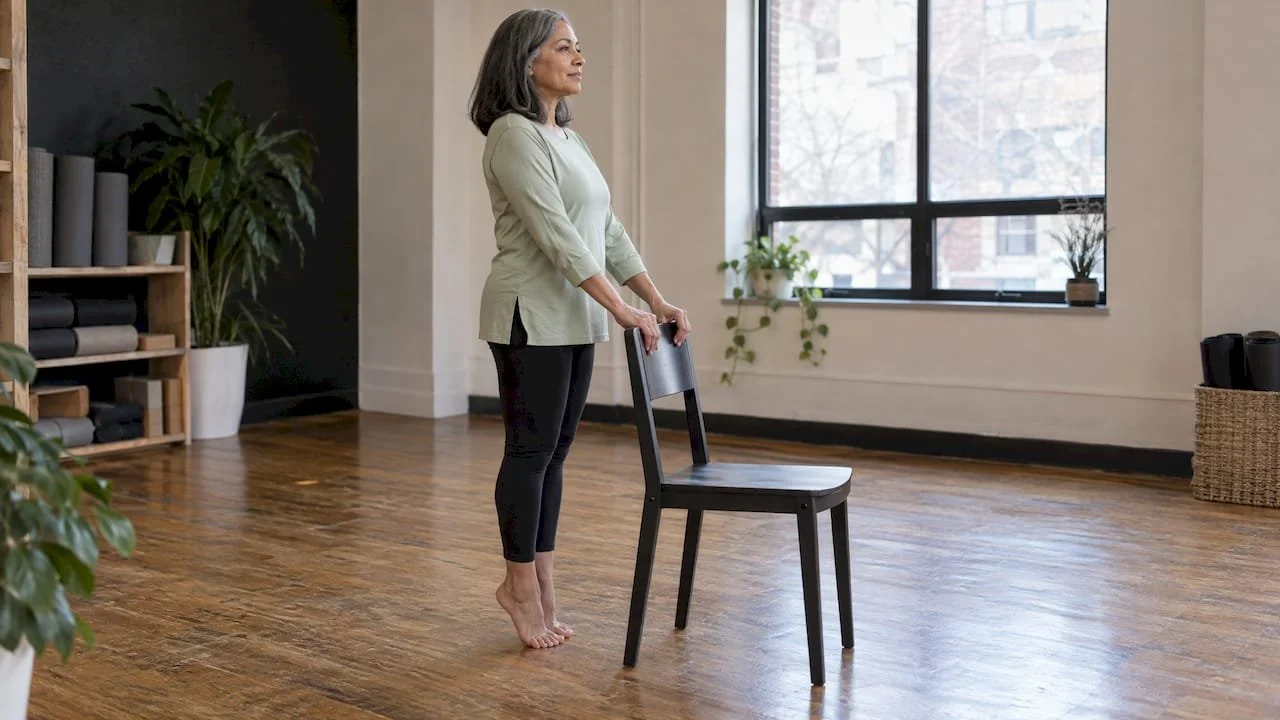
Chair-based Pilates with an ordinary chair. Here there are no springs. A regular chair gives you support. The NHS describes a chair-based Pilates video workout of about 30 minutes that mixes seated and standing movements, and some moves are fully seated for people who cannot stand. It suits people who have difficulty getting down to the floor and prefer chair support.
Both share the Pilates foundations: controlled movement, a steady trunk, aligned posture and deliberate breathing. If you want the basics of that last piece, our complete guide to Pilates breathing techniques walks through it.
The main benefits of the Pilates chair
A note on evidence first. The sources we rely on describe benefits of Pilates practice in general. The chair is one way to deliver them. Here is what they say.
Strength and core stability
The University of Melbourne's Chair Pilates for Home guide says chair Pilates focuses on strength, core stability, flexibility, muscle control, posture and breathing. On the spring apparatus, your trunk has to hold still while your arms or legs move a loaded pedal. That is core work in a very direct form: your midsection stabilizes so the limbs can push.
Balance and coordination
The pedal is where the challenge is. Per the Balanced Body guide, you need to control both the pedal and its return while balancing and supporting your body weight. You cannot let the spring do the work on the way back. Controlling that return, often while standing on one leg or perched on the seat, trains balance and coordination under mild load.
Posture and joint mobility
The NHS says regular Pilates practice can help improve posture, muscle tone, balance and joint mobility. Many of us spend the day hunched over a laptop. Pilates asks you to lengthen the spine, set the shoulders and use the deep trunk muscles to hold the position. For a practical routine, see our Pilates exercises for better posture. If back comfort is on your mind, daily spine health tips cover habits that pair well with a Pilates routine.
Stress relief and body awareness
The same NHS page lists relief of stress and tension among the benefits of regular practice. The breath-led, slow pace helps. If you are curious about the mind-body side, mind-body medicine and how it works gives background on why attention and breathing matter.
Easier access to exercise
The University of Melbourne guide notes that using a chair as a support base can help people who find it hard to get down to and up from the floor take part. For a beginner who feels unsure about floor work, that matters: the chair removes one barrier and keeps the rest of the workout intact.
Small footprint, full-body workout
Because the apparatus is compact and the work spans legs, arms and trunk, one short session covers a lot. That is why busy professionals like it: a focused 45 to 60 minutes can hit the whole body without impact on the joints.
Chair exercises by level
The Balanced Body guide labels Press Down and Pull Up as foundation-level exercises, and Swan and Mermaid Kneeling as intermediate. It describes variations and progressions, and it says exercises that demand skill to prevent a fall need proper training and a spotter, a second person standing by to help.
If you are using an ordinary chair at home, the University of Melbourne guide lists these moves, usually done for 10 repetitions (10 per side for lunges):
Standing chair squats
Seated or standing side bends
Alternate arm-and-leg extensions
Chair push-ups
Lunges
Calf raises
Seated opposite-hand-to-foot
A simple way to progress: start seated, add standing versions when balance feels steady, then add resistance or a more challenging stance. Keep your breath moving. Exhale on the effort, and your trunk will engage more naturally. Our guide to breathwork in Pilates practice shows how.
Who gets the most from it
Beginners who want low-impact exercise and are wary of the gym or of floor work.
Busy professionals who want a compact, efficient session that trains posture after long desk days.
Active adults who want better mobility or balance for running, golf or other sport.
Fitness and movement professionals, such as massage therapists or rehabilitation specialists, who want to understand how spring resistance and controlled movement work before adding Pilates to client care.
People who find the floor difficult, who can use chair support to join in.
Anyone managing an injury or health condition should speak with a doctor or physical therapist first. The NHS advises getting advice from a healthcare professional before trying its exercise videos if you are unsure they suit you, have a health problem or injury, have symptoms or feel unwell, recently had a health event, are pregnant or have recently given birth.
Using the chair safely
The spring is what makes the chair effective, and it is also why technique counts. The Balanced Body guide gives these points:
Keep your feet out from under the pedal.
Press the pedal down slowly and keep contact with it.
Release it slowly rather than letting it spring back under tension.
Make sure spring loops are fully engaged, and inspect springs for wear. A spring hooked incorrectly can come off and cause injury.
These are reasons to learn spring work with an instructor, who sets the springs and the progression for your body and keeps an eye on your alignment.
Getting the same benefits in Philadelphia
The benefits above come from a few things: resistance, control, alignment and breath. You can train all of them in the formats we teach at Amrita Yoga & Wellness.
| Format | What it trains | Price |
|---|---|---|
| Group classes (mat Pilates, group reformer) | Core, posture, controlled strength with a teacher and a community | Group Class Drop In, $28 per session |
| Private session | Personal setup, form and progression for your goals | From $85 per hour |
| Unlimited monthly | Regular practice, which is how change builds | 1 Month Unlimited Group Classes, $169 per month |
If your main reason for looking at the chair is comfort on the floor, our Chair Yoga with Heather page shows a seated practice. Our class schedule lists the Pilates options currently running.
For a broader look at the research, read what Pilates is good for.
Start with a session built around you
Our studio in Philadelphia is built for beginners through advanced practitioners, with classes that are designed for safety, personal growth and connection. If you want to learn how controlled resistance work feels in your own body, a private mat Pilates session starts from $85 per hour for one person, and there is a format for two to three people. If you prefer company, a group class drop-in is $28 per session, and memberships are listed on the same page.
Bring a water bottle, wear clothes you can move in, and tell your instructor about any injury before you begin.
Our perspective
Many people come to us asking about the chair because they have heard it is short, hard and effective. What we tell them is that the machine is not the secret. The secret is learning to move with control, to breathe with the movement, and to keep your trunk steady while your limbs work. Those skills carry across every format we teach.
We design our classes for safety and for every level, from first-timers to experienced movers. In a group Pilates class you get coaching, a community and a steady rhythm. In a private session you get time built around your posture, your goals and your pace. Beginners often tell us the hardest part is simply starting, so we make the first step approachable.
If you want the benefits of the chair, consistency matters more than any single piece of equipment. Pick a format you will come back to, ask your instructor to progress you gradually, and let the practice build.
Juiced
FAQ
What is chair Pilates?
Chair Pilates has two meanings. It can be a workout on the spring-loaded Pilates chair, or Pilates-style exercise that uses an ordinary chair for support. The NHS describes the second kind as a mix of seated and standing moves. Both emphasize control, posture and breathing.
Is the Pilates chair good for beginners?
Yes, with guidance. Balanced Body labels exercises such as Press Down and Pull Up as foundation level. Because the pedal is spring-loaded, a beginner should learn the setup and the slow release of the pedal from an instructor.
Can chair Pilates help with balance?
The NHS says regular Pilates practice can help improve balance, and the pedal work on the chair requires you to control a moving load while staying steady. Start with seated or supported versions and progress as you feel stable.
Do I need to be fit before I start?
No. The University of Melbourne guide notes that a chair can serve as a support base for people who find floor work hard. If you have an injury, are pregnant or have recently had a health event, talk with your healthcare professional first.