Benefits of Barre Pilates for Low-Impact Strength
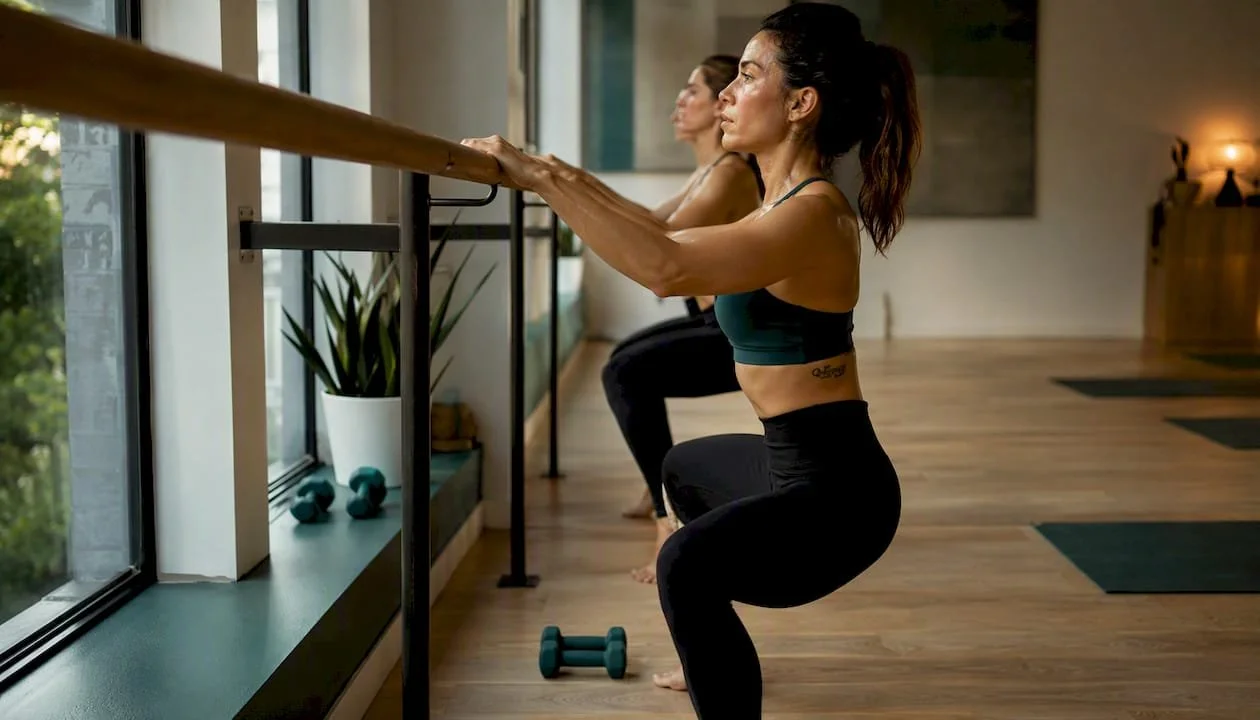
Barre Pilates is a low-impact, full-body workout that builds muscular endurance, sharpens posture, increases flexibility, and strengthens the pelvic floor — all without a single jump. A published clinical study found that just 10 barre classes over two months produced measurable reductions in urinary urgency, leakage, and pelvic discomfort. Adults who want real physical results without punishing their joints will find this method genuinely worth their time. If you're in Philadelphia, Amritayogawellness offers barre Pilates classes where you can experience these benefits firsthand.
At a glance, barre Pilates delivers:
Muscular endurance and toning across legs, glutes, arms, and core
Improved posture and lower-back support through continuous core engagement
Greater flexibility from combined small-movement strength work and dynamic stretching
Pelvic-floor strengthening backed by clinical research
Joint-friendly exercise with no jumping or high-impact loading
Stress reduction and a stronger mind-body connection
| Point | Details |
|---|---|
| Pelvic-floor results | 10 classes over two months produced measurable reductions in urgency and leakage in clinical research. |
| Realistic timeline | Expect flexibility and body-awareness gains in weeks 2–4; endurance and posture changes by weeks 4–8. |
| Recommended frequency | Two to three sessions per week delivers consistent gains; pair with Pilates for balanced results. |
| Who benefits most | Adults seeking low-impact strength, postpartum individuals (with clinician clearance), and desk workers with posture concerns. |
| Try it locally | Amritayogawellness in Philadelphia offers beginner series, drop-in classes, and private intro sessions. |
Table of Contents
How barre Pilates supports your mental health and social well-being
What does the research actually say about barre's effectiveness?
How often should you do barre, and when will you see results?
What are the main physical benefits of barre Pilates?
Healthline describes barreas a hybrid of ballet, Pilates, yoga, and strength training built around high repetitions and isometric holds. Those tiny, controlled movements drive deep muscle fatigue, particularly in the thighs, glutes, and shoulders, producing the characteristic "barre shake" that signals your stabilizing muscles are working hard.
Posture is one of the clearest wins. Because every exercise demands continuous core engagement, the muscles supporting your spine get consistent work. Over weeks, that translates to less lower-back tension and a more upright stance, something the Cleveland Clinic specifically highlights as a benefit of consistent practice.
Flexibility improves through an unusual combination: strength work through a full range of motion followed by targeted stretching. Most cardio classes skip this pairing entirely. Barre builds it into every session.
The pelvic-floor finding deserves its own moment. The clinical study showing improvement after 10 classes is meaningful for postpartum adults, older adults, and anyone managing stress incontinence. Pelvic-floor strengthening is rarely a selling point in group fitness, which makes barre's track record here genuinely distinctive.
High-rep, low-resistance work targets legs, glutes, arms, and shoulders
Isometric holds build endurance without heavy loading on joints
Core engagement in every exercise supports spinal health and posture
Flexibility gains come from strength-through-range-of-motion plus dedicated stretching
No jumping means significantly less joint stress than HIIT or aerobics classes
Pro Tip: If your knees or hips are a concern, barre is one of the few group formats where joint-friendly rehabilitation principles and fitness goals genuinely overlap. Tell your instructor about any joint history before class.
How barre Pilates supports your mental health and social well-being
The physical benefits are only part of the picture. Group mind-body fitness classes like barre tend to reduce stress and improve quality of life by demanding focused attention to form, which pulls your mind away from the noise of the day. You cannot think about your inbox while counting your 30th pulse in a plié hold.
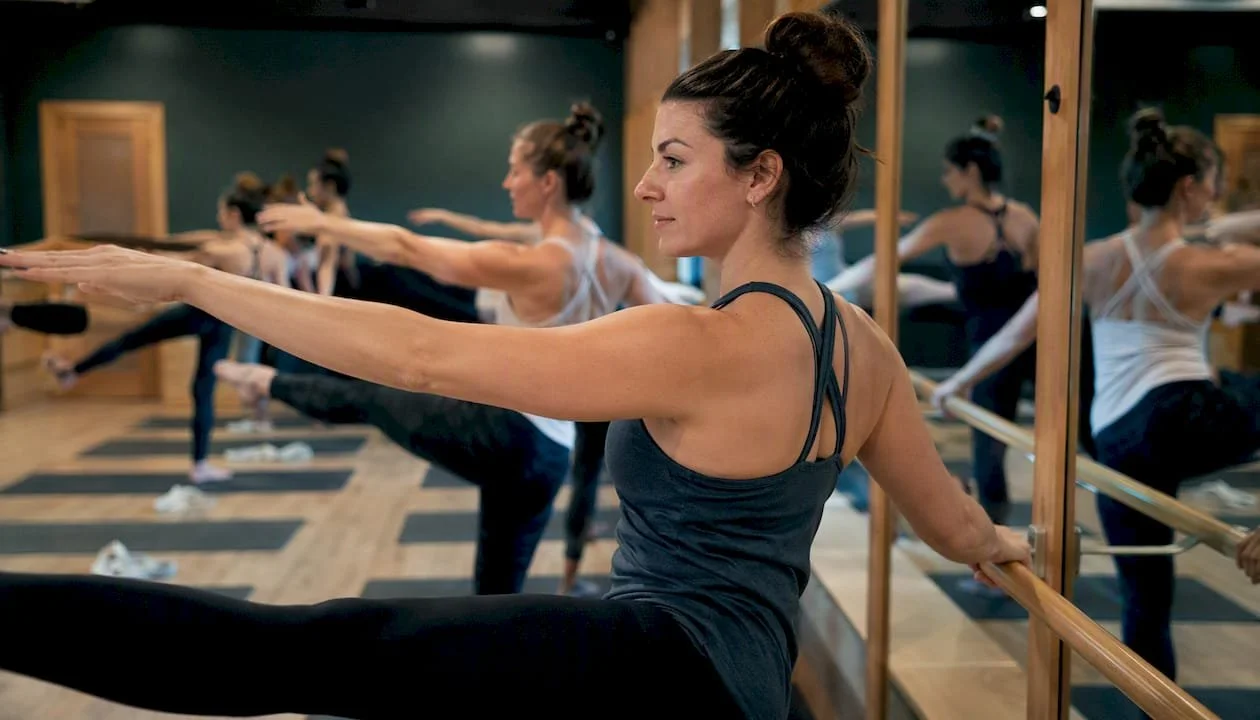
The "barre shake" plays a role here too. Healthline notes that instructors treat the shake as a positive signal, not a warning. Learning to stay calm and controlled while your muscles tremble is a genuine mindfulness practice, one that carries over into how you handle discomfort elsewhere.
Studio classes add a social layer that online workouts rarely replicate. A shared playlist, a familiar instructor, and a room full of people all fighting the same burn creates accountability that keeps attendance consistent. Consistency, more than any single session, is what produces lasting results.
Focused form work strengthens the mind-body connection
Group energy and music-driven pacing improve enjoyment and adherence
The YMCA's barre primer lists reduced stress and increased stamina among the most commonly reported benefits
Community accountability raises the likelihood of showing up week after week
What does the research actually say about barre's effectiveness?
The strongest evidence sits in the pelvic-floor space. The PMC study is specific: 10 classes over roughly two months, measurable improvement in urgency and leakage. That is a concrete, clinically relevant outcome from a modest time investment.
Beyond that, the picture is promising but still developing. NextPlay Community's barre Pilates guide notes directly that scientific literature on barre Pilates remains smaller than the body of evidence for traditional resistance training. Most supporting data comes from practitioner surveys, instructor interviews, and general exercise physiology research rather than large randomized controlled trials.
What that means practically: the benefits are real and consistent with established exercise science, but anyone expecting the same depth of evidence as, say, progressive overload strength training will find the literature thinner.
Strong evidence: pelvic-floor improvements after 10 classes over two months
Moderate evidence: posture, flexibility, and endurance gains from consistent practice, supported by Cleveland Clinic and Women's Health instructor perspectives
Limited evidence: maximal hypertrophy and high-intensity cardiovascular conditioning — barre is not the right tool for either goal
Small sample sizes and short study timelines are the main limitations of current research
What does a typical barre class look like?
Classes typically last close to an hour and follow a structure including warm-up, standing barre work using the rail for balance, a mat or floor segment, and a closing stretch. Light hand weights (1–3 lbs) or resistance bands appear in some formats. The tempo is brisk and music-driven, which distinguishes it from the quieter, breath-paced rhythm of a Pilates reformer session.
No ballet background is needed. Healthline confirms that the barre itself is simply a support tool for balance, not a prompt for choreography. Instructors cue alignment and muscle engagement, not dance steps.
For your first few classes, expect to feel muscles you forgot existed. Modifications are standard, and a good instructor will offer them without being asked. When the shake arrives, stay with it.
Wear grippy socks (most studios require them), comfortable fitted clothing, and bring water
Arrive a few minutes early to introduce yourself to the instructor and mention any injuries
Focus on the instructor's alignment cues rather than matching the person next to you
Modifications are always available; use them without hesitation
Pro Tip: Search specifically for "intro to barre" or "barre fundamentals" classes rather than dropping into a general class on day one. The beginner-focused resources at Amritayogawellness can help you identify the right starting point.
Who should try barre, and who should modify or avoid it?
Barre suits a wide range of adults. Desk workers with tight hips and rounded shoulders, postpartum individuals cleared by a clinician, older adults managing joint sensitivity, and anyone who has bounced off high-impact classes will all find it accessible. Women's Health instructor commentary specifically calls out prenatal and postnatal populations as candidates for modified barre work.
That said, some situations call for caution. Recent major surgery, unstable joints, or uncontrolled medical conditions warrant a conversation with a clinician before starting. Pregnancy is not a contraindication, but it does require an instructor experienced with prenatal modifications.
Good candidates: adults seeking low-impact strength, postpartum individuals (with clinician clearance), desk workers, older adults, anyone recovering from high-impact overuse
Modify or consult first: recent surgery, unstable joints, uncontrolled hypertension, pregnancy without prenatal-trained instructor
Always communicate injuries to your instructor before class, not after
Stop any exercise that produces sharp pain, not just the expected burn
How often should you do barre, and when will you see results?
Two to three sessions per week is the practical sweet spot for measurable gains in endurance, posture, and flexibility. The clinical pelvic-floor data maps to roughly 10 classes over two months, which works out to about one to two sessions per week at minimum.
A realistic timeline looks like this:
Weeks 2–4: improved body awareness, early flexibility gains, better sense of alignment
Weeks 4–8: noticeable endurance improvements, posture changes, reduced muscle fatigue during holds
Around 10 classes (roughly 2 months): pelvic-floor improvements supported by clinical evidence
FlexologyGuide recommendspairing 2–3 barre sessions with 1–2 Pilates sessions weekly for balanced results. Scheduling a recovery week every four to six weeks helps prevent overtraining without losing momentum.
Pro Tip: Track your sessions in a simple notes app. Knowing you've hit class eight of ten is a surprisingly effective motivator when class nine feels inconvenient.
How does barre compare to Pilates?
Both methods share an emphasis on core engagement, controlled movement, and low-impact loading. The differences are in tempo, intent, and feel.
| Feature | Barre | Pilates |
|---|---|---|
| Tempo | Music-driven, brisk | Breath-driven, deliberate |
| Primary focus | Muscular endurance, full-body toning | Deep core control, spinal articulation |
| Equipment | Ballet barre, light weights, bands | Mat, reformer, resistance rings |
| Cardio effect | Moderate; raises heart rate more | Lower; precision over pace |
| Best for | Toning, endurance, pelvic floor | Core rehab, movement precision |
Today.com's comparison notes that barre typically raises heart rate more than Pilates and relies on musical pacing to drive effort. Pilates, by contrast, rewards slowness. If your goal is toning and endurance, barre leads. If you're rebuilding core control after injury or surgery, Pilates earns priority. For a deeper studio-level breakdown, Amritayogawellness's barre vs. Pilates guide walks through both in practical terms.
Combining them works well. FlexologyGuide's sequencing advice suggests placing Pilates earlier in the week to build movement precision before barre sessions induce fatigue. You can also supplement barre with Pilates resistance rings for added variety at home.
How to get started with your first barre Pilates class
Choose the right entry point. A beginner series or "intro to barre" workshop beats dropping into a general class. Many studios offer a single drop-in option so you can test the format before committing.
Ask the instructor key questions. Certifications, class size, modification availability, and whether the format is barre, Pilates, or a hybrid all matter.
Evaluate class quality. Clear alignment cues, visible modification options, and a progressive structure (not just the same moves every week) signal a well-run program.
Decide: in-studio or online. In-studio gives you real-time correction, which is worth a lot in the first month. Online works once you know the basics.
Look for instructors certified through recognized programs (ACE, NASM, or barre-specific certifications)
A class size under 15 usually means more individual attention
Online formats suit experienced practitioners; beginners benefit from in-person correction
A studio perspective from Amrita Yoga & Wellness
At Amritayogawellness, barre Pilates sits at the center of what the studio does best: accessible, evidence-informed movement for adults who want results without punishment. The studio's barre Pilates overview and barre fitness blog reflect a genuine commitment to helping students understand not just what to do, but why it works.
The research on pelvic-floor improvement, the clinical perspectives on posture, the instructor guidance on modifications — these are not abstract talking points. They show up in how classes are structured and how instructors communicate with students. For anyone in Philadelphia looking for a low-impact method that takes the science seriously, Amritayogawellness is a natural starting point. Reach out to the studio directly to ask about beginner series, private intro sessions, or workshop schedules.
Barre Pilates at Amrita Yoga & Wellness in Philadelphia
Amritayogawellness offers barre Pilates classes designed for adults at every starting point, from complete beginners to those returning after injury or pregnancy. The studio's instructors provide real-time alignment cues, clear modification options, and a welcoming environment that makes the first class feel manageable rather than intimidating.
Class formats include drop-in sessions, beginner series, and private intro options. Attending a class can be a low-commitment way to explore if the method suits your body and goals. Visit Amritayogawellness to browse the current schedule and book your first session.
Sources
Barre workouts: benefits, how to, risks, and more — Healthline
Barre benefits: instructors on the pros of the low-impact workout — Women’s Health
Barre 101: A guide to barre workout and its benefits — YMCA Fit
Barre and Pilates together: how to train smarter — FlexologyGuide
Barre Pilates: Benefits, classes, safety and home workouts — NextPlay Community
This article provides general fitness information and is not a substitute for personalized medical or clinical advice. Consult a qualified healthcare provider before starting any new exercise program, particularly if you have a medical condition, recent injury, or are pregnant or postpartum.