
3 Weekly Hot Yoga Sessions Cut Body Fat About 6%: Weight Loss Evidence

Hot yoga can help reduce body fat, but only when it's practiced consistently and stacked alongside a real diet plan and other forms of exercise. It is not a standalone fat-loss tool. A single 90-minute session burns a moderate amount of calories, comparable to a brisk walk, not the 1,000-calorie figure some studios still advertise. The sections below cover realistic calorie numbers, what long-term studies actually found, and who should talk to a doctor before turning up the heat.
TL;DR:
Hot yoga burns approximately 300 to 460 calories in a 90-minute class, but this varies widely depending on effort, experience, and body size.
Fat loss results require at least three sessions per week over six months, combined with a healthy diet and other forms of exercise.
Heavy sweating during class mainly indicates water loss, which is quickly regained; it does not directly reflect fat burning.
Individuals with heart conditions, heat intolerance, or on certain medications should seek medical advice before practicing hot yoga.
Building heat tolerance gradually over weeks is essential, starting with 2 to 3 sessions weekly and increasing frequency only if tolerated well.
Amritayogawellness
Build A Consistent Hot Yoga Practice
Amrita Yoga & Wellness offers hot yoga and other wellness practices for Philadelphia adults building sustainable routines.
Table of Contents
Benefits of Hot Yoga for Weight Loss: What the Calorie Numbers Really Show
Sweat is not the same as fat loss, and that distinction matters more than almost anything else in this conversation. A soaked t-shirt after a 105-degree class mostly reflects water leaving your body through evaporation, not triglycerides being burned off. You'll regain most of that weight the moment you rehydrate.
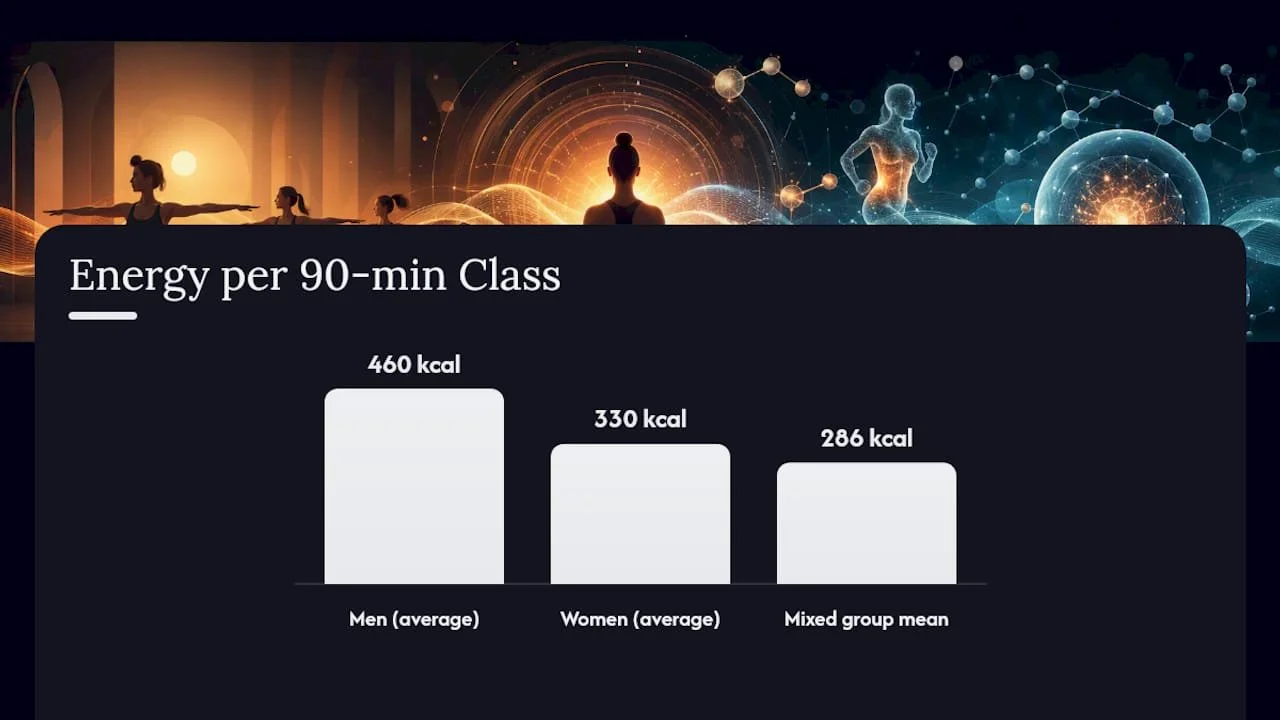
The real number to care about is energy expenditure, and it's lower than the marketing suggests. In a standardized 90-minute Bikram session, men burned an average of 460 calories and women burned an average of 330, according to Colorado State University research covering the study. That is a meaningful workout, roughly on par with a fast-paced hour on a treadmill, but it's nowhere near the four-figure claims some class flyers still print.
Lab-based measurements back this up with a bit more nuance. A separate study using expired-gas analysis found session energy expenditure ranging from 179 to 478 kcal, with a mean around 286 kcal across a mixed group of novice and experienced practitioners. That spread is wide, and it tells you something practical: your fitness level, effort, and how deeply you move into each posture change the number by more than 250 calories in either direction.
A few factors drive that variance:
Experience level. Practitioners who've been doing hot yoga for years tend to work harder and hold poses longer, pushing their output toward the higher end of the range.
Class length and style. A 60-minute flow burns less than a 90-minute Bikram sequence with the same postures repeated at higher intensity.
Body size and composition. Larger bodies generally expend more energy performing the same movements, a basic principle of exercise physiology that applies here as anywhere else.
Room temperature and humidity. Higher heat increases cardiovascular strain and heart rate, which nudges energy cost up, though the effect is smaller than most people assume.
On average, a standardized 90-minute hot yoga class burns somewhere between 300 and 460 calories, depending on your sex, effort, and experience. That range sits in the light-to-moderate intensity category as classified by the American College of Sports Medicine, not the "torch everything" zone some instructors imply.
Heat does increase your body’s energy use slightly as it works to regulate core temperature and circulate blood to the skin for cooling. However, this thermoregulatory cost is a small part of the total energy burned. Most calories burned come from muscular work of holding and moving through postures, rather than the ambient heat itself. Heat raises your heart rate and makes the class feel harder, which is a different thing entirely from raising your metabolic rate afterward in any lasting way.
What the Research Actually Says About Hot Yoga and Fat Loss
Short-term lab studies measure something different from long-term body-composition studies, and mixing the two up is where a lot of hot yoga claims go wrong. The acute studies, the ones using expired-gas analysis or heart-rate monitors during a single class, tell you how many calories one session burns and how hard your cardiovascular system is working. They do not tell you whether three months of classes will change how you look or how much fat you're carrying.
For that, you need longitudinal data, and there's less of it than you'd expect for a practice this popular. The most cited example: a six-month Bikram program with three 90-minute sessions per week produced an average body-fat reduction of about 6.07% at six months in adult women, with roughly 3.71% already visible at the 45-day mark. That's a real, measurable change, and it held up across different age groups in the sample.
Notice the conditions attached to that result. Three sessions a week. Ninety minutes each. Six months of adherence. That's a demanding schedule, and it's the schedule that produced the result, not a casual once-a-week habit.
A broader systematic review paints a more mixed picture. Researchers reviewing 43 studies covering 942 participants found consistent improvements in flexibility, balance, and some cardiometabolic markers, but inconsistent evidence for body-composition change across the literature. The review's authors flagged real methodological weaknesses in many of the underlying trials, including small sample sizes and a lack of intensity-matched comparison groups.
A related critical review of Bikram-specific trials found similar patterns: modest weight or BMI improvements in some obese participants over 8 to 12 week interventions, alongside stronger and more reliable gains in strength, balance, and flexibility. Functional fitness improves fairly reliably. Body composition change is less certain and appears to depend heavily on how often and how long people practice.
| Study type | What it measured | Main finding |
|---|---|---|
| Acute lab study | Calories burned per session | 179 to 478 kcal, mean near 286 kcal |
| Six-month longitudinal trial | Body-fat percentage over time | ~6.07% average reduction at 6 months, 3 sessions/week |
| Systematic review (43 studies) | Flexibility, balance, metabolic markers, body composition | Strong support for flexibility and balance; mixed evidence for fat loss |
| Bikram-specific critical review | Weight, BMI, strength, flexibility | Modest weight/BMI change in some groups; consistent functional gains |
There's also an adherence angle that rarely makes it into the calorie discussion. Research out of Harvard notes that heated yoga may reduce depressive symptoms in adults, and lower stress tends to support the kind of consistency that weight management actually requires. A class that helps you sleep better and stress less is doing indirect work even on days it doesn't torch many calories.
Read together, the evidence points to a fair conclusion: hot yoga and weight loss are connected, but the connection strengthens with frequency and time, and it's stronger for fitness markers than for fat loss specifically.
Who Sees the Biggest Benefits, and Who Should Be Careful
Not every body responds to heated yoga the same way, and that's worth knowing before you commit to a schedule.
People starting from a sedentary baseline tend to see the most dramatic early changes. Trial participants who were previously inactive or classified as overweight showed larger relative improvements in fitness and modest weight changes compared to already-active participants, a pattern common across most exercise interventions, not unique to heat.
People with cardiovascular disease need medical clearance first. A heated room pushes heart rate up faster than a room-temperature class, and that added cardiac demand is a real consideration for anyone with existing heart conditions.
People with heat intolerance or a history of fainting should approach cautiously. Studio temperatures commonly run between 90 and 105 degrees Fahrenheit, and that range raises real dehydration and heat-illness risk for susceptible individuals.
Anyone on diuretics or beta blockers should ask their doctor before regular hot yoga. Both drug classes interact with the body's ability to regulate fluid and heart rate under heat stress.
Watch for warning signs during and after class: dizziness, nausea, confusion, a racing heart that doesn't settle, or skin that stops sweating despite the heat. Any of these warrants stepping out of the room immediately, and recurring symptoms deserve a conversation with a clinician.
Mayo Clinic's guidance on hot yogaechoes this: yoga supports a weight-loss plan well when it's paired with regular aerobic exercise and a sound diet, but the heat component specifically calls for extra caution in anyone with heart or heat-related health issues.
How to Build Hot Yoga Into a Weight-Loss Plan
Consistency, not intensity, is what separates people who see body-composition change from people who just feel sore for a few weeks.
Start with 2 to 3 sessions a week for your first month. This gives your body time to acclimate to the heat without triggering burnout or overload symptoms.
Progress toward 3 sessions a week for at least six months. That's the schedule tied to the roughly 6% body-fat reduction seen in longitudinal research, and shorter commitments simply haven't shown the same effect.
Pair classes with dedicated aerobic or resistance training. Major exercise guidelines call for a substantial volume of weekly moderate-intensity activity for weight maintenance, a target that hot yoga alone, even at three sessions a week, is unlikely to fully cover. Adding two strength sessions or a couple of brisk walks fills that gap.
Build an actual energy deficit through food, not just sweat. No amount of heat exposure substitutes for eating in a way that supports fat loss. Track intake loosely for a couple of weeks if you're unsure where you stand.
Track body-fat percentage and functional markers, not just the scale. A pound of muscle and a pound of fat weigh the same but look completely different on you. Strength gains, flexibility, and how your clothes fit tell you more than a number that fluctuates with hydration daily.
Pro Tip: Give yourself two to four weeks of shorter or less frequent heated sessions before jumping into a full 90-minute class three times a week. Heat tolerance builds gradually, and rushing it is the fastest way to end up dizzy on the mat instead of building a habit that lasts.
Getting Ready for Class: A Safety Checklist Worth Following
Hydration strategy matters more in a heated room than almost any other variable you control. Start drinking water several hours before class rather than chugging a bottle right before you walk in, and add electrolytes if you're sweating heavily or taking a class longer than 60 minutes. Plain water alone, in large volumes, can occasionally dilute sodium levels during intense heat exposure.
What you eat beforehand matters too. A light snack with some carbohydrate an hour or two before class works better than a heavy meal, which can sit uncomfortably once you start folding forward in 100-degree heat. Skip alcohol the night before if you can. It compounds dehydration in a way that catches people off guard.
Wear moisture-wicking fabric, never cotton, which gets heavy and clingy once soaked.
Bring a towel for your mat and one for yourself; heated floors get slippery fast.
Tell your instructor about any injury or condition before class starts, not mid-pose.
Sit or lie down immediately if you feel light-headed. Skipping a pose is always better than pushing through dizziness.
Rehydrate steadily for the hour after class rather than trying to replace all fluid loss at once.
Pro Tip: If you notice a headache, unusual fatigue, or dark urine hours after a class, that's your body telling you rehydration didn't go far enough. Treat it as a signal to adjust your water intake before your next session, not something to push through.
Our hot yoga safety guide covers overheating symptoms and recovery steps in more depth, and our pre-class preparation checklist walks through nutrition timing if you want a more detailed plan before your first heated class.
Where Amrita Yoga & Wellness Fits Into This Picture
The studio offers hot yoga programming alongside pilates, barre, tai chi, and massage therapy for students of various levels. Classes include heat acclimation and modification options, following an evidence-informed pacing rather than treating the heat as a gimmick.
This section reflects the editorial view of Juiced, drawing on the physiological and clinical research summarized throughout this article. For related reading, see our guides on essential hot yoga safety tips and mastering hot yoga step by step.
Setting Realistic Expectations With Hot Yoga
Hot yoga earns its place in a weight-loss plan, but it earns that place slowly, and only with real consistency behind it. Expect flexibility and balance gains within weeks. Expect meaningful fat-loss numbers only after months of regular practice paired with solid nutrition and other movement. Anyone with a heart condition, heat sensitivity, or a fainting history should talk to a doctor before starting. Track body-fat percentage and strength, not just the number on the scale, and give the process the six months the research actually calls for.
— Juiced
Start Your Hot Yoga Practice the Safe Way
The studio uses a beginner-first approach that acclimates participants to the heat gradually instead of starting with full 90-minute Bikram-style classes. Hot yoga classes include instructor guidance on modifications, hydration timing, and pacing, helping first-timers build tolerance.

New students are walked through what to expect before the heat even turns on, and instructors check in on modifications throughout class rather than leaving you to figure it out alone. If tarot readings or other wellness workshops sound like a better entry point into the studio community first, you can explore our tarot reading sessions before committing to a full class schedule. Either way, the next step is simple: book your first class and let us guide the pacing from there.
This article is general information, not a substitute for advice from a qualified doctor. Consult a qualified healthcare professional about your own circumstances before acting on anything here.
Sources
Researcher: hot yoga yields fitness benefits (Colorado State University coverage of Bikram study)
Physiological responses to Bikram yoga in novice and experienced practitioners (laboratory study)
Mayo Clinic Q and A: Hot yoga for weight loss and overall health
FAQ
How many calories does a hot yoga class actually burn?
A standardized 90-minute session burns roughly 300 to 460 calories on average, with lab studies showing a range as wide as 179 to 478 kcal depending on effort and experience.
Can Bikram yoga alone help you lose weight?
Bikram yoga can support fat loss when practiced three times a week for six months or longer, a schedule tied to an average 6.07% body-fat reduction in one longitudinal study, but it works best paired with diet and other exercise.
Is sweating a lot in hot yoga a sign of fat loss?
No. Heavy sweating reflects water loss through evaporation, not fat being burned, and most of that weight returns once you rehydrate.
Who should avoid hot yoga or modify their practice?
People with heart disease, heat intolerance, a history of fainting, or those taking diuretics or beta blockers should consult a doctor first, since heated rooms raise cardiovascular and dehydration risk.
How often should I practice hot yoga for weight-loss results?
Start with 2 to 3 sessions a week to build heat tolerance, then aim for 3 sessions a week for at least six months, which matches the frequency used in studies showing measurable body-fat change.