3–5mm Base Hot Yoga Mats Studio Teachers Trust for 95°F Classes
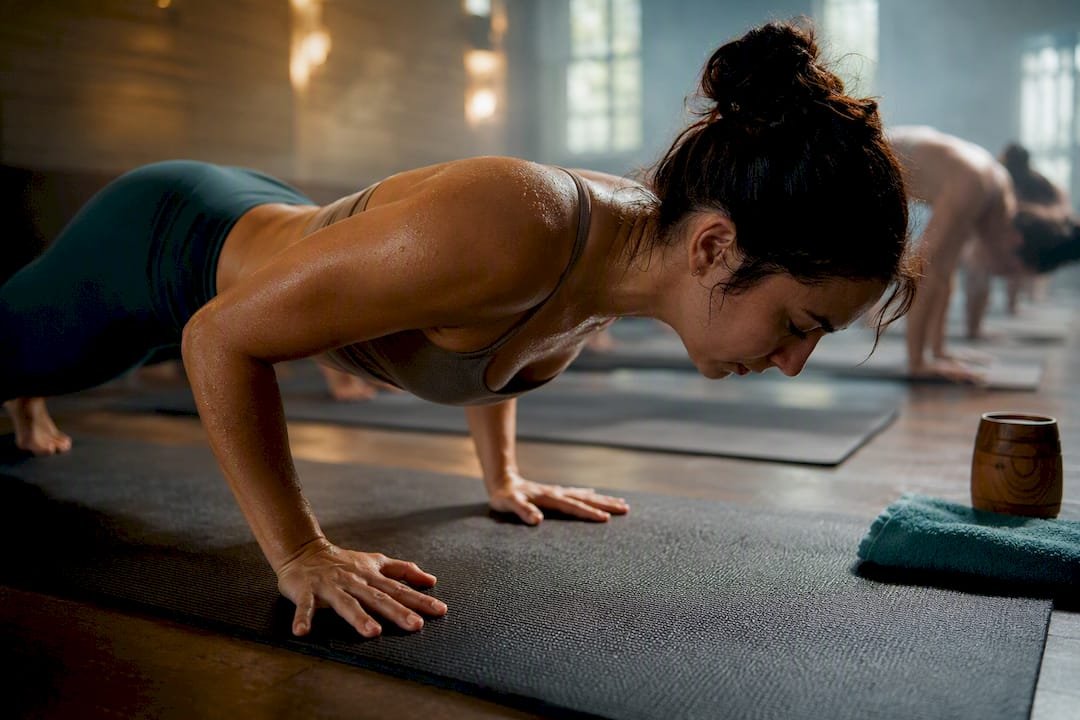
The mats that hold up in hot yoga combine a dense natural-rubber base with a moisture-absorbing top, whether that's cork, microsuede, or a purpose-built sweat-activated polymer. Thinner PVC "sticky mats" feel grippy dry but turn into a slip hazard the moment sweat hits them. The trade-off is weight and price against portability, and the right maintenance routine matters almost as much as the material itself.
TL;DR:
Mats with moisture-absorbing surfaces like cork or microsuede increase grip as they get wet, which is essential for safety in high-temperature rooms.
A dense rubber base between 3 to 5mm thick prevents slipping and provides stability during dynamic sequences, especially during transitions.
Regular, gentle cleaning is critical to maintaining grip over time, with cork requiring mild soap and water and rubber mats tolerating light sprays.
Thicker mats up to 6mm offer added joint cushioning but can destabilize balance during single-leg poses, making medium thickness ideal for most practitioners.
Price and durability often outweigh initial cost, as mid-range rubber-microsuede mats tend to last longer and perform better than budget options for frequent hot yoga practice.
Amritayogawellness
Find Your Hot Yoga Practice
Amrita Yoga & Wellness offers hot yoga classes alongside diverse practices for adults seeking physical, mental, and spiritual well-being in Philadelphia.
Table of Contents
What to Look for in Hot Yoga Mats
Most mat failures in a heated room come down to five things, and you can check for all of them before you buy.
Grip behavior when wet is the one that actually matters in a 95 degree room. A mat that feels tacky in the store but relies on texture alone often turns slick within twenty minutes of sweating. Look for mats explicitly built to increase traction as they absorb moisture rather than resist it.
Base density and weight keep a mat from creeping across a hardwood or polished concrete floor during transitions like chaturanga to downward dog. A thin, light mat shifts. A dense rubber base, generally in the 3 to 5mm range, stays anchored because it has enough mass to resist the sliding force of a moving body.
Thickness sets the balance between cushioning and stability, covered in more detail below.
Material safety deserves real scrutiny given how much skin contact and heat exposure a hot yoga mat sees. Certifications like OEKO-TEX and PVC-free labeling signal a manufacturer has tested for off-gassing, which matters more in a heated room than a cool studio because heat accelerates chemical release from cheap synthetics.
Maintenance needs vary a lot by material, and skipping this step is the fastest way to kill a good mat's grip.
Sweat-activated tops need regular gentle cleaning, not heavy scrubbing
Cork surfaces respond to mild soap and water, never harsh solvents
Natural rubber degrades faster under direct sun or high heat storage
Towel systems require washing after nearly every session to stay hygienic
Pro Tip: Test a mat's wet grip before committing to a full class. Mist the surface with water and try a downward dog. If your palms slide even slightly, that mat will likely betray you halfway through a heated vinyasa flow.
How Materials and Surface Texture Affect Grip When Wet
The base and the top layer of a mat do different jobs, and hot yoga performance depends on getting both right.
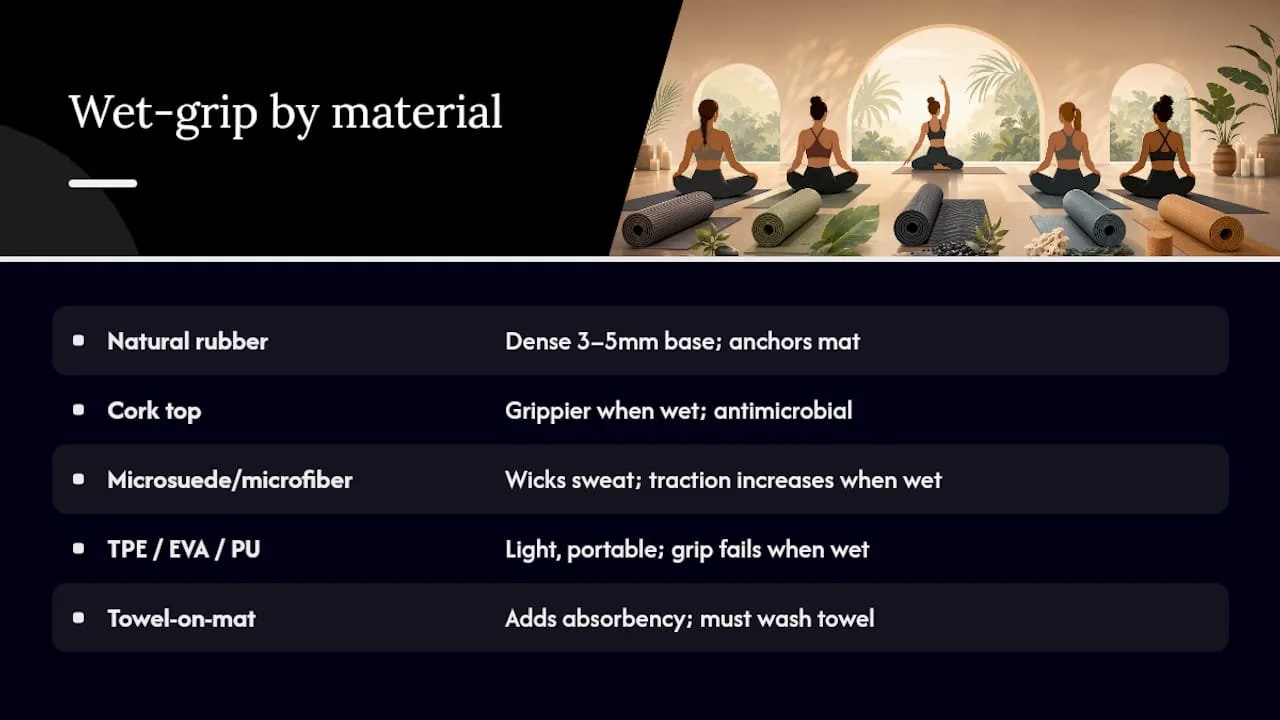
Natural rubber is the workhorse base material for serious hot yoga mats. A dense rubber slab, typically 3 to 5mm thick, anchors the mat to the floor through sheer weight and surface friction. That density is what keeps a mat from bunching under your feet during a fast-paced flow, an issue insiders flag as being just as important as the top surface itself.
Cork has become a favorite top layer because it gets grippier, not slicker, as it absorbs moisture. It's also naturally antimicrobial, which matters when you're rolling out a mat you sweat through three or four times a week. Cork needs gentler care than rubber. A dedicated cork mat typically calls for wiping with mild soap rather than any alcohol-based cleaner, since harsh chemicals strip the natural cork surface over time.
Microsuede and microfiber tops, often paired with a rubber base, work through absorption. As sweat spreads across the surface, the fabric wicks it away from your skin's contact point, which paradoxically increases traction instead of reducing it. Some manufacturers now build dedicated sweat-activated PU layers designed specifically to grip better the wetter they get, letting practitioners skip a towel entirely.
TPE, EVA, and basic PU mats are the budget and travel-friendly end of the spectrum. They weigh less, cost less, and pack down small, but most lose grip fast once moisture hits them. If portability is your top priority, this trade-off might be worth it, but expect to pair the mat with a towel.
Towel-on-mat systems solve the slip problem by adding a highly absorbent layer on top of any base mat. They work, but they add a hygiene step (washing the towel after every session) and an extra piece of gear to carry, unpack, and keep from sliding around on top of the mat itself.
What Thickness Works Best for Heated Classes?
Thickness controls the trade-off between cushioning your joints and staying balanced through standing poses, and hot yoga tends to punish the wrong choice more than a cooler class would.
3 to 4mm mats offer the most stability for balance-heavy sequences and are the default choice for daily hot yogis who prioritize a solid connection to the floor.
4 to 6mm mats strike a middle ground, giving knees and hips a bit more cushion while still keeping most of the floor feedback intact. This range works well for studio regulars taking multiple classes a week.
6mm and thicker mats cushion joints well but can wobble underfoot during single-leg balances like tree pose or half-moon, since the extra foam compresses unevenly under a shifting foot.
Beginners with sensitive knees often lean toward the thicker end, and that's a reasonable call for kneeling positions. Just know that the added foam changes how transitions like plank to child's pose feel, since a thicker mat sinks rather than holds firm. If joint comfort during kneeling poses is your main concern, pairing a mid-range mat with the safety guidance for heated classes covers modifications that reduce knee strain without needing extra padding.
How to Clean and Maintain a Hot Yoga Mat for Better Grip
Sweat buildup clogs the microscopic texture that gives a mat its traction, and maintenance is consistently cited as the single biggest factor in long-term grip performance, often outweighing the initial material choice. A mat that started out perfect can turn slippery within a few months if it never gets properly cleaned.
Wipe down after every session. A damp microfiber cloth or a light spray of water removes surface sweat before it dries into the mat's texture.
Deep clean weekly. Use a mild soap and water solution, following whatever the manufacturer specifies for that particular material.
Skip the harsh chemicals. Alcohol-based or heavily scented cleaners strip the natural properties out of cork and rubber, degrading exactly the grip you're trying to preserve.
Break in new rubber and cork mats gradually. A few light sessions before jumping into a full heated class lets the surface texture settle without excessive strain.
Watch for the warning signs of a dying mat: a permanent loss of tackiness even after cleaning, visible thinning in high-traffic spots, or delamination where layers start to peel apart.
Pro Tip: Store your mat rolled with the top surface facing outward, away from direct sunlight. UV exposure and folded storage both accelerate the breakdown of rubber and cork faster than regular use does.
Which Mat Approach Fits Your Practice?
Different combinations of base and top layer suit different practice styles, and matching your habits to the right one saves both money and frustration.
Dense rubber base with an absorbent top is the strongest all-around choice for towel-free hot yoga, since it handles both the sliding problem and the wet-grip problem at once.
Cork top over a rubber base suits eco-conscious practitioners who want antimicrobial properties and sweat-activated grip without synthetic materials.
Microsuede or dedicated sweat-activated tops work well for anyone who wants near-instant tack the moment sweat starts, without waiting for a break-in period.
Lightweight TPE or travel mats paired with a towel make sense if you move between studios or travel often, though you're trading some grip reliability for portability. Practitioners who bounce between different studio floors tend to find multi-layer setups hold up more consistently across varying surfaces than single-layer travel mats do.
Thin PVC sticky mats are the one combination worth actively avoiding for hot yoga. They feel grippy in a cool showroom and turn genuinely dangerous once real sweat hits them.
What Amrita's Teachers Have Learned About Hot Yoga Mats
Years of watching students set up for heated classes teaches you things no spec sheet will. Teachers consistently notice the same pattern: students who mist their mat lightly before a hot class, rather than relying on the surface alone, get better traction through the first twenty minutes, before their own sweat takes over the job.
Mid-range thickness tends to work best for group studio classes where floors vary between hardwood and rubber flooring underlayment. That range gives enough cushion for kneeling poses without sacrificing the stability standing sequences demand. For readers who want a closer look at specific picks suited to studio floors and climate, the studio's mat guide breaks down options by practice style. None of this replaces trying a mat yourself under real heat and real sweat, which is exactly why testing one in a live class beats guessing from a product photo.
Comparing Popular Hot Yoga Mat Categories
Rather than chase specific brand names, it helps to think in terms of categories, since most mats worth considering fall into a handful of buckets. Premium natural-rubber-and-cork combinations sit at the top of most testing roundups for wet grip, though they carry a higher price and more weight to carry to class. Mid-tier rubber-and-microsuede mats show up constantly in gear comparisons because they balance grip, weight, and cost reasonably well for someone taking two or three heated classes a week. Budget synthetic mats built from TPE or basic PU dominate the entry-level market, and they're fine for occasional heated sessions but tend to disappoint anyone practicing hot yoga several times a week. The pattern across nearly every roundup is the same: mats explicitly marketed for hot yoga, rather than general-purpose mats, consistently outperform on wet-grip tests because manufacturers design the top layer around moisture rather than treating it as an afterthought.
What a Hot Yoga Mat Actually Costs
Expect real variation depending on material and construction. Basic TPE or foam mats sit at the low end and often lose grip fast under heat and sweat, making them a poor long-term value even at a lower upfront price. Mid-range rubber-and-microsuede combinations occupy the middle tier and tend to deliver the best balance of durability and performance for regular practitioners. Premium natural-rubber-and-cork mats sit at the top of the market, reflecting both the material cost and the more involved manufacturing process cork requires.
Value for money in hot yoga isn't really about the sticker price. A cheap mat that needs replacing every few months because it delaminates or loses tack costs more over a year than a well-made mat that holds up through two or three years of regular heated practice. Factor in how often you practice: someone taking hot yoga four or five times a week wears out a mat far faster than an occasional practitioner, which changes the math on what "worth it" actually means for your specific habits.
How Often Should You Replace a Hot Yoga Mat?
Practice frequency drives wear far more than calendar time does. A mat used in hot yoga four or five times a week faces constant moisture cycling, repeated flexing, and heat exposure that a once-a-week practitioner's mat never sees, and that difference shows up in the surface long before the base breaks down.
Daily or near-daily hot yogis often notice a meaningful drop in tackiness within six to twelve months, even with good maintenance. Occasional practitioners, taking one or two heated classes weekly, can often stretch a quality mat past the two-year mark. The clearest signs it's time to replace a mat are a permanent loss of grip that cleaning doesn't restore, visible thinning where your hands and feet land most, and any delamination or peeling at the edges. Pushing a worn-out mat past that point isn't just uncomfortable. It's genuinely how slips and falls happen mid-flow, particularly during transitions where your hands bear sudden weight.
The Real Lesson on Hot Yoga Mats: Construction Beats Marketing
Most mat marketing leans hard on buzzwords like "extra grip" or "non-slip technology" without explaining what's actually happening at the material level, and that gap is where a lot of practitioners get burned, literally sliding out of poses they've held fine for months. The honest answer is boring: base density and top-layer absorption do almost all the work, and everything else is packaging.
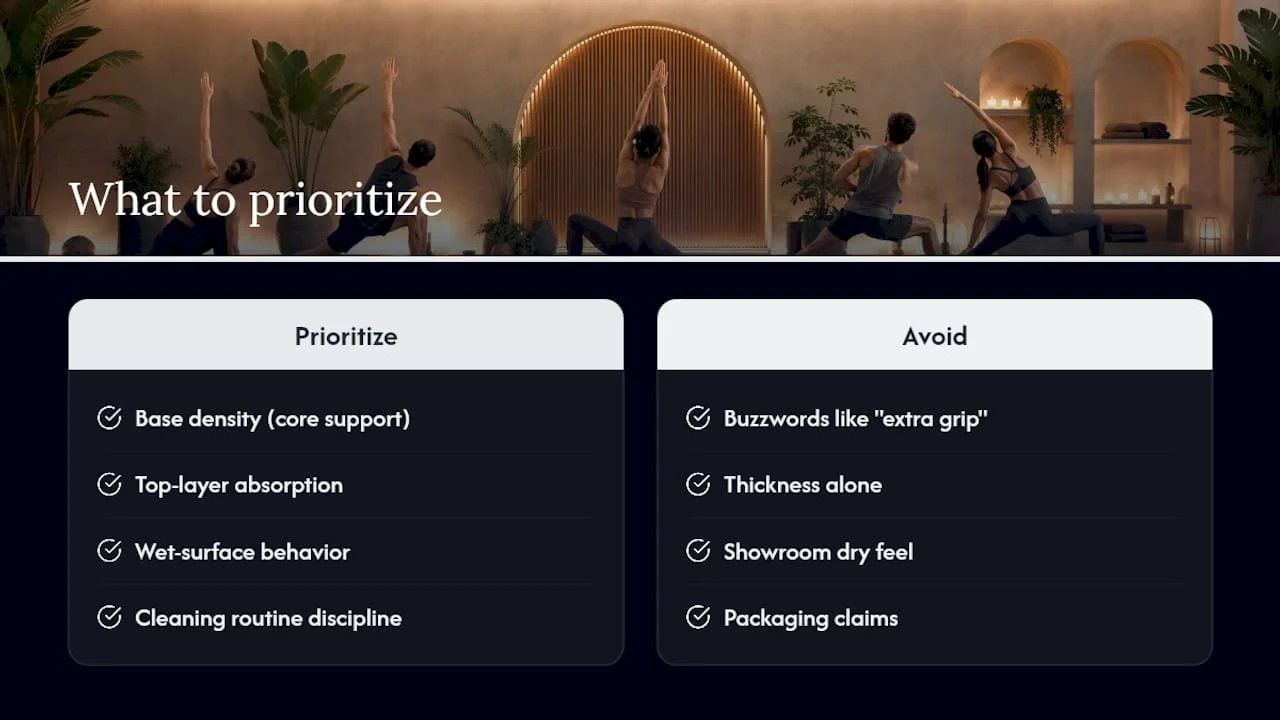
Conventional advice tends to fixate on thickness as the main buying decision, when in a heated room, wet-grip behavior matters more than cushioning for most practitioners under 40 without joint issues. A 4mm mat with the wrong top surface will fail you faster than a 6mm mat with the right one. If you're choosing between two mats and can only weigh one factor, weigh how the surface behaves once it's actually wet, not how it feels in a dry showroom.
The other underrated piece is maintenance discipline. A well-built mat with sloppy cleaning habits degrades just as fast as a mediocre mat, maybe faster, since absorbent surfaces clog with residue if you skip regular washing. Buy for the material, then commit to the cleaning routine that material demands.
— Juiced
How Amrita Yoga & Wellness Can Help You Find the Right Mat
Reading about grip and density only gets you so far. Amrita Yoga & Wellness gives you the one thing a product page can't: a chance to test a mat's real wet-grip performance in an actual heated room, mid flow, alongside a teacher who can tell you if your setup is working or fighting you.
Regular hot yoga classes double as a low-stakes way to try different mat types before committing to one, since you'll feel the difference between a sweat-activated top and a basic synthetic surface within a single session. If you're curious about how astrology-informed pose sequencing pairs with your practice, the studio's wellness partners cover that connection in more depth. For readers who want personalized guidance beyond mat selection, tarot sessions are also available as part of broader wellness offerings. Curious where to start? Book a tarot reading or reach out to a wellness studio directly to ask about class times and in-studio mat recommendations tailored to your practice.