Club Pilates Explained: A Beginner's Complete Guide
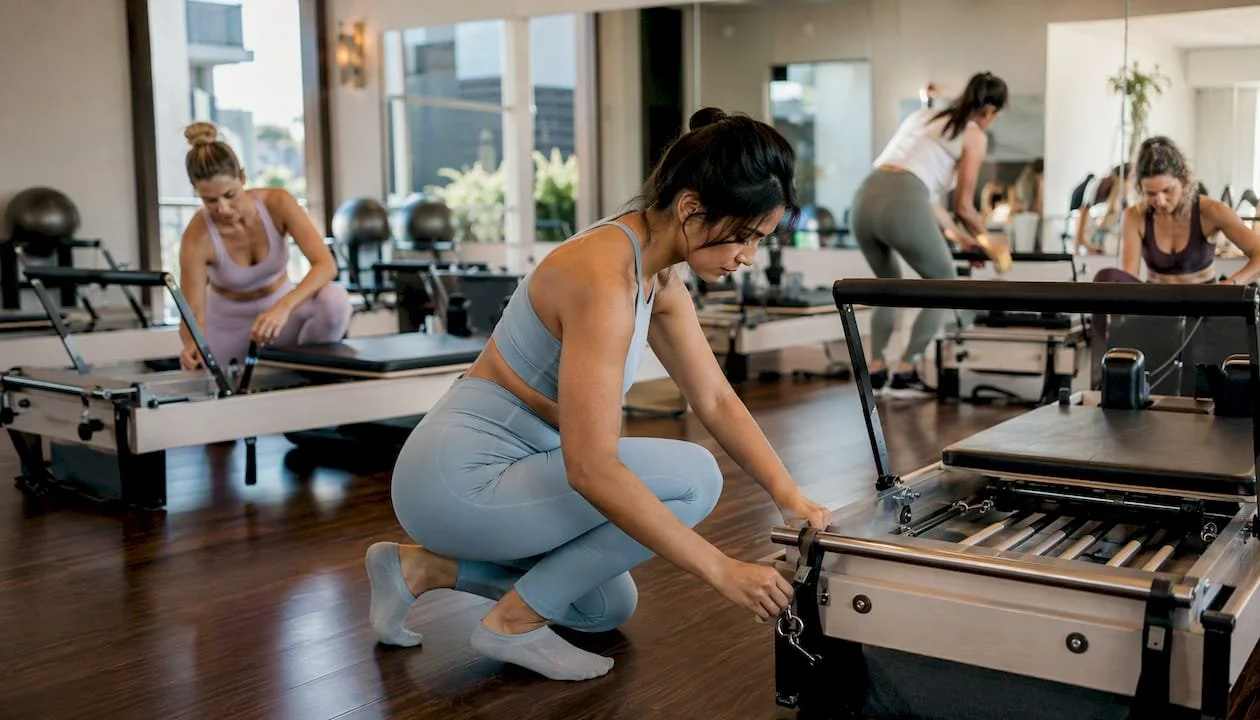
Club Pilates is a nationwide reformer-centered fitness franchise that runs instructor-led group classes using the Reformer as the primary apparatus, supplemented by the EXO-Chair, Springboard, TRX, and other equipment. Owned by Xponential Fitness, it operates as a studio franchise network with locations across the United States. Here is what you get at a glance:
Format: Group classes of roughly 45–50 minutes, reformer-based
Equipment: Balanced Body Allegro 2 Reformers plus complementary apparatus
Class levels: Four progressive levels, nine class formats
Entry point: A 30-minute Intro Reformer session, often complimentary for first-timers
Instructors: Certified with 500+ hours of Pilates training per brand claims
Table of Contents
How are Club Pilates instructors trained and how do they keep classes safe?
Why does Club Pilates rotate between multiple apparatus in one session?
Amrita Yoga & Wellness: a local complement to reformer Pilates
What is Club Pilates and how does the brand work?
Club Pilates launched in 2007 in San Diego, California, and has since grown into one of the largest Pilates franchise chains in the country. Xponential Fitness, the parent company behind several boutique fitness brands, owns and operates the franchise system. Individual studios are franchisee-owned, which means the experience is standardized at the brand level but managed locally.
The positioning is deliberate: reformer Pilates made accessible at a membership price point rather than the private-session rates that traditional Pilates studios typically charge. Group classes keep costs lower while still delivering instructor attention and equipment-based training. Every studio carries a locator on the Club Pilates website so you can find a nearby location, check class schedules, and book an intro session before committing to a membership.
Pro Tip: Before visiting, use the Club Pilates studio locator to confirm which class formats your nearest location offers. Not every studio runs every format on every day.
What classes and equipment will you find at Club Pilates?
The Reformer is the centerpiece. Club Pilates primarily uses Balanced Body Allegro 2 Reformers, chosen for their smooth carriage performance, durability, and compatibility with tower attachments. Balanced Body is the dominant brand in commercial Pilates studios, and franchise standardization is a key reason: every location gets the same machine, which keeps maintenance predictable and the client experience consistent across studios.
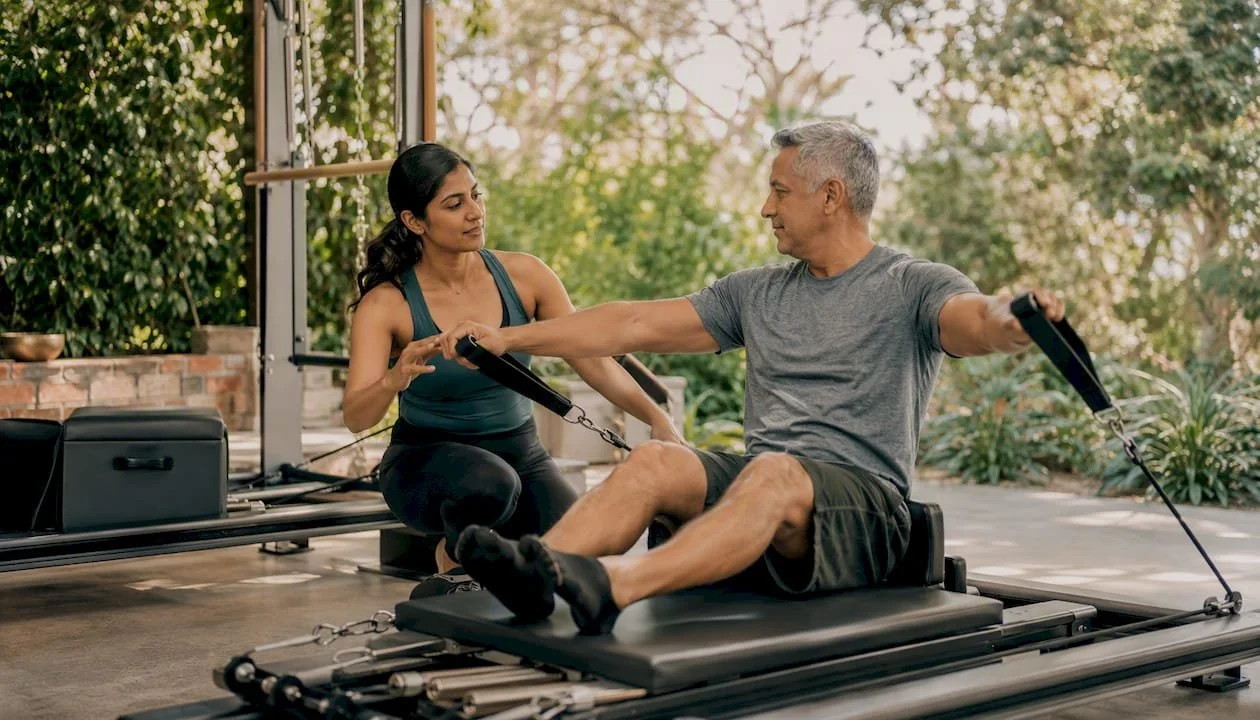
Beyond the Reformer, a typical Club Pilates studio includes the EXO-Chair, Springboard, TRX suspension system, Bosu balance trainer, and foam rollers. Each piece targets something specific. The EXO-Chair challenges single-leg stability and hip strength. The Springboard adds spring-resistance wall work for upper body and spinal mobility. TRX shifts load to bodyweight suspension, raising the core demand. Bosu work tests balance under instability.
Class formats and levels
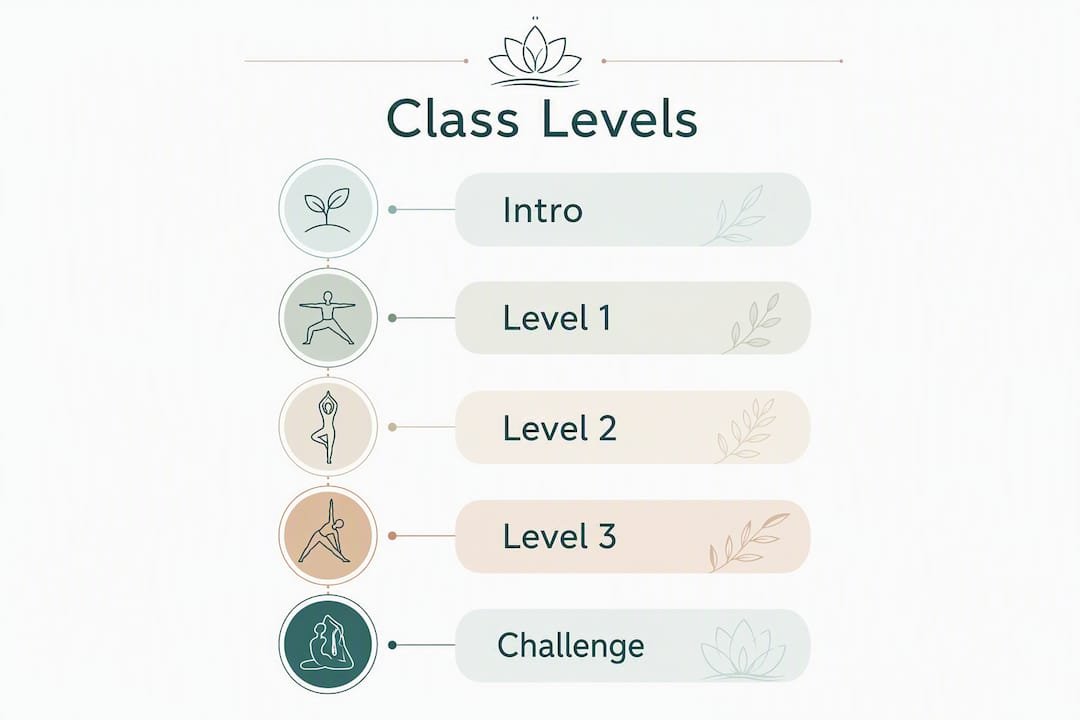
Club Pilates offers nine formats organized across four levels. The level structure matters more than most beginners realize.
| Level | Who it suits | Focus |
|---|---|---|
| Intro | Absolute beginners | Equipment orientation, basic spring settings |
| Level 1 | New clients, foundational movers | Core fundamentals, reformer basics |
| Level 1.5 | Clients with solid Level 1 base | Increased pace, added apparatus |
| Level 2+ | Experienced reformer clients | Complex sequences, multi-apparatus flow |
Core formats include Reformer Flow (the standard group class), CP F.I.T. (higher-intensity conditioning), and dedicated stretch and cardio trampoline options at select studios. The Intro class sits outside the level system and is specifically designed for first-timers.
Pro Tip: Stay at Level 1 longer than you think you need to. Resistance settings and flow transitions on the Reformer rely on muscle memory. Rushing to Level 1.5 before those patterns are automatic is the most common beginner mistake.
What should you expect at your first Club Pilates class?
A first-timer should book the Intro session, a 30-minute Reformer experience where an instructor walks you through the machine, spring resistance settings, and basic movement patterns. It is not a full workout. Think of it as a safety orientation that also gives you a real feel for the apparatus before you step into a group class.
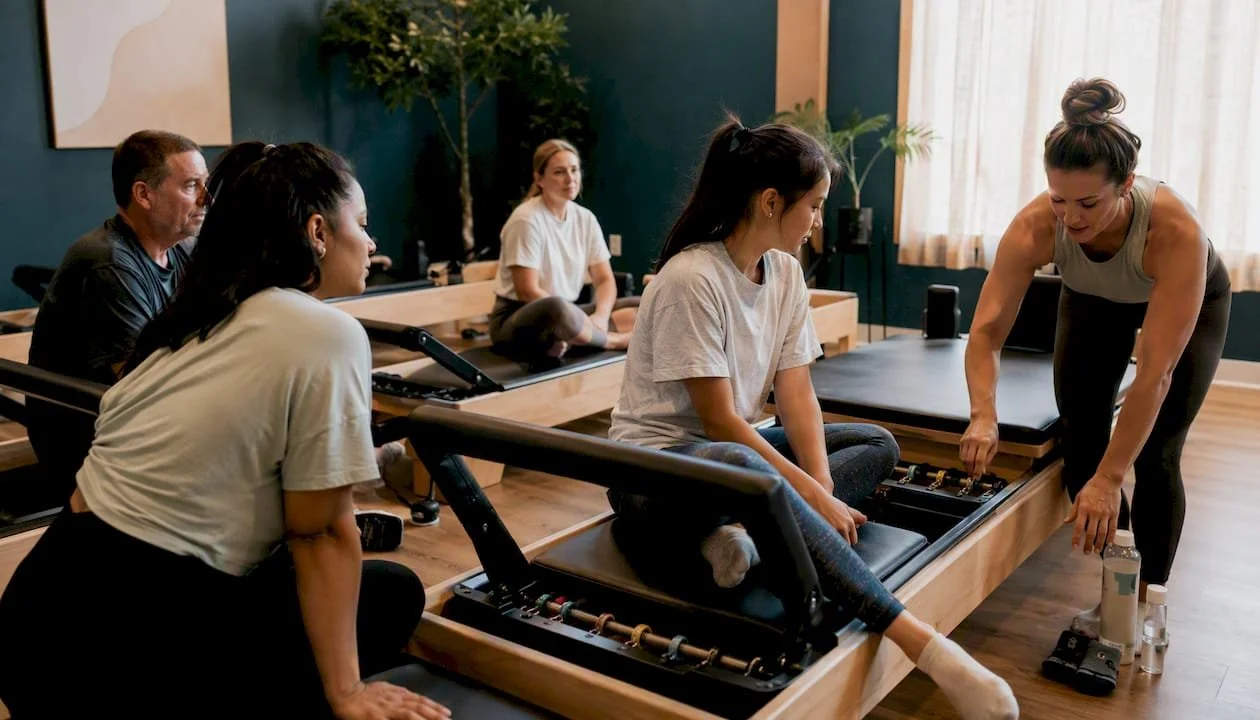
Standard group classes run roughly 50 minutes. The instructor cues the room verbally and demonstrates when needed, moving between clients to check form and offer modifications. Class sizes are kept small enough that you are not anonymous. If you have a knee issue, a shoulder limitation, or you are coming back from an injury, tell the instructor before class. Modifications are a normal part of the session, not an exception.
Wear grip socks (most studios sell them if you forget), arrive five minutes early, and bring water. The studio will assign you a Reformer. You will not spend the whole class on it. Depending on the format, you may rotate to the Springboard or EXO-Chair mid-session.
Pro Tip: Grip socks are required at most Club Pilates locations. Pack a pair or budget a few dollars to buy them at the front desk on your first visit.
Who benefits most from Club Pilates workouts?
Club Pilates describes its method as suitable for a wide range of backgrounds, from sedentary beginners to competitive athletes using it for cross-training. That claim holds up in practice for several specific groups:
Beginners and deconditioned clients: The level system and intro session remove the intimidation factor. You are not expected to know anything walking in.
Athletes cross-training: Reformer work builds the stabilizer muscles that heavy compound lifting tends to neglect, particularly around the hips, shoulders, and spine.
Rehab and injury-prevention clients: The low-impact, spring-assisted resistance is easier on joints than free weights. Pairing reformer sessions with therapeutic exercise principles can support recovery from movement-limiting injuries.
Older adults: Low-impact, balance-focused, and scalable. The EXO-Chair and Springboard work especially well for clients prioritizing functional strength over aesthetics.
Where Club Pilates is not the right fit: if your primary goal is maximal hypertrophy or heavy barbell strength, reformer classes will not get you there. The resistance levels are meaningful but not comparable to progressive overload training. Think of it as a complement to strength work, not a replacement. Exploring different types of Pilates classes can help you figure out where reformer work fits in your broader fitness picture.
How does Club Pilates pricing and membership work?
Pricing is not set at the national level. Individual franchisees set their own rates, so what you pay in Philadelphia will differ from what a studio in Austin charges. That said, the purchase structures are consistent across locations.
Most studios offer three options: a drop-in single class, a class pack (typically 5 or 10 sessions), and a monthly membership with a set number of classes per month. Monthly memberships generally offer the lowest per-class cost. The Intro session is often complimentary or offered at a reduced rate for first-timers.
Before signing anything, ask three specific questions: What is the cancellation policy for the membership? Can you freeze the membership if you travel or get injured? What does a private training session cost if you want one-on-one instruction? The answers vary by studio and are not always posted online.
Pro Tip: Ask about the freeze policy before you sign a monthly membership. Most studios allow a temporary hold, but the terms differ. Knowing this upfront saves a frustrating conversation later.
How are Club Pilates instructors trained and how do they keep classes safe?
Club Pilates references 500+ hours of comprehensive Pilates training as the standard for its instructors, a figure that appears in official brand materials including the studio intro class description. That training depth is above the minimum required by most general fitness certifications, which typically run 20–40 hours.
Key safety and modification practices across Club Pilates studios:
Instructors are trained to offer movement modifications for common injuries and mobility limitations
Class size is kept small to allow instructors to observe and correct form
Equipment is maintained and cleaned between sessions
Level-based class structure prevents beginners from being placed in sequences beyond their current ability
The certified instructor model and progressive class levels are the two structural features that most directly affect your safety as a client. The level system is not just marketing. It is what keeps a Level 1 client from attempting a Reformer sequence that requires hip flexor control they have not yet built.
500+ hours of Pilates training is the instructor standard Club Pilates cites. For context, a standard personal training certification requires roughly 20 hours of study.
Why does Club Pilates rotate between multiple apparatus in one session?
Rotating between the Reformer, EXO-Chair, and Springboard within a single class is not just variety for its own sake. Each apparatus changes the stability demand on your body. The Reformer moves under you. The EXO-Chair requires you to hold position against spring resistance from a seated or standing base. The Springboard anchors you to a wall while you work against horizontal resistance. Switching between them forces your neuromuscular system to recalibrate constantly, which accelerates balance, core stability, and mobility gains compared with staying on one machine the entire session.
For first-timers, this is worth knowing before you walk in. A Reformer Flow class stays primarily on the Reformer. A multi-apparatus format like CP F.I.T. will move you around the room. If you are still learning spring settings and carriage control, start with Reformer Flow before adding the complexity of apparatus rotation.
Pro Tip: If neuromuscular adaptation and postural recovery are your goals, ask the front desk which formats include the most apparatus rotation. That information is usually not on the class description card.
Should you try Club Pilates?
For most people asking this question, yes. Club Pilates is a well-structured entry point into reformer Pilates, with a level system that genuinely protects beginners and enough format variety to stay interesting as you progress. The Intro session removes the financial risk of committing before you know whether you like it.
Try it if: — You are new to Pilates, returning from an injury, cross-training alongside another sport, or looking for low-impact strength work
Key Takeaways
Club Pilates is a reformer-centered franchise offering nine class formats across four levels, with certified instructors and a complimentary Intro session that makes it one of the most accessible entry points into reformer Pilates in the United States.
| Point | Details |
|---|---|
| Reformer is the core apparatus | Club Pilates uses Balanced Body Allegro 2 Reformers, supplemented by EXO-Chair, Springboard, and TRX. |
| Nine formats, four levels | Start at Level 1 or the Intro session; advancing too quickly is the most common beginner mistake. |
| Pricing varies by studio | Drop-in, class packs, and monthly memberships are all available; ask about freeze and cancellation policies locally. |
| Instructors hold 500+ hours of training | That standard is above most general fitness certifications and directly affects class safety. |
| Amitayoga wellness complements reformer work | Amrita Yoga & Wellness in Philadelphia offers mat Pilates, private sessions, and rehab-focused classes that pair well with reformer training. |
A local studio's perspective on where Club Pilates fits
Club Pilates fills a real gap: affordable, equipment-based group Pilates with a clear level structure. For someone who has never touched a Reformer, that structure is genuinely useful. The franchise model means you get a consistent experience regardless of which location you visit, which matters when you are still learning.
Where it gets interesting is what happens after the intro phase. Reformer group classes are excellent for building a movement foundation, but some clients eventually want more individualized attention, particularly those working around an injury or trying to address a specific postural pattern. That is where a smaller studio setting, private instruction, or mat-based work becomes a meaningful complement rather than a replacement.
At Amrita Yoga & Wellness in Philadelphia, the Pilates for beginners approach emphasizes that foundation work. Whether you are just starting out or looking to deepen what you have built in a reformer class, mat and private sessions can address the gaps that group formats naturally leave.
Amrita Yoga & Wellness: a local complement to reformer Pilates
If you are exploring reformer classes and also want a community-focused studio experience in Philadelphia, Amrita Yoga & Wellness offers mat Pilates, private sessions, and wellness workshops that work alongside what you build in a reformer class. The focus is on accessible, personalized practice, whether you are a complete beginner or someone recovering from an injury who needs more individualized guidance than a group class allows.
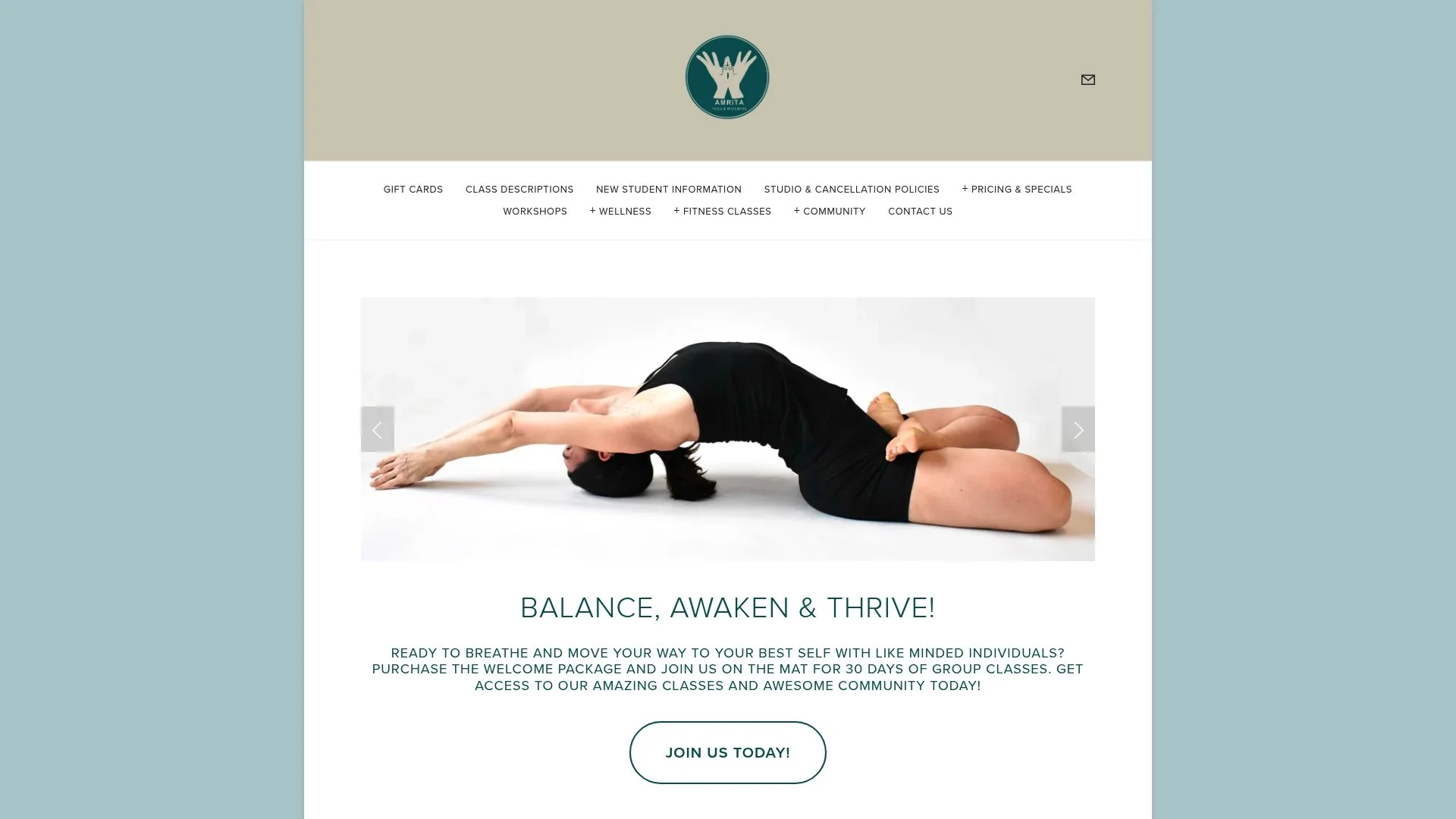
Posture recovery, core rebuilding, and movement retraining are areas where smaller-group and private instruction genuinely outperform the group format, especially when you are working around a specific limitation. Amrita Yoga & Wellness brings that depth to Philadelphia practitioners. Visit amritayogawellness.com to browse classes and book a session that fits where you are right now.
Useful sources
What Brand of Reformer Does Club Pilates Use — Gymfrog: explains the Balanced Body Allegro 2 selection and commercial studio reasoning
Club Pilates Equipment Suite — Balanced Body: Balanced Body's own page listing equipment used in Club Pilates locations