What to Wear for Reformer Pilates: Studio Outfit Guide
TL;DR:
Fitted, hardware-free clothing and grip socks are essential for safe and effective reformer Pilates classes. Wearing appropriate tops and bottoms allows instructors to see alignment and prevents damage to equipment, while grip socks ensure traction and hygiene. Loose clothing and metal hardware undermine safety, visibility, and equipment longevity.
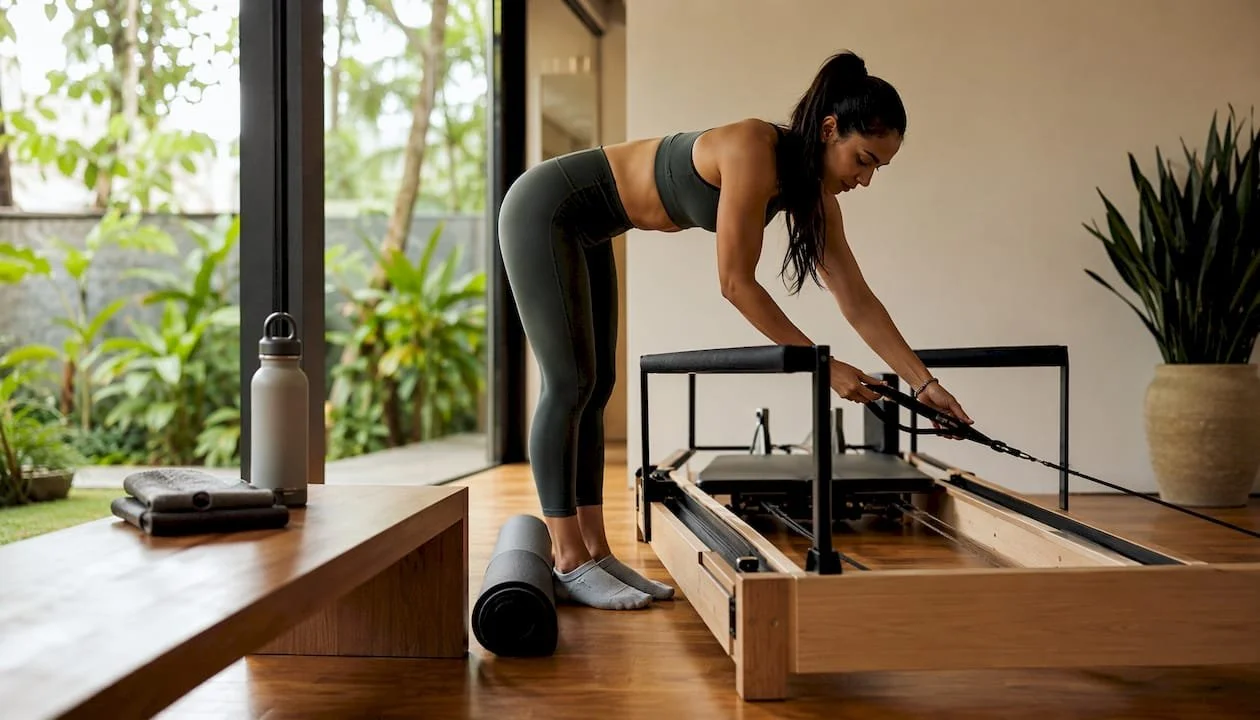
For reformer Pilates, wear fitted, smooth clothing and grip socks. That's the whole answer. Everything else is detail.
Your 10-second checklist:
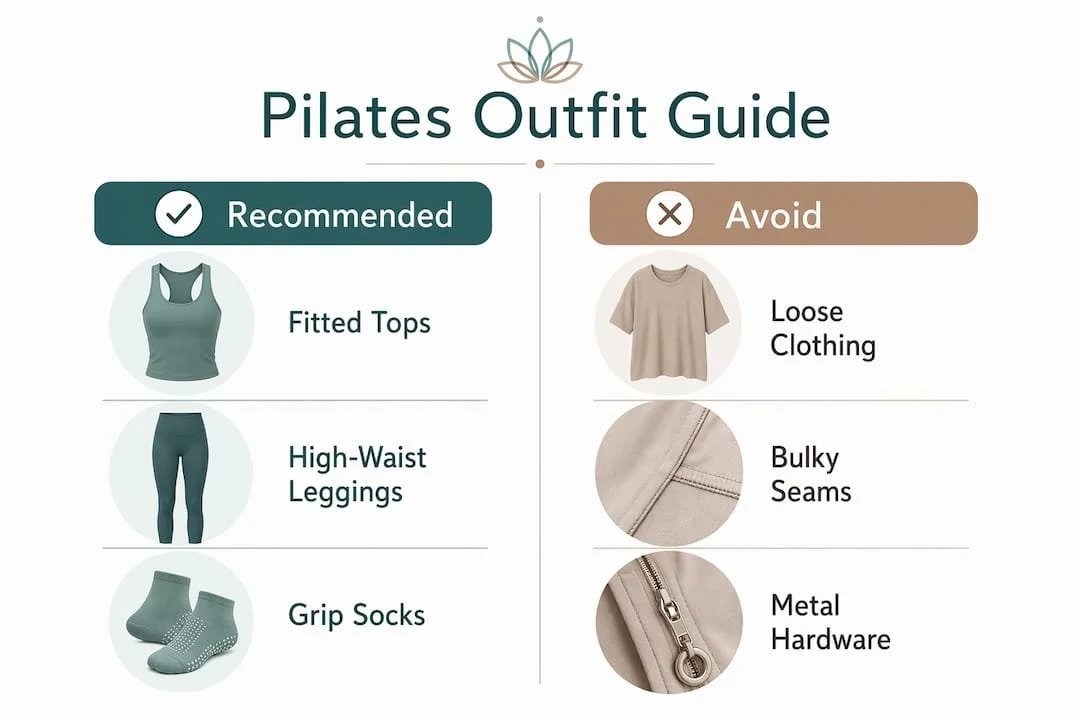
Fitted tank, longline sports bra, or snug tee
High-waisted leggings or compressive bike shorts
Grip socks (required at most studios)
Hair tied low (bun, braid, or low ponytail)
Jewelry off, especially rings and bracelets
Light zip layer for warm-up, optional
Loose clothing catches on springs and hides your alignment from your instructor. Studio grip-sock policies exist for hygiene and traction, not upselling. At Amrita Yoga & Wellness, instructors rely on visual cues to correct your spine and pelvis in real time, so what you wear directly affects how much you get out of class.
Table of Contents
What should you wear on top for reformer Pilates?
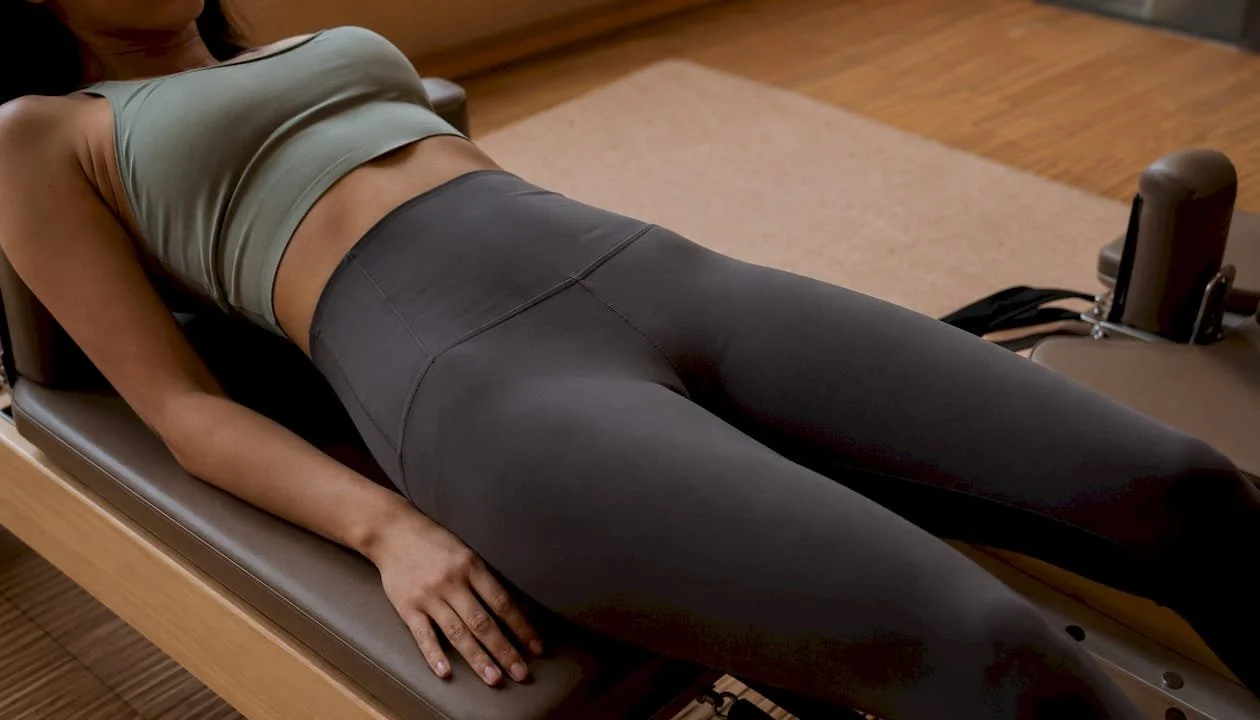
Fitted is non-negotiable. When you're doing roll-ups, planks, or overhead reaches, a loose top shifts, bunches, and rides over your face. Your instructor loses sight of your ribcage and shoulder placement, which are two of the most important alignment cues in Pilates.
Best top choices:
Fitted tank tops (most popular, great airflow)
Longline sports bras or racerback crop tops
Snug long-sleeve athletic tops for cooler studios
Medium-support sports bra as a base layer
Skip underwire entirely. Prone and supine positions make underwire dig in fast, and clasps create pressure points against the carriage. A medium-support longline bra or seamless crop top handles the movement without any hardware problem.
Pro Tip: A longline sports bra worn alone counts as your top in most studios. It keeps your torso visible, stays put during inversions, and eliminates the layering issue entirely.
What bottoms work best for reformer Pilates?
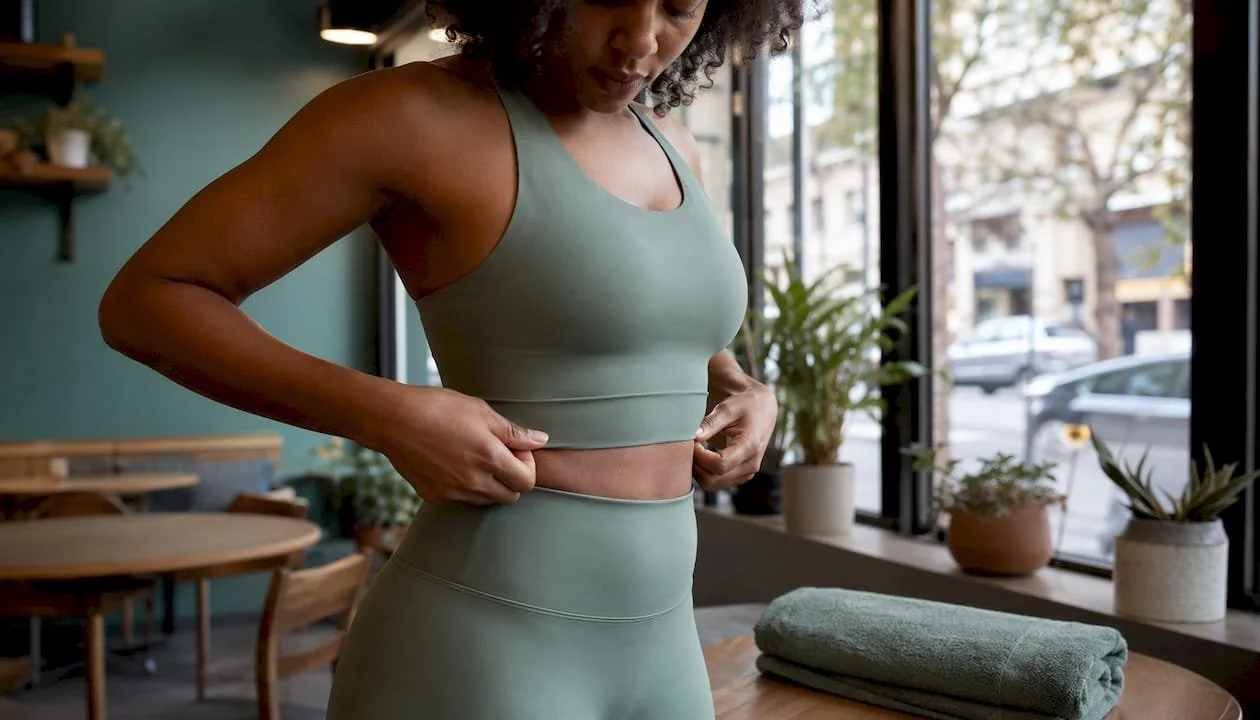
High-waist leggings are the default for good reason. High-waisted leggings with a smooth, wide waistband and flat seams prevent rolling and slipping during supine footwork, and they give your instructor a clear view of your hip and knee tracking.
Bike shorts work well in heated classes or if you run warm, but length matters. Choose shorts with enough length to avoid riding up. Shorter styles ride up during leg circles and long stretch, and the carriage surface can chafe bare skin during strap work.
What to look for in bottoms:
Four-way stretch fabric (nylon-spandex blends, typically 75/25 or 80/20)
Waistband at least 3 inches wide, no fold-over styles
Flat-locked or seamless construction at the inner thigh
7/8 or full length for reformer (ankle bunching is a minor annoyance; bare skin on straps is not)
What to avoid:
| Avoid | Why |
|---|---|
| Flared or wide-leg pants | Can snag springs or footbar |
| Cargo pockets or belt loops | Metal hardware scratches carriage vinyl |
| Fold-over yoga waistbands | Roll down during core work by the third exercise |
| Baggy sweatpants | Hide leg alignment; unsafe near springs |
| Jeans or denim | Zero stretch, metal rivets damage equipment |
Pro Tip: Beginners benefit from solid colors or mid-tones over busy prints. Instructors can spot spinal curves and hip alignment faster on a plain surface, which means more useful corrections for you.
Do you need grip socks for reformer Pilates?
Yes, at most U.S. studios. Grip socks are almost universally required in U.S. reformer studios for hygiene and safety. Regular socks are genuinely dangerous on a sliding carriage and footbar. One barefoot moment on a moving reformer explains the policy better than any studio sign.
What to look for in grip socks:
Silicone or rubber treads (full-sole patterns offer more traction than scattered dots)
Snug fit that doesn't twist during footwork
Breathable fabric (cotton-blend or moisture-wicking)
Low-profile toe seam to avoid pressure points on the footbar
Toe-separator styles (like ToeSox) are optional but improve proprioceptive feedback
On rentals vs. buying your own: Studios often sell or rent grip socks at the front desk, but rental pairs wear out and rarely fit well. A basic pair costs a modest amount and lasts through regular use. Buy before your first class.
Barefoot is acceptable at some studios, particularly smaller or private ones. Athletic shoes are never worn on the reformer. They limit foot flexibility and block the sensory feedback that reformer footwork is specifically designed to build.
Pro Tip: Pack your grip socks in the outer pocket of your bag so you never walk in without them. Forgetting on day one is the most common beginner mistake.
Which fabrics and seams hold up best on the reformer?
Moisture-wicking synthetics outperform cotton for reformer work. Moisture-wicking performance materials regulate temperature and draw sweat away when you're lying on equipment for extended periods. A soaked cotton base layer gets heavy and cold during the stretch sequence.
Fabric priorities:
Nylon-spandex blends (four-way stretch, quick-dry)
Seamless or flat-locked construction at contact points
Smooth outer surface (no textured panels against the carriage)
Seam construction matters more than most people expect. Bulky inner-thigh seams press against the carriage during footwork and become genuinely uncomfortable after 20 minutes. Flat-locked or seamless panels solve this entirely.
The hardware rule is absolute. Studios prohibit clothing with hard external hardware because metal zippers, buckles, and decorative rings scratch carriage vinyl and snag on springs. Some studios charge for equipment damage. Pullover tops and elastic-waist bottoms only.
| Fabric | Verdict |
|---|---|
| Nylon-spandex blend | Best all-around: stretch, moisture management, durability |
| Polyester-spandex | Good moisture-wicking, slightly less soft |
| Cotton | Avoid as a base layer; absorbs sweat, gets heavy |
| Bamboo blends | Comfortable but slower to dry |
Pro Tip: Bring a light zip-up or cropped sweatshirt for the warm-up and cooldown. Studios start cool, heat up mid-class, and drop again during the final stretch. Tying a hoodie around your waist doesn't work on a reformer carriage.
Quick do's and don'ts before you walk in
Do:
Wear fitted base layers from top to bottom
Bring grip socks (or check studio rental policy in advance)
Tie hair low before you arrive
Remove rings, bracelets, and dangling earrings
Pack a light removable layer and a water bottle
Check studio policies on socks, nails, and jewelry
Don't:
Wear baggy tops or wide-leg pants near the equipment
Wear anything with zippers, buttons, or metal hardware
Use regular socks or athletic shoes on the machine
Wear heavy perfume (studios are small, enclosed spaces)
Leave long nails untrimmed (they can tear carriage upholstery)
Pro Tip: Check your specific studio's class policies before your first session. Sock requirements, jewelry rules, and nail-length guidelines vary by location.
How should you handle hair, jewelry, and accessories?
Hair is a practical issue, not a style one. High buns and topknots sit exactly where your head rests on the carriage headrest. After five minutes of supine work, that pressure point becomes distracting. Low buns, low ponytails, and braids stay comfortable through the whole class.
Hair options that work:
Low bun or low ponytail (most common)
Single or double braids (secure, no movement)
Headband for flyaways or shorter hair
Non-slip hair ties over regular elastics
Removing rings, bracelets, and dangling earrings prevents pinches, skin abrasions, and catching on straps. Small stud earrings are generally fine, but the safest move is to leave jewelry at home entirely. Metal hair clips are worth skipping too since they can scratch the headrest upholstery.
Pro Tip: Pack a spare hair tie in your grip-sock pocket. Elastics break at the worst moments, and mid-class adjustments interrupt your flow and your instructor's.
What should you pack in your bag?
Keep it simple. The goal is to arrive ready, not to overpack.
Essentials:
Grip socks (your own pair)
Water bottle
Small towel (some studios request one for carriage wipe-down)
Hair ties
Light zip layer or cropped sweatshirt
Optional but useful:
Unscented deodorant
A thin mat or personal towel if your studio requests it
A fresh top for after class if you're heading somewhere else
Arrive 5–10 minutes early on your first visit. Check the front desk for sock rentals if you forgot yours, confirm any studio-specific rules, and get settled on your reformer before class starts. Rushing onto the machine cold is how small injuries happen.
Why fit, fabric, and studio rules actually matter
The attire rules at reformer studios aren't about aesthetics. They exist because instructors need to see spine curves, shoulder placement, and pelvic alignment to give safe corrections. Loose clothing blocks that feedback loop entirely. In a group class, an instructor scanning six reformers has seconds to spot a misaligned pelvis. Fitted clothing makes that possible; baggy clothing makes it a guess.
Equipment protection is the second reason. Carriage vinyl is expensive to replace. Metal hardware scratches it on contact, and bulky seams can catch on springs under load. Some studios include damage fees in their liability waivers.
Grip socks reduce slipping on the carriage and footbar while also limiting shared-surface contamination on studio equipment. Most U.S. reformer studios state sock requirements explicitly for both safety and hygiene reasons.
What instructors actually watch for in your first class:
Neutral spine vs. flat back during footwork
Shoulder blade position during arm work
Pelvic tilt during the hundred and roll-ups
Knee tracking over the second toe during leg press
Fit, not brand, is what instructors prioritize. Clothing that stays put and allows visual assessment reduces mid-class adjustments and improves how much you learn. For more on why precise alignment matters in reformer Pilates, the functional stakes go well beyond what you wear.
Key Takeaways
Fitted, hardware-free clothing and grip socks are the complete reformer Pilates dress code: everything else is a preference, not a rule.
| Point | Details |
|---|---|
| Fitted base layers | Tops and bottoms must stay close to the body to avoid catching on springs and to let instructors see alignment. |
| High-waist leggings | A wide, smooth waistband and flat-locked seams prevent rolling and pressure points during supine work. |
| Grip socks required | Most U.S. studios require grip socks for traction and hygiene; buy your own pair for $8–$15 before class. |
| No hardware rule | Metal zippers, buckles, and jewelry scratch carriage vinyl and can trigger equipment damage fees. |
| Amritayogawellness | Amrita Yoga & Wellness offers beginner reformer classes and studio guidance for first-time practitioners in Philadelphia. |
What instructors actually want you to know
The clothing conversation comes up in almost every beginner's first session, and it's worth saying plainly: nobody is judging your outfit. Instructors ask about fit because they're watching your spine, not your style.
The most common beginner mistake isn't wearing the wrong brand. It's showing up in a loose tee and fold-over yoga pants, then spending half the class pulling fabric out of the way. That's frustrating for you and makes it harder for your instructor to help. One fitted outfit solves it.
You don't need expensive or branded apparel. A basic pair of compressive leggings and a snug tank from any athletic brand works perfectly. The only thing most beginners genuinely need to buy before class is grip socks. Everything else is probably already in your drawer.
Studios welcome questions. If you're unsure about the sock policy, the temperature, or whether your outfit is appropriate, ask at the front desk before class. That's a much better use of two minutes than adjusting your waistband through the entire footwork series.
Ready to try your first reformer class?
Amrita Yoga & Wellness in Philadelphia offers beginner-friendly reformer classes where fit and function matter more than gear. Whether you're stepping onto a reformer for the first time or returning after a break, the studio's approach keeps things practical: show up in fitted clothing, bring your grip socks, and the rest takes care of itself.
Browse reformer class resources on the Amritayogawellness site, or book a beginner session directly at amritayogawellness.com to get started. Drop-in and trial options are available for new practitioners.
Useful sources and further reading
Policies vary by studio, so always confirm sock requirements and jewelry rules before your first class.
What to Wear to Reformer Pilates — Vitalis Studios: General attire guidance and studio expectations
Pilates Grippy Socks Guide — DeadSoxy: Grip-sock features, fit, and traction explained
Reformer Pilates Client Safety & Studio Guidelines — Elizabeth Nadine: Equipment protection and jewelry/hardware rules
What to Wear to Pilates — Inner Soul: Fabric selection and fit-over-brand guidance
What to Wear to Pilates — Rank and Style: Waistband and seam construction details
Pilates resistance ring fitness benefits: How correct clothing and accessories support movement quality
Amrita Yoga & Wellness — Reformer Pilates resources: Studio-level guidance and class information