How to Start Yoga at Home: A Beginner's Guide
TL;DR:
Starting yoga at home requires only a mat, minimal space, and short, consistent sessions focusing on breath and foundational poses. A structured 15 to 20-minute routine, including breathwork, warm-up, core poses, and relaxation, promotes habit formation and physical progress. Prioritizing breath connection over pose complexity enhances long-term success and safety for beginners.
Starting yoga at home means building a simple, consistent practice with the right setup, foundational poses, and breathwork to develop strength, flexibility, and mental clarity. You do not need a studio membership, expensive gear, or prior experience to begin. A yoga mat, six feet of clear floor space, and 15 minutes a day are enough to get started. Australia's Department of Health and Aged Care 2024 review confirms yoga delivers measurable physical and mental health benefits, making it one of the most evidence-backed wellness practices you can adopt at home.
How to start yoga at home: what you actually need
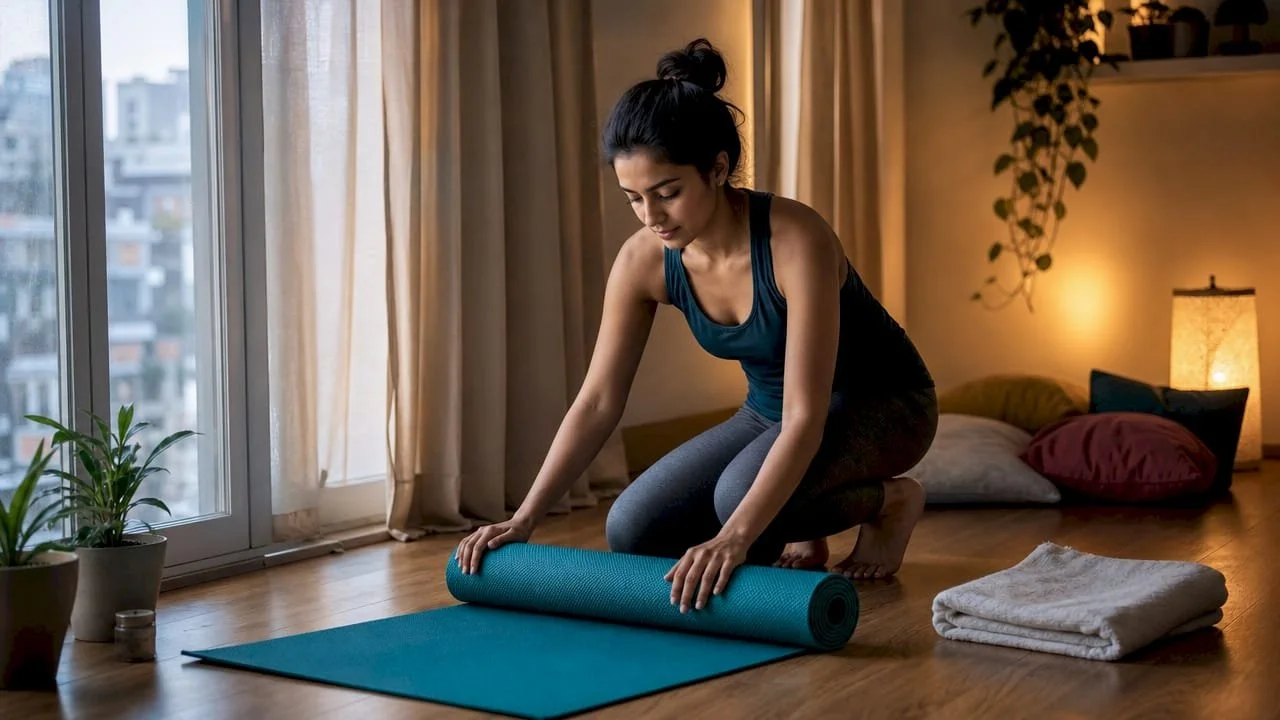
The barrier to beginning a home yoga practice is lower than most people expect. You need a non-slip surface, clothing that allows a full range of movement, and a space roughly 6 by 4 feet cleared of furniture and hazards. That is the entire minimum requirement.
Choosing your mat and clothing
A dedicated yoga mat gives you grip, cushioning, and a defined practice zone. If you are not ready to invest, a folded towel on carpet works for your first few sessions. Many university wellness programs recommend personal mats for hygiene and consistency. Wear fitted or stretchy clothing that does not bunch up during forward folds or inversions. Loose sweatpants and a fitted top work well.
Setting up your space
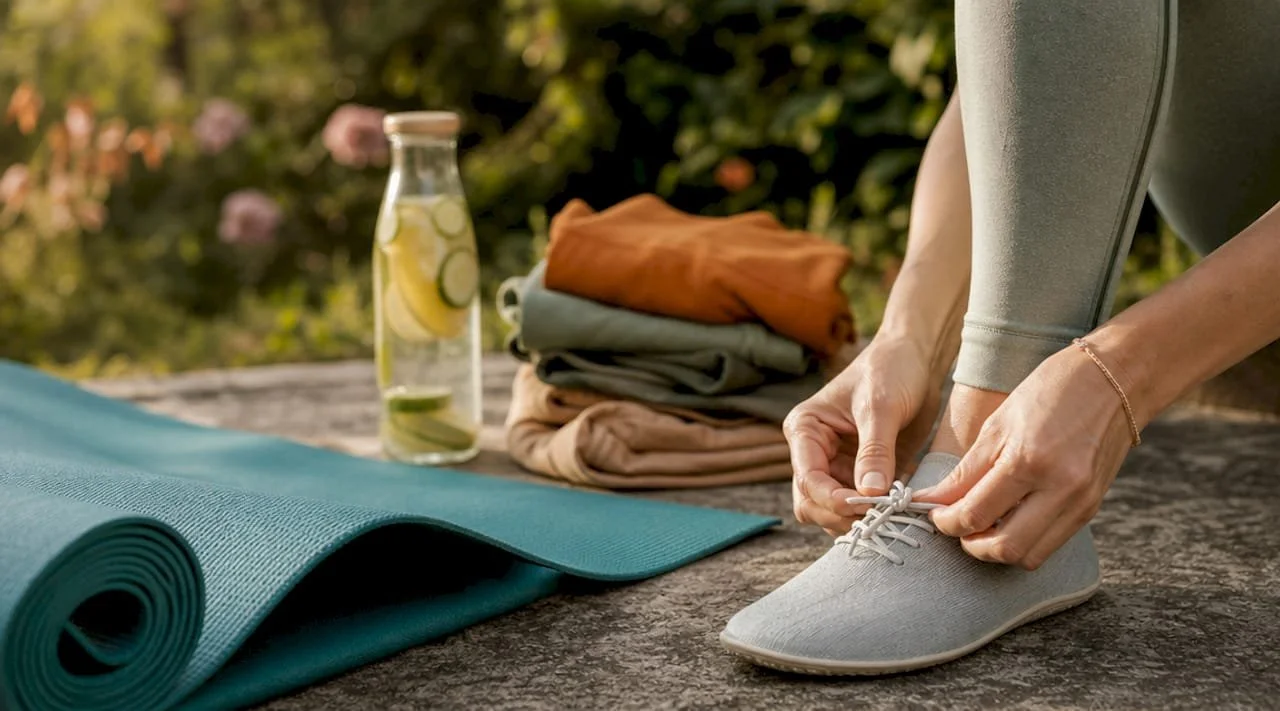
Pick a spot with natural light and ventilation if possible. A quiet, distraction-free space is one of the strongest predictors of a consistent home practice. Turn your phone to silent, close the door, and remove clutter from your field of vision. These small steps signal to your brain that practice time is different from the rest of your day.
Optional props that make a real difference
Yoga blocks (2): Bring the floor closer to your hands in standing poses like Triangle or Half Moon
A strap: Extends your reach in seated forward folds without forcing your spine to round
A folded blanket: Supports your hips in seated poses and cushions your knees in low lunges
A bolster or firm pillow: Ideal for restorative poses and Savasana
Props are not training wheels. Using blocks and straps to maintain alignment actually prevents the wrist and hamstring injuries that sideline beginners most often. Check out these beginner yoga tips from Amrita Yoga & Wellness for more on building a safe setup.
Pro Tip: Place your mat in the same spot every time. Physical consistency reinforces the mental habit of showing up.
How to structure a beginner yoga session
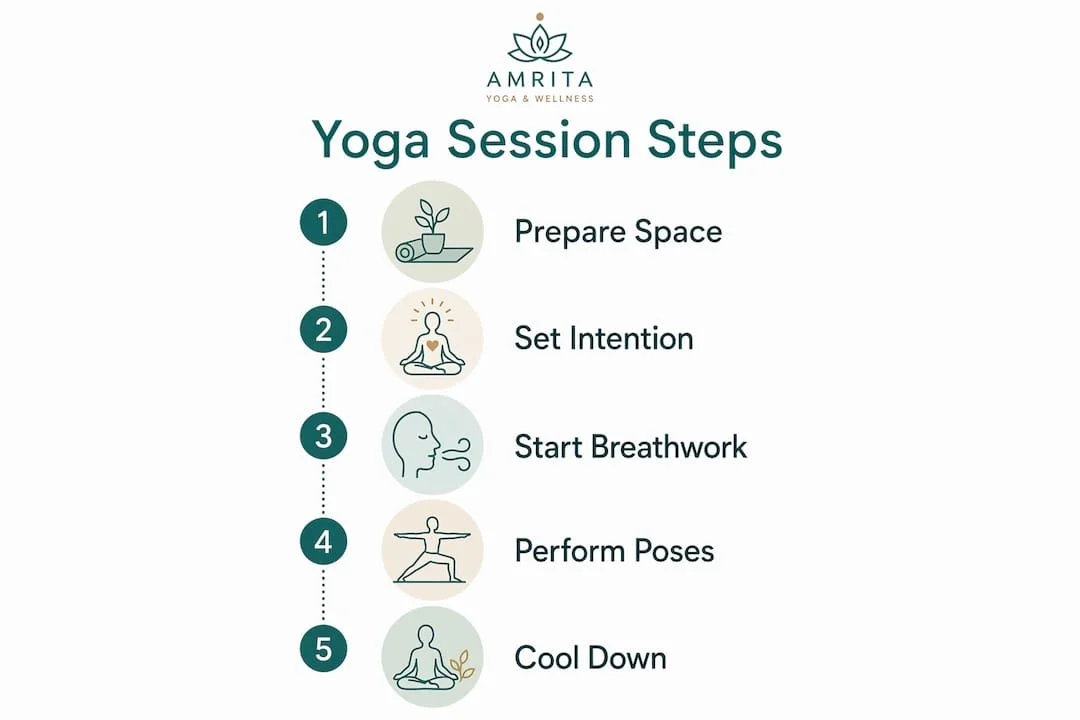
A well-structured session does not require a yoga beginners course or a live instructor. The sequence below follows the format recommended by experienced home practice guides and takes 15 to 20 minutes total.
The five-part session flow
Breathwork (0 to 3 minutes): Sit comfortably and practice diaphragmatic breathing. Inhale slowly through your nose, letting your belly rise first, then your chest. Exhale fully. This activates your parasympathetic nervous system and shifts your attention inward before any movement begins.
Warm-up (3 to 7 minutes): Move through gentle neck rolls, shoulder circles, Cat-Cow on all fours, and hip circles. These prepare your joints and connective tissue for load-bearing poses.
Core poses (7 to 16 minutes): Work through 5 to 7 foundational postures. See the table below for a starter selection.
Seated stretches (16 to 18 minutes): Transition to the floor for a seated forward fold or Supine Twist to release the lower back and hamstrings.
Savasana (18 to 20 minutes): Lie flat on your back, arms slightly away from your body, and rest completely. This session structure is not optional. Savasana is where your nervous system integrates the session's work.
Foundational poses for beginners
| Pose | What it trains | Key alignment note |
|---|---|---|
| Mountain Pose (Tadasana) | Posture, body awareness | Press all four corners of each foot into the mat |
| Child's Pose (Balasana) | Hip flexors, lower back | Rest forehead on mat; arms forward or alongside body |
| Downward Dog (Adho Mukha) | Hamstrings, shoulders, spine | Bend knees generously if hamstrings are tight |
| Warrior I (Virabhadrasana I) | Legs, hip flexors, core | Back foot at 45 degrees; front knee over ankle |
| Seated Forward Fold (Paschimottanasana) | Hamstrings, spine | Use a strap around feet; never force the fold |
| Bridge Pose (Setu Bandha) | Glutes, spine, chest | Press feet flat; avoid turning the head |
Hatha yoga is the style best suited to this kind of session. Its slow pace and emphasis on alignment make it the right starting point before exploring Power, Vinyasa, or Hot yoga. For breathwork that deepens your practice further, the Amrita Yoga & Wellness guide on aerial yoga breathing offers transferable techniques for any beginner.
Pro Tip: Set a single intention before each session, such as "I will focus on my breath" or "I will stay patient with myself." Intention setting measurably increases mindfulness and session engagement.
How to build a routine that actually sticks
The most common reason beginners quit yoga at home is not lack of motivation. It is starting with too much, too fast. Sustainable practice means beginning with 3 sessions per week at 15 minutes each, not daily 60-minute flows. That frequency is enough to build noticeable flexibility and mental calm within four to six weeks.
Here is what makes the difference between a two-week experiment and a lasting habit:
Anchor your practice to an existing habit. Practice right after your morning coffee or immediately before your shower. Habit stacking removes the decision of when to practice.
Track your sessions in a simple journal. Write the date, the poses you did, and one sentence about how you felt. Reviewing three weeks of entries is genuinely motivating.
Use free resources strategically. Free yoga for beginners on YouTube channels like Yoga With Adriene gives you structured guidance without cost. Pair video sessions with solo practice days to build independence.
Adjust poses gradually, not all at once. Add one new pose per week rather than overhauling your entire sequence. Gradual progression prevents overwhelm and reduces injury risk.
Set a phone reminder for your practice time. It sounds trivial, but a consistent alarm trains your body clock the same way a gym schedule does.
The 10 to 20 minute session window is not a beginner compromise. It is the scientifically supported sweet spot for building a habit without the burnout that longer sessions create in the early weeks. Explore the Amrita Yoga & Wellness yoga routine blog for sequencing ideas as your practice grows.
Pro Tip: Missing one session is normal. Missing two in a row is the start of quitting. If you skip a day, practice for just five minutes the next day to keep the streak alive.
Common mistakes beginners make at home
Practicing yoga at home without any guidance creates specific risks that a studio setting naturally prevents. Knowing these pitfalls in advance keeps you safe and progressing.
Skipping the warm-up. Cold muscles tear. Even five minutes of Cat-Cow and shoulder rolls before your first standing pose reduces injury risk significantly.
Forcing depth in poses. Deeper is not better. A Downward Dog with bent knees and a long spine is more effective than a straight-legged version with a rounded back.
Practicing on a full stomach. Wait at least two hours after a full meal. Twists and inversions on a full stomach cause discomfort and reduce your ability to breathe deeply.
Ignoring existing injuries. If you have a history of lower back, knee, or shoulder issues, consult a physical therapist or physician before beginning. Yoga is therapeutic when practiced correctly and harmful when it is not.
Comparing your practice to online videos. Instructors on YouTube and social media have practiced for years. Their range of motion is not your starting point.
"Yoga is not about touching your toes. It is about what you learn on the way down." This perspective, widely attributed to Jigar Gor, captures the mindset that separates beginners who progress from those who quit. The goal is awareness, not performance.
For busy schedules, the Amrita Yoga & Wellness guide on home yoga for professionals addresses how to maintain practice quality even in short windows.
Key takeaways
Starting yoga at home requires only a mat, clear floor space, and consistent short sessions built around breathwork, foundational poses, and gradual progression.
| Point | Details |
|---|---|
| Minimal setup is enough | A non-slip mat, comfortable clothing, and 6x4 feet of space are all you need to begin. |
| Session structure matters | Follow the five-part flow: breathwork, warm-up, core poses, seated stretches, and Savasana. |
| Start with Hatha style | Hatha yoga's slow pace and alignment focus make it the safest entry point for beginners. |
| Three days per week is optimal | Short, frequent sessions build habit faster than occasional long ones. |
| Props prevent injury | Blocks and straps support correct alignment and protect wrists and hamstrings from strain. |
Why breath matters more than any pose
Most people who want to learn yoga for beginners focus entirely on the physical shapes. That is understandable. Poses are visible, measurable, and easy to compare. But after years of observing how beginners progress, the single clearest predictor of long-term success is not flexibility or strength. It is whether someone learns to connect movement to breath in the first two weeks.
Yoga is a mind-body discipline, not a fitness format. When you rush through poses while holding your breath, you are doing calisthenics with Sanskrit names. When you slow down and let each inhale and exhale guide your movement, something genuinely different happens in your nervous system. Stress responses quiet. Attention sharpens. The body feels safer moving into unfamiliar positions.
The practical implication is this: if you can only focus on one thing in your first month of home practice, make it your breath. Not the depth of your forward fold. Not how close your heels get to the floor in Downward Dog. Just breathe slowly, breathe fully, and let the poses follow. The physical results, including improved flexibility, better posture, and reduced tension, arrive faster when you stop chasing them directly.
I also want to address the question of online resources honestly. Free yoga for beginners on YouTube is genuinely excellent for structure and variety. But it works best as a complement to understanding the principles, not a replacement for them. Watch a video, then practice the same sequence without the video the next day. That gap between guided and solo practice is where real learning happens.
— Juiced
Explore yoga and wellness at Amrita Yoga & Wellness
Ready to take your home practice further with expert guidance and a supportive community?
Amrita Yoga & Wellness, Philadelphia's studio for yoga, pilates, barre, tai chi, and massage therapy, offers beginner-friendly classes and resources designed for exactly where you are right now. Whether you want structured sessions to complement your home practice or are curious about integrating holistic wellness tools, Amrita Yoga & Wellness has options built for every starting point. Explore their tarot readings and wellness services to deepen the mind-body connection your yoga practice is already building. Community, guidance, and growth are all available when you are ready.
FAQ
What do I need to start yoga at home?
You need a non-slip yoga mat or towel, comfortable clothing that allows full movement, and roughly 6 by 4 feet of clear floor space. Optional props like blocks and straps help with alignment but are not required for your first sessions.
How long should a beginner yoga session be?
Beginner sessions of 10 to 20 minutes are the recommended starting point. Short sessions reduce overwhelm and make it easier to practice consistently several times per week.
Which yoga style is best for beginners at home?
Hatha yoga is the best starting style because of its slow pace and strong emphasis on alignment and breath. Avoid Power yoga, Vinyasa flow, or Hot yoga until you have built a solid foundation over several weeks.
Can I lose weight doing yoga at home?
Yoga supports weight management through improved body awareness, stress reduction, and consistent physical activity. Styles like Vinyasa and Power yoga burn more calories per session, but any regular home practice contributes to overall wellness and healthier habits over time.
Where can I find free yoga classes for beginners?
YouTube channels like Yoga With Adriene offer structured, free yoga for beginners with sessions ranging from 10 to 45 minutes. Pair these with the session structure outlined in this guide to build both guided and independent practice skills.