What Is a Barre Class Workout? A Beginner's Guide
TL;DR:
A barre class combines ballet-inspired movements, Pilates core work, and yoga stretches into a low-impact, full-body workout. It enhances muscular endurance, posture, and flexibility through high-repetition, controlled exercises that minimize joint stress. Group classes also promote mental well-being, making barre suitable for all fitness levels and recovery needs.
A barre class workout is a low-impact fitness method that blends ballet-inspired movements, Pilates core work, and yoga stretches into a single full-body session. Unlike traditional dance classes, barre skips choreography entirely and focuses on small, controlled repetitions that drive muscles to fatigue without stressing your joints. Classes typically run 30–60 minutes and use a fixed ballet barre, light hand weights, resistance bands, and exercise balls as props. The result is a workout that builds muscular endurance, improves posture, and increases flexibility, all at a pace that works for beginners and experienced exercisers alike.
What happens in a typical barre class workout?
A standard barre session follows a predictable structure, which makes it easy to settle into even on your first day. Most classes open with a standing warm-up at the barre, move through targeted muscle work, and close with a floor-based cool-down and stretch.
Here is what you can expect during a typical class:
Warm-up (5–10 minutes): Light cardio and mobility work to raise your heart rate and prepare your joints.
Barre work (20–30 minutes): Standing exercises using the barre for balance. Expect plié pulses, relevés, and leg lifts targeting your legs and glutes.
Core section (10–15 minutes): Pilates-inspired floor work including planks, leg circles, and mini-ball squeezes.
Cool-down and stretch (5–10 minutes): Yoga-style stretches to lengthen muscles and reduce soreness.
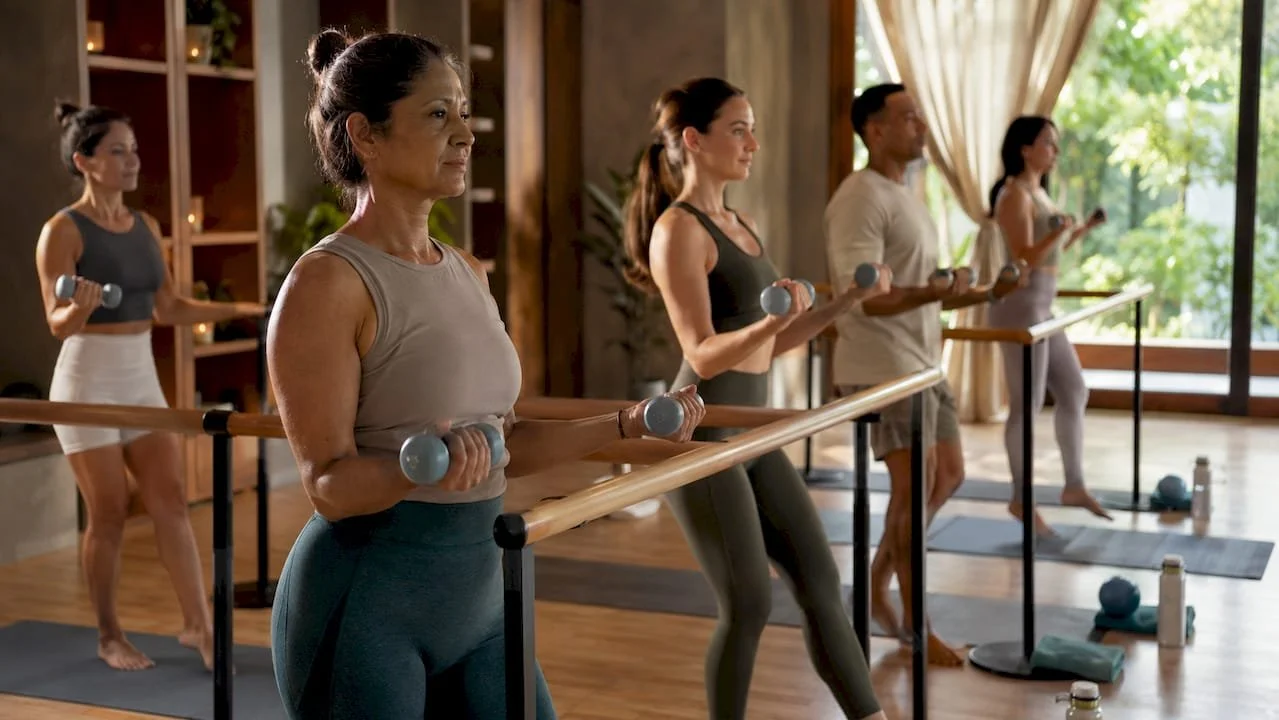
Barre uses light hand weights) in the 2–3 pound range, which keeps the focus on endurance and muscle tone rather than bulk. Resistance bands and small exercise balls appear in many classes to add variety and challenge specific muscle groups. The defining feature of every exercise is high repetitions with small range of motion. You might pulse through 30 seconds of plié squats or complete 12–15 leg lifts per side. That combination of low resistance and high reps is what creates the signature burn barre is known for.
Pro Tip: Arrive five minutes early and tell the instructor it is your first class. A quick heads-up lets them watch your form and offer modifications before the class even starts.
What are the physical and mental benefits of barre workouts?
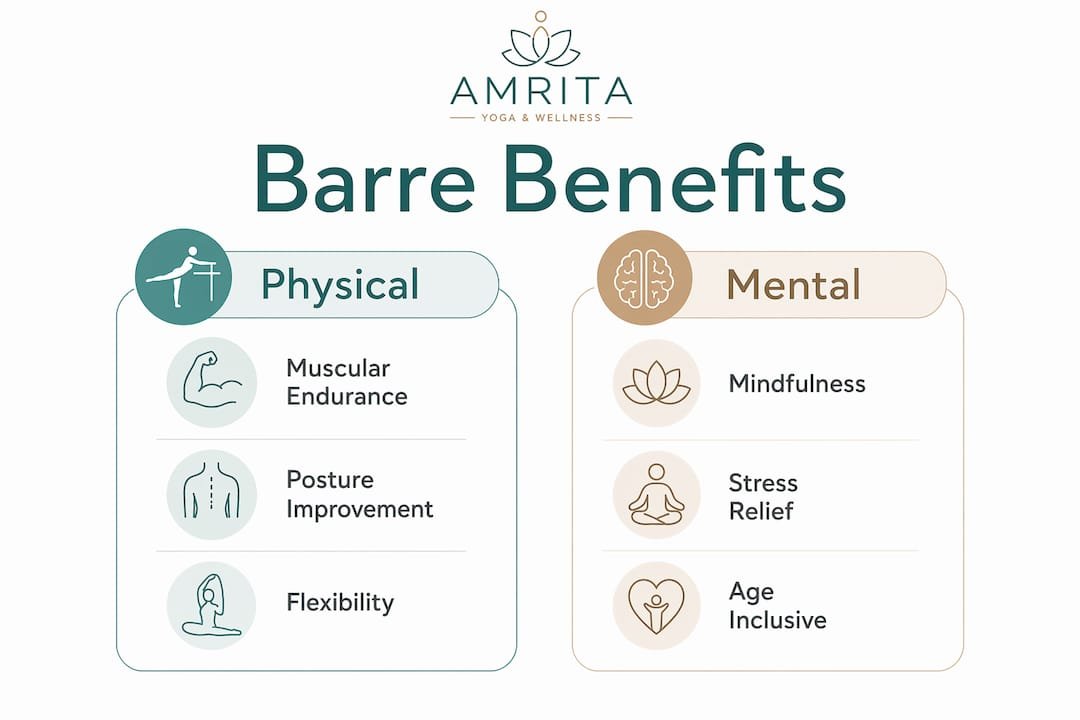
Barre delivers a broad set of physical benefits without the joint stress that comes with running, jumping, or heavy lifting. Barre is endurance-based training that uses fine, repetitive movements to reach muscular fatigue with minimal impact. That makes it a strong option for people recovering from injury, managing joint pain, or simply looking for a sustainable long-term fitness practice.
The physical benefits include:
Posture improvement: Barre strengthens muscles around the chest, shoulders, hips, and back that hold your body upright. This directly counteracts the forward rounding that builds up from hours at a desk.
Muscular endurance: High-rep sequences train your muscles to sustain effort over time, which translates to better performance in everyday activities.
Flexibility and balance: The yoga-style stretches and single-leg balance work in every class improve both range of motion and stability.
Core strength: Pilates-based floor work targets deep abdominal muscles that support your spine and protect your lower back.
The mental side of barre is just as real. Group barre classes reduce stress and support emotional well-being in ways that mirror the benefits of yoga and Pilates. The focused, repetitive nature of the movements requires enough concentration to quiet mental chatter without being overwhelming. Many people describe leaving class feeling both physically tired and mentally clear.
"Barre emphasizes quality over quantity in movements, focusing on precise alignment and time under tension rather than heavy weights or speed." — Barre Pilates Workout Guide
Barre is also one of the most age-inclusive and fitness-level-inclusive formats available. A 25-year-old athlete and a 60-year-old returning to exercise can take the same class, because the instructor can modify every exercise up or down based on ability.
How does barre compare to Pilates and yoga?
Barre, Pilates, and yoga share a commitment to controlled movement and body awareness, but each method has a distinct focus. Understanding the differences helps you decide which practice fits your goals, or whether combining them makes sense.
| Method | Primary focus | Movement style | Key equipment |
|---|---|---|---|
| Barre | Muscular endurance and alignment | High-rep pulses and holds | Ballet barre, light weights |
| Pilates | Core strength and spinal control | Slow, sequenced core work | Mat, reformer machine |
| Yoga | Flexibility, balance, and mental calm | Flowing or held poses | Mat, blocks, straps |
Barre incorporates Pilates breathing and alignment techniques alongside ballet's pulsing repetitions and balance exercises. That overlap is why barre pilates fusion classes have grown in popularity. A barre pilates session typically splits time between standing barre work, core exercises with a mini-ball, and cooldown stretches, all while maintaining the breath awareness that defines Pilates.
What sets barre apart from both Pilates and yoga is the deliberate drive to muscular fatigue. Pilates sequences are controlled and precise but rarely push you to the point of shaking. Yoga holds build strength, but the goal is usually flexibility and stillness. Barre specifically targets that trembling sensation in your thighs or seat as a sign that the muscle is working at its limit. You can explore barre and Pilates fusion formats to see which combination resonates with your body.
Barre yoga is a less common but growing format that layers yoga's breath and mindfulness cues onto barre's standing sequences. It tends to feel slower and more meditative than a standard barre class while still delivering the muscle-fatigue effect.
What should beginners know before starting a barre class?
Starting barre the right way saves you from frustration and reduces the risk of injury. The learning curve is real but short. Most people feel comfortable with the format after two or three classes.
Follow these steps to get the most from your first few sessions:
Choose a beginner or foundational class. Barre is suitable for all fitness levels, but foundational classes teach posture and alignment before adding intensity. Starting there builds the base you need.
Learn the pelvic tuck. The pelvic tuck protects your lower back and is the single most important technical cue in barre. Your instructor will explain it, but pay close attention because it changes how every exercise feels.
Introduce yourself to the instructor. Telling your instructor about any injuries or limitations before class allows them to offer modifications that keep you safe and working effectively.
Expect your muscles to shake. Muscle shaking during barre) is normal and signals that you have reached muscular exhaustion through high repetitions. It is not a sign that something is wrong. It means the method is working.
Build frequency gradually. Two classes per week is a solid starting point. Most people notice meaningful changes in posture and strength within four to six weeks of consistent attendance.
Pro Tip: Wear grip socks to your first class. They prevent slipping on the studio floor and give you better feedback about how your foot is pressing into the ground during balance exercises.
You can find more detailed guidance on starting barre as a beginner to help you feel prepared before you walk through the door.
Key takeaways
A barre class workout builds muscular endurance, improves posture, and increases flexibility through high-repetition, low-impact movements drawn from ballet, Pilates, and yoga.
| Point | Details |
|---|---|
| Core definition | Barre blends ballet, Pilates, and yoga into a 30–60 minute low-impact full-body workout. |
| Signature technique | High-rep, small-range movements drive muscles to fatigue without heavy weights or joint stress. |
| Key physical benefits | Barre strengthens posture muscles, builds endurance, and improves balance and flexibility. |
| Mental benefits | Group barre classes reduce stress and support emotional well-being similar to yoga and Pilates. |
| Beginner priority | Learn the pelvic tuck, introduce yourself to the instructor, and expect muscle shaking from day one. |
Why barre deserves more credit than it gets
Most people walk into their first barre class expecting something gentle and walk out surprised by how hard it actually is. That gap between expectation and reality is the most consistent thing I have observed about barre, and I think it explains why the format gets underestimated.
Barre is not dance. It is not stretching with a fancy name. It is endurance training with a very specific mechanism: sustained time under tension at low resistance. That mechanism is genuinely difficult to replicate in a gym setting, which is why barre attracts people who have tried everything else and still feel like something is missing.
The communal dimension matters too. Group barre classes create a shared experience of discomfort that builds real connection between participants. There is something about shaking through the last ten seconds of a plié hold together that strips away self-consciousness and replaces it with solidarity.
My honest observation after watching many people start barre is that the ones who stick with it past the first month stop thinking about it as a workout and start thinking about it as a practice. That shift in mindset, from performance to process, is where the real long-term value lives. Patience and consistency are not just encouraged in barre. They are built into the method itself.
— Juiced
Try barre classes at Amrita Yoga & Wellness in Philadelphia
Amritayogawellness offers barre classes in Philadelphia designed for all fitness levels, from complete beginners to those with years of experience. The studio's instructors prioritize proper alignment and offer modifications so every participant can work at their own pace safely and effectively.
Amritayogawellness also offers Pilates, hot yoga, tai chi, and massage therapy, making it easy to build a well-rounded wellness practice under one roof. If you are curious about the full range of wellness services available, including tarot readings and community workshops, the studio's schedule has something for every stage of your wellness path. Check the class schedule online and book your first barre session today.
FAQ
What is a barre class workout, exactly?
A barre class workout is a low-impact fitness session that combines ballet-inspired movements, Pilates core work, and yoga stretches. Classes run 30–60 minutes and use a ballet barre, light weights, and resistance bands to build strength and flexibility.
Is barre the same as barre Pilates?
Barre and barre Pilates are related but distinct. Barre Pilates is a fusion format that adds Pilates breathing and core sequencing to standard barre exercises, typically resulting in a more technique-focused class with greater attention to spinal alignment.
How often should beginners attend barre classes?
Two classes per week is the recommended starting point for beginners. Most people notice clear improvements in posture and muscular endurance within four to six weeks of consistent practice.
Why do my muscles shake during barre?
Muscle shaking during barre is a normal and expected response. It signals that your muscles have reached fatigue through high repetitions at low resistance, which is exactly the training effect barre is designed to produce.
Is barre good for people with joint pain or injuries?
Barre is one of the most joint-friendly workout formats available because it avoids high-impact movements like jumping or heavy loading. Always inform your instructor of any injuries before class so they can provide appropriate modifications.