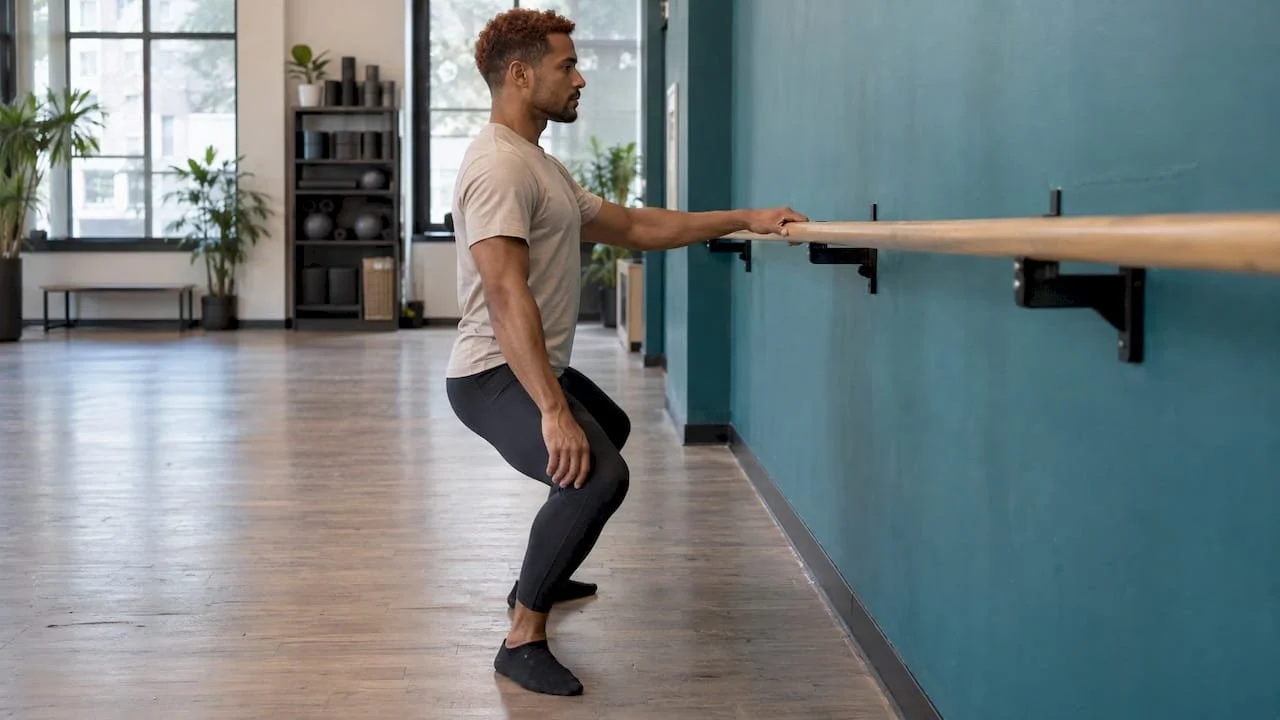
A barre class is a low-impact, full-body workout that borrows from ballet, Pilates and yoga. You use small, controlled movements, light weights and a ballet-style handrail (the "barre") to work your legs, glutes, core and arms until the muscles tire. You don't need dance experience. If you live in Philadelphia and want to try one, our barre classes are built for first-timers as well as regulars.
Amritayogawellness
Try Barre in Philadelphia
Explore Amrita Yoga & Wellness barre classes, described for first-timers and regulars, and find out more about the studio’s offerings.
TL;DR
Barre is a low-impact workout that combines ballet, yoga and Pilates. It uses light weights, holds and small, repeated movements instead of jumping.
A typical class runs about 30 to 45 minutes, with a warm-up and a cool-down. Expect segments for arms, legs, seat and core.
You don't need ballet experience. Wear fitted, comfortable clothes and grip socks, and bring water.
Barre is easy on the joints and can be scaled up or down, so beginners and advanced students can share a room.
In Philadelphia you can try a single class from $28 or start with a $11 community class.
Table of Contents
What a barre class is
Barre takes its name from the stationary handrail in a ballet studio. Cleveland Clinic describes barre as a low-impact exercise that combines yoga, Pilates and ballet, with a focus on strength, flexibility, muscular endurance and core engagement.
The handrail is a prop for balance, not a requirement for skill. You rest a hand on it during leg work, or step away from it for floor work and core sequences. Some classes also use a mat, a small inflatable ball, a light resistance band and light hand weights.
If you've seen the question asked as "barre workout," "barre fitness" or "barre exercise," they all mean the same thing: a group fitness class built around this ballet-inspired format.
What happens in a typical class
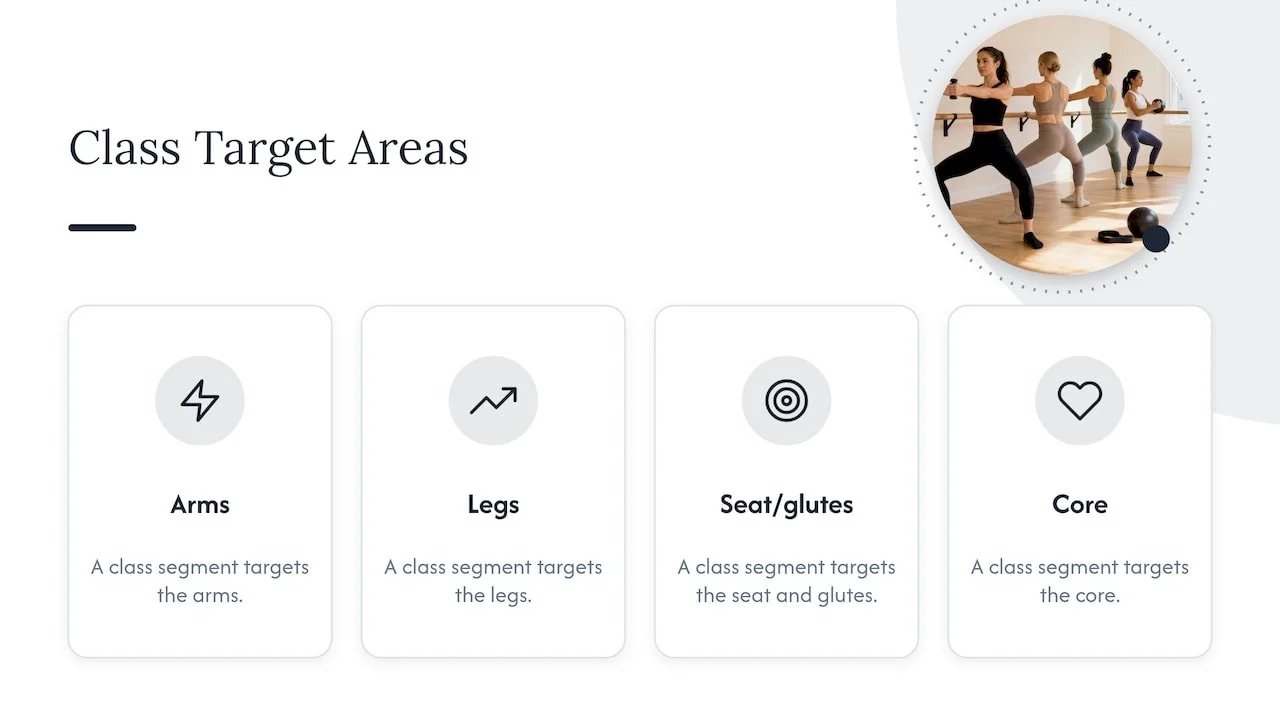
The format is easy to follow once you've seen it once. IBBFA, a barre education body, explains that a class moves through segments that target the arms, the legs, the seat and glutes, and the core. It's defined by precision and endurance rather than big athletic movements.
Here is the usual order.
Warm-up
You start with gentle movements to get the blood flowing: pliés (bending the knees with the heels together and toes turned out), relevés (rising onto the balls of the feet) and arm raises. A barre-style routine from UC Berkeley's student wellbeing team opens the same way, with pliés, relevés and arm raises, each repeated 10 times.
Arms
You pick up light hand weights, often a pound or two, and do small, controlled movements. The weight is low on purpose. The challenge comes from repeating the movement many times and holding it.
Legs and seat
This is the part most people remember. Standing at the barre, you work through pliés, turnouts, lifts and holds. Cleveland Clinic lists turnouts (heels together, toes opened to about 45 degrees) as a way to work the glutes, deep hip muscles and rotators. It also lists pliés, which work the quads and glutes, and first-position relevés, which work the calves. You can hold a chair or the barre for support.
You'll hear instructors call out small pulses: tiny movements through a short range. They tire the muscle until it gives a light, characteristic shake. That shake is normal and tells you the muscle is working.
Core
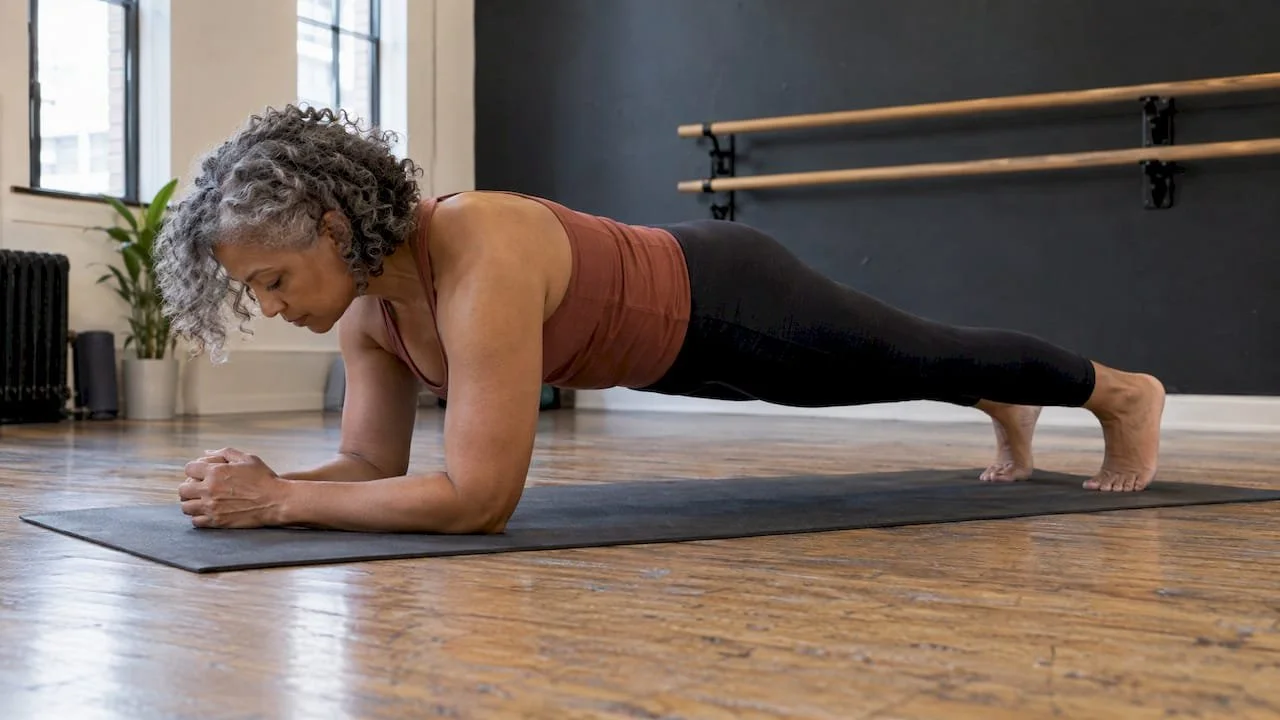
Core work usually happens on a mat. Think planks, controlled leg lifts and curls, all with attention to a steady spine and engaged abdominals.
Cool-down and stretch
The class ends with stretching for the muscles you just worked. In the Berkeley routine, the cooldown is straddle, pike and hamstring stretches held for 30 seconds each. Many studios weave a little stretching between the strength segments as well.
How barre differs from other workouts
Barre versus high-intensity training
Barre uses low resistance and light weights with no jumping or plyometrics, so it is easier on joints than high-intensity interval training, according to Cleveland Clinic. It emphasizes working the muscle through its full available range of motion, with tightly controlled, high-repetition movements.
Why holds matter
One feature sets barre apart. ACE, the American Council on Exercise, notes that barre classes hold positions so engaged muscles stay under isometric tension (the muscle works without changing length). Holding positions and repeating small movements increases time under tension, which can improve muscular endurance in the muscles involved. ACE also points to a focus on posture, alignment and core stabilizer engagement.
Barre versus Pilates and yoga
Barre borrows from both, and the overlap is why many people try all three. Mat Pilates leans on core control and precise, flowing movement. Yoga links breath, balance and flexibility, often in longer holds and flows. Barre adds the ballet-style handrail work, the pulses and the light weights. If you like the controlled feel of Pilates and the stretch of yoga, barre will feel familiar.
Studios also differ. Some classes are fast-paced and cardio-focused, while others are slower and form-focused, as Cleveland Clinic notes. Check the class description to see which style you're booking.
What barre does for your body
IBBFA lists the main benefits as:
stronger, more enduring legs, seat and core
better posture and spinal alignment
more flexibility and mobility
improved balance and body awareness
a joint-friendly way to do resistance work without high impact
Posture is a good example. Dr. Waters of Cleveland Clinic says barre asks for the posture of a dancer: lifted and engaged, with the back muscles holding the arms in position. That activates postural muscles and can counter the hunched posture that comes from long periods of sitting. For desk workers, that's a practical reason to try it.
As with any exercise, results come from showing up regularly, and every body responds at its own pace. You can read more in our posts on the benefits of barre classes and what to expect in the first 4 to 6 weeks.
Who can take a barre class
Almost anyone. Cleveland Clinic says anyone willing to learn barre can learn, and Dr. Waters recommends starting with a beginner class. Nearly all classes use light hand weights and tools, and modifications are available, such as bending over to stretch at the barre or resting in child's pose.
IBBFA adds that the format scales: beginners and advanced participants can work in the same room, and the format is regularly adapted for prenatal and postnatal clients, older adults and people returning from injury.
If you're newer to exercise in general, it helps to pair classes with simple strength training for beginners, which builds the same foundation of controlled, progressive effort.
Staying safe
Never force turnout. Cleveland Clinic cautions you to work only in a range that keeps your posture steady and causes no pain.
Tell your instructor before class about injuries, pregnancy or a health condition, so they can offer modifications.
If you have a medical condition or are recovering from an injury, check with your doctor or physical therapist before starting a new exercise program.
Choose an instructor who cues alignment and core engagement clearly. IBBFA lists clear cueing, balanced progression and knowledge of anatomy as the marks of safe barre instruction.
What to bring and wear
The packing list is short.
| Item | Why it helps |
|---|---|
| Fitted, flexible clothes such as leggings and a tank or fitted tee | Your instructor can see your alignment and correct it |
| Grip socks | They add traction for balance work; most barre is done in socks, not shoes |
| Water bottle | Barre looks gentle but you will sweat |
| Light layer | Useful during the warm-up and cool-down |
| Towel (optional) | For the mat work and the shake |
Skip baggy clothing that hides your form and bulky sneakers. Hand weights, bands and balls are normally provided in the studio, so ask when you book if you're unsure.
Your first barre class: a simple plan
Pick a beginner-friendly class. Look for a description that mentions all levels or beginners.
Arrive 10 to 15 minutes early. Introduce yourself, mention any injuries and ask where to set up. A spot near the middle of the room helps you watch the instructor.
Start with the lightest weights. Add load later, once your form holds through the whole set.
Make the movement smaller, not bigger. In barre, a tiny controlled pulse beats a large sloppy one.
Rest when you need to. Drop your arms, stretch at the barre or take child's pose. These are built-in options, not failures.
Go twice in the first two weeks. Familiar terms such as plié and relevé click quickly on the second visit.
Perspective
Barre is one of the friendliest ways we know to get strong without feeling beaten up. It rewards patience: small movements, steady breath and attention to alignment. That is the same thing yoga and Pilates teach, so many of our students move between all three.
We believe a studio should feel welcoming to anyone, whether you have never stood at a barre or have practiced for years. Our classes are designed around safety, personal growth and connection at every experience level, and that means clear guidance, options for every body and a room of people who cheer each other on.
If you want low-impact strength, better posture and a community around your workout, a barre class is a good place to begin, and Philadelphia is where we'd love to meet you.
Juiced
Try barre at Amrita Yoga & Wellness
We teach barre alongside yoga, mat Pilates, group reformer, tai chi and more, so you can build a routine that mixes styles. See our Philadelphia barre classes for the format, and check the class schedule for times.
These are the ways to start, with prices as listed on our class pricing page:
Community Class Drop In: $11 per session
Group Class Drop In: $28 per session
Experience Drop In: $33 per session
Nurtured Beginnings: $35 per pass
1 Month Unlimited Group Classes: $169 per month
If you'd like individual attention first, private sessions start from $85 per hour. For a deeper read on the format, try our beginner's guide to the barre class workout or our piece on why barre is a low-impact workout.
FAQ
Is a barre class hard?
It can feel harder than it looks. The movements are small, but the holds and repetitions tire the muscles quickly, which is where the shake comes from. You control the intensity by choosing lighter or heavier weights and a smaller or larger range of motion.
Do I need ballet experience for barre?
No. Barre borrows ballet vocabulary and the handrail, but anyone willing to learn can take part. Starting with a beginner class lets the instructor explain terms such as plié and relevé.
How long is a barre class?
Most classes run about 30 to 45 minutes, with a warm-up and cool-down built in, according to Cleveland Clinic. Studio classes are often longer, so check the schedule for the exact length.
Is barre the same as Pilates?
No, though they overlap. Both emphasize control and core engagement. Barre adds ballet-inspired handrail work, pulses and light weights, while Pilates is built on its own set of mat or reformer exercises. Many people take both.
Sources
Hitting the Barre: Understanding the Popular Group Fitness Trend, ACE Certified, December 2019
A barre-style workout for toning and agility, UC Berkeley Student Wellbeing