See Results in 4–6 Weeks With Barre: Posture, Endurance, and Calm
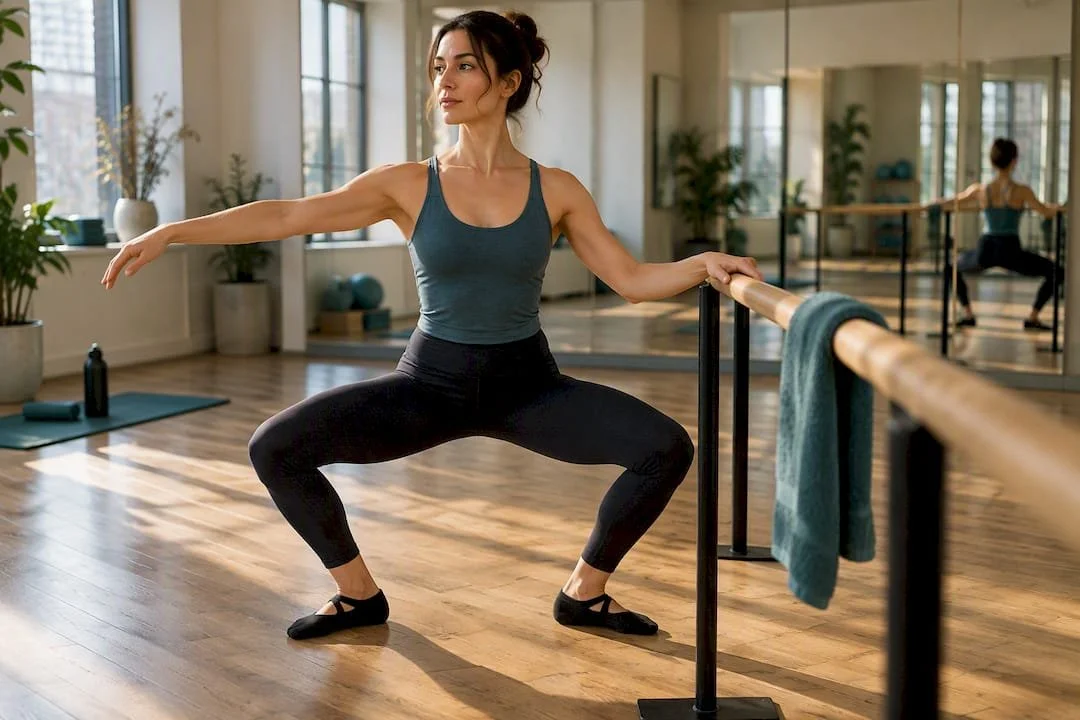
Barre delivers real, measurable benefits: better muscular endurance and visible toning, stronger postural muscles and core control, improved flexibility, sharper balance, and a genuine mental reset through focused, low-impact movement. The Cleveland Clinic and WebMD both back this up, and it matches what we see week to week at Amritayogawellness. It works best as a complement to heavier strength training or cardio, not a replacement for either.
TL;DR:
Barre enhances muscular endurance and postural strength mainly through high-repetition, low-weight exercises that engage slow-twitch fibers.
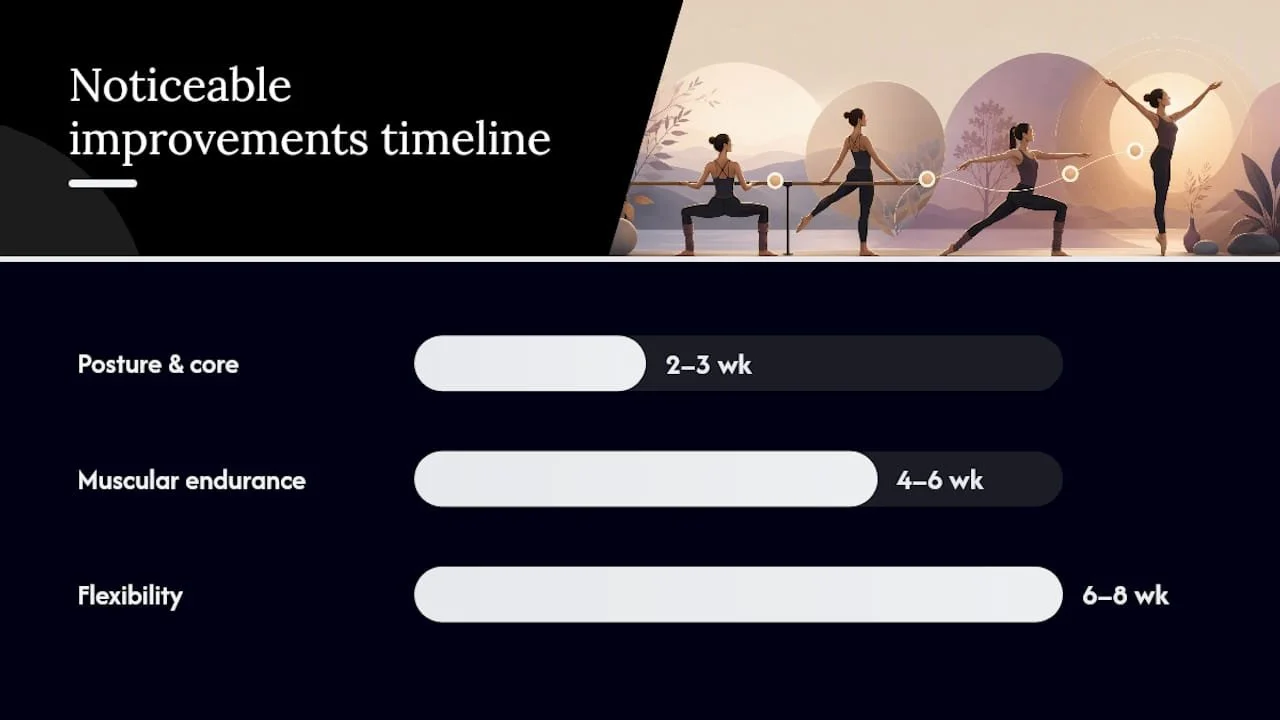
Most improvements in posture and core control appear within two to three weeks of consistent practice, with flexibility gains taking up to eight weeks.
Its low-impact nature makes it suitable for beginners, those with joint sensitivities, and pregnant individuals when proper modifications are used.
Barre should be combined with strength and cardio sessions for a balanced fitness routine, as it does not efficiently build maximal strength or cardiovascular fitness.
Consistent attendance and progression involve adding repetitions, extending holds, or increasing resistance, with noticeable physical and mental benefits typically emerging within a month.
Amritayogawellness
Build Strength With Barre
Amrita Yoga & Wellness offers barre alongside yoga, Pilates, and other practices for adults seeking accessible movement in Philadelphia.
Explore Amrita Yoga & Wellness
Table of Contents
What Is Barre Fitness, and How Does It Work?
Barre fitness fuses ballet, Pilates, and yoga into one format built around tiny, controlled movements and long isometric holds rather than big, explosive reps. A typical class has you pulsing at a ballet barre, holding a chair-like squat for 30 seconds, or shaking through a plank, often with light dumbbells, resistance bands, or a small ball wedged between your knees. Barre's design leans on high repetition and constant tension instead of heavy loads.
Here's what shows up in most classes:
A ballet barre for balance and leg work
Light hand weights (1 to 3 pounds) or resistance bands for arm toning
Grippy socks for stability on hardwood or marley floors
Small props like Pilates balls or sliders for core isolation
That combination of repetition and time under tension is exactly why barre builds endurance and postural strength faster than it builds maximum power.
What Physical Benefits Does Barre Actually Deliver?
Barre's biggest physical payoff is muscular endurance paired with visible toning, driven by high-rep, low-weight work that keeps muscles under tension far longer than a typical strength set. SELF's exercise-science reporting notes that this kind of volume training builds endurance and lean tone effectively, though it doesn't maximize absolute strength the way progressive heavy lifting does. Your slow-twitch muscle fibers, the ones responsible for sustained, low-force output, get the bulk of the work in a typical class.
By the numbers: One small observational study tracked 25 participants and found improvements in urinary incontinence symptoms after roughly ten Pure Barre sessions. That's a promising early signal, not proof, given the tiny sample size.
Posture and core strength improve for a straightforward reason: nearly every barre exercise demands a neutral pelvis, an engaged core, and stacked alignment from head to heel. The Cleveland Clinic links this consistent postural demand to reduced lower back pain, particularly for people who sit at a desk most of the day.
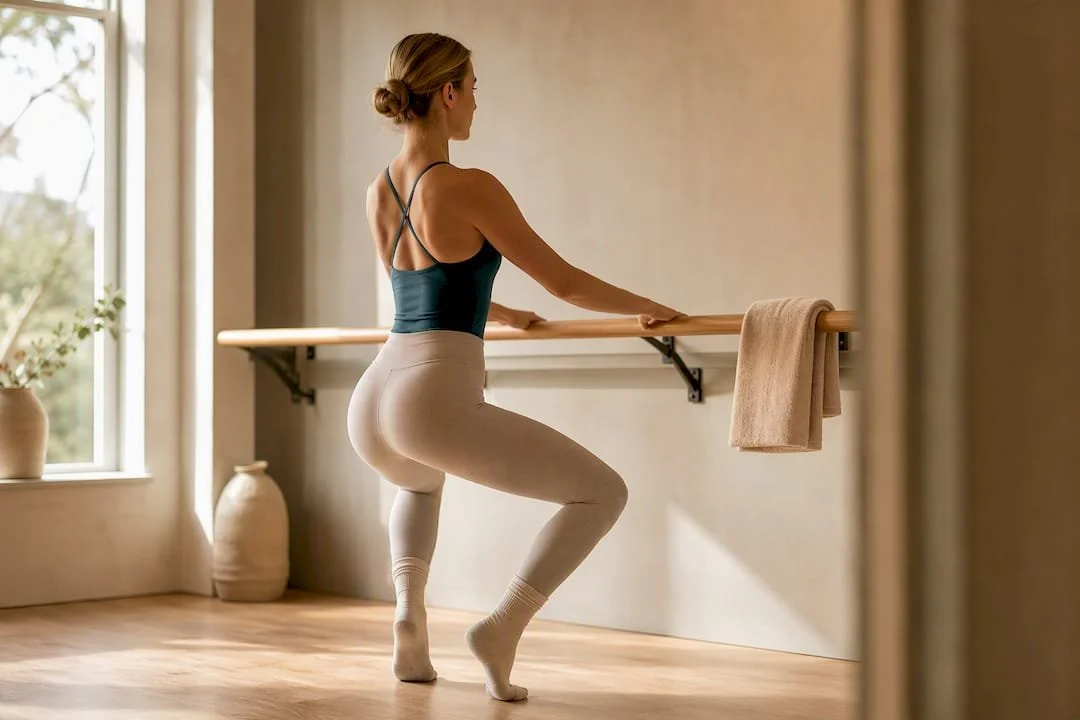
Flexibility gains come from the ballet lineage. Classes typically end with deep stretches at the barre, targeting hip flexors, hamstrings, and shoulders, and the repeated range-of-motion work adds up over weeks.
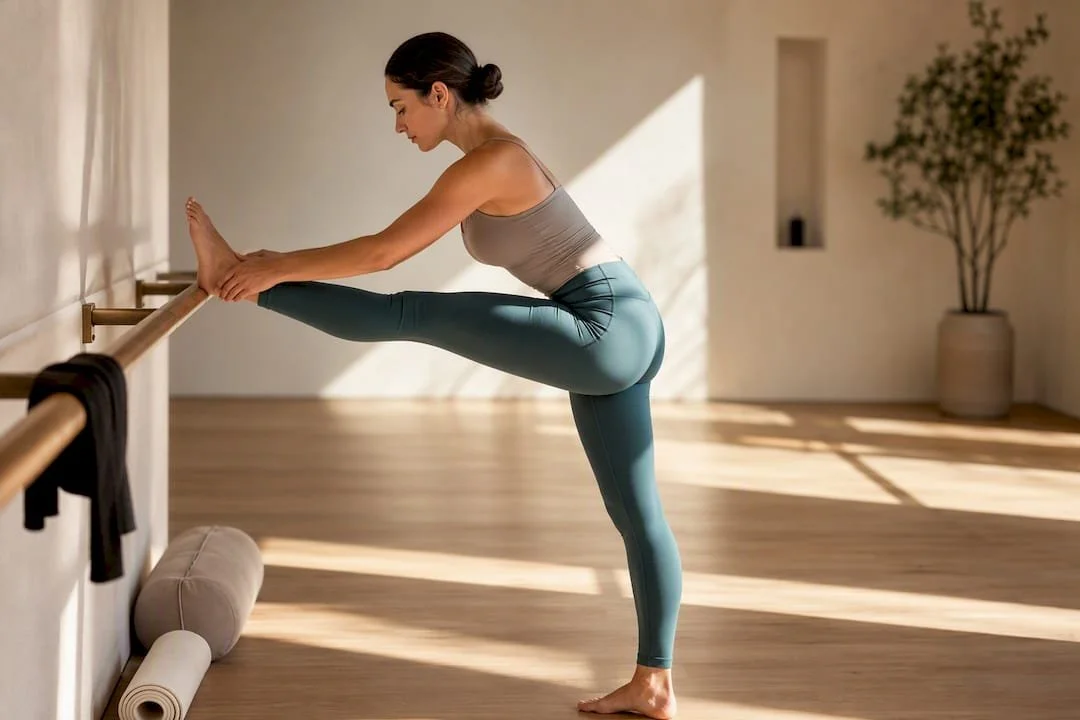
Balance and proprioception see some of the most underrated improvements in barre. Single-leg holds, heel raises, and grippy socks that let you actually feel the floor sharpen your body's spatial awareness. Balance-training research on PubMed supports the broader idea that this kind of neuromuscular control work matters for functional fitness and fall prevention, especially as people age.
A quick rundown of what changes and how fast:
Muscular endurance: Noticeable within 4 to 6 weeks of consistent practice
Posture and core control: Often felt within 2 to 3 weeks
Flexibility: Gradual, visible over 6 to 8 weeks
Balance: Improves steadily with single-leg and heel-elevated work
Pelvic-floor benefits deserve a cautious mention. The evidence is preliminary, limited to small samples, but instructors report enough anecdotal improvement in core and pelvic control that it's worth watching as more research comes in.
Does Barre Help Your Mental Health Too?
Barre's slow, precise cueing pulls your attention into the present moment in a way that's harder to achieve during, say, a treadmill run. Exercise in general reduces stress according to the Mayo Clinic, and barre's demand for constant micro-adjustments (pull your navel in, tuck your pelvis, lift through your spine) functions almost like a moving meditation.
The class environment does real work here too. Music-driven pacing, shared effort, and a room full of people shaking through the same 30-second hold build a kind of camaraderie that keeps people coming back.
Focused cueing sharpens mind-body awareness
Group energy and music boost enjoyment and consistency
Regular attendance is tied to better emotional quality of life
Pro Tip: If you struggle to quiet your mind during workouts, pick a barre class with a live instructor over an on-demand video. The real-time alignment cues force your brain to stay engaged rather than drift.
For more on the mental side of movement, science-backed approaches to inner peace offer useful context on how structured practices lower stress.
Where Does Barre Fit in a Balanced Fitness Routine?
Barre shines at endurance, posture, and mobility, but it has real limits. It won't build maximal strength the way barbell squats or deadlifts will, and it won't replace a hard cardio session for heart-rate conditioning. Treat it as one piece of a larger routine, not the whole plan.
A sensible weekly blend looks like this:
Two to three barre sessions for endurance, posture, and mobility
One to two strength sessions with progressive resistance (weights, bands, or machines) to build maximal force
One to two cardio sessions (running, cycling, or swimming) for heart-rate conditioning
One rest or active-recovery day to let muscles adapt
Progression in barre usually means adding reps, extending hold times, or moving to heavier hand weights, since the format rarely goes above a few pounds of resistance.
Who Benefits Most From Barre, and What Modifications Matter?
Barre suits a wide range of people, but it's especially useful for beginners easing into fitness, anyone with joint sensitivity who wants to avoid high-impact stress, and people cross-training alongside heavier lifting or running. WebMD notes that its low-impact nature makes it a reasonable option for people managing joint issues, though instructor-led modifications matter.
Beginners often start with a chair or wall for extra balance support
People with knee or hip sensitivity can shorten range of motion on pulses
Pregnant or postpartum practitioners typically skip deep core flexion and high-impact holds, with pelvic-floor caution built into modifications
Anyone recovering from injury should flag it to the instructor before class starts
If a movement causes sharp pain (not the usual muscle shake), stop and ask for a modification or sit it out.
How Amritayogawellness Teaches Barre
At Amritayogawellness, barre classes emphasize alignment and safety first, whether you're dropping into a group class, joining a livestream, or booking a private session for one-on-one attention. Students consistently mention feeling steadier on their feet and less achy through the lower back after a few weeks of regular attendance. Before your first class, tell the instructor about any injuries, pregnancy, or joint concerns so they can offer modifications from the very first pulse. Check the class descriptions to find the format that fits your experience level.
When Should You Prioritize Barre?
Barre earns a spot in your routine two to three times a week, with noticeable posture and endurance changes by week four to six. Pair it with strength and cardio work, and pick it because you enjoy it. Consistency beats intensity here.
— Juiced
Try a Barre Class Built Around Alignment, Not Guesswork
Amritayogawellness gives you a direct, low-pressure way to try barre with instructors who correct your form in real time instead of leaving you to copy a video screen. That alignment-first coaching is the practical difference between a class that leaves you sore in the right places and one that leaves you nursing a tweaked knee.
You can start with a Group Class Drop In for $28 or try it from home with a Livestream Class Drop In for $19. If you want individualized modifications, especially for an injury, pregnancy, or joint sensitivity, a One to One Session starting at $85 per hour puts an instructor's full attention on your form. Beginners often start with Nurtured Beginnings for $35, a pass designed specifically for a first visit. Browse the full class descriptions and pick a time that works, then book your spot for this week.
Sources
FAQ
What Are the Main Benefits of a Barre Workout?
Barre improves muscular endurance, posture, core strength, flexibility, and balance through high-rep, low-weight movements and isometric holds. It also offers mental benefits like stress reduction, thanks to its focus-heavy, precise cueing style, as noted by the Cleveland Clinic.
Is Barre a Good Workout for Beginners?
Yes, barre is beginner-friendly because it's low-impact and instructors typically offer modifications like using a chair for extra support. Amritayogawellness offers a Nurtured Beginnings pass for $35 specifically designed for first-time students.
How Long Does It Take to See Results From Barre?
Most people notice improved posture and core control within 2 to 3 weeks, with muscular endurance and toning becoming visible around 4 to 6 weeks of consistent practice. Flexibility gains tend to build more gradually, over 6 to 8 weeks.
Can Barre Replace Strength Training or Cardio?
No, barre builds endurance and tone but doesn't maximize absolute strength or cardiovascular conditioning the way heavy lifting or running does, according to SELF's reporting on barre and strength training. Pairing barre with two to three sessions of progressive strength work and cardio each week gives you a more complete routine.
Is Barre Safe During Pregnancy?
Barre can be safe during pregnancy with modifications, since it's low-impact and adjustable, but deep core flexion and certain pelvic-floor-intensive moves are typically avoided. Always tell your instructor you're pregnant before class so they can guide you through safe alternatives.