Full-Body Conditioning Class Types: How to Choose
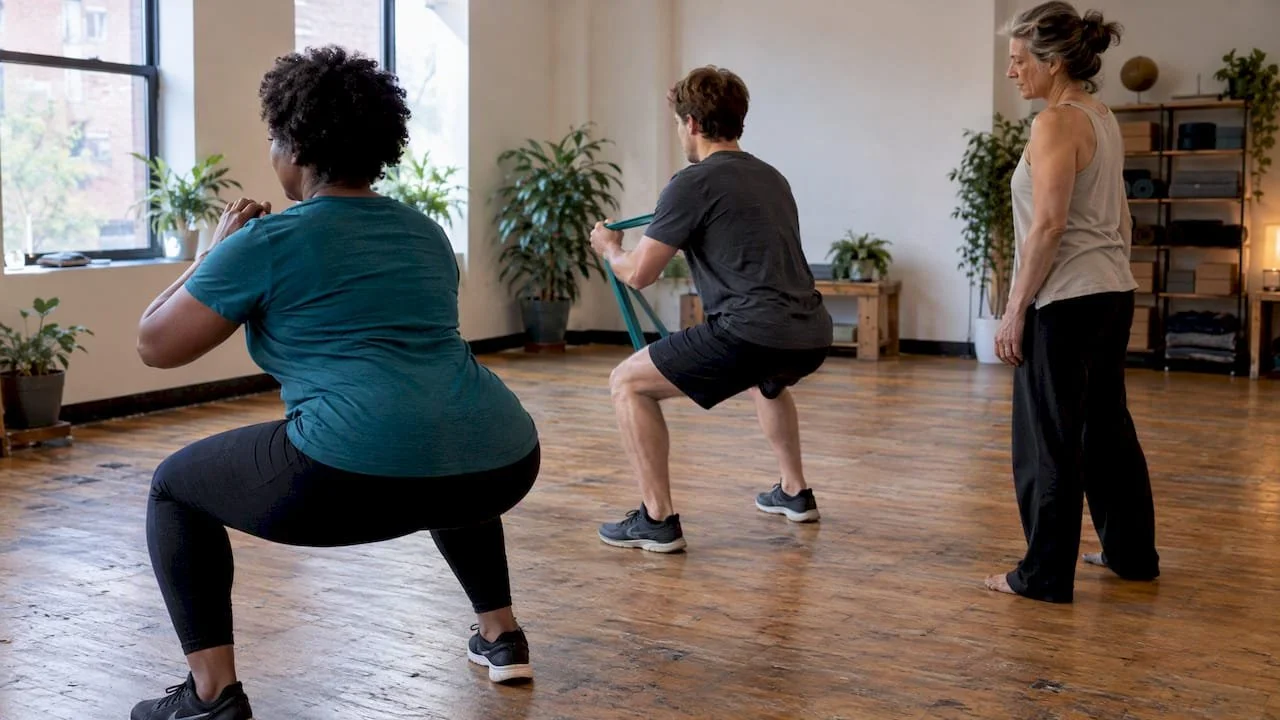
A full-body conditioning class trains strength, cardio, mobility and balance in a single session. The main types are strength and circuit classes, HIIT, Pilates (mat and reformer), yoga (including hot, sculpt and aerial), barre and tai chi. The best one for you is the one that fits your current fitness, your joints and your schedule, because you only get results from a class you keep attending.
Below, we sort the class types by what they train, show what a week might look like, and explain how to start safely. We teach yoga, Pilates, barre and tai chi at our Philadelphia studio, so we say plainly where each style shines and where another is a better fit.
Amritayogawellness
Find a Conditioning Class That Fits
Explore yoga, Pilates, barre and tai chi classes at our Philadelphia studio to find a practice that suits your goals and preferences.
TL;DR
"Full-body conditioning" is a goal, not one class. Strength, cardio, mobility and balance can come from very different formats.
Federal-style targets are simple: the WHO guidelines call for aerobic activity plus muscle-strengthening work on 2 or more days a week for adults.
Pilates, yoga, barre and tai chi are low-impact ways to condition everything, with alignment coaching built in. HIIT and circuits add more cardio load.
Pick by consistency first. A class you enjoy and attend beats a harder one you skip.
Beginners and anyone returning from injury should talk to a physician and choose an instructor who offers modifications.
Table of Contents
What a conditioning class is supposed to do
Conditioning is the broad physical preparation of your body. In practice that means five qualities: muscular strength, muscular endurance, cardiovascular fitness, mobility and balance. A well-rounded class touches most of them. A narrow one trains one or two very well.
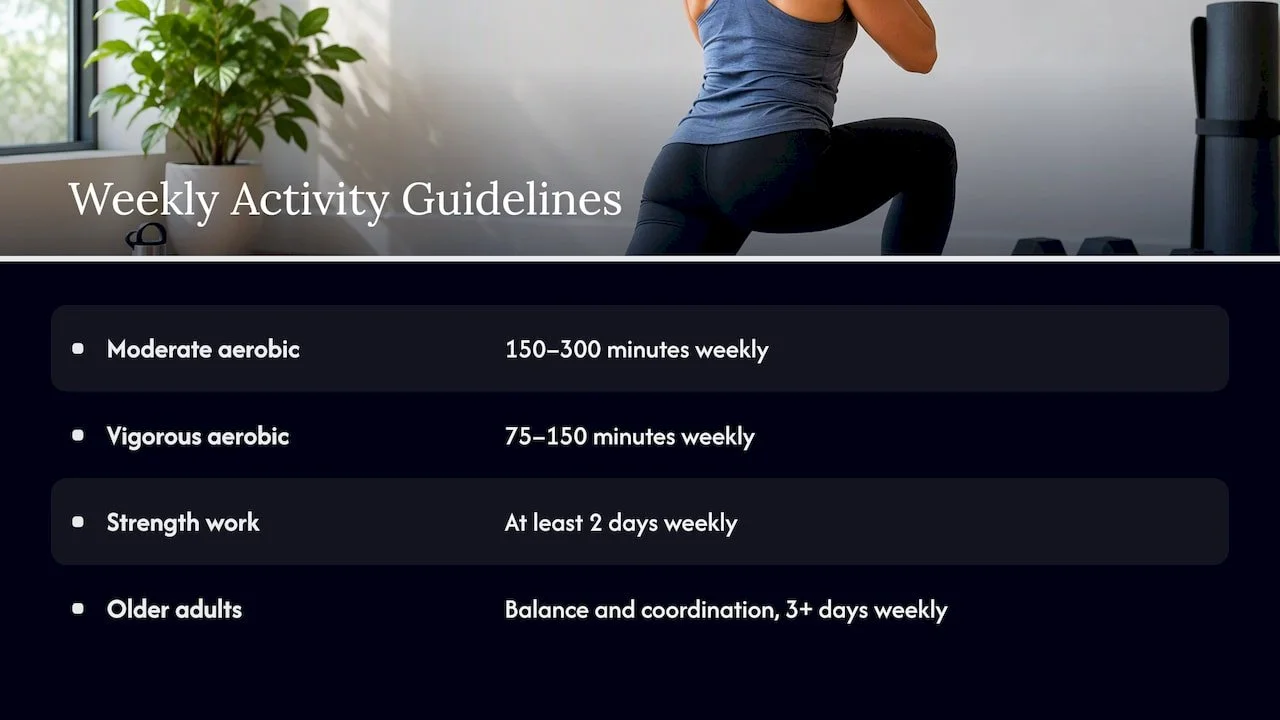
The WHO 2020 guidelines are a useful yardstick. For adults 18 to 64 they recommend 150 to 300 minutes of moderate aerobic activity (or 75 to 150 of vigorous activity) per week, plus muscle-strengthening that works all major muscle groups on at least 2 days. Older adults are advised to add multicomponent activity with balance and coordination work on 3 or more days a week.
The main full-body conditioning class types
| Class type | Main focus | Impact | Good for | Watch for |
|---|---|---|---|---|
| Strength or circuit | Muscle strength, endurance | Low to moderate | Building strength with weights and bodyweight | Rushing load before form is solid |
| HIIT | Cardio, power | Often high | Short, intense sessions | Recovery time between sessions |
| Mat Pilates | Core, posture, control | Low | Beginners, desk workers, injury return | Needs careful cueing to get alignment right |
| Reformer Pilates | Resistance-based strength, flexibility | Low | Strength with joint support | Smaller classes, book ahead |
| Yoga (flow, hot, sculpt, aerial) | Mobility, strength, balance, breath | Low to moderate | Flexibility with strength and stress relief | Heat and inversions need pacing |
| Barre | Legs, glutes, core endurance | Low | Muscular endurance, posture | Small, repeated movements fatigue fast |
| Tai chi | Balance, coordination, calm | Very low | All ages, balance and falls prevention | Slow pace feels easy until you try it |
Here is how each plays out in a real class.
Strength and circuit classes
These use dumbbells, kettlebells, bands and bodyweight, moving through stations or timed rounds. They are the most direct route to the muscle-strengthening part of the guidelines. A good coach will teach the four basic patterns of pushing, pulling, squatting and hinging before loading them heavily.
The trade-off is that big, fast circuits can reward intensity over technique. If you are new, ask how the instructor scales moves.
HIIT
High-intensity interval training alternates hard efforts with short rests. It is efficient for cardio and the format is changing: industry coverage of group fitness trends reports 60-minute HIIT classes losing ground to 30 to 45 minute formats, with growing demand for programming that blends strength, recovery and breathwork.
HIIT suits people who already have a base of fitness and enjoy pushing. It is not the only way to condition your heart, and it is a poor starting point if you are coming back from an injury.
Mat Pilates
Pilates was developed by Joseph Pilates in the early 20th century, largely as a method of injury recovery. Mat classes use your body weight, sometimes with small props, to train the deep core, hips, back and shoulders with slow, controlled repetitions.
It is a strong first choice if you want low-impact conditioning that improves posture. If you want a deeper look, our guides to mat Pilates for core strength and flexibility and seven different kinds of Pilates go through the options.
Reformer Pilates
The reformer is a sliding carriage with springs. The springs add adjustable resistance and can also assist a movement, so the same machine can be gentle for a beginner and demanding for an experienced client. That makes group reformer classes a flexible full-body format: legs, arms, core and back all work against resistance while the frame supports the spine.
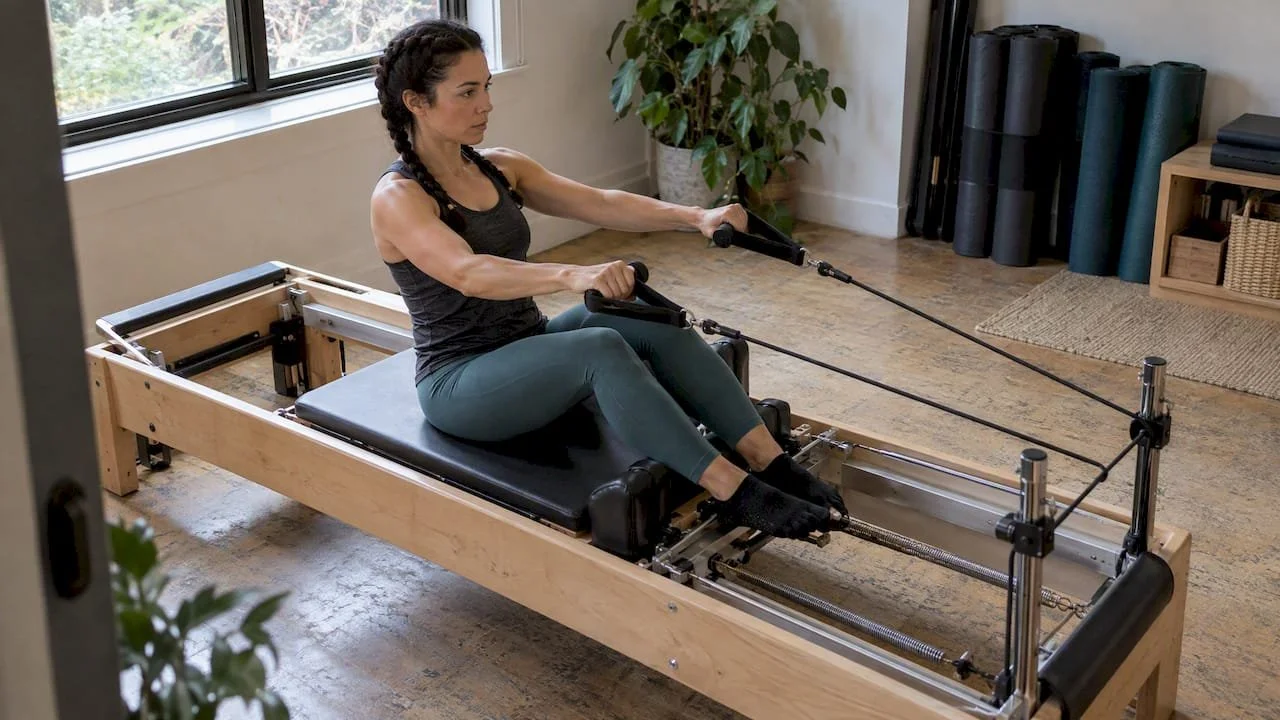
We explain what happens in class in What Is a Pilates Reformer Class? and what the machine does for you in What Does a Pilates Reformer Do for Your Body?.
Yoga: flow, hot, sculpt and aerial
Yoga trains mobility, balance and bodyweight strength together, with breathing woven in. Within it you will find real variety:
Flow or vinyasa: continuous movement linked to breath, a moderate cardio load plus strength in the legs, shoulders and core.
Hot yoga: the same postures in a heated room. Many people like the sense of loosening up, but you should build up gradually and hydrate.
Yoga sculpt: poses combined with light weights for a more strength-focused session.
Aerial yoga: a fabric hammock supports your weight, which can take pressure off joints and add core and grip work.
If you are choosing between yoga and Pilates, the Cleveland Clinic's comparison of yoga and Pilates is a balanced read. In short, Pilates leans toward core control and strength, yoga toward flexibility, balance and mind-body practice. Many people do both.
Barre
Barre borrows from ballet, Pilates and strength work. You use small, repeated movements, often at a bar with light weights and bands, to fatigue the legs, glutes, arms and core. It builds muscular endurance and posture without jumping or heavy loading. Expect a good burn and a lot of precision.
Tai chi
Tai chi is slow, flowing movement with weight shifting, coordination and breath. It is the gentlest entry on this list and the most directly aimed at balance. For older adults, the WHO guidance on multicomponent activity with balance training is the reason classes like this earn a place in a weekly plan.
Match the class to your goal
Start with what you want from the next three months, not with what is trending.
You want to build strength and a base: pick one strength or reformer class a week for the strength element, then add a gentler class for mobility.
You want a sweat and a cardio boost: a HIIT or flow class, with a slower day in between for recovery.
You sit most of the day and want better posture: mat or reformer Pilates plus yoga for hips and shoulders.
You are returning from an injury: Pilates, yoga or tai chi with an instructor who offers modifications, after a conversation with your physician or physical therapist.
You are stressed and sleeping badly: yoga, Pilates or breathwork. The Cleveland Clinic notes that mind-body options like yoga and Pilates are increasingly used for stress and sleep, and advises choosing activity you enjoy so you will stick with it.
You are 65 or older, or training for balance: include balance and multicomponent work. This guide on balance training for seniors covers safe exercises for preventing falls.
A sample week of full-body conditioning
This is an example, not a prescription. Adjust it to your level and check with your doctor if you have a health condition.
| Day | Class | What it covers |
|---|---|---|
| Monday | Reformer or strength class | Resistance for all major muscle groups |
| Tuesday | Rest or a walk | Recovery |
| Wednesday | Yoga flow or hot yoga | Mobility, balance, moderate cardio |
| Thursday | Barre or mat Pilates | Muscular endurance, core |
| Friday | Rest | Recovery |
| Saturday | Tai chi, aerial yoga or a longer flow class | Balance, coordination, joint-friendly work |
| Sunday | Breathwork or an easy stretch | Downshift |
Two strength-focused sessions meet the 2-day muscle-strengthening line in the WHO guidance. Add brisk walking or a more aerobic class to move toward the weekly aerobic targets.
How to start safely
Most conditioning injuries are not caused by one type of class. A review of fitness-center injuries on PubMed Central describes musculoskeletal problems as multifactorial, tied to overuse, too little recovery and poor technique. The advice that follows from that is practical:
See a professional first if you are injured or managing a condition. Talk to your physician or physical therapist before you begin. The Cleveland Clinic's Pilates overview advises exactly that, then finding an instructor who offers personalized modifications instead of one uniform pace.
Learn alignment in a guided class. The same source advises beginners to start with guided classes so they learn correct form.
Progress in small steps. Moving too quickly is a leading cause of soreness and injury, even in people who are already fit.
Protect recovery days. Overuse is as risky as bad form.
Tell the instructor before class about injuries, pregnancy, or medical conditions so they can offer alternatives.
Where breathwork fits
Breathwork is not a conditioning class in the strength sense, but it can round out a week. A meta-analysis of randomized controlled trials found that structured breathwork can improve self-reported stress, anxiety and depression, though results depend on the protocol. It is cumulative: regular practice predicts more than one dramatic session. Treat it as a complement to training, not a replacement for medical care if you are struggling with anxiety or depression. In that case, speak with your doctor or a licensed mental health professional.
Our perspective: variety, guidance and a pace you can keep
We run a Philadelphia studio built around yoga, Pilates, barre and tai chi, so we see the same pattern every week. People arrive with a goal like "full-body conditioning" and an assumption that it must be hard. The ones who are still coming six months later usually did not choose the hardest class. They chose the one where the instructor knew their name, offered an easier or tougher version of each move and made the room feel welcome.
That is why we design classes for every level, from first-timers to experienced practitioners, and why we offer hot yoga, aerial yoga, mat Pilates, group reformer, barre and tai chi under one roof. You can mix a strength-leaning reformer class with a restorative yoga evening and a community class, without joining three different places. Alignment cues and modifications are part of how we teach, because good form is what lets you progress without paying for it in sore joints.
Our honest advice: try two or three styles before you commit to one. Notice how you feel the next morning and which class you look forward to. Then build your week around that.
— Juiced
Try a class at Amrita Yoga & Wellness
If you are in Philadelphia and want to test a few styles, you do not need to commit to a membership first. Our drop-in options include a Group Class Drop In at $28 per session, a Community Class Drop In at $11 per session, and Nurtured Beginnings at $35 per pass for newcomers. A livestream drop-in is $19 per session.
When you settle on a rhythm, the monthly plans on the same page include Earth at $119 per month, Water at $139, Air at $149 and 1 Month Unlimited Group Classes at $169. If you would rather have personalized guidance, private yoga and Pilates sessions start from $85 per hour. You can see what is on right now in our class schedule, and our studio policies cover booking and cancellations.
FAQ
What is a body conditioning class?
It is a group session designed to build several fitness qualities at once, usually strength, endurance, cardio, mobility and balance. Formats vary widely, from weighted circuits to reformer Pilates to yoga. Check the class description to see which qualities it emphasizes.
What are the different types of full-body workouts?
The most common are strength or circuit training, HIIT, Pilates, yoga, barre and tai chi. Strength and HIIT lean toward power and cardio. Pilates, yoga, barre and tai chi are lower impact and emphasize control, mobility and balance.
How many conditioning classes should I take each week?
The WHO guidelines call for muscle-strengthening on at least 2 days a week for adults, alongside aerobic activity. Many people reach that with two to four classes mixed with walking and rest days. Start lower if you are new and build gradually.
Is Pilates or yoga better for full-body conditioning?
Neither is better for everyone. Pilates leans toward core strength and controlled resistance work, while yoga adds more flexibility, balance and breath practice. Many people alternate them across a week.
Can beginners or people with injuries join conditioning classes?
Often yes, but speak with your physician or physical therapist first, then pick a guided class where the instructor offers modifications. Tell the instructor about any injury before class begins.
Sources
WHO 2020 guidelines on physical activity and sedentary behaviour (PMC)
The Benefits of Exercise for Mental Health, Cleveland Clinic
Effect of breathwork on stress and mental health: a meta-analysis, Scientific Reports