Science Backed, Practice Proven: Why Yoga Helps Body and Mind in Weeks

Yoga is good because it produces measurable improvements in physical function and mental wellbeing, backed by clinical reviews and neurophysiological studies. Flexibility, balance, and strength gains are well documented, and so are reductions in perceived stress, better sleep, and calmer mood. The evidence is strongest for stress relief, balance, and chronic low back pain, according to the NCCIH, while gains in cardiovascular and metabolic markers are real but more modest.
TL;DR:
Consistent yoga practice can improve sleep and reduce perceived stress within a few weeks, especially through breathing exercises.
Strength, flexibility, and balance gains typically require two to three months of regular practice and are most noticeable with weekly sessions.
Yoga offers meaningful relief for chronic low back pain and some benefit for knee osteoarthritis and headaches, but it should complement medical treatment.
Small reductions in blood pressure, cholesterol, and blood sugar may occur, yet yoga is unlikely to outperform aerobic exercise for cardiovascular health.
Starting with beginner classes, using props, and practicing daily short sessions with proper modifications enhances safety and habit formation.
Table of Contents
Physical Benefits: Strength, Flexibility, Balance, and Function
Mental and Emotional Benefits: Stress, Mood, Sleep, and Cognition
Pain and Chronic Conditions: Low Back Pain, Arthritis, Headaches
Cardiovascular and Metabolic Effects: Blood Pressure, Lipids, Blood Sugar
How Yoga Actually Works: Breath, Nervous System, and Mechanics
What Actually Changes When Someone Starts Practicing Regularly
Why Yoga Is Good: The Full Range of Benefits
Yoga touches nearly every system researchers have bothered to measure, though not all of it holds up equally well under study.
Physical: better flexibility, core strength, joint stability, and balance
Mental: lower perceived stress, improved mood, and more consistent sleep
Pain relief: meaningful help for chronic low back pain, some benefit for knee osteoarthritis and headaches
Cardiovascular and metabolic: small reductions in blood pressure, occasional improvements in cholesterol and blood sugar
Mindfulness and behavior: better body awareness, which often nudges people toward healthier eating and activity habits
Lifestyle: community, routine, and a reason to show up consistently
Most people notice sleep and stress changes within a few weeks. Flexibility and strength gains take longer, often two to three months of regular practice. The strongest evidence points to stress reduction, balance, and low back pain relief. Cardiovascular and cognitive claims are promising but still developing.
Physical Benefits: Strength, Flexibility, Balance, and Function
Yoga builds strength differently than lifting weights does. Holding a plank, warrior pose, or chair pose isometrically loads muscles for extended periods, which improves endurance strength even without added resistance. Moving slowly between poses also trains stabilizer muscles that a typical gym routine skips entirely.
Flexibility gains show up in study after study, and they're not just about touching your toes. Harvard Health notes that yoga improves functional movement, meaning the kind of mobility that makes bending, reaching, and twisting in daily life easier and safer.
Balance improvements matter most for older adults, where falls are a leading cause of injury. Poses like tree pose and standing splits train the small stabilizing muscles around the ankles and hips that balance depends on. Two to three sessions a week tends to produce noticeable balance gains within a couple of months, though even a short daily practice adds up faster than most people expect.

Mental and Emotional Benefits: Stress, Mood, Sleep, and Cognition
Stress reduction is where yoga's evidence base is most convincing. Studies consistently show lower perceived stress and better sleep quality among regular practitioners, and the NCCIH lists it among the practice's best-supported effects.
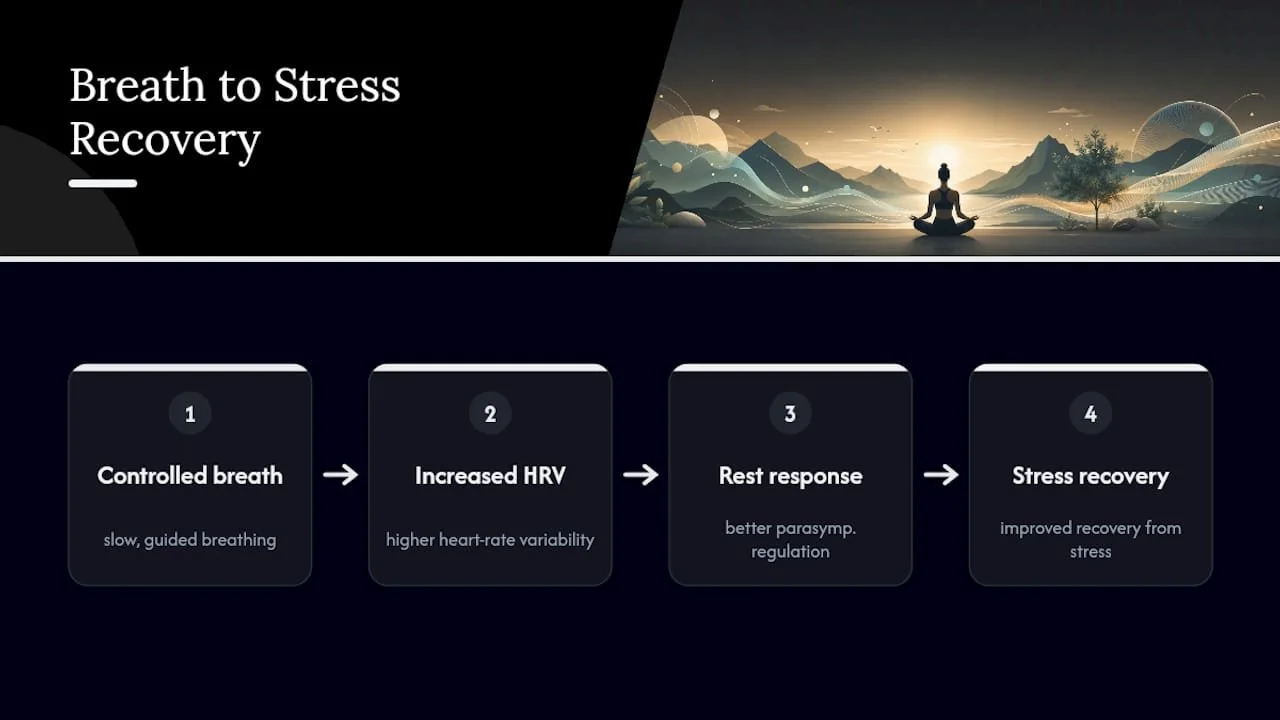
The mechanism traces back to breathing. Controlled breathwork increases heart rate variability, a marker of how well your nervous system shifts between stress response and recovery, and stronger HRV is tied to better parasympathetic regulation. That's the physiological basis for why a slow breath in a tense moment actually works.
There's a brain component too. Neuroimaging research on long-term practitioners found less gray matter loss in regions tied to positive emotion compared with non-practitioners, suggesting sustained practice may help protect emotional processing as people age.
For anxiety and depression, yoga functions best as an adjunct, not a replacement. It can meaningfully ease symptoms alongside therapy or medical treatment, but it isn't a universal fix, and no credible source frames it that way.
Pain and Chronic Conditions: Low Back Pain, Arthritis, Headaches
Chronic low back pain is where yoga has earned its clearest clinical footing. Systematic reviews and clinical guidance identify it as a recommended option for some cases of persistent low back pain, putting it in the same conversation as physical therapy for certain patients.
The picture is softer but still encouraging for other conditions. Research points to benefits for knee osteoarthritis, along with relief for migraines and tension headaches, though the effect sizes vary more across studies than they do for back pain.
None of this means yoga replaces medical care. It works best layered onto a treatment plan a clinician has already reviewed, especially for anyone managing arthritis flares or headache disorders that need medication management alongside movement.
Cardiovascular and Metabolic Effects: Blood Pressure, Lipids, Blood Sugar
Smaller trials show yoga can lower blood pressure and improve lipid or glucose markers in some groups, though the effect sizes are modest and vary by study population. Harvard Health notes the practice shows enough promise on cardiovascular risk factors that it's sometimes folded into cardiac rehabilitation programs.
That said, don't expect yoga to outperform vigorous aerobic exercise on heart health metrics. If you're managing hypertension or diabetes, yoga is a reasonable complement to your existing plan. It's rarely enough on its own.
How Yoga Actually Works: Breath, Nervous System, and Mechanics
The breath is doing more work than most people realize. Slow, controlled breathing (pranayama) stimulates the vagus nerve and increases parasympathetic activity, which is the nervous system's built in brake pedal. That's the same principle singers and speakers rely on when they use breathing and relaxation techniques to steady nerves before a performance.
Regular practice also appears to downregulate the HPA axis, the stress hormone loop that governs cortisol release, based on findings summarized by the Greater Good Science Center. On the physical side, sustained stretching and controlled loading improve connective tissue mobility and strengthen postural muscles, which explains a lot of the pain relief and balance gains discussed earlier.
Study designs vary widely across styles, from restorative yoga to power vinyasa, so not every finding generalizes across the board.
How to Start Yoga Safely and Build a Habit That Sticks
Start with frequency over intensity. Short daily or near-daily sessions tend to outperform infrequent long ones for building mindfulness, better sleep, and steadier mood.
Match the class to your level. A beginner-friendly hatha or gentle flow class builds a foundation before you try hot yoga or aerial work.
Tell your instructor about injuries or conditions. A qualified teacher will offer modifications instead of pushing you into a pose that aggravates an old injury.
Use props and take rest days. Blocks, straps, and the occasional child's pose prevent the sprains and strains that come from forcing range of motion you don't have yet, a principle covered in more depth in guidance on aerial yoga safety.
Pro Tip: Add two minutes of slow breathing before your first few classes. The stress relief kicks in faster than the flexibility gains, so it's the quickest way to feel a difference.
What the Research Actually Supports (and Where It's Thin)
The strongest signal comes from systematic reviews and summaries from sources like NCCIH and the HRV literature on breathwork, both of which point to consistent, replicated findings on stress, sleep, and balance.
Where the evidence gets thinner: sample sizes in many yoga trials are small, follow-up periods are often short (weeks, not years), and "yoga" itself covers wildly different interventions, from restorative sessions to vigorous power classes. That heterogeneity makes it hard to say a single style produces a specific effect size.
When you see a bold new yoga claim, ask what kind of yoga, how many people, and for how long. If those answers aren't stated, treat the claim as promising at best.
What Actually Changes When Someone Starts Practicing Regularly
The consistent thing we see in the classroom isn't dramatic. It's small and cumulative: someone starts sleeping through the night again, stops bracing their shoulders at their desk, or finally touches their toes without wincing. Mobility and stress relief usually show up before strength does, which matches what the research on breathwork and HRV would predict.
Beginner classes and breathwork focused sessions tend to be where people notice the fastest shifts, partly because the nervous system responds before the muscles catch up. If you want to test any of this yourself, our beginner classes and membership through the Karma Yoga Club are built around that same principle: consistency over intensity, and support over solo effort.
— Juiced