Instructor Tested Pilates Reformer Outfits to Keep Your Form Visible
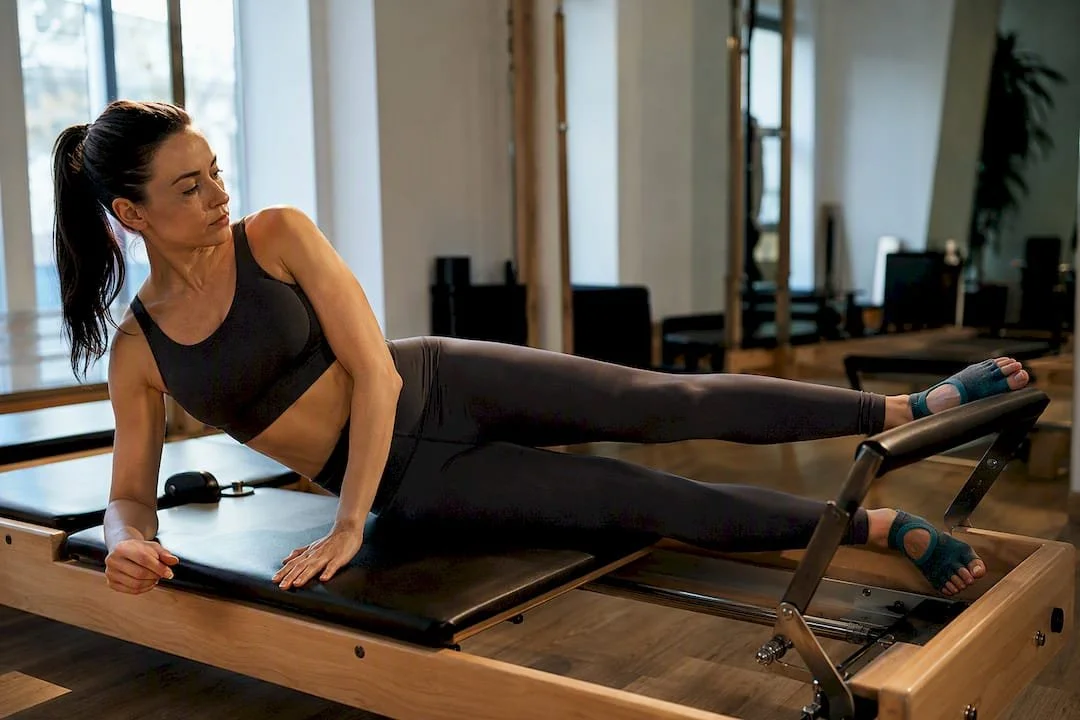
For Pilates reformer class, wear a fitted top, fitted leggings or bike shorts, and grip socks (or bare feet if your studio prefers that). The fit matters more than the brand. Your instructor needs a clear view of your shoulders, spine, and hips to correct your form, and anything loose can shift, ride up, or catch on the carriage while you're moving through it. Confirm your studio's footwear rule before you show up.
TL;DR:
Fitted, supportive tops are essential to allow instructors to properly monitor your shoulder, spine, and hip alignment during exercises.
High-waisted leggings or bike shorts with four-way stretch prevent slipping or riding up, ensuring stability throughout various reformer movements.
Grip socks provide traction and hygiene benefits, especially for beginners, whereas bare feet might offer better feedback but depend on studio policy.
Avoid clothing with zippers, snaps, or metallic details, as these can snag on springs or press into your back during specific exercises.
Test your outfit at home beforehand by hinging and rolling to ensure nothing slips or feels uncomfortable, helping you focus on the workout itself.
Table of Contents
What to Wear to Pilates Reformer: The Pack-and-Go Checklist
Here's the short version, so you can grab what you need and get out the door.
A fitted top (tank, tee, or sports bra with real support)
Fitted leggings or bike shorts that won't slide down when you move
Grip socks, or confirmation that your studio allows bare feet
A water bottle
A hair tie or two, even if your hair is already tied back
A couple of extras are worth tossing in your bag but aren't strictly required. A light, zipper-free layer helps if the studio runs cool before class starts, and a small towel comes in handy if you tend to sweat through a session. Before your first class, check the studio's beginner reformer guide or call ahead to confirm the footwear policy and whether grip socks are sold on-site. That one phone call saves you from showing up in the wrong socks.
Tops: What Support and Fit to Choose
A fitted tank, a snug tee, or a sports bra with real support works best on the reformer. You'll spend a good chunk of class lying flat, rolling through your spine, or holding positions upside down, and a loose shirt does not cooperate with any of that. It falls toward your face during a roll-up, bunches under your arms during side work, and hides exactly the alignment cues your instructor is trying to watch.
That last point matters more than most people realize. Instructors rely on seeing your ribcage, shoulder blades, and hip position to give useful corrections, and baggy clothing makes that job noticeably harder. If they can't see your alignment, they can't fix it.
For chest support, look for a built-in-bra top or a clasp-free sports bra. Standard bras with a back closure or an underwire can dig into your back during supine exercises, which gets uncomfortable fast when you're lying on a padded carriage for 45 minutes. If your studio feels cool before class begins, consider wearing a light, zip-free layer like a cropped sweater or soft wrap top that you can remove once you warm up. Avoid clothing with zippers that may cause discomfort during exercises.
Bottoms: Leggings, Bike Shorts, and How to Test Coverage
High-waisted leggings or bike shorts with four-way stretch are the standard, and for good reason. They move with your body through hip hinges, rolls, and deep stretches without sliding down or riding up, which is exactly what you need when you're constantly shifting between lying, kneeling, and standing on the reformer.
Length is a matter of preference. Full-length leggings and capri-length bike shorts both work fine, as long as the fabric has real stretch and a matte finish. Avoid loose joggers, wide-leg pants, or anything with a shiny, slippery surface. Loose fabric can catch on the reformer's springs, straps, or foot bar, and shiny leggings tend to slip against the vinyl carriage pad in a way that throws off your balance mid exercise.
Skip anything with a back zipper, snap, or heavy hardware too. It presses into your spine every time you lie down, and after the fifth rollback, you'll wish you'd left it in the drawer.
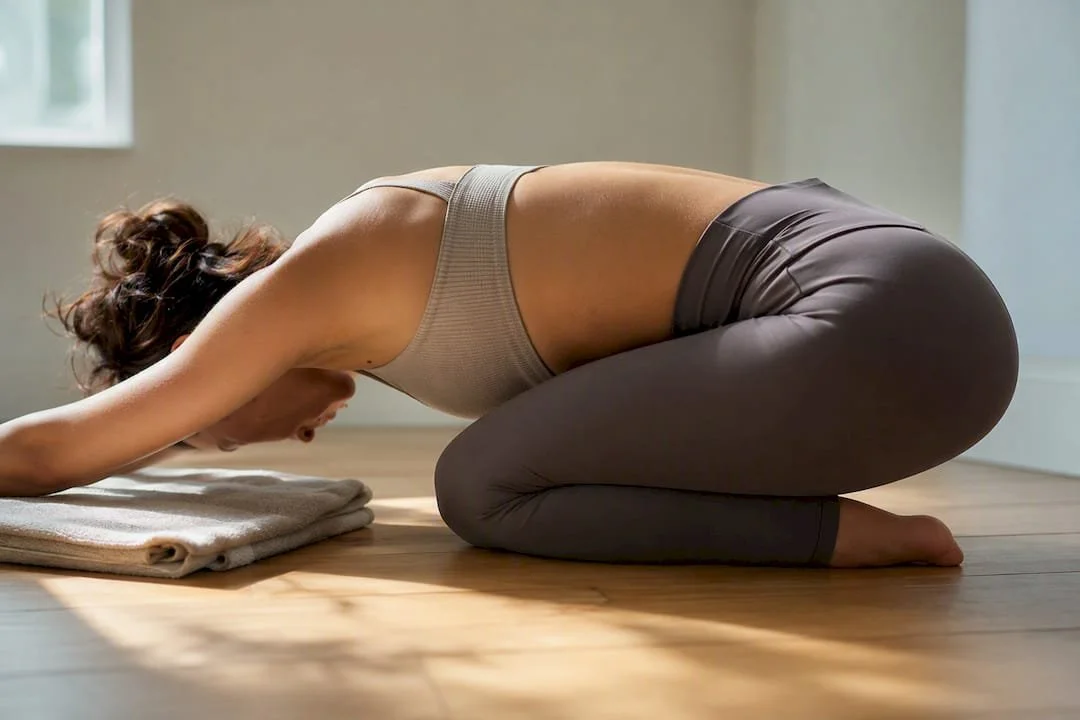
Here's a trick worth doing before you ever set foot in class: test your leggings at home. Hinge forward, roll down through your spine, and lie flat on the floor. If anything slips, rides up, or feels tight across the waistband, leave them for a different workout.
Grip Socks or Bare Feet: How to Decide
Most reformer studios land in one of two camps: they either require grip socks or they leave the choice up to you. Grip socks give you traction on the carriage and foot bar, which matters when your feet are pressing against a moving surface, and they solve the hygiene question that comes with a shared studio mat. For beginners especially, that extra grip can be the difference between a stable footbar push and a foot that slides at the worst moment.
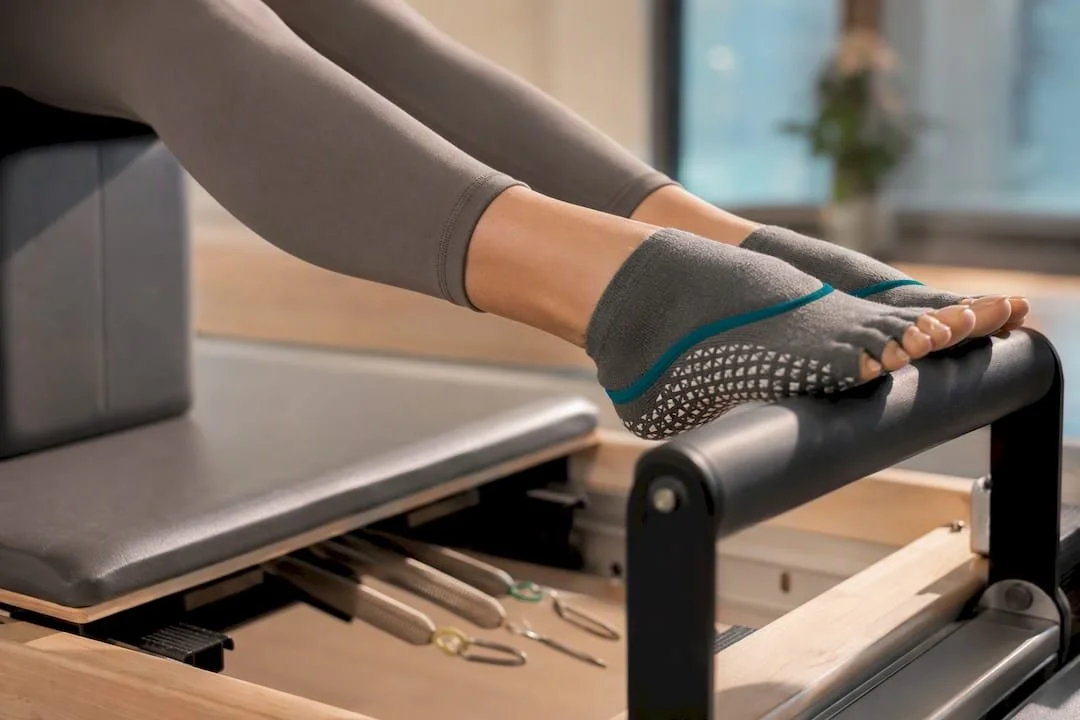
Bare feet have their own case. Some instructors actually prefer it, because bare skin gives you more direct feedback on foot position and pressure distribution, especially useful once you're comfortable with the machine. Whether that's an option at all comes down to studio policy, not personal preference.
What you should never wear: regular cotton socks or sneakers. Cotton socks slide on the carriage's vinyl surface with almost no traction, and sneakers just don't belong on reformer springs or a padded platform built for bare or gripped feet. If you show up without socks, don't panic. Many studios keep a small stock of grip socks for sale at the front desk for exactly this situation, but it's worth checking ahead so you're not stuck deciding on the spot.
Fabric and Fit: What Actually Prevents Slipping and Chafing
The material matters as much as the cut. Moisture-wicking, four-way-stretch blends with a matte finish are the gold standard for reformer class, because shiny, slick fabrics tend to slide against the carriage pad in a way that throws off small stabilizing movements you don't even notice you're making.
Flatlock seams are worth seeking out too. Bulky seams that feel fine standing up can dig into your skin uncomfortably once you're lying flat for a spine stretch or a set of leg circles. Minimal hardware, meaning no clasps, zippers, or metal grommets, keeps supine work comfortable instead of turning your lower back into a pressure point.
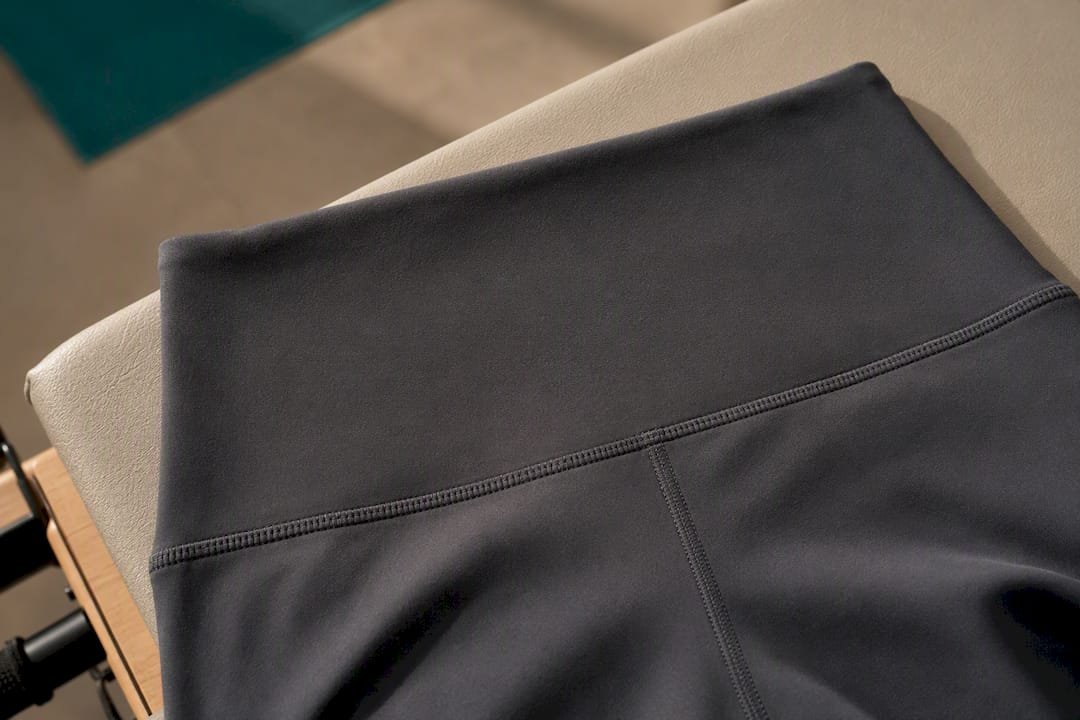
If you're taking a heated or infrared class, go lighter. A breathable, lightweight blend beats a heavier compression fabric when the room temperature is working against you before you've even started your warm up.
What to Avoid on the Reformer
A short list saves you a lot of trial and error. Skip these:
Zippers, snaps, or metal trim on leggings or shorts, which can snag on springs or press into your spine during supine exercises
Jewelry, especially rings, bracelets, and long necklaces, for the same snagging and pressure reasons
Heavy perfume or oiled skin, which can make grip socks or bare feet slide against the equipment
Baggy tops or wide-leg pants that hide your alignment and catch on the foot bar
Quick swaps fix all of it: seamless underwear instead of visible-line briefs, a zip-free pullover instead of a hoodie, and a slip-resistant, matte-finish fabric instead of anything glossy.
Hair, Accessories, and Small Comfort Items
Tie your hair back, full stop. A low ponytail or bun keeps it from sliding around against the headrest, which becomes genuinely distracting during headrest-supported exercises like the hundred. Bring a spare hair tie anyway, because the first one always seems to snap mid class.
A small towel and a water bottle round out the essentials. If the studio tends to run cold between exercises, thin socks for your hands or feet during rest periods can help, though most people don't need them once class gets moving. Skip jewelry entirely, and only bring gloves if your specific studio recommends them for grip.
Studio Checklist: Confirm the Rules Before You Show Up
A quick email or a look at the studio's website settles most of the guesswork. Ask about grip-sock requirements, how early to arrive, and whether socks are available for purchase if you forget yours.
For a first class, pack simply: a photo ID if you're a new client, a water bottle, grip socks or a plan to go barefoot, and enough time to arrive 10 to 15 minutes early. That buffer matters more on the reformer than in a typical group fitness class, since the instructor usually walks new students through machine setup before the session starts. If you want a fuller walkthrough of what a first class actually looks like, the beginner reformer guide covers what to expect once you're on the carriage, and the reformer mechanics breakdown is worth a skim if you're curious how the machine actually works before you try it.
Instructor Insight: What We Notice From the Studio Floor
The same wardrobe issues show up over and over. A loose top flips over someone's face during a roll-up. Shiny leggings slide half an inch on the carriage pad during a footwork series, just enough to throw off alignment. A bracelet catches on a spring during a hundred set. None of these are dramatic, but they all pull focus away from the actual exercise.
Clear sightlines are not a small thing for an instructor. Watching how your ribs move during breathing, how your hips track during a bridge, or whether one shoulder is riding higher than the other is how corrections actually happen in real time. Fitted, matte-finish clothing simply lets us do that job better. Community threads on the topic, including a long Reddit discussion among regular practitioners, land on the same consensus independently: fitted leggings, a snug top, and grip socks. That's not a coincidence. It's what actually works on the machine.
Style-Conscious Outfits That Still Work in Class
You don't have to choose between looking put together and moving safely. A monochrome set in a matte charcoal or navy reads polished under studio lighting and photographs well if you're heading straight to brunch after. A cropped rib-knit tank over high-waisted bike shorts in a muted sage or terracotta feels more considered than a plain black kit without sacrificing function. Neutral gray or black grip socks pull any outfit together instead of standing out as an afterthought.
One fashion roundup even featured reformer-ready pieces built around exactly this idea, matte finishes and tailored fits that photograph well. Just do the hinge-and-roll test in the fitting room before buying. Trend never beats fit.
Why the "Cute Outfit" Advice Online Misses the Point
Search "Pilates reformer attire" and you'll get a wall of shopping guides pushing color-coordinated sets and influencer-approved brands. Most of it skips the actual reason fit matters, which has nothing to do with aesthetics and everything to do with what your instructor can see and what your body does on a moving carriage.
Here's what gets underestimated: the cost of getting it wrong isn't just looking sloppy, it's losing corrections you're paying for. If your instructor can't see your shoulder blade position because your shirt has ridden up over your ears, that's a cue you don't get. If your leggings slip half an inch during footwork, you're compensating with muscles you didn't mean to engage, and you won't know it until your back is sore the next day. The gear matters because the class is built around real-time feedback, not because anyone cares what brand is on your waistband. Buy what fits, test it before class, and spend your actual money on the sessions instead of the outfit.
— Juiced
Try a Reformer Class at Amrita Yoga & Wellness
Group reformer classes suitable for beginners are offered in Philadelphia, so you don't have to figure out machine setup or footwear policy alone on your first visit. Instructors typically guide new students through the carriage, springs, and foot bar before the workout starts, and grip socks may be available if you show up without a pair.
If you're ready to put this checklist to use, book a class and bring the fitted top, leggings, and socks you just picked out. Curious what else the studio offers beyond the mat? Browse tarot readings as a low-key way to round out a wellness day, or head to the class schedule to find a reformer session that fits your week.
Sources
What to Wear to Pilates Reformer Class? — The Pilates Circuit
What to Wear to Pilates (2026): Complete Studio Outfit Guide | Pilates Collective Club
What to Wear to Pilates: Smart, Safe Outfit Guide — ThinkPilates