One to Three Minute Studio Tested Openings for Yoga Teachers
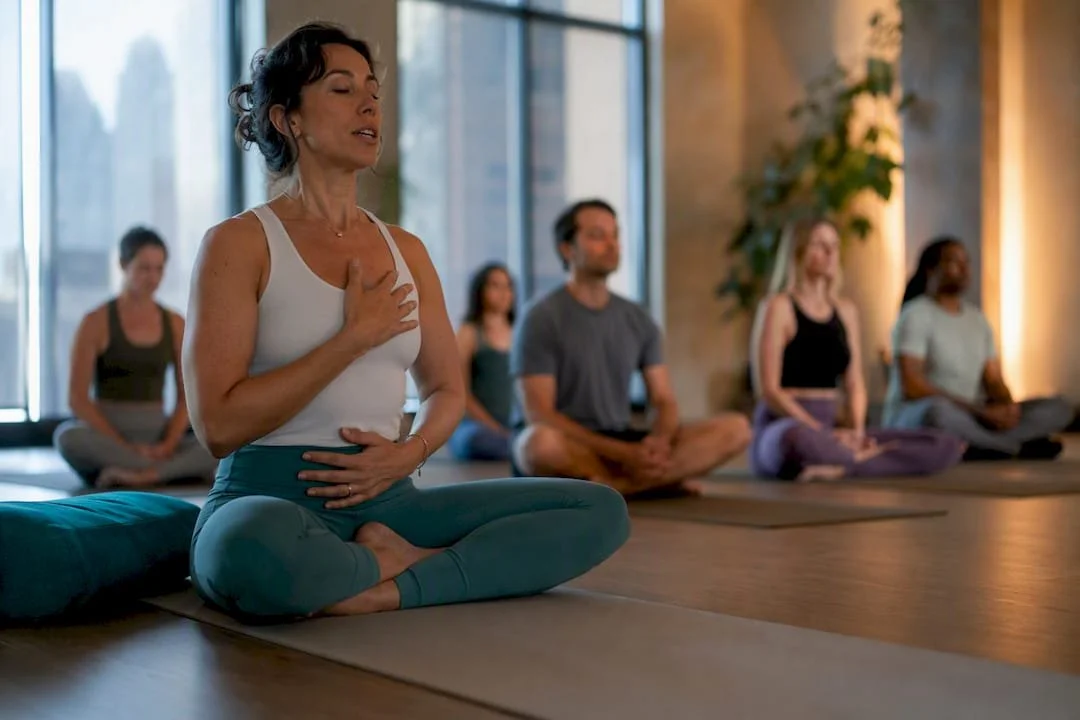
The single best opening for most classes is simple: arrive early enough to set the room, then start with a one to three minute welcome that pairs one breath cue with a short, plain-language intention. It works for vinyasa, restorative, and beginner rooms alike because it asks nothing complicated of the nervous system before movement begins. Longer scripts and elaborate framing almost always cost you more than they give back.
TL;DR:
Starting class with a one to three-minute breath cue and plain-language intention helps calm nervous systems and is suitable for all room types, from beginner to restorative.
The choice of opening depends on the class format and energy, with options like breath awareness, lying down or standing poses, and silence, each fitting different class goals.
Arriving 20 to 25 minutes early, setting the environment, rehearsing cues aloud, and having a clear backup plan enhance the effectiveness of the opening.
Teachers should focus on timing, simplicity, and trusting familiar scripts, as consistency builds confidence and regulatory effect more than a perfect wording.
Supporting tools such as scripted openings, props, and pre-class preparation help new teachers establish a calm, welcoming atmosphere quickly.
Table of Contents
Six Ways to Begin a Yoga Class, and When Each One Works
Every teacher eventually builds a short list of go-to openings. Which one you reach for should depend on the room's energy, the class format, and how much time you've actually got before the sequence needs to start moving.
Here are six reliable options, each suited to a different kind of room:
Sitting breath awareness. Have students find any comfortable seat, cross-legged or on a block, and spend 60 to 90 seconds noticing the breath without changing it. Works well for mixed-level classes where a few students need a moment to physically arrive. Modification: offer a chair or bolster for anyone whose knees complain about the floor.
Lie-down Savasana start. Students lie flat, palms up, and simply let gravity take over for two or three minutes before you say much of anything. Best for restorative or evening classes where the goal is to slow people down before you speed anything up. Modification: a rolled blanket under the knees relieves lower-back tension immediately.
Standing Tadasana or Mountain start. Everyone stands, feet grounded, arms relaxed, and you cue one deep breath with a slight lift through the chest. This suits energizing morning classes or any format where you want the room upright and alert from minute one. Modification: hands can rest on the hips instead of at the sides for anyone with shoulder tightness.
Child's Pose or kneeling start. A grounding, accessible shape that works even for students arriving stressed or rushed from traffic. It signals safety fast. Modification: widen the knees and stack forearms for anyone whose hips are tight.
Breathwork-only opening. Skip the pose entirely and lead two to five minutes of a simple technique, such as extended exhale breathing, before any physical movement starts. This fits workshops and breath-focused sessions where the whole point is nervous-system regulation, not stretching.
Silence or guided arrival. Say almost nothing. Let the room settle on its own for 30 to 60 seconds, then speak. It sounds risky the first few times you try it, but a coherent case exists that silence and a single grounding breath calm a room more effectively than a long rehearsed script, because the teacher's own settled state becomes the cue.
None of these require props beyond a mat, though blocks and bolsters make the seated and lying options accessible to more bodies. Pick one based on what the room needs that day, not on habit alone.
Copy-Ready Opening Scripts You Can Use Tonight
Scripts save you from freezing in front of a room, and they give you something concrete to adapt once you know your own voice. These three are built for different time budgets and can flex for beginner, mixed-level, or restorative rooms with small word swaps.
One-minute script. "Welcome, everyone. Find a comfortable seat or lie down, whatever your body wants right now. [Pause three seconds.] Take one breath in through the nose, and let it go slow. That's it. We'll ease into movement from here." This works when you're short on time or the room is already calm from a busy studio hallway.
Three-minute script. "Hi, I'm glad you're here. Quick logistics: mats face this direction, props are along the wall if you want them, and anything I offer today is optional. [Pause.] Let's settle in. Find your seat, close your eyes if that feels good, or keep a soft gaze down. [Guide two slow breaths, four counts in, six counts out.] Now let's take one gentle movement together, a slow roll through the spine, just to say hello to the body before we build." The optional line matters most in beginner or trauma-informed rooms, where permission to opt out lowers the stakes of the whole hour.
Five-minute script. "Welcome. Before we move, let's take a moment to arrive. [Guide 90 seconds of breath, in for four, out for six.] Today's theme, if it's useful to you, is steadiness. Not perfection, just steadiness. [Pause five seconds.] Let's bring that into the body with a gentle seated twist, first to the right. [Cue movement.] From here we'll build into our sequence." For restorative classes, swap the seated twist for a longer stillness and add a short guided body scan instead of movement.
Bracket any line you might cut on a rushed day, and keep an inclusive backup phrase ready, something like "modify anything, skip anything, this is your practice," so you're never caught explaining a modification mid-cue.
Studio-Backed Preparation Checklist Before Students Arrive
What happens before a single student walks in usually decides how the opening lands. Teachers who arrive 20 to 25 minutes early give themselves enough runway to set the room, adjust the lighting, and settle their own nerves before performing calm for a room full of strangers.
The checklist that actually matters looks like this:
Arrive 20 to 25 minutes before start time. Anything less and you're setting up while students are already unrolling mats, which reads as disorganized even if you're not.
Dim the lights if your studio allows it, and set the temperature slightly warmer than feels comfortable to you standing still, inspired by the techniques in Doors of Love and Light: Energize your space using love and light. Students in stillness feel cold faster than a moving teacher.
Lay out props before the door opens: blocks, bolsters, and blankets stacked where students can grab them without asking.
Rehearse your sequence out loud, even just once, standing in the empty room. Saying cues aloud catches the awkward phrasing that looks fine on paper but trips your tongue in real time.
Keep a small notecard at the front of your mat with your opening line and your sequence's key transitions. Nobody minds a teacher who glances at notes.
Test your playlist and speaker connection before anyone arrives, and set the tempo to match the class energy you're building toward, not the energy in the room right now.
If a new student has emailed ahead, greet them by name at the door. It costs you nothing and it changes their entire experience of walking into a room of strangers.
Pro Tip: Keep a one-line fallback ready for the days you're running behind: "We're going to skip the long version today and go straight into movement, breath first." Students rarely notice a shortened opening; they do notice a flustered teacher trying to cram everything in anyway.
Adjusting the Opening for Class Style and Length
A vinyasa class at 6 a.m. and a restorative class at 8 p.m. need different front doors. Matching the opening to the format, not just to your personal favorite, is what makes a sequence feel intentional instead of copy-pasted.
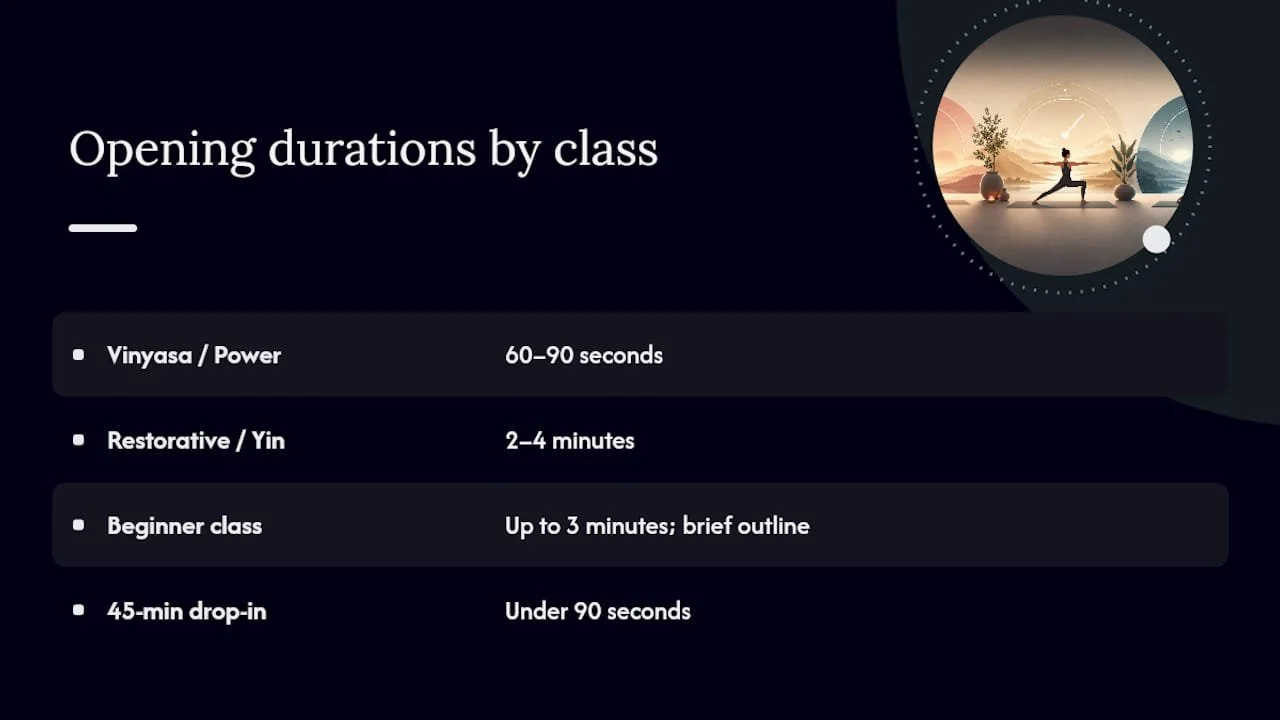
For a vinyasa or power class, a standing Tadasana opening with one strong breath cue builds the energy you're about to ask for. Budget 60 to 90 seconds; anything longer stalls momentum the class came for.
For a restorative or yin class, the lying Savasana or seated breath opening fits better, and you can afford two to four minutes since the whole session runs slower. Rushing a restorative opening defeats the format's purpose before it starts.
For a beginner class, Child's Pose or a simple seated check-in works best because it's physically accessible and doesn't ask for balance or flexibility before trust has been built. Spend up to three minutes here explaining, briefly, what to expect, since a short who/what/where/why/how outline in under a minute prevents mid-class confusion later. A related beginner-friendly sequence guide can help you plan the modifications that follow.
For a short drop-in class of 45 minutes, keep the opening under 90 seconds no matter the style. You simply don't have room for a five-minute arrival before the sequence needs to start.
For late arrivals or noisy rooms, don't restart your opening. Fold latecomers in with a quiet gesture toward open space and keep going. For mixed-ability rooms, offer the modification once, briefly, rather than narrating every option out loud.
Cueing, Voice, and the Language That Actually Lands
The words matter less than most new teachers think. The order and pacing matter more.
Cue in this sequence: breath first, then gross alignment, then refinement. Telling a room to "breathe, feel your feet on the ground, then notice if your shoulders are near your ears" respects how attention actually works, one layer at a time, instead of dumping five instructions into a single sentence.
Choice-based wording changes how safe a room feels. Inclusive teaching guidance recommends language that hands students the option rather than the order: say "you might" or "if it feels right" instead of commanding a shape. A few swaps worth memorizing:
Instead of "close your eyes," try "close your eyes, or soften your gaze toward the floor."
Instead of "sit up straight," try "find a seat that feels steady for you."
Instead of "everyone lie down," try "come to lying down, or stay seated if that serves you better."
Pause length matters more than most teachers realize. A three-second pause after a cue feels like plenty from the front of the room and barely registers from the back. Count to five in your head before you speak again; it will feel slow to you and just right to everyone else.
On voice: support your cues from the diaphragm rather than the throat, and slow your speaking pace by roughly a fifth compared to normal conversation. A teacher who treats silence as an active tool rather than dead air tends to calm a room faster than one filling every second with words. That single habit, pairing your own settled breath with a deliberate pause before speaking, does more to regulate a room's energy than any clever phrasing you could write in advance.
Common Opening Mistakes and Quick Fixes
Most opening problems come from adding, not subtracting. Here's what to cut and what to do instead.
Apologizing for anything. "Sorry, I'm a little behind today" only tells students to worry. Fix: skip the apology and start the breath cue anyway.
Over-explaining the sequence ahead. A long preview of everything coming in the next hour delays the part students actually came for. Fix: give one sentence of direction, then move.
Info overload in the first minute. Bundling logistics, theme, breathing instructions, and a joke all before the first pose leaves nothing memorable. Fix: pick one thread, either theme or logistics, not both.
Losing your place mid-cue. If your sequence slips your mind, don't scramble. Fix: drop into a simple pose, Child's Pose works, reset your own breath audibly, and pick back up from there.
Long asides for mixed-experience rooms. Explaining every modification for every body type out loud turns three minutes into eight. Fix: state the modification once, briefly, and trust students to take what they need.
How We Open Class at Amrita Yoga & Wellness
Most instructors at a yoga studio start the same practical way: arrive early enough to set the room without rushing, then open with a short welcome, one breath cue, and a plain-spoken line about what the hour holds. We've watched newer teachers gain real confidence once they stop trying to write the perfect opening and instead lean on a short, repeatable structure. Students settle faster, questions drop, and the room trusts the pace within the first minute. If you're building your own version, our guide on running an aerial yoga class from setup to close walks through a similar pre-class rhythm you can borrow from.
What New Teachers Get Wrong About the Opening
Most advice on beginning a class treats the opening like a performance moment, something to script perfectly and deliver flawlessly. That framing is backwards. The teachers who open a room well aren't the ones with the smoothest monologue; they're the ones who arrived early enough to not be rushing, and who trust a short breath cue over a clever line.
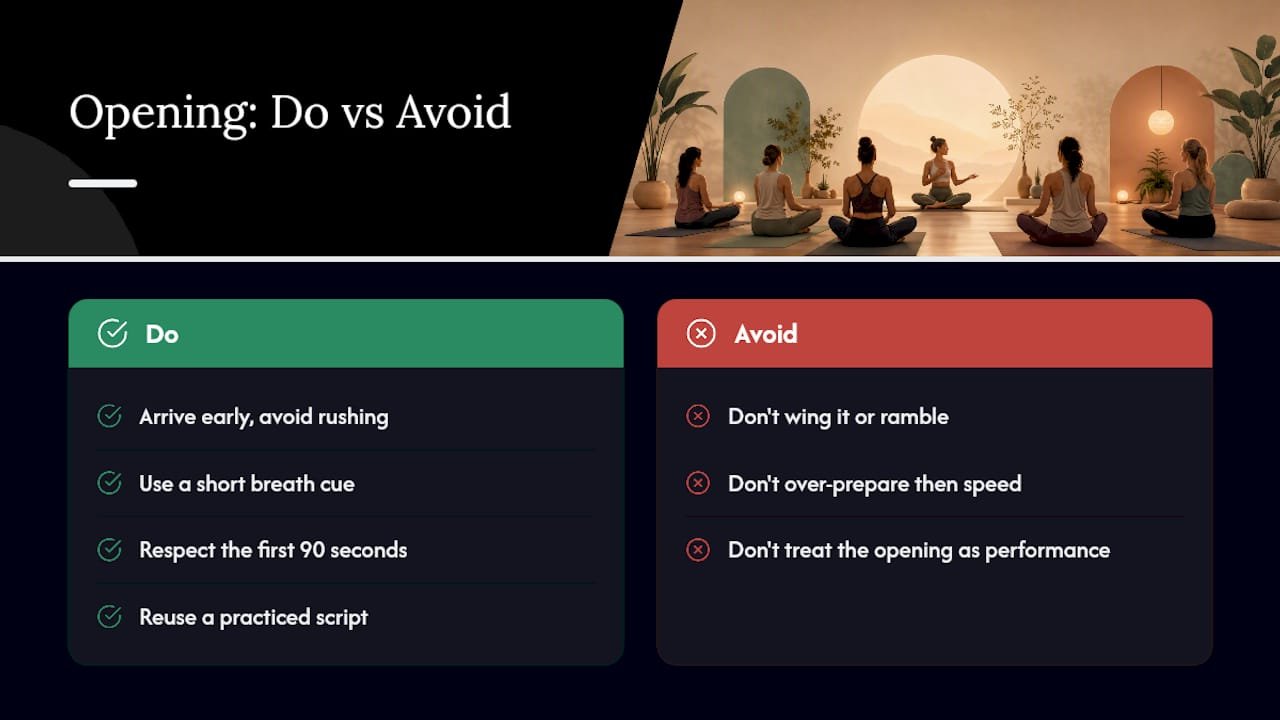
The overlooked piece is timing discipline. New teachers tend to either under-prepare the opening, winging it and rambling, or over-prepare it, writing a paragraph they then recite too fast because nerves speed everyone up. Both fail for the same reason: neither respects that the first ninety seconds exist to regulate a nervous system, not to entertain. A room doesn't need your best writing. It needs your steadiest breath.
If there's one piece of conventional advice worth pushing back on, it's the idea that every class needs a fresh, original opening. Reusing a script isn't lazy. It's the same reason pilots use checklists: repetition under low stakes builds reliability for the moments that matter more, further into the sequence, where your attention should be on the room, not on remembering your own words.
— Juiced
Amrita Yoga & Wellness: Support for Teachers Building Their Craft
Trainee teachers seeking more than scripts on a page can look for mentoring conversations and practical workshops built around front-of-room skills, things that are hard to learn from a manual alone.
Beyond class openings, our studio also hosts sessions like tarot readings for teachers looking to build out a broader wellness practice or add a reflective ritual to their own routine. If that kind of offering fits where you're headed next, you can check upcoming tarot reading sessions and see what's currently scheduled at the studio.
Sources
How to Teach Your First Yoga Class: The Complete New Teacher's Guide | FLOW Yoga Sequence Builder
How to start your yoga class with confidence | Sage Rountree
The most powerful cue in yoga might be silence — Yoga Teacher Journey