Start in 5 Minutes: Easy Yoga Routine with 3, 5 and 10 Minute Variants
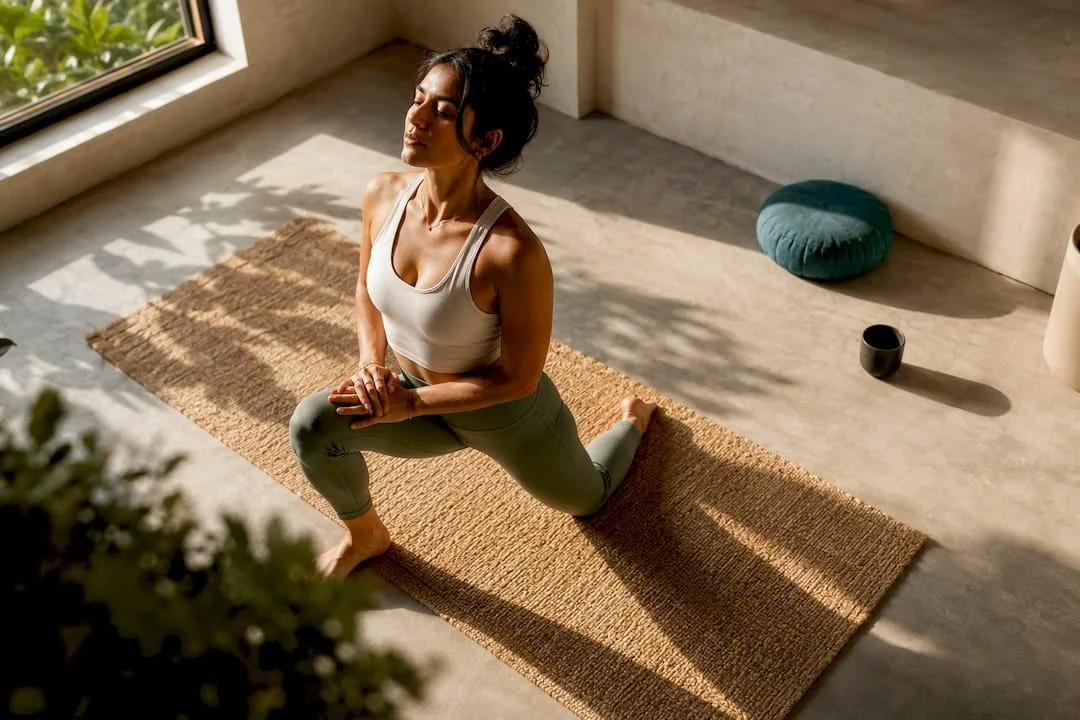
The fastest way into a daily practice is a five-pose, five-minute flow: Mountain Pose, Cat-Cow, Downward Dog, Child's Pose, and a seated forward fold. It needs nothing but floor space, works whether you're stiff from a desk chair or just woke up, and stretches to ten minutes or shrinks to three depending on your day.
TL;DR:
A five-minute yoga flow can be scaled to fit any schedule or energy level, with variations for 3, 5, or 10 minutes that target key areas.
Modifications like kneeling versions of poses and aid tools such as yoga blocks can help prevent strain without compromising the benefits.
Consistency, even with brief daily sessions, is more effective for building flexibility and reducing stress than sporadic, longer practices.
Beginners should avoid forcing deeper stretches and prioritize breathing and modifications to prevent pain and injury during poses.
A short routine can serve as a gateway to more advanced classes and longer practices once the habit and confidence are established.
Table of Contents
What Is an Easy Yoga Routine, and Why Start With One?
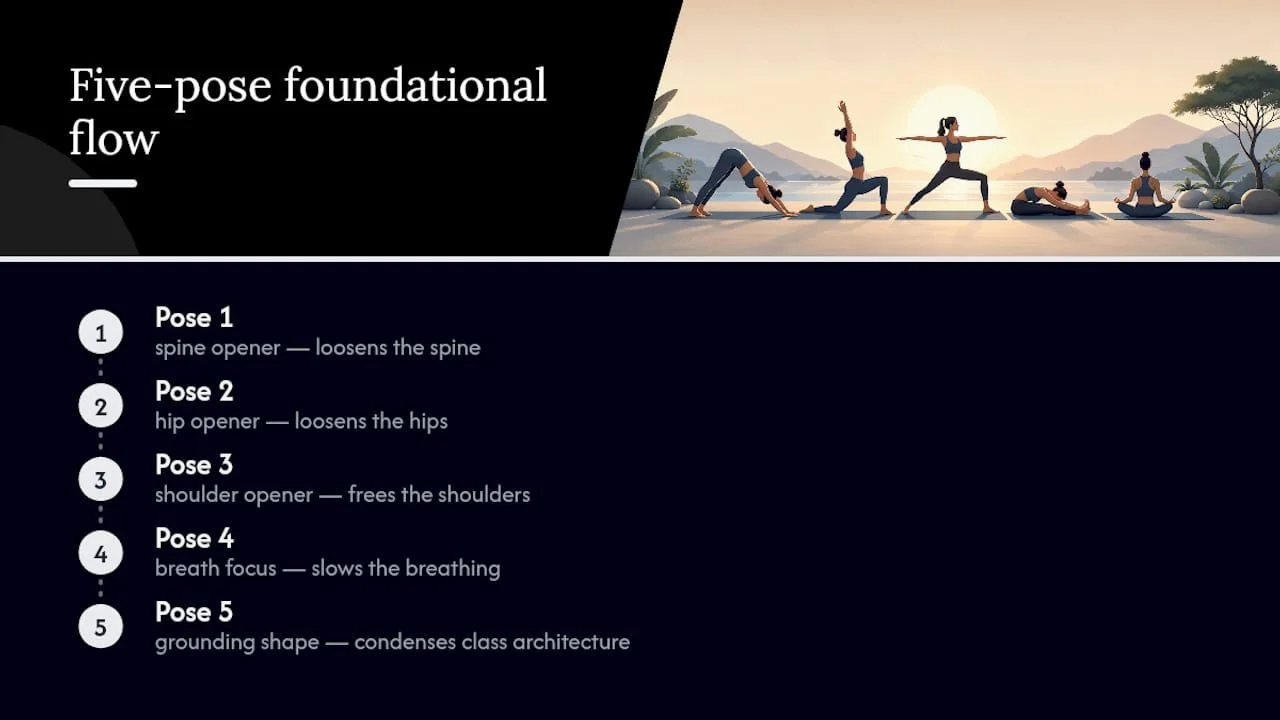
An easy yoga routine is a short, low-intensity sequence built from beginner-friendly poses. No handstands, no pretzel-level bending. Just a handful of shapes that loosen your spine, hips, and shoulders while slowing your breathing down.
The term gets thrown around loosely online, but the actual practice behind it has a name: a "grounding" or "foundational" sequence, the kind yoga teachers use to open nearly every class regardless of style. That's useful to know, because it means the five-pose flow below isn't a shortcut version of "real" yoga. It's the same architecture every Vinyasa, Hatha, or restorative class is built on, just condensed.
Step-By-Step Easy Yoga Routine (5 to 10 Minutes)
Run through this in order. Each pose gets two or three breaths at minimum; extend any of them if it feels good.
Mountain Pose (30 to 45 seconds). Stand with feet hip-width apart, weight even across both heels. Roll your shoulders back and down. Inhale to lengthen through the crown of your head, exhale to soften your jaw. This is your reset button, not a throwaway warm-up.
Cat-Cow (6 to 8 rounds). Come to hands and knees. Inhale, drop your belly, lift your chest and tailbone (Cow). Exhale, round your spine toward the ceiling, tuck your chin (Cat). Move slow enough that breath and motion land together.
Downward-Facing Dog (5 to 8 breaths). From hands and knees, lift your hips up and back, forming an inverted V. Bend your knees generously if your hamstrings are tight. You should feel a stretch through the backs of your legs, not a burn in your shoulders.
Low Lunge (5 breaths per side). Step your right foot forward between your hands, lower the back knee down. Inhale to lift your chest, exhale to sink your hips forward slightly. Switch sides.
Standing Forward Fold to rise (3 breaths). Feet hip-width, fold forward with soft knees, letting your head hang heavy. Inhale, roll up one vertebra at a time to standing.
Child's Pose (30 to 60 seconds). Kneel, big toes touching, knees wide or together, and fold your torso down between your thighs, arms stretched forward or resting alongside your body. Breathe into your lower back.
Seated Forward Fold (30 to 60 seconds). Sit with legs extended, hinge forward from your hips, hands resting wherever they land. This is your cooldown, not a flexibility test.
Turning this into 3, 5, or 10 minutes: For a 3-minute version, keep just Cat-Cow, Child's Pose, and the seated fold. For the full 5-minute flow, run the sequence above once through. For 10 minutes, repeat the standing sequence (steps 1 through 5) twice before moving into Child's Pose and the seated fold, and this doubled structure mirrors how longer beginner flows are typically built and repeated.
Why Each Pose Made the List (And How to Modify It)
Every pose in this flow earns its spot by targeting a specific area beginners tend to hold tension.
Mountain Pose: goal is postural awareness, not stretch. Alignment cue: stack ears over shoulders and hips. Modification: practice seated in a chair with feet flat, spine tall.
Cat-Cow: goal is spinal mobility. Cue: lead the movement with your breath, not your muscles. Modification: do it seated in a chair, hands on knees, arching and rounding your upper back.
Downward Dog: goal is a full-body stretch through the shoulders, spine, and hamstrings. Cue: press firmly through your palms so weight doesn't collapse into your wrists. Modification: bend both knees deeply, or skip it and use a wall, hands pressed flat while you fold forward at the hips.
Low Lunge: goal is hip flexor release. Cue: keep your front knee tracking over your ankle, not past your toes. Modification: place a folded blanket under the back knee, and keep your hips squared and neutral to avoid compensating through your lower back.
Child's Pose: goal is rest and gentle hip opening. Cue: let your forehead relax toward the floor or a block. Modification: widen your knees if your belly needs room, or sit on a pillow for height.
Seated Forward Fold: goal is hamstring release without strain. Cue: bend your knees as much as needed to keep your back straight. Modification: sit in a chair and fold forward over your thighs instead.
Pro Tip: Keep a yoga block or a thick book within reach. Sliding it under your hand in Low Lunge or under your seat bones during the forward fold takes real strain off your joints without changing what the pose is doing for you.
How Long Should Your Routine Be Today?
Energy levels shift day to day, and your routine should shift with them. Here's how to match duration to how you're actually feeling:
3-minute reset (low energy, seated or in bed): Cat-Cow for 8 rounds, followed by Child's Pose and a seated forward fold. No standing required.
5-minute morning flow: the full seven-pose sequence above, run once, moving briskly between poses.
10-minute fuller practice: repeat the standing portion twice, adding a slow Chair Pose hold before Low Lunge for extra strength work, and this longer version follows the same repeatable structure that 10-minute beginner sequences are typically built around.
No-standing variant (travel, injury, limited mobility): Cat-Cow, Child's Pose, seated forward fold, and a seated spinal twist, all done on a mat, bed, or even a chair.
Making Five Minutes a Daily Habit
Pick a fixed trigger. Right after you brush your teeth, right before coffee, right after you close your laptop. The specific time matters less than the consistency of pairing it with something you already do without thinking.
Start with a genuinely tiny goal, 3 minutes, not 20. You're building a habit, not training for a retreat.
Add a minute or two per week once the short version feels automatic, rather than jumping straight to a longer flow.
Track it somewhere visual, a wall calendar, a habit app, a checkmark on a sticky note. Seeing a streak is its own motivation.
Tell a friend or join a class occasionally. Social accountability catches the days willpower alone won't.
Consistency beats duration here. Practices as short as 3 to 10 minutes a day are enough to build flexibility and take the edge off daily stress, and doing five minutes every day outperforms one long session on a Sunday you'll probably skip anyway.
Common Mistakes That Turn Easy Yoga Into Hard Yoga
Sharp, stabbing pain means stop immediately. A dull stretch or mild muscle burn is normal and expected. That distinction is the single most important thing to know before you roll out a mat.
Beyond pain, a few habits quietly undermine beginners:
Holding your breath during effortful poses like Low Lunge, which spikes tension instead of releasing it.
Letting your lower back sag in Cow Pose or Downward Dog instead of engaging your core slightly.
Forcing a deeper stretch than your body offers that day, especially in forward folds.
Skipping modifications out of pride, then paying for it in sore knees or wrists the next morning.
Pro Tip: If you have a knee, hip, or back condition, or you're pregnant, run this routine by a doctor or physical therapist first. It's a gentle sequence, but "gentle" and "appropriate for every body" aren't the same thing.
How Amrita Yoga & Wellness Supports Beginners Past the Basics
A five-minute home flow is a great entry point, but it's not the ceiling. Beginner-friendly classes are available in Philadelphia across styles from restorative to hot yoga, plus pilates and tai chi, for anyone ready to build on what they've started at home.
Browse the beginner yoga routine breakdowns on the studio blog for more relaxation-focused sequences.
Read 7 essential poses for beginners for deeper cueing on the shapes covered above.
Check the daily yoga practice tag for habit-building posts and upcoming beginner classes.
If balance work in longer flows feels shaky, safe balance progressions for adapting standing poses are worth reviewing before adding poses like Tree or Warrior III.
A Short Word on Keeping This Approachable
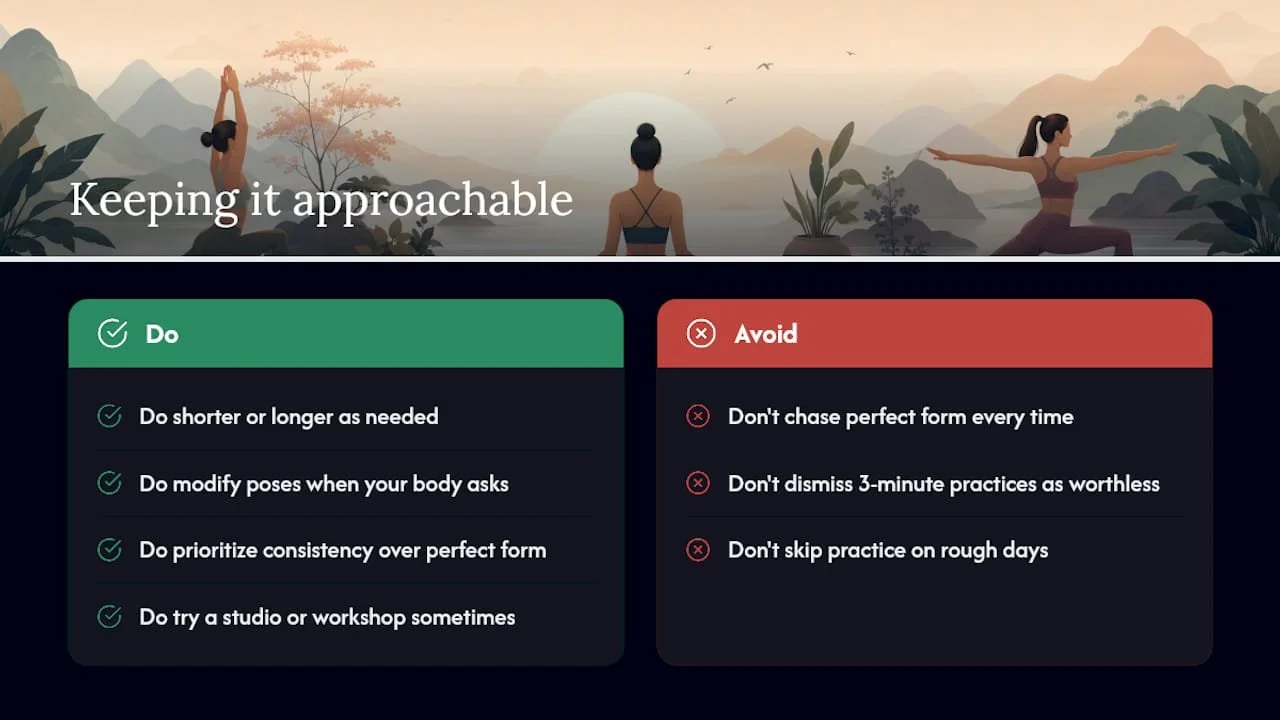
Nobody's grading your Downward Dog. The whole point of an easy routine is that it flexes with you, shorter on rough days, longer when you've got the time, modified whenever your body asks for it. Consistency wins over perfect form every single time.
Some mornings you'll do the full ten minutes. Other mornings, three minutes of Cat-Cow before coffee is the win. Both count. If you're craving structure or community beyond your living room, a studio like Amritayogawellness or a curious flip through its tarot readings and workshop offerings might be the next small step worth taking.
— Juiced