Best Yoga Style? Decide in 3–6 Sessions by Matching to Your Goal
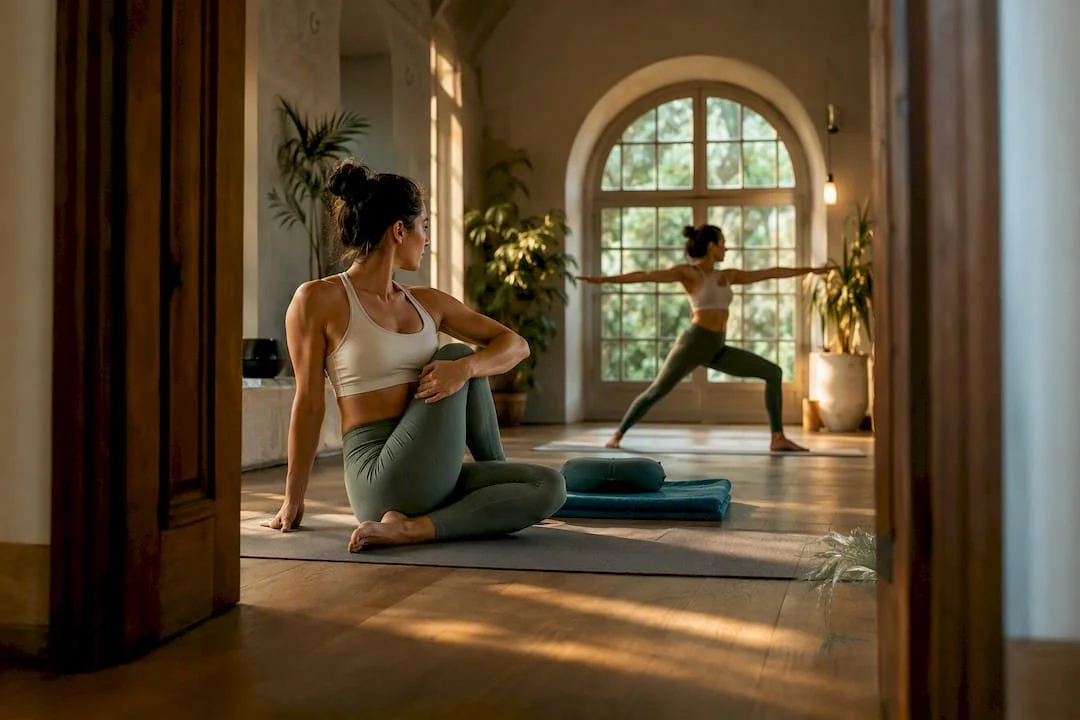
The best yoga style depends entirely on what you're trying to fix, build, or calm down. Restorative and Yin suit relaxation and recovery. Hatha and Iyengar build a safe foundation for beginners and anyone healing an injury. Vinyasa and Ashtanga suit those aiming to build strength and endurance. Whatever you pick, safety and a good teacher matter more than the label on the class schedule.
TL;DR:
Most yoga styles deliver similar health benefits, such as improved flexibility and reduced stress, regardless of the specific type practiced.
The risk profile of a yoga class depends more on intensity and heat than on style, requiring appropriate choices for individuals with health conditions.
Beginners should start with gentle styles like Hatha or Restorative, gradually exploring more active forms like Vinyasa or Power yoga over time.
Clear class descriptions, props availability, and instructor flexibility are more important than style labels when choosing a studio or teacher.
Testing different styles through short trial classes and asking targeted questions helps find the best fit for individual goals and physical capacity.
Amritayogawellness
Find Your Yoga Practice
Explore yoga, Pilates, barre, tai chi, and wellness offerings at Amrita Yoga & Wellness in Philadelphia.
Explore Amrita Yoga & Wellness
Table of Contents
What Does Research Say About the Best Type of Yoga for Health?
Which Yoga Styles Are Most Popular, and What Is Each Best For?
What Does Research Say About the Best Type of Yoga for Health?
Yoga's benefits show up consistently across styles: lower stress, better balance, improved flexibility, stronger muscles, and meaningful help managing chronic pain. What's surprising is how little the specific style seems to matter for those outcomes. A systematic review of randomized yoga trials found that the proportion of positive results in a study had no real connection to which yoga style was tested. Gentle Hatha classes and vigorous Ashtanga sessions both produced favorable results at similar rates.
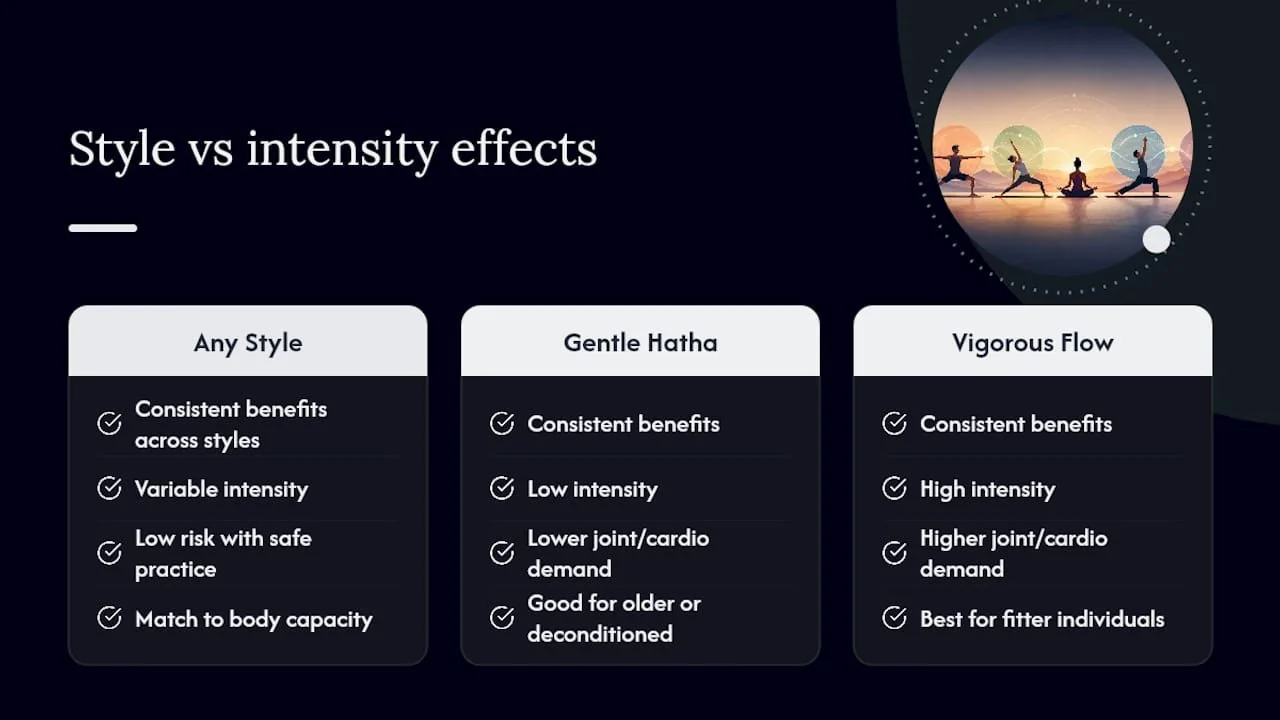
The National Center for Complementary and Integrative Health backs this up, noting that consistent, safely practiced yoga delivers benefits regardless of brand name or lineage. That said, intensity and heat do change the risk profile. Fast-paced flow classes and heated rooms demand more from your joints and cardiovascular system, which matters if you're older, deconditioned, or managing a health condition. The style you choose should match your body's current capacity, not just your goals.
Which Yoga Styles Are Most Popular, and What Is Each Best For?
Studio schedules can look like alphabet soup to a newcomer. Here's what the most commonly searched yoga styles actually involve and who tends to benefit most from each one.
Hatha: A slower, foundational style focused on basic postures and breath awareness. Best for beginners building body awareness and comfort with alignment. Low to moderate intensity, highly accessible, and classes typically move through postures one at a time with plenty of instruction.
Vinyasa: A flowing practice that links breath to movement in continuous sequences. Best for people wanting a cardio and strength component alongside flexibility work. Moderate to high intensity depending on the teacher, and pace can escalate quickly, so beginners should watch for classes labeled "slow flow" or "level one."
Ashtanga: A fixed sequence of postures performed in the same order every time, often at a demanding pace. Best for disciplined practitioners who already have some fitness base and want a repeatable, athletic practice. High intensity, with classes generally running the full primary series or a modified version of it.
Iyengar: A precision-focused style built around exact alignment, often using blocks, straps, and bolsters. Best for injury rehabilitation and anyone who wants detailed corrective feedback. Low to moderate intensity, and it's one of the more accessible styles for people with mobility limits, since clinical guidance specifically points to Iyengar for students needing modification.
Restorative or Yin: A slow practice using long holds, often five minutes or more per pose, supported by props. Best for stress relief, deep connective tissue stretching, and recovery days. Very low intensity, with classes usually built around five or six poses total for the entire session.
Bikram or hot yoga: A sequence of postures practiced in a room heated to around 100°F or higher. Best for people already comfortable with heat and looking for an intense sweat-based practice. High intensity, and providers caution that heat adds real risk for anyone with cardiovascular issues or heat sensitivity.
Power yoga: A fitness-driven variation of Vinyasa built for strength and calorie burn rather than tradition or lineage. Best for gym-goers who want a mat-based strength workout. High intensity, with class structure resembling circuit training more than a meditative flow.
Prenatal or chair yoga: Modified sequences adapted for pregnancy, seniors, or anyone with significant mobility restrictions. Best for accessibility first, movement second. Low intensity by design, and classes lean heavily on props and seated or supported variations of standard poses.
If you want to go deeper on any of these, what is Vinyasa yoga and why it matters breaks down the flow-based styles in more detail, and the Hatha yoga archive covers foundational practice for anyone starting from zero.
How Do You Choose the Right Yoga Style for Your Goals?
Start by naming your actual goal, not the goal you think you're supposed to have. Strength and endurance point toward Vinyasa, Ashtanga, or power yoga. Flexibility and relaxation point toward Yin, Restorative, or gentle Hatha. Rehab after injury or surgery points toward Iyengar or a private session with a teacher who can watch your form closely.
Before booking anything, ask a few direct questions:
What level is this class, and does the description match my experience?
Will props like blocks, straps, or chairs be available and offered?
What training does the instructor have, and how do they handle modifications?
Can I stop or rest during class without being singled out?
Is this a heated room, and if so, how does that affect people with health conditions?
Watch for red flags: instructors who push students past visible discomfort, classes that never mention props, or any pressure to skip a modification you clearly need. A physician-oriented review of yoga recommendations notes that class-level detail and instructor responsiveness predict individual outcomes better than the style name ever does.
Pro Tip: Give any new style three to six sessions before judging it. Your first class in a new format almost always feels awkward. The real signal comes once your body knows what to expect.
How Should Beginners Test Different Yoga Styles Safely?
A short, structured trial period beats guessing from a class description. Here's a simple way to explore without overloading your body.
Book one gentle class first, either Hatha or Restorative, and focus entirely on breathing and alignment rather than achieving deep stretches.
Over the next four to six weeks, add one more active class, like Vinyasa, alongside your gentle session to compare how your body responds to each pace.
Once you know which pace suits you, increase frequency gradually, and consider a private session if you want individualized correction on tricky poses.
A realistic starter week looks like two studio classes, one short home practice using basic poses, and at least one full rest day.
The 7 yoga styles for beginners and wellness seekers guide walks through this kind of trial approach in more depth if you want a longer roadmap.
What Should You Look for in a Yoga Studio or Teacher?
Clear class descriptions tell you more than any style label. A studio that spells out pace, prop availability, and who the class suits is doing you a favor before you even walk in.
Look for beginner-specific tracks rather than a single mixed-level catch-all.
Confirm the studio actually stocks props and that teachers offer them without being asked twice.
Check whether class descriptions mention modifications for injuries, pregnancy, or mobility limits.
Notice whether a studio offers multiple styles, since that variety usually signals teachers trained across different approaches rather than one narrow specialty.
Amrita Yoga & Wellness lists detailed class descriptions covering everything from hot yoga to restorative formats, which is exactly the kind of transparency worth checking for wherever you decide to practice.
An Honest Take on Picking a Yoga Style
Forget the label. A distracted teacher running a "gentle" class can hurt you faster than an attentive one running a demanding flow. Prioritize alignment, ask for modifications without hesitation, and let intensity build slowly under someone who actually watches how you move.
— Juiced
Ready to Try a Class and See What Fits?
Reading about styles only gets you so far. Amrita Yoga & Wellness gives you a direct way to test what actually suits your body, with class descriptions detailed enough that you know what you're walking into before you unroll a mat.
If you're brand new, the Nurtured Beginnings pass at $35 is built for exactly that first step, and a single Group Class Drop In runs $28 if you'd rather sample one class at a time. Prefer individual attention while you sort out alignment issues or an injury? A One to One Session starts at $85 per hour. New students can also check the New Student Specials page for current offers before committing to a membership. Book a beginner-friendly class this week and let a real teacher, not a style name, tell you what fits.
Sources
For deeper clinical detail, see the NCCIH overview on yoga effectiveness and safety and the physician's guide to recommending yoga published through the National Institutes of Health.
Yoga: In Depth — National Center for Complementary and Integrative Health (NCCIH)
A Physician’s Guide to Recommending Yoga — PMC (National Institutes of Health)
FAQ
What is the best yoga style for beginners?
Hatha is usually the easiest entry point because it moves slowly through basic postures with clear instruction. Iyengar is a strong second option if you want extra alignment feedback and prop support from day one.
Which yoga style is best for flexibility?
Restorative and Yin yoga produce the most noticeable flexibility gains because poses are held for several minutes, allowing connective tissue to release gradually. Hatha also builds flexibility over time, just at a gentler pace with shorter holds.
Is Vinyasa or Hatha better for weight loss?
Vinyasa burns more calories per session because it keeps you moving continuously between poses, which makes it a better fit for cardio-focused goals. Hatha still supports strength and mobility, but its slower pace means it contributes less to calorie burn.
Do I need to be flexible to start yoga?
No. Flexibility is a result of consistent practice, not a requirement to begin one. Beginner-friendly styles like Hatha and Restorative are built specifically for people starting with limited mobility or no prior experience.