What Is Hot Hatha Yoga? A Beginner's Guide
TL;DR:
Hot Hatha yoga is traditional yoga practiced in a heated room of 95 to 100°F, emphasizing alignment, breathwork, and static postures. Its heat increases flexibility, reduces stiffness, and promotes mental calmness through pranayama techniques, making it suitable for beginners and intermediate practitioners. Unlike Bikram, Hot Hatha offers flexible sequencing and a calmer, slower pace that fosters mindfulness and physical benefits.
Hot Hatha yoga is traditional Hatha yoga practiced in a room heated to around 95 to 100°F, combining static posture holds with pranayama breathing and meditation to build flexibility, muscle tone, and mental focus. The heat is not a gimmick. It loosens connective tissue faster than a room-temperature class, which means you can go deeper into poses with less risk of strain. If you have been wondering what is hot hatha and whether it belongs in your weekly routine, this guide covers everything from the core techniques and real benefits to safety rules and what to expect on day one.
What is hot hatha yoga, and how does it work?
Hot Hatha yoga is the heated version of classical Hatha yoga, a practice that combines asanas, pranayama, and meditation to balance the body and prepare the mind for stillness. The word Hatha comes from the Sanskrit roots ha (sun) and tha (moon), representing the balance of opposing forces within the body. That philosophy carries directly into the heated format. You work with both effort and ease, heat and breath, strength and surrender.
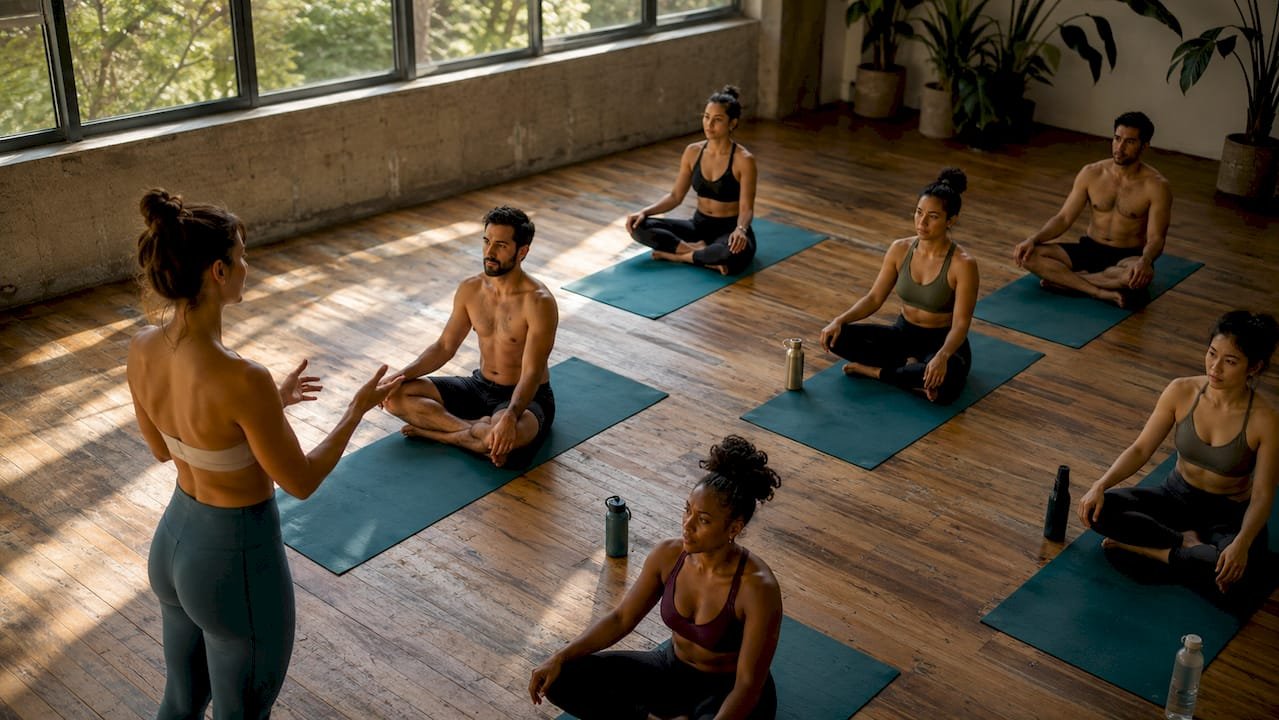
The class structure is deliberate and unhurried. An instructor guides you through traditional postures held for several breaths at a time, with the room temperature maintained between 95 and 100°F. That sustained heat increases blood flow to muscles, which makes deeper stretching more accessible and reduces the stiffness that often limits beginners in unheated classes. The emphasis throughout is on alignment and mindfulness, not speed.
Breathing is central to how the practice works. Most Hot Hatha classes incorporate pranayama techniques like ujjayi (victorious breath) or nadi shodhana (alternate nostril breathing) to regulate the nervous system and manage the physical intensity of the heat. This is what separates Hot Hatha from a simple "hot stretching" session. The breathwork turns the heat into a tool for mental training, not just physical conditioning.
Pro Tip: Hydrate before you arrive. Drink at least 16 ounces of water two hours before class so your body enters the heated room already prepared, not playing catch-up.
Key characteristics of a standard Hot Hatha class:
Room temperature between 95 and 100°F with controlled humidity
Traditional Hatha postures held for 5 to 10 breaths each
Slower pace focused on alignment, not transitions
Pranayama and brief meditation woven throughout
No fixed sequence, unlike Bikram yoga
What are the benefits of hot hatha yoga?
The benefits of hot hatha yoga span both the physical and mental. Heat loosens muscles more effectively than a warm-up alone, which translates to measurably greater range of motion during holds. Longer holds build the kind of slow-twitch muscle endurance that improves posture and functional strength over time. You are not just stretching. You are training your muscles to stabilize under sustained load.
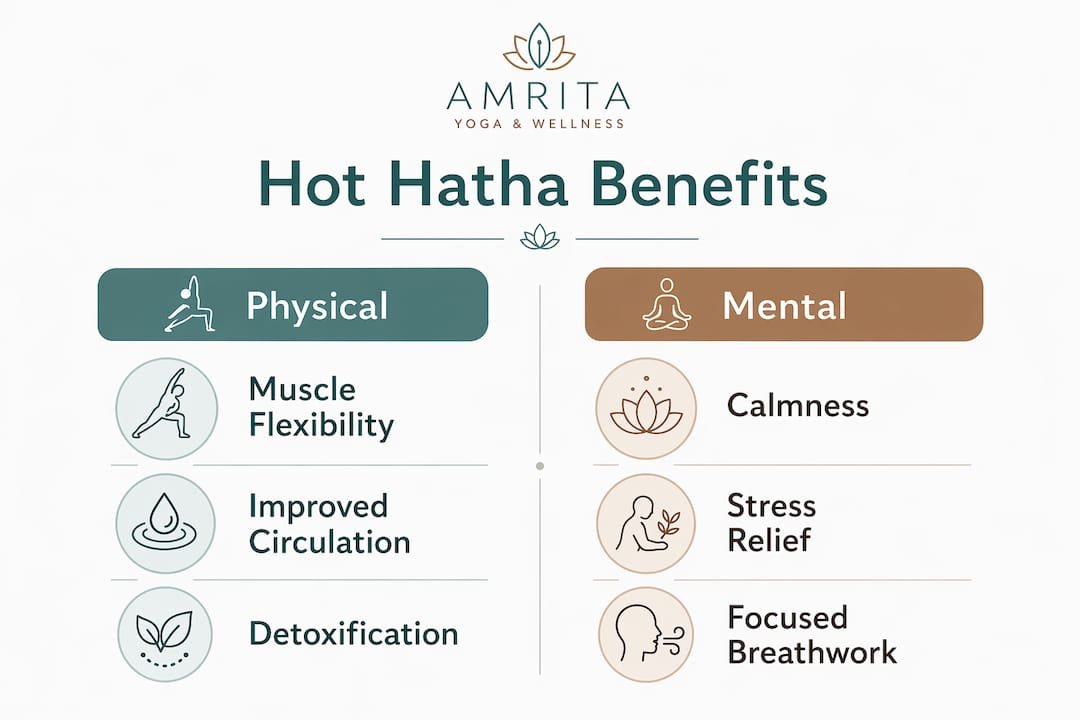
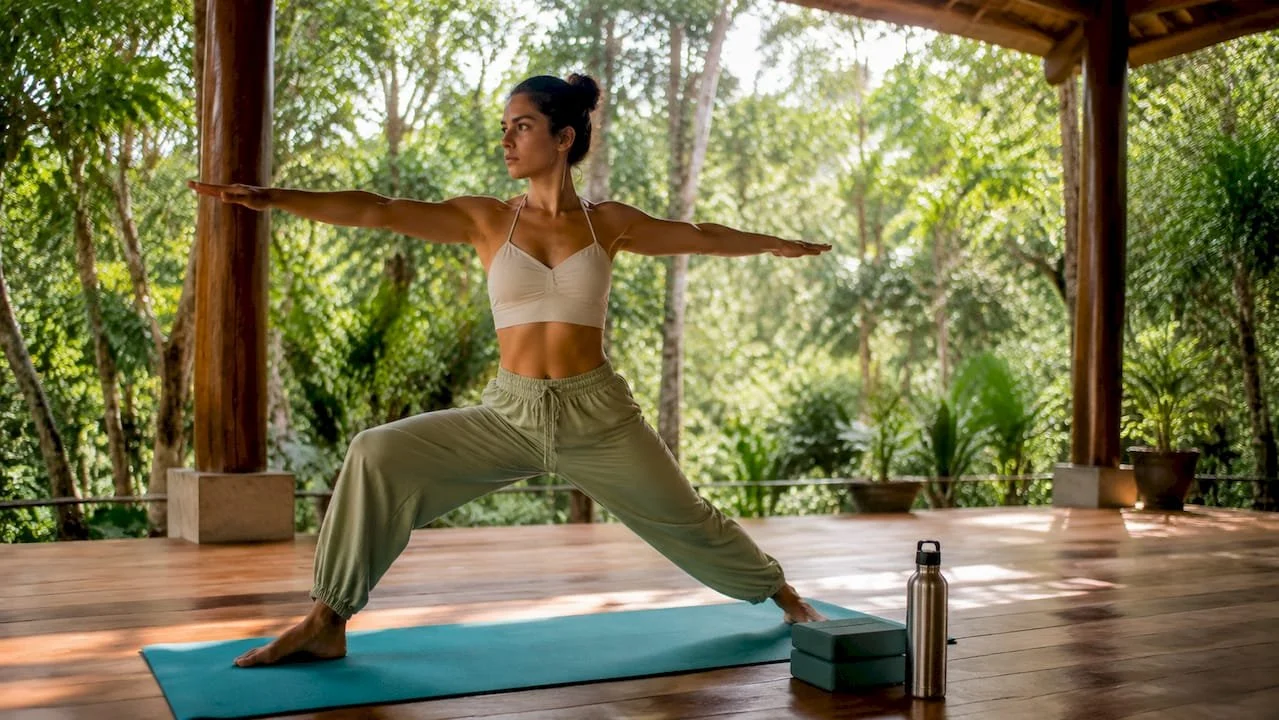
Mental calmness is one of the most reported outcomes, and it is not accidental. The combination of heat, breathwork, and slow movement activates the parasympathetic nervous system, the part of your nervous system responsible for rest and recovery. Practitioners who stick with Hot Hatha for four to six weeks consistently report reduced stress and improved sleep quality. The heat forces you to stay present. You cannot mentally drift when the room is 98°F and you are holding Warrior II for eight breaths.
The cardiovascular dimension is real but moderate. Your heart rate rises in a heated room even during slow movement, which means Hot Hatha delivers a mild aerobic stimulus without the joint impact of running or the intensity of Hot Power Yoga. This makes it particularly well-suited for people returning from injury or those who want cardiovascular conditioning without high-impact movement.
Specific benefits backed by practice and research:
Flexibility: Heat increases muscle elasticity, allowing deeper stretches in poses like forward folds and hip openers
Muscle tone: Sustained holds in postures like Chair Pose and Warrior III recruit stabilizing muscles that dynamic flows often skip
Endurance: Holding poses for extended periods in heat builds mental and physical stamina simultaneously
Stress reduction: Pranayama and meditation components lower cortisol and promote mental calm
Improved circulation: Elevated room temperature dilates blood vessels and increases blood flow to muscles and joints
How does hot hatha differ from Bikram, Vinyasa, and traditional Hatha?
Understanding where Hot Hatha sits among other yoga styles removes a lot of confusion for beginners. Hot Hatha moves slower than Vinyasa and uses static holds rather than flowing transitions. Vinyasa links breath to movement in a continuous sequence, making it more aerobic and cardiovascular. Hot Hatha prioritizes depth and alignment over momentum.
The comparison with Bikram is equally important. Bikram yoga follows a fixed sequence of exactly 26 postures practiced in a room heated to approximately 105°F with 40% humidity. Hot Hatha has no fixed sequence, runs cooler, and incorporates meditation and pranayama that Bikram's format does not include. Hot Hatha instructors have creative freedom in sequencing, which means classes vary significantly between studios and teachers.
Traditional Hatha yoga, practiced at room temperature, shares the same postures and philosophy but lacks the heat variable. The heat in Hot Hatha is not decorative. It changes the physiological experience of every pose, accelerating the physical benefits and adding a layer of mental challenge that room-temperature classes simply cannot replicate.
| Style | Temperature | Pace | Sequence | Best for |
|---|---|---|---|---|
| Hot Hatha | 95 to 100°F | Slow, static holds | Flexible, instructor-led | Beginners to intermediate |
| Bikram | ~105°F | Moderate, structured | Fixed 26-pose sequence | Those wanting consistency |
| Vinyasa | Room temp or warm | Fast, flowing | Dynamic, varies by class | Intermediate to advanced |
| Traditional Hatha | Room temperature | Slow, static holds | Flexible, instructor-led | All levels, especially beginners |
The table makes one thing clear. Hot Hatha occupies a specific niche: the mindfulness and accessibility of traditional Hatha, combined with the physical intensity of a heated environment, without the rigidity of Bikram or the aerobic demand of Vinyasa.
What safety considerations do you need to know?
Heat changes the risk profile of yoga in ways that matter before you ever step into a studio. Hot yoga is not safe for everyone, and knowing who should consult a doctor first is not optional reading. Pregnant people, and those with high blood pressure, asthma, or cardiovascular conditions, face elevated risk from heat stress and should get medical clearance before attending any heated class.
Dehydration is the most common issue beginners encounter. Sweating in a 98°F room depletes fluids faster than most people expect, and thirst is a lagging indicator. By the time you feel thirsty during class, you are already mildly dehydrated. Hydration planning needs to start hours before class, not in the parking lot.
Follow these steps to prepare safely for your first Hot Hatha class:
Drink at least 16 ounces of water two hours before class
Eat a light meal two to three hours before, not immediately before
Bring a large water bottle and a full-size towel to class
Wear moisture-wicking, form-fitting clothing to manage sweat
Arrive five minutes early to acclimate to the room temperature before class begins
Know the signs of heat exhaustion: dizziness, nausea, rapid heartbeat, or sudden weakness
Pro Tip: If you feel dizzy or lightheaded during class, sit or lie down immediately. Leaving the room briefly to cool down is always the right call. Pushing through heat illness symptoms is the one mistake you cannot afford to make.
For a deeper look at hot yoga safety practices, Amritayogawellness has published detailed guidance specifically for heated class formats.
How can beginners get started with hot hatha yoga?
Hot Hatha is accessible for beginners precisely because of its slower pace and alignment focus. You do not need prior yoga experience to attend your first class. What you do need is realistic expectations and a willingness to listen to your body rather than compete with the person on the mat next to you.
Choose a class explicitly labeled "Hot Hatha" or "Heated Hatha" rather than "Hot Power" or "Hot Flow," which are faster and more demanding. Many studios, including Amrita Yoga & Wellness in Philadelphia, offer beginner-specific sessions where instructors provide more detailed alignment cues and offer pose modifications throughout class.
What to bring and wear matters more in a heated class than in a standard studio:
A non-slip yoga mat or a mat towel to manage sweat on the surface
Moisture-wicking shorts or leggings and a fitted top
A large water bottle, at least 24 ounces
A full-size towel for your mat and a smaller one for your face
An open mindset about resting in Child's Pose whenever you need it
The first class will feel intense. The heat is the dominant sensation for most beginners, and that is normal. Your body needs two to three sessions to begin adapting to the thermal environment. Resist the urge to judge the practice based on one class. The adaptation itself is part of the training. For preparing for hot yoga, reviewing a preparation checklist before your first session significantly reduces first-class anxiety.
Pro Tip: Modify every pose that causes pain, not just discomfort. Bending your knees in a forward fold or using a block in Triangle Pose is not a shortcut. It is correct technique for your current range of motion.
Key takeaways
Hot Hatha yoga delivers the most benefit when you combine proper hydration, realistic expectations, and consistent attendance over several weeks.
| Point | Details |
|---|---|
| Core definition | Hot Hatha is traditional Hatha yoga practiced in a room heated to 95 to 100°F with a focus on alignment and breathwork. |
| Primary benefits | Heat enhances flexibility, static holds build muscle tone, and pranayama reduces stress and improves mental focus. |
| Key difference from Bikram | Hot Hatha has no fixed sequence and runs cooler than Bikram, making it more varied and beginner-friendly. |
| Safety first | Drink 16 ounces of water two hours before class and avoid Hot Hatha if you have cardiovascular or heat-sensitivity conditions without medical clearance. |
| Beginner strategy | Start with classes labeled "Hot Hatha" or "Heated Hatha," bring a mat towel, and plan to rest in Child's Pose as needed. |
Why Hot Hatha changed how I think about yoga intensity
Most people assume intensity in yoga means speed. Vinyasa flows, power sequences, and rapid transitions feel demanding because they are busy. Hot Hatha taught me that the hardest thing in yoga is staying completely still in a difficult position while the room is 98°F and your mind is screaming at you to move.
The heat is not the enemy. It is the teacher. Every time I have watched a beginner walk into their first Hot Hatha class, the heat strips away the performance instinct almost immediately. You cannot fake stillness in a hot room. You either find your breath and settle in, or you spend the entire class fighting yourself. That struggle, and the moment it resolves, is where the real practice lives.
My honest observation after years of teaching and practicing in heated environments: Hot Hatha is underrated as a mental training tool. People come for the physical benefits, the flexibility and the muscle tone, and those are real. But the students who stay come back because of what happens to their focus and stress levels outside the studio. The breathwork carries over. The stillness carries over.
If you are on the fence, start with one class. Hydrate properly, lower your expectations for the first session, and pay attention to how you feel the following morning. That is where Hot Hatha makes its case.
— Juiced
Explore Hot Hatha yoga at Amrita Yoga & Wellness
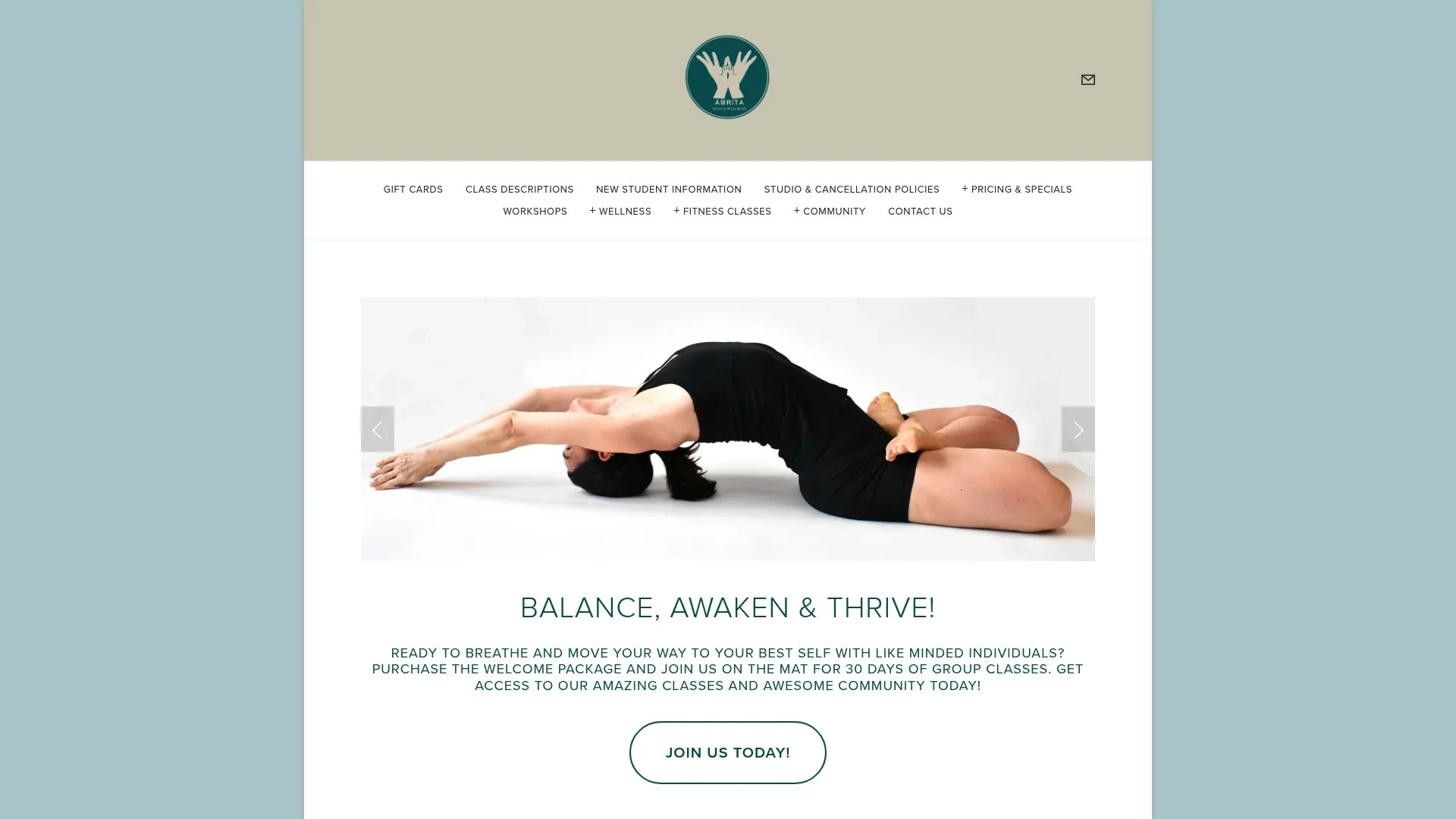
Amrita Yoga & Wellness in Philadelphia offers Hot Hatha classes designed for all experience levels, from first-timers to seasoned practitioners looking to deepen their alignment practice in a heated environment. The studio's class schedule includes beginner-friendly heated sessions with instructors who provide modifications and detailed cues throughout. Beyond yoga, Amritayogawellness supports whole-person wellness through offerings like tarot readings for those exploring the mind-body-spirit connection alongside their physical practice. If you are ready to experience Hot Hatha in a welcoming, community-focused studio, visit Amrita Yoga & Wellness to browse the current class schedule and sign up.
FAQ
What is hot hatha yoga in simple terms?
Hot Hatha yoga is traditional Hatha yoga practiced in a room heated to 95 to 100°F, focusing on holding postures longer to build flexibility, muscle tone, and mental calm through breathwork and alignment.
How hot is a hot hatha yoga class?
A Hot Hatha class is typically heated to 95 to 100°F, which is cooler than Bikram yoga's standard 105°F but warm enough to significantly increase muscle elasticity and cardiovascular load.
Is hot hatha yoga good for beginners?
Yes. Hot Hatha is one of the most beginner-accessible heated yoga formats because its slower pace and alignment focus allow new students to learn postures correctly without the pressure of keeping up with a fast-moving flow.
Who should avoid hot hatha yoga?
People who are pregnant or have high blood pressure, asthma, or cardiovascular conditions should consult a doctor before attending any heated yoga class due to the elevated cardiovascular and heat stress involved.
How is hot hatha different from Bikram yoga?
Hot Hatha uses a flexible, instructor-designed sequence in a room at 95 to 100°F, while Bikram follows a fixed 26-pose sequence in a hotter room at approximately 105°F with strict humidity controls.