Infrared Heat Yoga: Benefits for Body and Mind

TL;DR:
Infrared heat yoga heats the body directly using far-infrared panels at lower temperatures than traditional hot yoga. It improves muscle flexibility, circulation, and cardiovascular health while offering easier breathing and greater accessibility. Practicing two to three times a week supports flexibility, recovery, and nervous system regulation.
Infrared heat yoga is defined as a yoga practice performed in a studio heated by far-infrared panels rather than conventional forced-air systems. The benefits of infrared heat yoga go well beyond simple warmth: practitioners gain deeper muscle flexibility, improved circulation, and a more breathable environment than traditional hot yoga provides. Studios like ALIVE Studios and SaunaCloud have documented how far-infrared energy penetrates tissue directly, warming muscles from the inside out at room temperatures between 85–95°F. That combination of deep tissue warming and cooler air makes infrared yoga one of the most accessible heated practices available today.
What are the benefits of infrared heat yoga on the body?
Far-infrared wavelengths penetrate 1.5–3 inches into skin and muscle tissue. That depth of penetration is what separates infrared yoga from every other heated practice. The heat reaches the muscle before the air around you feels oppressive.
Collagen fibers become more pliableabove 104°F, which directly increases tissue extensibility during stretches. This means your hamstrings, hip flexors, and connective tissue respond to poses more readily than they would in a room-temperature class. The result is a safer, more effective stretch with less risk of overpulling cold tissue.
Vasodilation follows the tissue warming. Blood vessels widen, circulation increases, and oxygen delivery to working muscles improves. Infrared heat produces cardiovascular benefits comparable to moderate aerobic exercise by elevating heart rate and blood flow. A single infrared yoga session can deliver a meaningful cardiovascular load without the intensity of a run or spin class.
Your body also responds with thermoregulatory sweating. Sweating in infrared heated yoga mainly functions to cool the body. The detoxification claims you may have read about lack strong scientific support, so the real wins here are circulatory and musculoskeletal.
Key physical effects of infrared heat yoga include:
Deeper muscle warming at lower ambient temperatures than traditional hot yoga
Increased tissue extensibility from collagen pliability above 104°F
Vasodilation that improves blood flow and oxygen delivery
Cardiovascular conditioning comparable to moderate aerobic exercise
Preliminary evidence of reduced muscle soreness and joint health support with regular far-infrared exposure
Pro Tip: Some studios allow infrared heating to run at higher intensity at the start of class to pre-warm tissues. Arriving five minutes early and lying in savasana before class begins lets you absorb that initial heat dose and enter your first pose with warmer, more responsive muscles.
How does infrared yoga compare to traditional hot yoga?
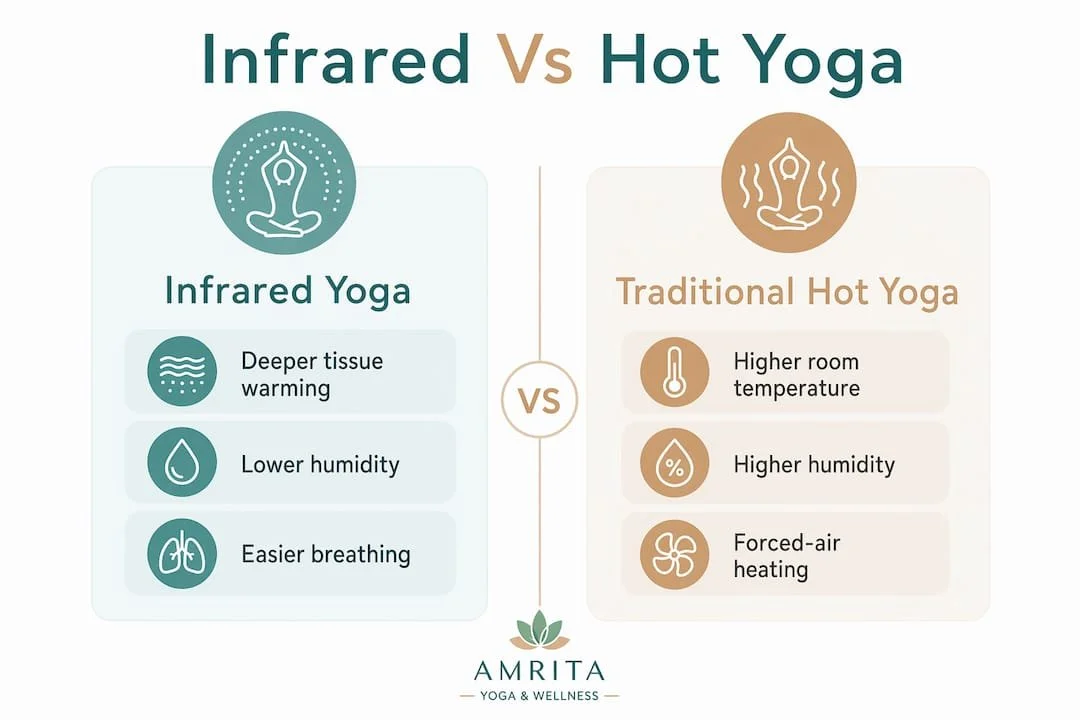
The core difference between infrared yoga and traditional hot yoga is the heat delivery method, not the yoga itself. Traditional hot yoga heats the ambient air to 95–105°F using forced-air systems or radiant heaters. Infrared yoga warms the body directly at a room temperature of 85–95°F. The postures are often identical. The experience is not.
Infrared heated yoga offers easier breathing due to lower humidity and cooler surrounding air. In a traditional Bikram or hot vinyasa class, the dense, humid air can make breathing feel labored from the first sun salutation. Infrared studios feel warmer in your muscles than in your lungs. That distinction matters for practitioners with respiratory sensitivity or those who have avoided hot yoga because the air felt suffocating.
| Feature | Infrared yoga | Traditional hot yoga |
|---|---|---|
| Room temperature | 85–95°F | 95–105°F |
| Heat delivery | Direct tissue penetration | Heated ambient air |
| Humidity level | Lower | Higher |
| Breathing comfort | Easier | More labored |
| Tissue warming depth | 1.5–3 inches | Surface level |
| Cardiovascular load | Moderate to high | Moderate to high |
| Accessibility | Higher for beginners | Moderate |
Both practices produce cardiovascular and flexibility benefits. The perceived intensity differs significantly. Practitioners who find traditional hot yoga overwhelming often report that infrared classes feel challenging but manageable. The heat delivery method accounts for most of that difference in experience.
Practical differences practitioners notice most:
Infrared studios feel warm without the wall of humid heat at the door
Sweat onset is gradual rather than immediate
Longer pose holds feel more sustainable due to easier breathing
Practitioners with mild heat sensitivity often tolerate infrared better
What mental health benefits does infrared heat yoga offer?
Infrared heat yoga shifts the nervous system away from fight-or-flight and toward rest-and-restore. The combination of gentle heat, deliberate breathwork, and physical movement creates conditions where the parasympathetic nervous system can take over. That shift is the mechanism behind the relaxation practitioners feel after class, not just during it.

Practitioners report improved relaxation, reduced anxiety, and clearer mental focus after infrared heated sessions. The breathability of infrared studios plays a direct role here. When breathing is easy, mindfulness practice deepens. You can focus on the pose and your breath rather than managing the sensation of hot, heavy air.
The cardiovascular effects of infrared heat also support mental well-being. Elevated heart rate and improved circulation during class produce effects similar to moderate aerobic exercise, which research consistently links to reduced anxiety and improved mood. You get a mental health benefit from the heat itself, layered on top of the psychological benefits of yoga practice.
For infrared yoga for stress relief, the combination is particularly effective:
Heat-induced relaxation of muscle tension reduces physical stress signals
Easier breathing supports longer, slower exhales that activate the vagus nerve
Cardiovascular effects mirror the mood benefits of aerobic exercise
The warm environment encourages practitioners to slow down and stay present
Pro Tip: End your infrared yoga session with at least five minutes in savasana with the heat still active. The combination of stillness and warmth deepens the parasympathetic response and extends the post-class calm significantly longer than a rushed exit.
One misconception worth addressing directly: sweating in infrared yoga does not detoxify the body in any clinically meaningful way. The liver and kidneys handle detoxification. The real mental health benefits come from nervous system regulation, cardiovascular effects, and the meditative quality of the practice itself.
Who should practice infrared heat yoga, and how to do it safely?
Infrared heat yoga suits adults seeking improved flexibility, active recovery, or a gentler entry into heated yoga. The lower ambient temperature and easier breathing make it more accessible than traditional hot yoga for beginners, older adults, and people returning from injury.
Safety considerations for infrared heat yoga mirror those of other heat therapies. Anyone with cardiovascular conditions, heat sensitivity, or pregnancy should consult a healthcare provider before attending. The heat load is real even if the room feels cooler than a traditional hot yoga studio.
Follow these steps to practice safely and get the most from each session:
Hydrate before class. Drink at least 16 ounces of water in the two hours before your session. Infrared heat produces significant sweat output, and starting dehydrated accelerates fatigue.
Acclimate gradually. Attend two or three classes before pushing intensity. Your body needs time to adapt to the thermoregulatory demands of infrared heat.
Choose your mat placement intentionally. Heat exposure varies by distance from infrared panels. Placing your mat farther from panels reduces heat dose if you are new or sensitive. Moving closer increases it as you build tolerance.
Bring a full water bottle and a towel. Sipping water throughout class prevents dehydration. A towel keeps your mat from becoming slippery as sweat builds.
Listen to your body during class. Dizziness, nausea, or a sudden drop in energy are signals to rest in child's pose or step out briefly. These responses are not signs of weakness. They are your thermoregulatory system asking for a break.
Rehydrate after class. Replace fluids and electrolytes within 30 minutes of finishing. Coconut water or an electrolyte drink works better than plain water after heavy sweat sessions.
Infrared yoga is not a replacement for medical treatment. For practitioners managing chronic pain, joint conditions, or stress-related illness, it works best as a complement to professional care, not a substitute.
Key Takeaways
Infrared heat yoga delivers deeper muscle warming, easier breathing, and meaningful cardiovascular benefits by using far-infrared energy to heat tissue directly rather than heating the surrounding air.
| Point | Details |
|---|---|
| Direct tissue warming | Far-infrared penetrates 1.5–3 inches into muscle, improving flexibility and reducing injury risk. |
| Easier breathing | Lower humidity and cooler air make infrared studios more accessible than traditional hot yoga rooms. |
| Cardiovascular benefit | Infrared heat elevates heart rate and blood flow to a level comparable to moderate aerobic exercise. |
| Mental health support | Nervous system regulation and cardiovascular effects reduce anxiety and improve post-class mental clarity. |
| Safe practice habits | Hydration, gradual acclimation, and smart mat placement are the three non-negotiable safety steps. |
What I've learned from practicing in the heat
Most people approach infrared yoga expecting it to feel like a milder version of hot yoga. It does not feel milder. It feels different. The heat sits inside your muscles rather than pressing against your face. Your first few classes, that distinction is disorienting in the best way. You feel warm and capable at the same time, which is not the usual hot yoga experience.
What I have observed over time is that the quality of heat matters more than the quantity. A well-designed infrared studio at 88°F produces a more productive practice than a poorly ventilated hot room at 100°F. The infrared yoga studio experience is genuinely different from anything forced-air heat produces, and that difference shows up in how your body feels the next morning.
The mistake most practitioners make is treating every infrared class as a maximum-effort session. The heat does real physiological work. Pairing two or three infrared classes per week with non-heated sessions gives your nervous system and connective tissue time to consolidate the gains. Recovery is where the benefits actually take hold.
Detox claims aside, the case for infrared yoga is strong and defensible: better circulation, more flexible tissue, a calmer nervous system, and a practice environment that does not punish you for breathing. That is a meaningful combination for anyone building a long-term wellness routine. Check out yoga essentials that support your heated practice, from grip towels to moisture-wicking mats.
— Juiced
Infrared yoga classes at Amrita Yoga & Wellness in Philadelphia
Amritayogawellness offers infrared yoga classes as part of a full wellness program at its Philadelphia studio, alongside pilates, barre, tai chi, and massage therapy. The studio's infrared classes are designed for practitioners at every level, from first-timers curious about heated yoga to experienced students seeking deeper recovery and stress relief.

Amritayogawellness also offers tarot readings as part of its broader wellness programming, giving practitioners a way to support mental and spiritual well-being alongside their physical practice. Whether you are new to infrared yoga or ready to build it into a regular routine, Amritayogawellness provides the classes, community, and guidance to make that happen. Visit amritayogawellness.com to browse the class schedule and sign up.
FAQ
What is infrared heat yoga?
Infrared heat yoga is a yoga practice performed in a studio heated by far-infrared panels that warm the body directly rather than heating the surrounding air. Room temperatures typically range from 85–95°F, lower than traditional hot yoga studios.
Is infrared yoga good for you?
Infrared yoga supports flexibility, circulation, cardiovascular health, and stress reduction. Safety considerations are similar to other heat therapies, so practitioners with cardiovascular conditions or heat sensitivity should consult a healthcare provider first.
How does infrared yoga differ from hot yoga?
Traditional hot yoga heats the ambient air to 95–105°F using forced-air systems, while infrared yoga warms body tissue directly at cooler room temperatures. Infrared studios have lower humidity, making breathing easier and the experience more accessible for many practitioners.
Does infrared yoga detox the body?
Sweating in infrared yoga primarily cools the body and does not detoxify it in any clinically supported way. The liver and kidneys handle detoxification. The credible benefits of infrared yoga are improved circulation, flexibility, and nervous system regulation.
How often should you practice infrared heat yoga?
Two to three infrared yoga sessions per week is a practical starting point for most adults. Pairing infrared classes with non-heated sessions gives connective tissue and the nervous system adequate recovery time between heat exposures.