How Pilates Supports Wellness: A Guide for Philly Adults
TL;DR:
Pilates improves flexibility, core strength, balance, and posture, benefiting daily movement.It reduces stress, anxiety, and pain by emphasizing controlled movement and mindful breath.Suitable for diverse populations, Pilates supports health goals beyond aesthetics through consistent practice.
Pilates gets dismissed as gentle stretching or a boutique fitness trend reserved for dancers and athletes. That reputation undersells it completely. Recent science shows Pilates delivers measurable improvements in pain reduction, mental health, and functional fitness that go far beyond flexibility. For adults in Philadelphia juggling demanding schedules, desk jobs, and urban stress, those outcomes matter. This guide breaks down what Pilates actually does for your body and mind, who it works best for, and how to fit it into a realistic wellness routine without overhauling your entire life.
Table of Contents
Key Takeaways
| Point | Details |
|---|---|
| Holistic wellness boost | Pilates offers proven benefits for physical and mental health, including flexibility, pain reduction, and stress relief. |
| Accessible for all adults | Pilates can be safely practiced by a wide range of adults, including those with chronic conditions or beginners. |
| Best in balanced routine | Integrating Pilates with other wellness practices produces optimal results, rather than relying on it alone for muscle or weight changes. |
| Myths versus reality | Common misconceptions about Pilates are clarified—it’s not a major weight-loss method but a holistic wellness enhancer. |
Pilates as a foundation for physical health
Pilates is built on controlled, intentional movement. Every exercise asks your muscles to work together rather than in isolation, which is why it feels deceptively challenging even without heavy weights. That full-body demand is also why the benefits stack up quickly across multiple dimensions of physical health.
Flexibility, core strength, balance, and postureall improve with regular Pilates practice, according to National Geographic's science coverage. That combination is not just about feeling limber. Better posture reduces neck and shoulder tension. Stronger core muscles protect your lower back. Improvedpelvic alignment and balancelower your fall risk as you age, which becomes increasingly relevant past 40.
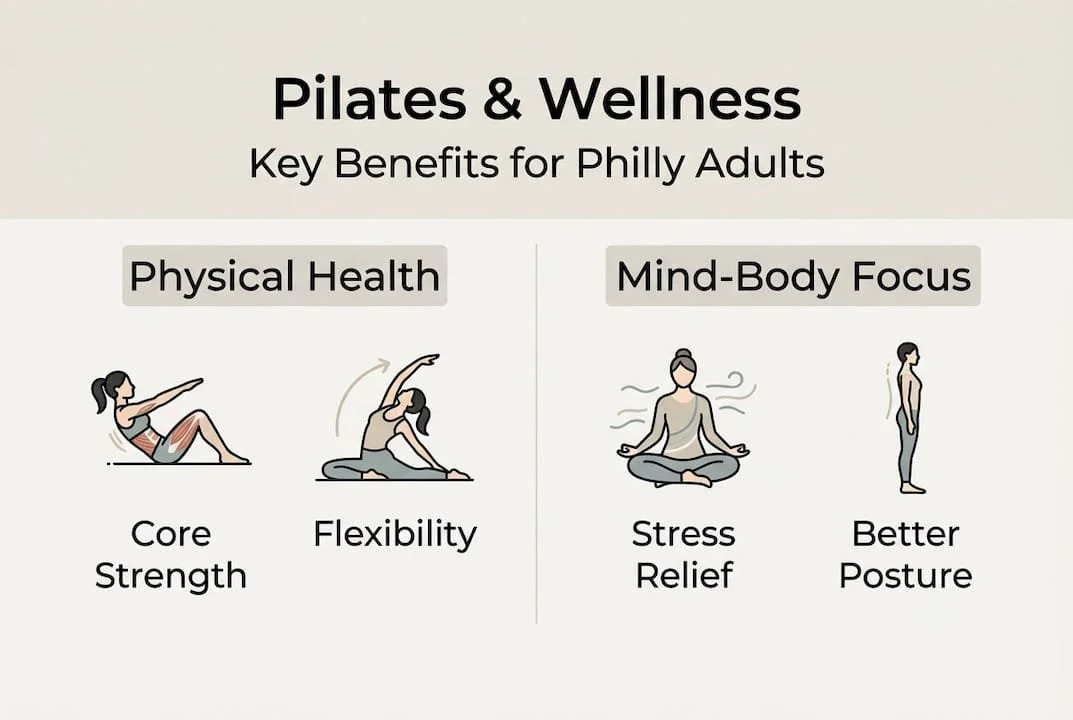
For anyone in Philadelphia who spends hours at a desk or commuting, these physical changes translate directly into daily life. You move more easily, sit more comfortably, and recover faster from physical strain.
Here is what consistent Pilates practice supports for adults:
Reduced lower back pain through targeted core engagement
Improved posture from spinal mobility and alignment work
Greater joint flexibility without the high-impact stress of running or jumping
Better balance and coordination especially important for adults over 50
Faster recovery from injuries due to emphasis on controlled, low-impact movement
Stronger deep stabilizer muscles that protect knees, hips, and the spine
If you are new to the practice, start with guided resources on building strength and flexibility to understand the foundational movements before jumping into intermediate classes. Working on building core strength with proper form from the start prevents bad habits that could limit your progress later.
Mental health: The mind-body connection in Pilates
With physical health benefits established, let's turn to Pilates' crucial role in mental wellness.
Most people who start Pilates for physical reasons end up staying for the mental clarity it provides. That is not a coincidence. Pilates demands full attention. You cannot scroll your phone while coordinating breath with precise movement, which forces your nervous system to downshift in a way passive rest often does not.
"Pilates reduces anxiety, depression, stress, pain, and disability while improving quality of life," according to peer-reviewed research published in a clinical review covering multiple controlled trials.
For Philadelphians navigating city stress, that is significant. The mind-body integration evidence points to Pilates as a meaningful complement to therapy, medication, or other mental health tools, not a replacement, but a genuine contributor.
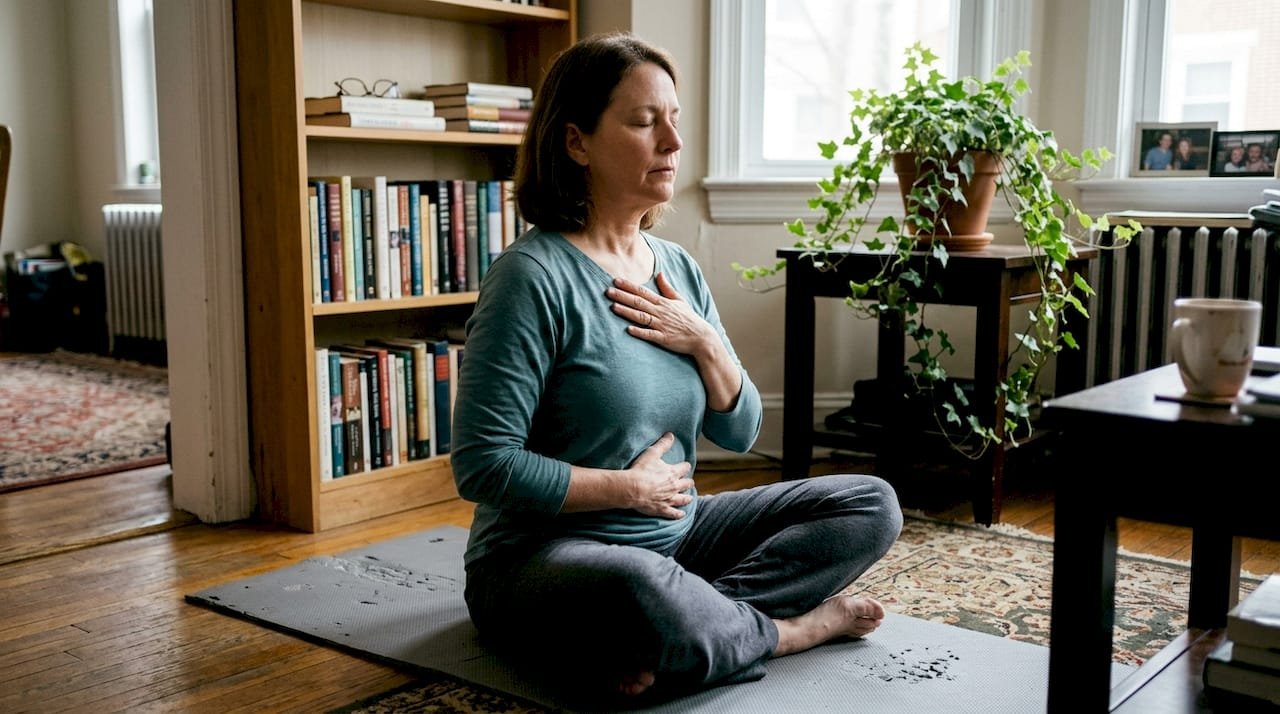
The mechanism behind these mental benefits is grounded in breathwork. Pilates uses lateral thoracic breathing, which means you expand the ribcage sideways rather than lifting the chest. This activates the parasympathetic nervous system and lowers cortisol, the body's primary stress hormone. Learning proper pilates breathing techniques early in your practice accelerates both the physical and mental payoff.
Here are practical steps to deepen the mind-body connection in your Pilates sessions:
Arrive five minutes early to sit quietly and set a single intention for your session
Sync breath with movement from the first exercise rather than treating breathing as an afterthought
Notice physical sensations without judging them, building the self-awareness that defines mindful movement
End each session with two minutes of stillness to let the nervous system register what just happened
Use breath cues as anchors whenever your focus drifts during complex sequences
The depth of breathwork in Pilates separates it from many other fitness formats. When practiced consistently, that breath awareness carries into daily life, helping you respond to stressors more calmly.
Inclusivity and adaptability: Pilates for every adult
Building on mind-body integration, let's see who can benefit from Pilates and how it adapts to individual needs.
One of the strongest arguments for Pilates is how broadly it applies. This is not a practice designed exclusively for young, flexible, or already-fit people. Pilates is adaptable for diverse populations, including middle-aged women, individuals with obesity, and those managing chronic conditions, which makes it one of the most genuinely inclusive fitness options available.