Ashtanga Vinyasa Yoga comes in two class formats and three series. The formats are a led class, where a teacher calls every pose and breath, and Mysore-style, a self-paced practice with one-to-one guidance. The series are primary, intermediate and advanced, practiced in that order. Most people spend years in the primary series, so for a beginner the real choice is the class format. This guide explains each type, how Ashtanga differs from general vinyasa, and how to begin in Philadelphia.
Amritayogawellness
Find a Yoga Practice That Fits
Explore Amritayogawellness’s Philadelphia studio offerings, with yoga classes and other wellness practices for a range of experience levels.
TL;DR
Two class types: led (the teacher counts the breath and calls each pose) and Mysore-style (you practice a memorized sequence at your own pace, with hands-on help).
Three series: primary, intermediate and advanced. Most practitioners stay in the primary series, and that is a normal place to be.
Ashtanga uses a fixed sequence every time. General vinyasa flow uses the same kind of movement, but the teacher changes the sequence from class to class.
Beginners usually do best starting with a led or beginner-friendly class, then deciding whether self-practice suits them.
Table of Contents
What Ashtanga Vinyasa Yoga actually is
The two class types: led and Mysore-style
The three series: primary, intermediate and advanced
Ashtanga Vinyasa vs. general vinyasa flow
What to know before you start
How to choose a class in Philadelphia
Where to practice with us
Perspective: why we favor a patient, supported start
FAQ
Sources
What Ashtanga Vinyasa Yoga actually is
Ashtanga Vinyasa is a modern postural yoga system developed and popularized by K. Pattabhi Jois. The University of Virginia's Mandala Collections guide separates this Jois system from the much older, broader term "ashtanga yoga," which refers to an eight-limbed path described in classical texts. When a studio schedule says "Ashtanga," it almost always means the Jois method: a set sequence of poses linked by breath.
Three things hold the practice together. This trio is called tristhana, and the same guide describes it as three coordinated points of attention: breath, posture and gaze point.
Breath. Smooth, long, even breathing through the nose, with a soft sound made by slightly narrowing the throat. Each movement is assigned an inhale or an exhale.
Posture (asana). The poses, done in a fixed order and joined by flowing transitions called vinyasa.
Gaze (drishti). Each pose has a place to rest your eyes, which helps steady the mind.
Bandhas, or internal "locks" that engage the pelvic floor and lower abdomen, are often taught alongside these three. Teachers differ in how they describe the breath. A 2024 peer-reviewed article in Religions treats ujjayi breathing as part of tristhana, while a later position attributed to Sharath Jois separates formal ujjayi pranayama from the deep, audible breathing used during poses. As a student, you do not need to settle that debate. You need to breathe steadily, and a good teacher will show you how.
The same article reads vinyasa as more than choreography. Coordinated breath, movement, bandha and gaze can work as a moving meditation that supports inward focus. That is why people who like a repeatable practice often stay with Ashtanga for years.
The two class types: led and Mysore-style
This is the distinction most people mean when they search for types of Ashtanga Vinyasa. The poses are the same. The way you learn and practice them is not.
Led classes
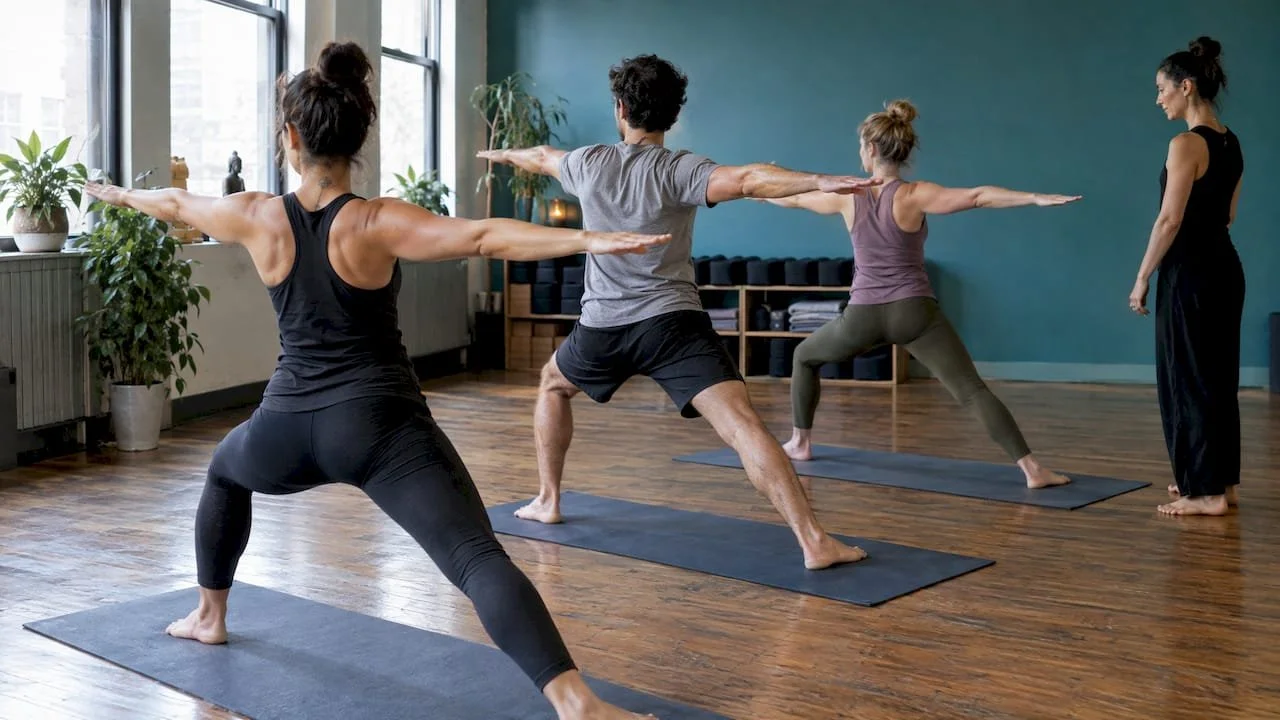
In a led class, the teacher calls out each pose and the breath count, and everyone moves together. It feels closest to a typical group yoga class, and it gives you the shape of the whole sequence in one sitting. Because the teacher is counting and calling rather than demonstrating in detail, you get a clear sense of pace and rhythm but less individual correction.
Led classes suit you if you:
like moving with a group and feeling the shared rhythm
want to learn the order of poses by repetition
prefer a set start and end time
are new to yoga and want a structure to follow
Mysore-style classes
Mysore-style is named after the Indian city where Jois taught. Students arrive within a window of time and each person practices the sequence from memory, at their own pace. The teacher walks the room, gives adjustments and adds new poses only when you are ready. Beginners start with a short version of the sequence and add to it over weeks and months.
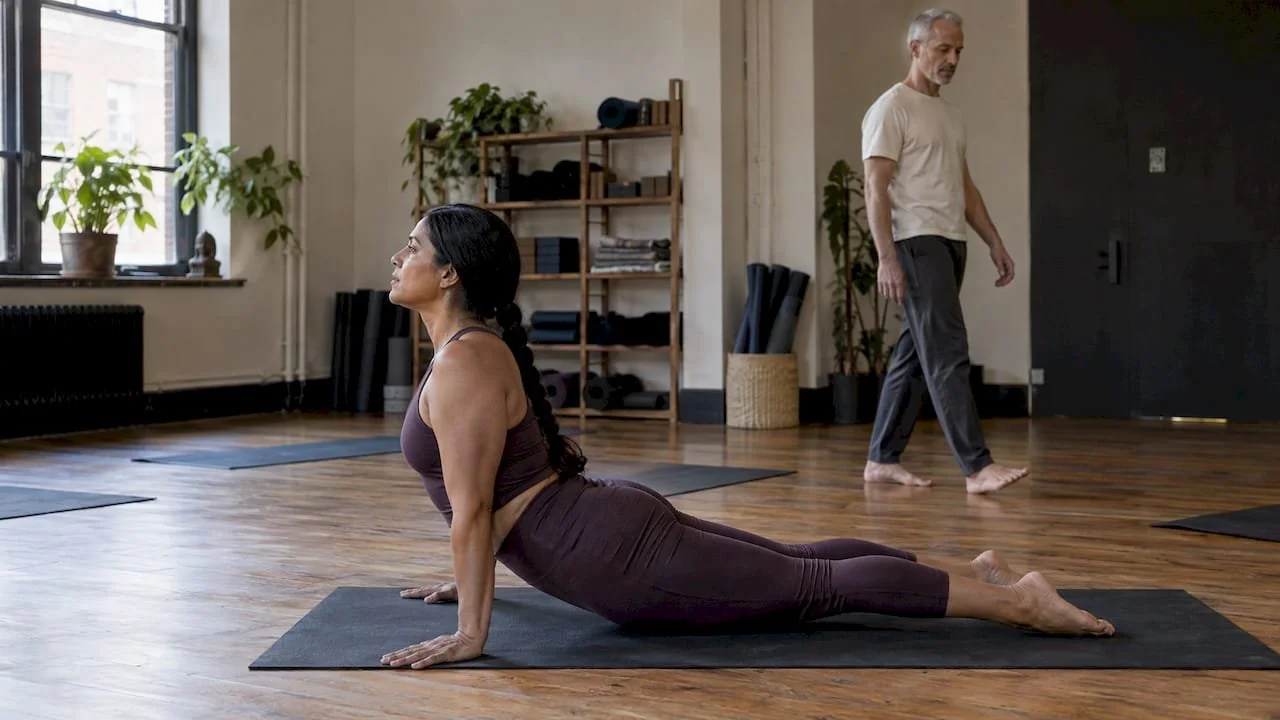
The room can look intimidating, since everyone is doing something different and nobody is being told what to do. In practice it is the more personal format: your teacher knows where you are and builds the practice around you.
Mysore-style suits you if you:
want individual attention and hands-on guidance
prefer to set your own pace and listen to your own breath
plan a regular, frequent practice
want to learn the sequence well enough to practice it anywhere
Which format first?
| Led class | Mysore-style | |
|---|---|---|
| Who sets the pace | The teacher | You |
| Instruction | Poses and breath counted aloud | Quiet room, individual help |
| Learning the sequence | By repetition as a group | By memorizing, one piece at a time |
| Best for | First-timers who like structure and group energy | Students who want a personal, steady progression |
| Typical feel | Shared rhythm, one speed | Independent, meditative |
Most newcomers start with a led class because it needs no preparation. If you find yourself wanting more detail on individual poses, that is the moment to try self-paced practice.
The three series: primary, intermediate and advanced
The second way to divide Ashtanga is by sequence. Each series is a fixed order of poses that builds on the one before it.
Primary series
The primary series is the foundation, and it is where nearly everyone practices. The 2024 Religions article describes it as containing more than 60 asanas, taking about 80 minutes when done as a full vinyasa-style sequence, and notes that most practitioners remain in it. It moves through Sun Salutations, standing poses, seated poses and a closing sequence of finishing postures, with breath and movement linked throughout.
That structure gives the primary series a few practical benefits for a beginner:
It is predictable. You learn it once and know what comes next.
It builds strength and flexibility at the same time. The standing poses build the legs and the seated work lengthens the hamstrings and hips.
It ends with a quiet finish. The closing poses bring the practice to a calm, settled place. If a settling routine after practice appeals to you, these chakra balancing routines offer short practices of 5 to 20 minutes.
You do not need to do the whole series to benefit. Beginners in a Mysore room typically learn a short portion first, such as the Sun Salutations and a few standing poses, and extend it gradually.
Intermediate and advanced series
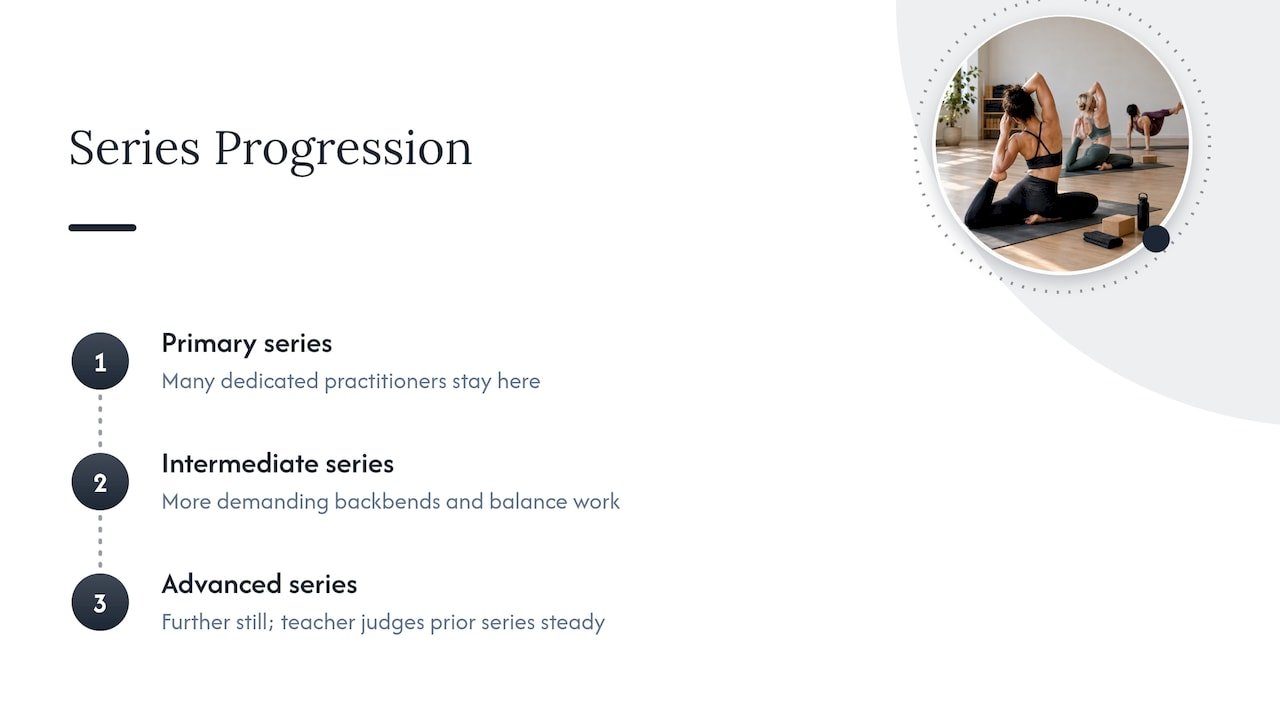
The intermediate series follows the primary series and adds more demanding backbends and balance work. The advanced series goes further still. In traditional teaching you move on only when your teacher judges the previous series to be steady, and many dedicated practitioners never leave the primary series. If you are just starting, think of the later series as something to learn about, not something to aim for in your first year.
Ashtanga Vinyasa vs. general vinyasa flow
Many people searching this topic want to know why a studio lists both "Ashtanga" and "Vinyasa." The simplest answer is that Ashtanga is a specific system and vinyasa is a style.
| Ashtanga Vinyasa | General vinyasa flow | |
|---|---|---|
| Sequence | Fixed and repeated every class | Different each class |
| Origin | Developed and popularized by K. Pattabhi Jois | Broad, teacher-driven style |
| Music and theme | Usually minimal | Often music, themes, creative sequencing |
| Learning style | Memorize and deepen | Follow along and explore |
| Formats | Led or Mysore-style | Mostly led |
Both link breath to movement. If you like variety and creative sequencing, vinyasa flow will feel fresh each time. If you like knowing exactly what the practice is and watching yourself change inside it, the fixed Ashtanga sequence is the draw. Many practitioners do both.
What to know before you start
If you are a beginner
You do not need to be flexible or strong. Ashtanga is often described as demanding, so it helps to build a base of common poses first. Our guides to basic yoga poses for beginners and essential yoga asanas to start today cover the shapes you will meet in Sun Salutations and standing sequences.
A few practical points:
Tell the teacher about injuries before class. Wrists, shoulders, knees and lower back deserve a mention. Ask for modifications.
Start with fewer repetitions. Doing part of a sequence well beats rushing through the whole thing.
Learn the breath first. If your breath goes ragged, slow down. The breath sets the pace, not the other way round.
Practice regularly. A fixed sequence rewards frequency more than intensity.
Rest when you need to. Skipping a pose or taking a break is part of learning.
If you have a medical condition, are pregnant or are recovering from an injury, check with your doctor or physical therapist before starting a vigorous practice.
If you are experienced
If you already practice vinyasa or hot yoga, Ashtanga will feel familiar but more rigid. You will notice the absence of playlists and the repetition of the same sequence. That repetition is the point: because the poses stay constant, you can see small changes in your breath, balance and focus over time.
If you want to teach someday
Studying a fixed system first gives you a clear map of how breath, gaze and posture fit together, which is useful whatever style you later teach. Learning a sequence thoroughly, with a teacher who corrects you, makes you a clearer instructor.
How to choose a class in Philadelphia
When you look at a schedule, check these points:
Format. Is the class led, or is it a self-paced practice room?
Level. Is it marked as beginner, all levels or experienced?
Length. A full primary-series class can run well over an hour, so confirm the duration.
Room. Heated or unheated changes how the same poses feel.
Teacher. A teacher who explains the breath and gives modifications is worth more than a famous name.
If Ashtanga's pace feels like a lot for your first month, a general all-levels yoga class is a gentle way to learn the vocabulary, and you can move toward the fixed sequence when you are ready.
Where to practice with us
Amrita Yoga & Wellness is a Philadelphia studio offering yoga in multiple styles, including hot yoga and aerial yoga, for beginners through advanced students, along with Pilates, barre and tai chi. Our class and monthly experience schedule shows what is currently on offer, so you can find a class that matches your level.
If you are testing the waters, the published drop-in prices make it easy to start: a community class drop-in is $11, a group class drop-in is $28 and the Nurtured Beginnings pass is $35. If you practice often, monthly memberships run from $119 to $149, and one month of unlimited group classes is $169. Prefer one-to-one attention? Private sessions start at $85 per hour, which lets you work on the details of your breath and poses at your own speed.
Perspective: why we favor a patient, supported start
We have always built our studio around inclusivity, approachability and community. That shapes how we think about a system like Ashtanga.
The fixed sequence is a gift: it gives you something to return to, and it shows you your own progress. But the way in matters. Someone who walks into a room, is handed a sequence they do not know and is left alone with it often leaves and never returns. Someone who is welcomed, given a few poses, shown how to breathe and allowed to build gradually often stays for years.
That is why our classes are designed around safety, personal growth and connection at every level. Whether you want a group class, a membership that lets you practice several times a week or a private session to learn the foundations, the aim is the same: a practice you can sustain.
Start small, keep the breath steady and let the practice grow with you.
Juiced
FAQ
What are the main types of Ashtanga Vinyasa classes?
There are two: led classes, in which the teacher calls each pose and counts the breath, and Mysore-style classes, in which you practice the sequence at your own pace with individual guidance. Both use the same poses. Led classes feel like a typical group class, while Mysore-style is more personal.
How many series are there in Ashtanga?
There are three: primary, intermediate and advanced. The primary series is the foundation, and a 2024 academic article notes that most practitioners remain in it. You progress only when your teacher feels you are steady in the series you are working on.
Is Ashtanga the same as vinyasa yoga?
No. Both link breath to movement, but Ashtanga follows a fixed sequence in every class, while general vinyasa flow changes the sequence from teacher to teacher and class to class. Ashtanga Vinyasa was developed and popularized by K. Pattabhi Jois.
Is Ashtanga Vinyasa good for beginners?
Yes, if you start at a pace that suits you. Begin with a led or beginner-friendly class, learn the breath and Sun Salutations first, and tell your teacher about any injuries. You do not need to be flexible to start.
How long is a full Ashtanga primary series?
A 2024 peer-reviewed article describes the primary series as having more than 60 asanas and taking about 80 minutes when practiced as a full sequence. Beginners usually practice a shorter portion at first.