5 Minute Breathwork, Cyclic Sighing, Research Backed, Studio Guided
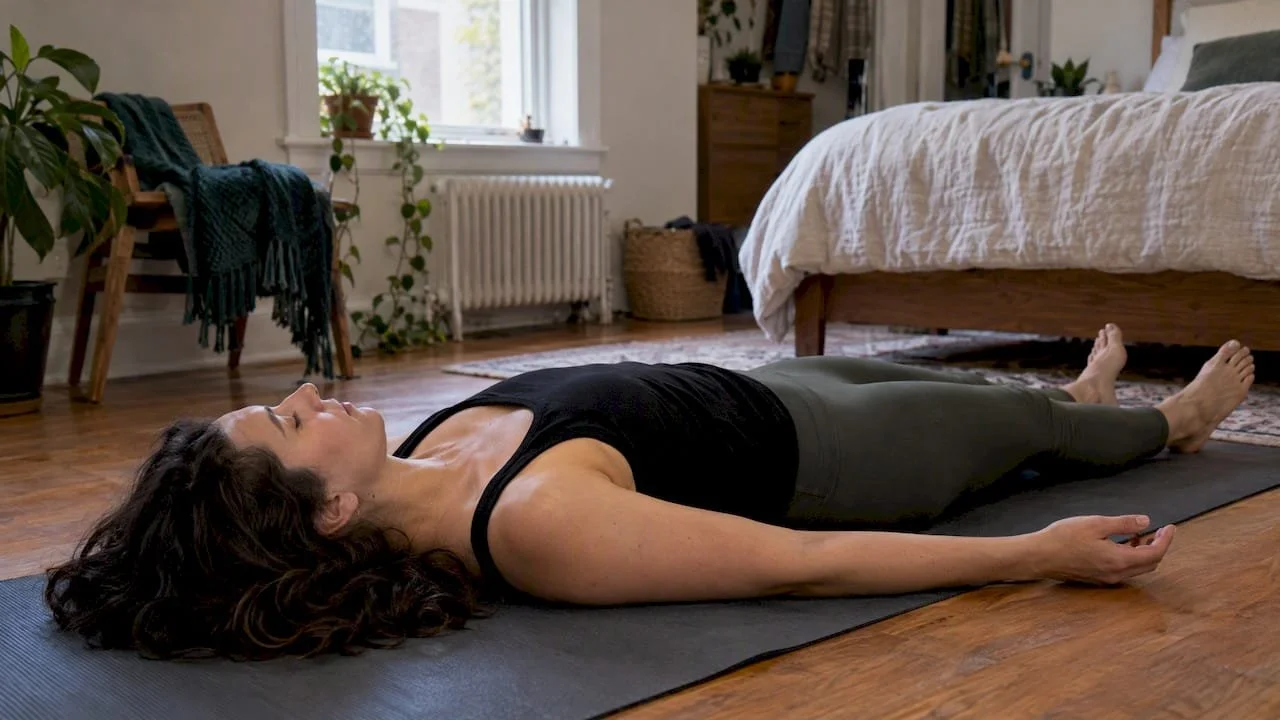
The fastest way to calm anxiety through breath is a technique called cyclic sighing: a double inhale through the nose followed by a long, slow exhale through the mouth. A Stanford-led randomized trial found that practicing it for a few minutes a day reduced anxiety and improved mood more than mindfulness meditation did. The long exhale is doing the real work here, and several other exercises use the same principle. Step-by-step instructions for each follow below.
TL;DR:
Practicing cyclic sighing for five minutes daily with an emphasis on a longer exhale significantly reduces anxiety and improves mood.
Slow, exhalation-focused techniques like diaphragmatic breathing and paced breathing are supported by research for better safety and effectiveness over fast or forceful methods.
Consistency matters more than technique complexity, with evidence indicating that regular, guided sessions produce more reliable benefits over weeks.
Techniques should be personalized and adjusted if they increase anxiety or cause discomfort, especially for people with respiratory or cardiac conditions.
Guided instruction or in-person classes can enhance technique accuracy and ensure long-term benefits, especially for beginners.
Amritayogawellness
Practice Breathwork With Guidance
Amrita Yoga & Wellness connects Philadelphia adults with yoga, breathwork workshops, and wellness practices for physical and mental well-being.
Table of Contents
Step-by-step breathwork exercises to reduce anxiety
Each of these techniques can be practiced seated, with your feet flat and your shoulders relaxed. Start with whichever feels most natural, then rotate as needed.
Cyclic sighing: Inhale through your nose, pause, then take a second shorter sip of air to fully fill your lungs, then exhale slowly through your mouth for twice as long as the inhale. Repeat for 5 minutes. The extended second inhale and the long exhale are the two parts that matter most.
Diaphragmatic (belly) breathing: Place one hand on your chest and one on your belly. Breathe so only the lower hand rises, inhaling for 4 counts and exhaling for 6, for 5 to 10 minutes.
4-7-8 breathing: Inhale for several counts, hold for a count, exhale for a longer count. If holding feels uncomfortable, shorten all three counts proportionally rather than skipping the hold.
Box breathing: Inhale for several counts, hold briefly, exhale for similar length, hold briefly. This works well as a steady anchor during ordinary stress, but the holds can feel confining during acute panic, so switch to an exhale-focused technique if that happens.
Paced breathing at roughly six breaths per minute: Inhale and exhale over several seconds each, continuously, for multiple minutes. This pace is associated with higher heart rate variability, a marker linked to a calmer nervous system.
Alternate nostril breathing: Close one nostril, inhale through the other, then switch nostrils and exhale. Reverse and repeat for several rounds. Substitute another technique if nasal congestion makes this awkward.
A 60 to 90 second reset: When you only have a minute, do 6 to 8 rounds of a single long exhale, out through pursed lips, with no formal counting required.
Pro Tip: Whichever exercise you choose, make the exhale longer than the inhale. That single adjustment matters more than the specific method.
How to practice safely and avoid common pitfalls
Breathwork is generally low-risk, but a few rules keep it that way.
Stop and seek medical care if you experience chest pain, severe breathlessness, or fainting during practice.
Avoid fast, forceful breathing patterns when you are already anxious; stick to slow, comfortable counts instead.
Begin seated with back support, and build sessions up to at least 5 minutes rather than rushing a longer routine on day one.
If you feel lightheaded or tingly, breathe a little shallower and slower rather than stopping outright, since over-breathing is the usual cause.
If a technique increases your anxiety instead of lowering it, switch to simple, unforced exhale-focused breathing or pause the practice.
People with a history of panic disorder, respiratory conditions such as asthma or COPD, or cardiac issues should check with a clinician before starting a new breathing routine, since some instructions that involve deep or forceful inhalation can worsen symptoms in panic disorder specifically.
Pro Tip: If a technique feels wrong for your body, change the method, not your commitment to practicing.
What the research says about breathwork and anxiety
The evidence for slow, exhale-weighted breathing is stronger than for fast or forceful techniques. In the Stanford trial of 111 volunteers, participants who practiced cyclic sighing for five minutes daily over one month showed greater improvement in positive mood than a mindfulness-meditation group, and the cyclic-sighing group also lowered their resting breathing rate.
A systematic review of 58 studies covering 72 breathing interventions found that 54 of those interventions were effective, and that session length of at least 5 minutes along with human-guided instruction predicted better outcomes.
A 2025 meta-analysis of six randomized trials with 517 patients found that prāṇāyāma breathing reduced symptom severity in conditions including PTSD and depression compared with passive controls, while noting more adverse events with fast breathing techniques than with slow ones. Taken together, these sources point in the same direction:
Slow, exhalation-focused breathing has a more consistent safety and benefit profile than fast-paced techniques.
Sessions under 5 minutes and techniques taught without guidance show weaker or less reliable results.
Results vary across studies, and benefits tend to be stronger when breathwork is paired with mindfulness or structured instruction rather than practiced in isolation.
A repeatable 5-minute daily practice plus a panic script
A short routine beats an occasional long one, because consistency is what builds the effect over weeks.
Warm-up (30 seconds): Sit comfortably and take two normal breaths to notice your current pace.
Core practice (4 minutes): Do cyclic sighing or diaphragmatic breathing continuously, keeping the exhale longer than the inhale throughout.
Cool-down (30 seconds): Return to normal breathing and notice any shift in your body before standing up.
For acute anxiety in the moment, use this 60 to 90 second script instead: take one double inhale through the nose, then sigh out slowly through your mouth, repeating 6 to 8 times while naming one thing you can see and one thing you can hear between cycles. That grounding cue keeps attention anchored while the long exhales do their work.
As the daily habit sticks, you can extend sessions, add simple mindfulness cues between breathing rounds, or explore mindfulness practices built for yoga and wellness settings for more structure.
Keep a simple streak reminder, such as a calendar check mark, rather than tracking detailed metrics.
Add one extra minute per week until you reach a length that feels sustainable.
How Amrita Yoga & Wellness teaches breathwork
Some yoga and wellness studios build breathwork into group classes, workshops, and private sessions, with instruction designed to be approachable for people trying these techniques for the first time. Guided instruction matters because a trained eye can catch pacing or posture issues that are easy to miss when practicing alone, which the research above ties directly to better outcomes. Readers who want more structured support than a self-guided routine can bring their questions into a class or book a private session for individualized pacing.
The real lesson in breathwork for anxiety
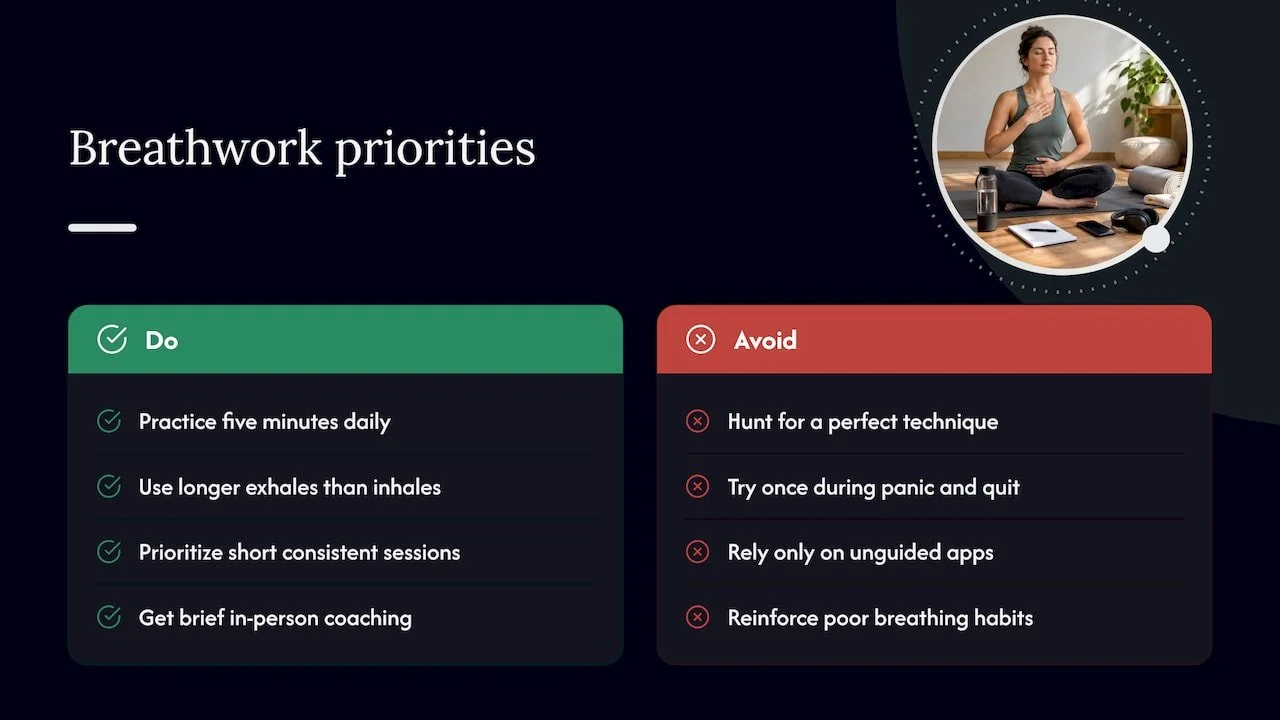
The breathwork world oversells complexity. Readers chase elaborate patterns, apps, and counting systems when the actual mechanism is almost boringly simple: a longer exhale signals safety to your nervous system, and that signal does most of the heavy lifting. Box breathing, alternate nostril breathing, and 4-7-8 all work through variations of the same principle, not through some unique formula each one claims to own.
The bigger failure point isn't technique selection, it's consistency and guidance. People try a breathing exercise once during a panic spike, decide it "didn't work," and abandon it, when the Stanford research points to daily five-minute practice building benefit over weeks. Prioritize showing up for short sessions over hunting for the perfect method, and get a few minutes of in-person coaching if you can, since guided instruction keeps you from reinforcing poor habits before they become automatic.
— Juiced
Practice breathwork with guided support at Amrita
If reading instructions isn't enough, Amrita's group and livestream classes include guided breathwork alongside yoga, so you can practice these techniques with real-time feedback instead of guessing at your pacing. First-time attendees get beginner-friendly cues and modifications, and private sessions are available for anyone who wants individualized pacing or has a health concern to work around.
Check the class schedule to find a session that fits, or book a one-to-one session for breathwork tailored to your needs.
FAQ
Which breathwork technique is best for anxiety?
Cyclic sighing, with its extended exhale, has the strongest evidence behind it for fast relief, supported by a Stanford randomized trial showing benefits from five minutes of daily practice. Diaphragmatic breathing and paced breathing at a slow, steady rate are close alternatives that work through the same exhale-focused mechanism.
What is the 3-3-3 rule for anxiety?
The 3-3-3 rule is a grounding technique, not a breathing pattern: you name three things you can see, three sounds you can hear, and move three parts of your body. It pairs well with slow breathing but is a separate grounding tool rather than a breathwork method on its own.
Does breathwork really work for anxiety?
Breathing exercises can reduce anxiety symptoms, particularly slow, exhale-weighted techniques practiced for at least five minutes, according to a systematic review of breathing interventions. Effects vary across people and studies, and benefits tend to be more consistent when paired with guided instruction or mindfulness.
What is the relationship between anxiety and breathing issues?
Anxiety often speeds and shallows breathing, and that faster breathing pattern can itself feed feelings of panic or breathlessness. Slowing the exhale interrupts that cycle, which is part of why exhale-focused techniques show more reliable results than fast breathing patterns in clinical research.
How can I combine breathwork with other anxiety management techniques?
Pairing breathwork with brief mindfulness practice tends to produce steadier results than breathing alone, based on a 2024 review of combination approaches. Adding a short grounding cue or a few minutes of passive attention after your breathing session is a simple way to combine the two.