Mental Clarity Exercises for Adults: 9 Practices That Work
The most reliable mental clarity exercises for adults combine three things: slow breathing, regular movement, and a few minutes of attention training. None needs special equipment. Most take 5 to 20 minutes. This guide covers nine practices, what the research says about each, how to fit them into a work week, and where guided classes help more than going it alone.
Amritayogawellness
Make Mind-Body Practice Part of Your Week
Explore yoga and tai chi classes at Amrita Yoga & Wellness in Philadelphia as ways to add mind-body practice to your routine.
TL;DR
Start with slow diaphragmatic breathing. In one study of healthy adults, 20 sessions over 8 weeks improved sustained attention and lowered cortisol.
Move on a schedule. The WHO suggests 150 minutes of moderate activity a week for adults 18 to 64, in bouts of at least 10 minutes.
Add a mind-body practice such as yoga or tai chi. A review of adults 55 and older found a moderate positive effect on cognitive function.
Treat these as habits, not quick fixes. Consistency beats intensity, and a qualified teacher lowers your injury risk.
Table of Contents
What mental clarity actually means
Mental clarity is the ability to focus on one thing, think in a straight line, and make decisions without a fog of worry or distraction. It is not a medical diagnosis. It rises and falls with sleep, stress, movement, and how often you switch tasks.
That matters for how you choose exercises. Puzzles and word games, which dominate many search results, train specific mental skills. The practices below work on the conditions underneath: a calmer nervous system, a rested body, and attention you can aim on purpose. If your fog is persistent, comes with memory loss, mood changes, or sleep problems that do not improve, talk to your primary care doctor before assuming it is a lifestyle issue.
Nine exercises you can start this week
1. Diaphragmatic breathing (5 to 10 minutes)
Sit or lie down with one hand on your belly. Inhale through the nose for about four counts so the belly rises, then exhale slowly for six. Repeat for five minutes.
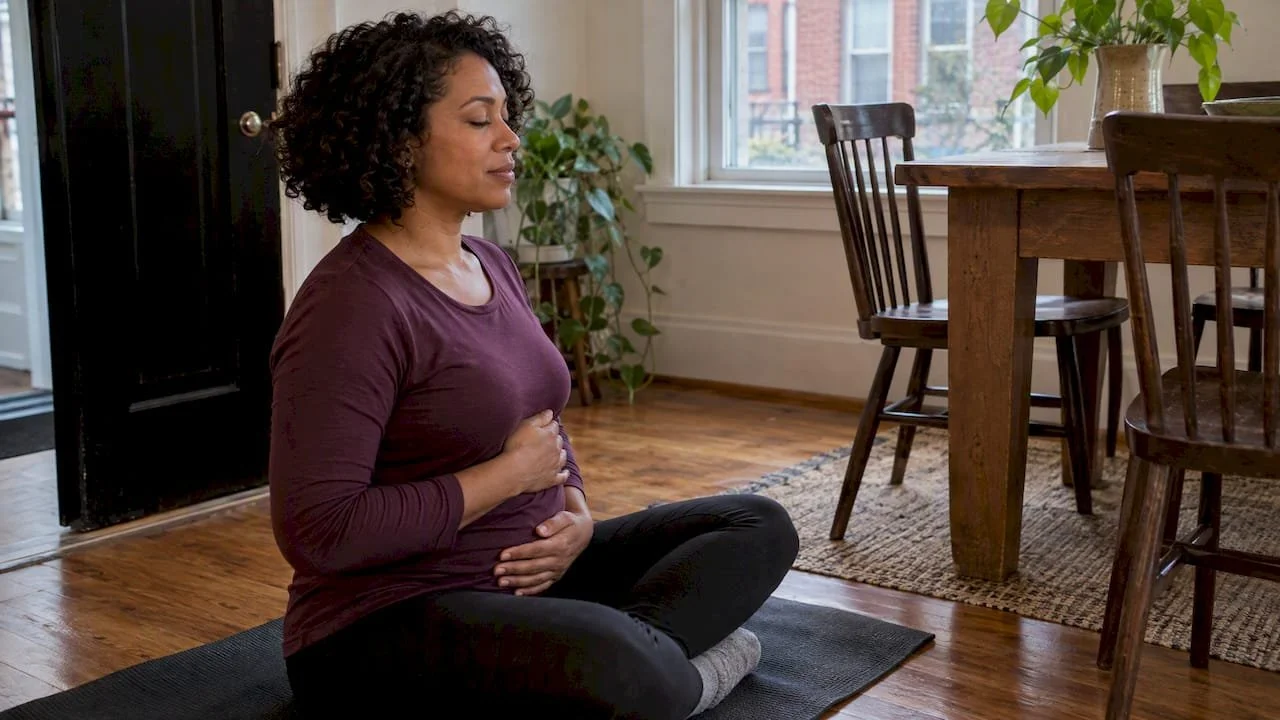
This is the fastest option on the list. A study of diaphragmatic breathing in healthy adults used 20 sessions of training over 8 weeks and found improvements in sustained attention along with lower cortisol. That is a training effect, so the real gain comes from repetition rather than one deep breath before a meeting.
2. The three-minute reset
Set a timer. In the first minute, notice what you are thinking and feeling without fixing it. In the second, follow your breath. In the third, widen your attention to the whole body. It works well between meetings because it is short enough that you will actually do it.
3. Body scan (10 to 15 minutes)
Lie down and move your attention slowly from your feet to your head, noticing sensation without trying to change it. The skill you are training is noticing that your mind has wandered and returning, which is the same skill you use at your desk. Our guide to mindfulness for mental clarity walks through it step by step.
4. Mindful walking (10 to 20 minutes)
Walk at an ordinary pace and put your attention on the soles of your feet, your stride, and the sounds around you. When you drift into planning, come back to your feet. In Philadelphia that can be a loop around Rittenhouse Square or a stretch of the Schuylkill River Trail. Walking also counts toward your weekly activity minutes, so it does double duty.
5. Brisk aerobic movement (30 minutes, most days)
The WHO's guidance for adults 18 to 64 is at least 150 minutes of moderate-intensity or 75 minutes of vigorous aerobic activity per week, counted in bouts of 10 minutes or more. The same document links regular activity to better brain health and fewer symptoms of depression and anxiety. If you are inactive now, it advises starting with small amounts and building up gradually.
6. A yoga flow matched to your level
Yoga combines breath, posture, and attention in one session, which is why it shows up so often in clarity research. The NCCIH summary says research suggests yoga may improve general wellness by relieving stress, supporting healthy habits, and improving mental and emotional health, sleep, and balance.
A caveat from the experts: a Harvard-hosted review of yoga evidence frames yoga as a promising adjunct and a lifelong skill, not a stand-alone cure, and notes that yoga styles differ enough that you should match the practice to your needs. A slow, breath-led class and a heated power class do different things to your body.
7. Tai chi or other slow mind-body movement
Tai chi asks you to coordinate balance, breath, and slow movement, so it is hard to do while distracted. The umbrella review of adults 55 and older that included yoga, tai chi, and dance reported a pooled effect size of 0.48 on cognitive function. Its best-performing programs ran at least 20 weeks, with 60-minute sessions at least three times a week. That is a research finding for older adults, not a promise for every age group, but it shows the pattern: longer, regular practice beats occasional bursts.
8. Mindfulness-based stress reduction habits
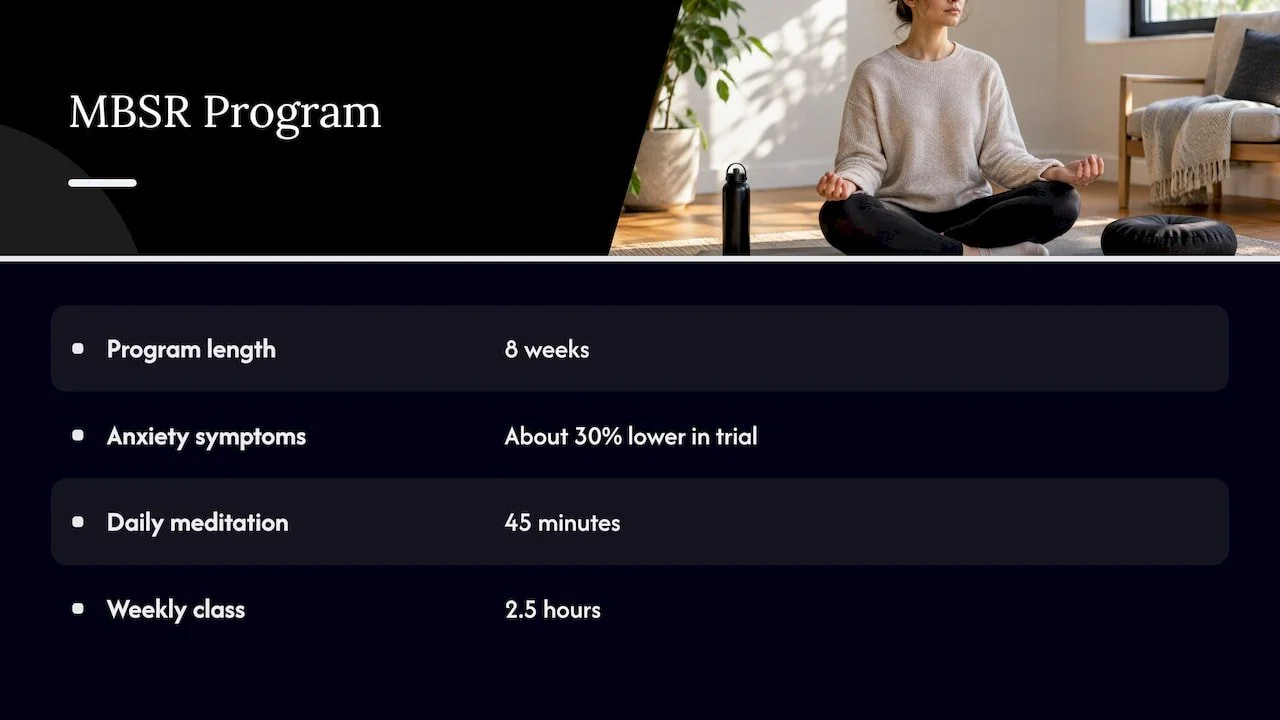
Mindfulness-based stress reduction (MBSR) is an 8-week program with daily home practice and a weekly group class. Harvard Health reports that in a trial it reduced anxiety symptoms by about 30%, similar to a first-line antidepressant. The program is demanding: 45 minutes of daily meditation plus a 2.5-hour weekly class. You do not need to go that far to benefit, but it shows what a committed practice can do. If you have an anxiety disorder, work with a clinician rather than replacing treatment with meditation.
One ingredient is worth knowing. A 2025 paper on mindfulness and stress points to acceptance, meaning letting go of judgment toward your experience, as a key active component. In practice: when your mind wanders, do not scold yourself. Just return.
9. A wind-down routine for sleep
Clarity depends on sleep. The CDC's NIOSH says most healthy adults need 7 or more hours of sleep, and recommends finishing vigorous exercise at least 3 hours before bed. Gentle stretching, breathing, or a body scan in the evening fits that window. Hard workouts do not.
A simple weekly plan
Here is a schedule built from the practices above. Adjust it to your life.
| Day | Practice | Time |
|---|---|---|
| Monday | Diaphragmatic breathing, then a brisk walk | 10 + 30 min |
| Tuesday | Yoga or tai chi class | 60 min |
| Wednesday | Three-minute reset twice, mindful walk at lunch | 3 + 3 + 15 min |
| Thursday | Yoga or tai chi class | 60 min |
| Friday | Diaphragmatic breathing, aerobic movement | 10 + 30 min |
| Saturday | Longer mind-body class or hike | 60 min |
| Sunday | Body scan and evening wind-down | 15 min |
This totals more than the WHO's 150-minute floor if your walks and classes are at moderate intensity. It also lines up with the finding that mind-body programs work best at three sessions a week or more. Start with two or three days and add from there. Missing a day is not failure.
What to expect, and what not to
Breathing exercises can feel calming within minutes. Attention gains from training build over weeks. The studies cited here used 8-week programs for breathing and mindfulness, and 20 or more weeks for mind-body exercise in older adults. If you try something for a week and feel no difference, that is normal.
Also keep expectations honest. These practices support clarity, and they are not treatments for depression, anxiety disorders, or cognitive decline. Researchers comparing structured aerobic and mind-body exercise in older adults with mild cognitive impairment are still working out which approach helps most, as in this 2026 meta-analysis. If you are worried about your memory or thinking, a doctor's visit comes first.
Some readers also look at recovery technology. If that interests you, a review of hyperbaric oxygen benefits and evidence shows what is and is not supported. Movement, breath, and sleep remain the foundation.
Safety: when guidance matters
The NCCIH notes that practicing yoga without guidance, especially as a beginner or with an underlying health condition, carries a higher risk of injury such as sprains and strains. Learning from a qualified instructor improves both safety and results. If you have an injury, tell the teacher before class starts.
Hot yoga needs extra care. The same NCCIH page lists dehydration and overheating as specific risks, and says they are more hazardous for people with conditions like high blood pressure or balance problems. If you have either, ask your doctor before trying a heated room. Everyone should drink water before and after class and step out if they feel dizzy.
Our perspective: clarity is a practice, not a hack
At Amrita Yoga & Wellness, we see the same pattern in Philadelphia adults who walk in feeling scattered. They rarely need a more intense workout. They need a regular, welcoming place to slow down, and a teacher who explains what is happening in the body so they can repeat it at home.
That is why our studio is built around inclusivity and beginner approachability. Our class structure and detailed guidance are designed for safety and personal growth at every level, and we run yoga in several styles alongside Pilates mat and reformer, barre, and tai chi. We also pair movement with breathwork and meditation because attention is trained the same way a muscle is: gently, often, and without judgment.
Our advice is simple. Pick one breathing exercise and one class you can attend weekly. Do them for two months before judging them. Then add. If you want more depth on the mindful side, our posts on mindfulness meditation types for clarity and mindfulness activities for stress relief are good places to begin.
— Juiced
Try it in a studio near you
If you would rather learn these practices with a teacher than from a page, you can start small. A single group class drop-in is $28, a community class drop-in is $11, and the Nurtured Beginnings pass is $35 for those new to the studio. If you will come several times a week, as the research on regular practice suggests, the Earth monthly membership is $119 per month and one month of unlimited group classes is $169. For personalized attention, one-to-one sessions start at $85 per hour on our private yoga and Pilates page. You can also read about each style on our class descriptions page to choose a fit.
FAQ
How long do mental clarity exercises take to work?
Breathing and short mindfulness exercises can feel calming in a single sitting. Measurable gains in attention take longer: the diaphragmatic breathing study used 20 sessions over 8 weeks, and the mind-body research favored 20 or more weeks. Plan on a couple of months before judging a routine.
What is the best exercise for brain fog?
There is no single best one. Slow breathing is the quickest to use, brisk walking helps with energy and counts toward the WHO's weekly activity target, and yoga or tai chi combine movement with attention. Persistent fog that does not lift deserves a conversation with your doctor, since sleep problems, stress, and medical conditions can all contribute.
Is yoga good for mental clarity?
Research suggests yoga may help with stress, mood, sleep, and balance, all of which affect clarity. Experts describe it as a supportive, long-term practice rather than a cure, and say the style should match your needs. A qualified instructor lowers the risk of injury, especially if you are a beginner.
Should I exercise at night to clear my head?
Gentle practices like stretching, breathing, or a body scan suit the evening. NIOSH advises finishing vigorous exercise at least 3 hours before bed, because exercising too close to sleep can disturb it.
Sources
The Effect of Diaphragmatic Breathing on Attention, Negative Affect and Stress in Healthy Adults
Structured aerobic and mind-body exercise in older adults with MCI, PubMed