The Amrita Journal
Explore thoughtful stories, practical wellness guidance and inspiring ideas to support your movement, mindfulness and everyday wellbeing at Amrita.
Benefits of Wall Pilates: A 2026 Guide for Adults
TL;DR:
Wall Pilates uses a wall for support and feedback to improve posture, core strength, and flexibility. It offers quick visible results within 3-4 weeks while being accessible and low-impact for busy adults. The practice also reduces stress and enhances body awareness through mindful movement and breath control.
Wall Pilates is defined as a low-impact exercise method that uses a flat wall as a support and alignment tool to perform controlled Pilates movements. The benefits of wall pilates include improved posture, deeper core activation, greater flexibility, and reduced stress, all without gym equipment. Unlike reformer Pilates, which requires specialized machinery, or mat Pilates, which offers no external feedback, wall Pilates gives your body immediate tactile cues about spinal position and muscle engagement. Research from 2026 confirms that adults can see visible posture improvements in as little as 3–4 weeks of consistent practice. For busy adults seeking a low-impact, accessible workout, wall Pilates delivers results that are both measurable and sustainable.
1. How does wall Pilates improve posture and spinal alignment?
The wall acts as a biofeedback tool that provides immediate tactile feedback on spinal alignment, something mat-only Pilates simply cannot replicate. When your back, shoulders, or hips drift out of position, the wall tells you instantly. That real-time correction accelerates learning far faster than trying to self-monitor in a mirror.
Deep core muscles, specifically the transverse abdominis and multifidus, activate more reliably when the wall guides your positioning. These muscles wrap around the spine like a corset and are the primary stabilizers of your lower back. Strengthening them reduces the common postural problems adults develop from desk work, including lower back arching and rounded shoulders.
Visible posture improvements appear within 3–4 weeks, with significant deep core activation measurable at 4–6 weeks. That timeline is faster than most adults expect from a bodyweight-only practice. The wall is the reason for that speed.
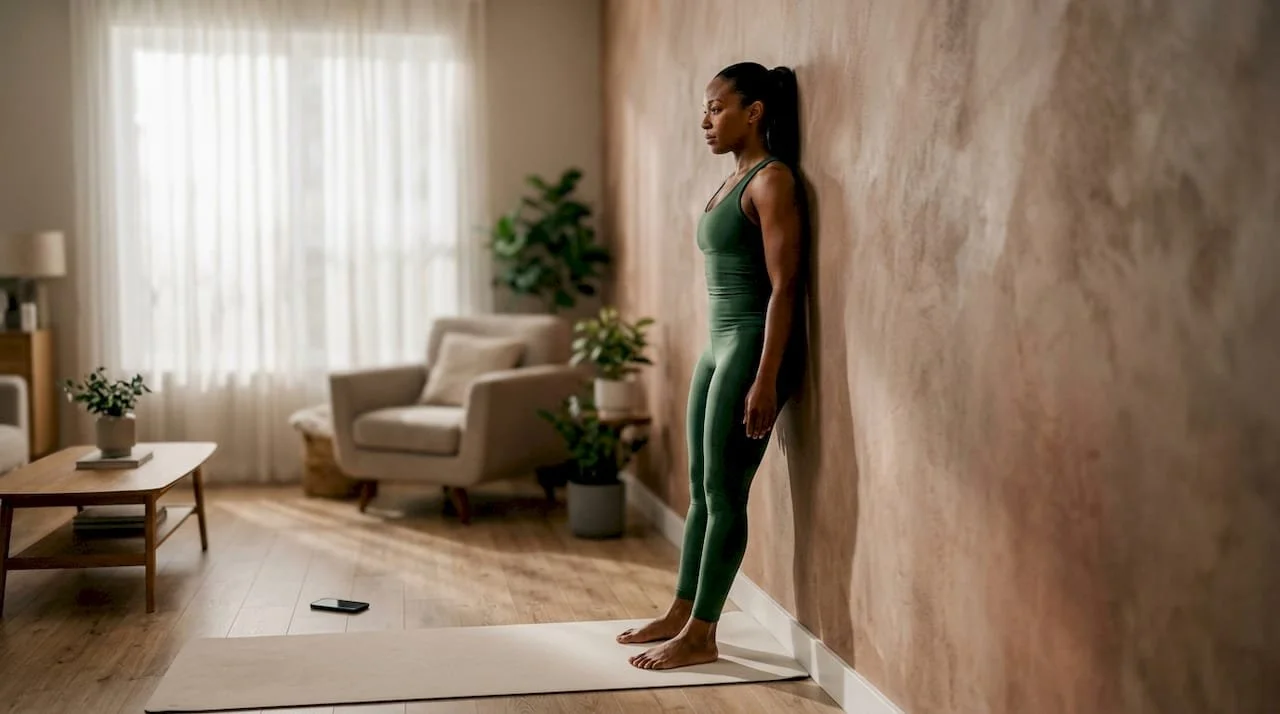
Pro Tip: Stand with your heels, hips, upper back, and the back of your head all touching the wall. Hold that position for 30 seconds before each session. This teaches your nervous system what neutral spine actually feels like, so you carry that alignment into every exercise.
2. What are the core strengthening and flexibility benefits?
Wall Pilates builds strength in the muscles that most adults neglect: the deep stabilizers rather than the superficial movers. The transverse abdominis, multifidus, and pelvic floor stabilizers all engage during wall-supported movements because the wall removes the option of compensating with larger muscle groups.
Flexibility of the hamstrings and hip flexors improves faster through wall Pilates than through mat-only practice. Gravity-assisted stretches, such as lying on your back with legs extended up the wall, allow a passive, sustained stretch that deepens over time without forcing the joint. Hip flexor tightness, a near-universal problem for adults who sit for long hours, responds particularly well to this approach.
The low-impact nature of wall Pilates protects joint health while building muscular endurance. There is no jumping, no heavy loading, and no sudden directional changes. That makes it appropriate for adults recovering from minor injuries or managing chronic joint sensitivity.
Key physical advantages of wall Pilates include:
Deep core activation targeting the transverse abdominis and pelvic stabilizers
Faster flexibility gains in hamstrings and hip flexors compared to mat-only work
Improved muscular endurance through sustained, controlled movement
Joint protection due to the low-impact, bodyweight-based format
Progressive challenge by adding resistance bands or light weights once fundamentals are solid
Adding resistance toolsonce you master the basics prevents fitness plateaus and keeps the practice challenging. A Pilates ball or light dumbbells can significantly increase the demand on your stabilizers without compromising the low-impact nature of the workout. For a broader look atPilates exercises for all levels, Amritayogawellness has a detailed breakdown worth reading.
3. How does wall Pilates support mental well-being and body awareness?
Wall Pilates reduces stress and improves the mind-body connection through focused breathwork and controlled movement. The breathing patterns central to Pilates activate the parasympathetic nervous system, which is the body's rest-and-recover state. That physiological shift is why adults consistently report feeling calmer after a session, not just physically tired.
The wall enhances proprioception, which is your body's sense of where it is in space. Most adults have poor proprioceptive awareness from years of sedentary habits. The wall's tactile feedback retrains that awareness quickly, making you more conscious of how you hold your body throughout the day, not just during exercise.
Mental well-being benefits from wall Pilates include:
Stress reduction through diaphragmatic breathing and slow, deliberate movement
Improved body awareness from the wall's immediate spatial feedback
Greater focus because each movement requires conscious engagement rather than momentum
Consistency support since the accessibility of the practice makes it easier to maintain a regular routine
Building a meditation routine alongside wall Pilates amplifies these mental health benefits. The two practices share the same core principle: deliberate attention to breath and body. Adults who combine both report faster improvements in stress management than those who practice either alone.
4. What makes wall Pilates practical for busy adults?
Beginner wall Pilates routinestypically last around 15 minutes, making them realistic for adults with packed schedules. A 15-minute session is short enough to fit before work or during a lunch break, yet long enough to produce measurable results when practiced consistently. That combination of brevity and effectiveness is rare in fitness.
The equipment requirement is minimal. You need a clear, flat wall and a mat or folded blanket to protect your joints. No gym membership, no reformer machine, no special footwear. That removes the friction that causes most adults to abandon new fitness habits within the first month.
Getting started safely is straightforward:
Choose a clear wall with no baseboards, outlets, or furniture nearby that could obstruct movement.
Use a mat or folded blanket between your body and hard flooring to protect your spine and hips.
Start with 15-minute sessions three times per week and build from there.
Focus on form before repetitions. One correct repetition beats ten sloppy ones.
Add resistance gradually. Introduce a light resistance band or Pilates ball only after you can perform the basic movements with control.
Wall Pilates is scalable for all fitness levels. Beginners use the wall for stability and alignment cues. More advanced practitioners add resistance tools to increase the challenge. That scalability means you never outgrow the practice.
Pro Tip: Place your mat perpendicular to the wall so you can transition between floor and wall exercises without repositioning. This keeps your session flowing and reduces the temptation to stop and reset.
5. Common misconceptions and safety tips for wall Pilates
The biggest misconception about wall Pilates is that it produces rapid weight loss on its own. Effective weight management requires integrated calorie control and cardiovascular exercise alongside Pilates practice. Wall Pilates tones muscle and improves posture, and consistent practice can reduce waist circumference by an average of 1.7cm over 8–12 weeks. That is a real, meaningful result. It is not the same as rapid fat loss, and conflating the two leads to early dropout.
"Expecting quick fixes from wall Pilates is the primary reason adults quit before seeing results. The practice rewards consistency over weeks, not days. Visible changes in posture and core strength emerge at 3–4 weeks. Significant strength gains follow at 4–6 weeks. Patience is not optional. It is the method."
Safety mistakes to avoid:
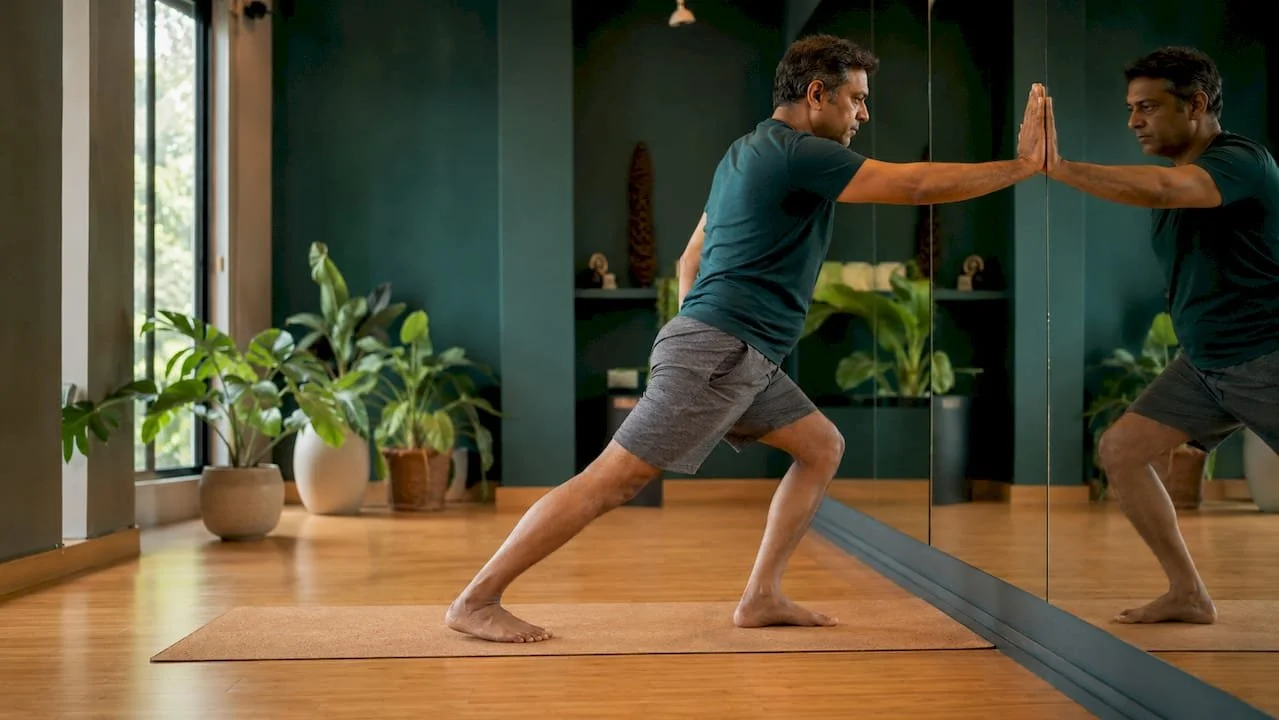
Pressing too hard into the wall. The wall is a feedback tool, not a resistance prop. Incorrect technique such as pushing forcefully against the wall can cause neck or lower back strain.
Skipping the warm-up. Cold muscles and connective tissue are more prone to strain. Spend 3–5 minutes on gentle mobility work before beginning.
Ignoring baseboards and outlets. A clear, flat wall surface with appropriate mat coverage is the baseline for safe practice.
Progressing too fast. Adding resistance before mastering bodyweight control increases injury risk without adding proportional benefit.
Neglecting nutrition and cardio. Wall Pilates complements a balanced lifestyle. It does not replace it.
For adults exploring popular Pilates styles beyond wall work, understanding the differences between mat, reformer, and wall formats helps set realistic expectations for each.
Key Takeaways
Wall Pilates delivers measurable posture, strength, and flexibility improvements within 3–6 weeks when practiced consistently, and its low-impact format makes it one of the most accessible fitness methods for busy adults.
| Point | Details |
|---|---|
| Posture improves fast | Visible spinal alignment gains appear within 3–4 weeks of consistent wall Pilates practice. |
| Core strength is deep | The wall activates the transverse abdominis and multifidus, the stabilizers most adults never train. |
| Flexibility gains are real | Gravity-assisted wall stretches improve hamstring and hip flexor mobility faster than mat-only work. |
| 15 minutes is enough | Beginner sessions last around 15 minutes, making the practice sustainable for busy schedules. |
| Weight loss requires more | Wall Pilates tones and improves posture; fat loss also requires cardio and calorie management. |
Why wall Pilates deserves more credit than it gets
Most fitness trends promise fast results and fade within a season. Wall Pilates has stayed relevant because it actually delivers on a narrow but meaningful set of outcomes: better posture, a stronger core, and a calmer nervous system. Those three things affect how you feel every single day, not just during a workout.
What I find most underappreciated is the biofeedback mechanism. Adults who have spent years sitting at desks have genuinely lost the ability to feel when their spine is neutral. The wall gives that sensation back. Once you feel it, you start noticing when you lose it, at your desk, in the car, standing in line. That body awareness carries over into everything.
The realistic timeline matters too. Three to four weeks for posture changes is fast by any standard. But adults who expect results in one week will quit in two. Setting the right expectation upfront is the difference between a practice that sticks and one that doesn't.
My honest advice: treat the wall as a teacher, not a crutch. Use it to learn what correct alignment feels like, then carry that knowledge into mat work, reformer sessions, and daily movement. Wall Pilates is not the destination. It is one of the best starting points in fitness for adults who want results without risk.
— Juiced
Pilates and wellness at Amrita Yoga & Wellness
Amritayogawellness offers Pilates classes and wellness sessions designed for adults at every fitness level, from first-timers to experienced practitioners. Whether you want to build on the wall Pilates fundamentals covered here or explore complementary practices like barre, yoga, or massage therapy, the studio's Philadelphia-based programs provide guided, personalized support.
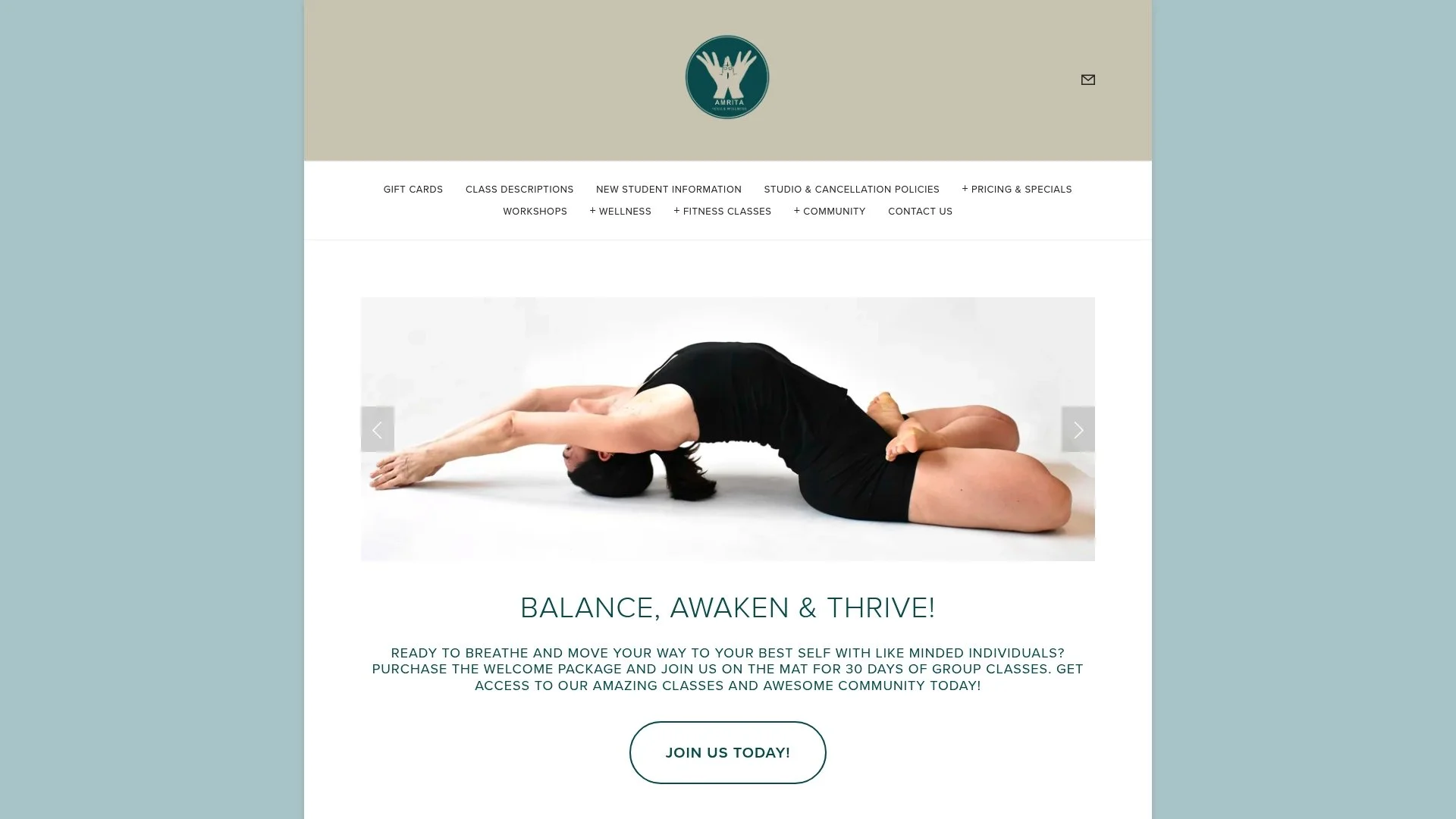
Amritayogawellness also offers tarot readings as part of its broader approach to well-being, connecting physical practice with self-reflection and spiritual wellness. For adults who want to go beyond the physical benefits of movement, that combination of body-focused and introspective offerings makes Amritayogawellness a genuinely well-rounded wellness hub. Visit amritayogawellness.com to browse classes and book a session.
FAQ
What is wall Pilates?
Wall Pilates is a form of Pilates that uses a flat wall as a support and alignment tool during controlled, low-impact exercises. It differs from mat and reformer Pilates by providing immediate tactile feedback on spinal position and muscle engagement.
How long does it take to see results from wall Pilates?
Visible posture and spinal alignment improvements appear within 3–4 weeks of consistent practice, with significant deep core muscle activation measurable at 4–6 weeks.
Is wall Pilates good for beginners?
Wall Pilates is one of the most beginner-friendly Pilates formats available. Sessions typically last around 15 minutes, require no equipment beyond a mat and a clear wall, and the wall itself provides alignment cues that reduce the learning curve.
Can wall Pilates help with weight loss?
Wall Pilates supports weight management by toning muscle and improving posture, and consistent practice can reduce waist circumference by an average of 1.7cm over 8–12 weeks. Significant fat loss also requires cardiovascular exercise and calorie management.
What are the mental health benefits of wall Pilates?
Wall Pilates reduces stress and improves body awareness through focused breathwork and controlled movement. The practice activates the parasympathetic nervous system, supporting a calmer mental state after each session.