Hot yoga teacher guide 2026: benefits, training pathway

Hot yoga transforms cardiovascular fitness by 15% in just eight weeks, making it one of the fastest routes to measurable wellness gains. This heated practice combines traditional yoga asanas with temperatures reaching 105°F, creating unique physiological adaptations that enhance both body and mind. Whether you're exploring classes in Philadelphia or considering a teaching career, understanding hot yoga's science, safety protocols, and certification pathways helps you maximize benefits while minimizing risks.
Table of Contents
Key takeaways
| Point | Details |
|---|---|
| Cardiovascular and flexibility gains | Hot yoga improves heart health by 10-15% and flexibility by 15-20% within weeks through enhanced muscle warming. |
| Mental wellness improvements | Practice reduces cortisol levels and anxiety while activating relaxation responses through controlled heat exposure. |
| Specialized certification required | Teachers need 200-hour foundational training plus hot yoga-specific education in heat physiology and safety protocols. |
| Safety is paramount | Proper hydration, gradual heat acclimation, and monitoring prevent heat-related illness in over 60% of cases. |
| Philadelphia opportunities | Strong local community offers diverse classes, mentorship, and median earnings around $50,000 annually for certified instructors. |
Introduction to hot yoga and its rising popularity
Hot yoga refers to yoga practiced in deliberately heated rooms, typically maintained between 90°F and 105°F with controlled humidity levels. The elevated temperature intensifies traditional yoga sequences, combining physical postures with pranayama breathing techniques to create a challenging yet accessible workout. This practice style gained mainstream attention in the 1970s and has evolved into multiple variations, each offering distinct approaches to heat exposure and sequence design.
The core practice centers on leveraging heat to enhance muscle pliability, increase heart rate, and promote profuse sweating. Instructors guide students through sequences that range from gentle stretching to vigorous flows, with room temperature amplifying the cardiovascular demand of each movement. The heated environment forces your body to adapt quickly, triggering thermoregulatory responses that build resilience over time.
Philadelphia has experienced remarkable growth in hot yoga participation over the past five years. Local studios report 40% increases in class attendance, with practitioners citing fitness results and stress relief as primary motivations. The city's wellness-focused population, combined with year-round demand for indoor exercise options, has created a thriving hot yoga ecosystem. Community events, teacher trainings, and specialized workshops now fill calendars across neighborhoods from Center City to Manayunk.
Several factors drive this expansion:
Measurable fitness improvements within weeks attract goal-oriented practitioners
Mental health benefits appeal to professionals managing high-stress careers
Social atmosphere creates accountability and belonging
Accessibility improvements through beginner-friendly classes and modified poses
Growing awareness of evidence-based wellness practices
Physiological effects of hot yoga on the body
The heated environment creates distinct physical adaptations that separate hot yoga from room-temperature practice. Your cardiovascular system responds to combined heat and movement stress by increasing endurance and flexibility through enhanced circulation and muscle warming. These changes occur rapidly, with measurable improvements appearing within two months of consistent practice.
Cardiovascular endurance jumps by 10-15% after eight weeks of regular sessions, as your heart adapts to pumping blood efficiently while managing core temperature. The dual challenge of physical exertion and heat stress trains your cardiovascular system more intensely than comparable room-temperature exercise. Blood vessels dilate to facilitate cooling, improving overall circulation and oxygen delivery to working muscles.

Flexibility gains reach 15-20% improvements as elevated temperatures reduce muscle viscosity and increase range of motion. Warmed tissues stretch more safely and deeply, allowing you to explore poses that might feel restrictive in cooler environments. This enhanced pliability reduces injury risk when proper form is maintained, though it also demands careful attention to avoid overstretching.
| Physiological Metric | Improvement Range | Timeframe |
|---|---|---|
| Cardiovascular endurance | 10-15% | 8 weeks |
| Flexibility | 15-20% | 6-8 weeks |
| Heat tolerance | 25-30% | 4-6 weeks |
| Recovery time | 20% reduction | 8-10 weeks |
Heat acclimation represents one of hot yoga's most valuable adaptations. Your body learns to sweat earlier and more efficiently, improving thermoregulation in all environments. This enhanced cooling capacity translates to better performance in outdoor activities, reduced heat-related discomfort during summer months, and improved resilience to temperature fluctuations. Athletes often incorporate hot yoga specifically to build this adaptation for competition preparation.
"The combination of heat exposure and controlled movement creates a unique training stimulus that builds both physical capacity and mental toughness, preparing practitioners for challenges beyond the yoga mat."
Increased blood flow during practice accelerates muscle recovery and nutrient delivery. The vasodilation response floods tissues with oxygen-rich blood, supporting repair processes and reducing post-exercise soreness. Many practitioners report faster recovery between workouts when incorporating hot yoga into cross-training programs.
Mental health benefits and psychological mechanisms
Hot yoga delivers profound mental wellness improvements through multiple neurological and hormonal pathways. The practice reduces cortisol levels by 20-25% when performed consistently three times weekly, directly addressing stress hormone imbalances that contribute to anxiety and mood disorders. This biochemical shift creates measurable improvements in emotional regulation and perceived stress levels.
The parasympathetic nervous system activates strongly during and after heated sessions, counteracting the chronic fight-or-flight response many people experience in daily life. Controlled breathing combined with heat exposure triggers relaxation responses that persist for hours after class ends. You'll notice improved sleep quality, reduced muscle tension, and calmer reactions to stressors as this pattern reinforces over time.
Mindfulness naturally deepens when you're managing heat stress alongside complex poses and breathing patterns. The intense present-moment awareness required to navigate a 105°F room while holding warrior pose leaves little cognitive space for rumination or worry. This forced focus trains your attention system, building skills that transfer to meditation and daily mindfulness practice.
Psychological resilience grows through repeated exposure to controlled discomfort. Each session where you choose to stay present despite heat, fatigue, or challenge strengthens your capacity to tolerate difficult situations elsewhere. Research participants describe increased confidence in handling work pressure, interpersonal conflict, and physical challenges after establishing consistent hot yoga practice.
Key mental health mechanisms include:
Endorphin release creating natural mood elevation
Reduced inflammation markers linked to depression
Improved body awareness and acceptance
Community connection reducing isolation
Achievement satisfaction from completing challenging sessions
Pro Tip: Track your mood before and after sessions for two weeks to observe patterns in emotional regulation and stress response improvements.
Pathway to becoming a certified hot yoga teacher
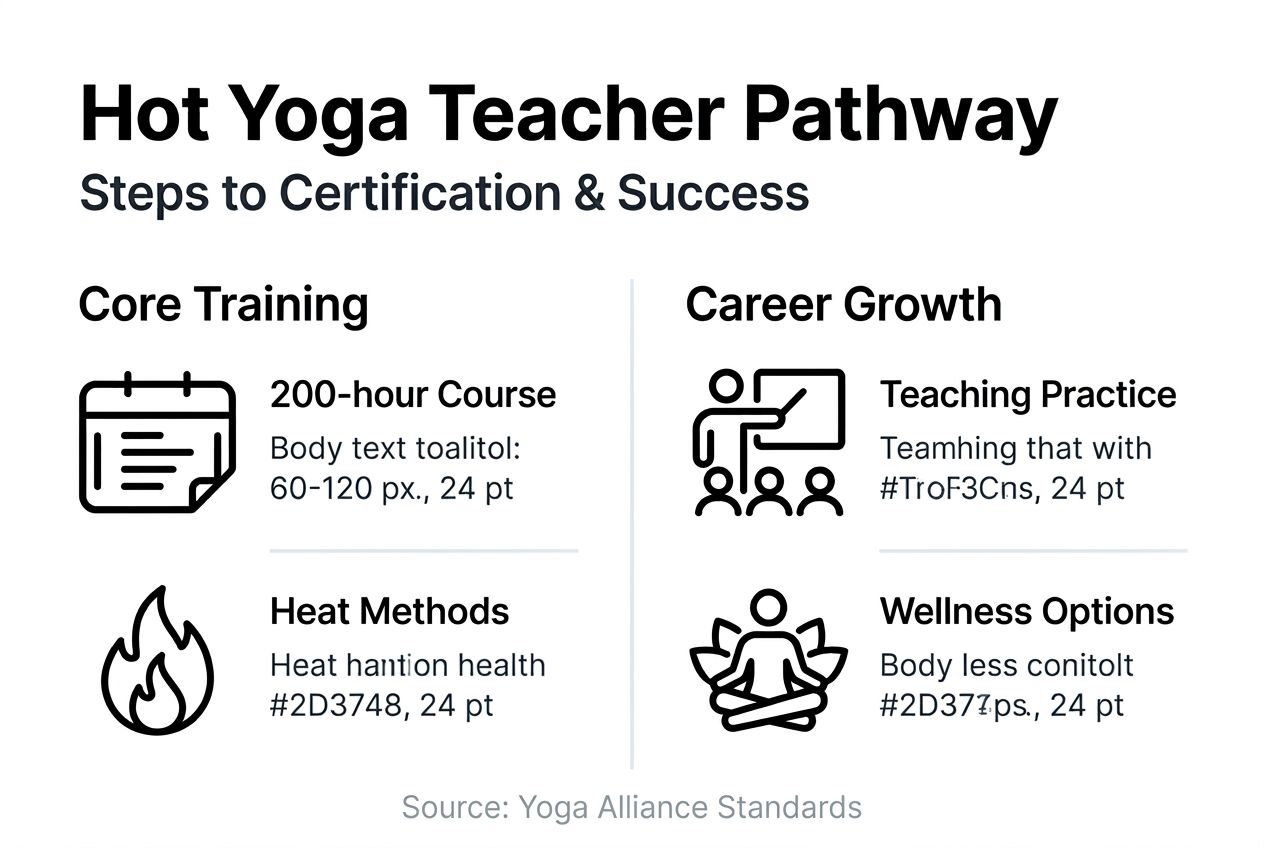
Becoming a qualified hot yoga instructor requires foundational yoga education followed by specialized training in heat physiology and safety protocols. The standard pathway begins with a 200-hour yoga teacher training program registered with Yoga Alliance, covering anatomy, teaching methodology, philosophy, and practicum experience. This baseline certification ensures you understand traditional yoga principles before adding heat-specific complexities.
Specialized hot yoga teacher training builds on that foundation with focused education in thermoregulation, heat illness prevention, and modifications for heated environments. These programs typically add 50-100 hours of instruction covering topics standard certifications omit. You'll learn to recognize early warning signs of heat stress, design appropriate sequencing for temperature variations, and adapt poses for practitioners at different acclimation stages.
The complete certification process unfolds through these steps:
Complete 200-hour foundational yoga teacher training from a registered school
Accumulate 50-100 personal practice hours in heated environments
Enroll in accredited hot yoga specialty training program
Complete supervised teaching hours with mentor feedback
Pass practical teaching demonstration and written examination
Obtain liability insurance and CPR/First Aid certification
Pursue continuing education in heat safety and advanced techniques
| Training Component | Standard Yoga | Hot Yoga Specialty |
|---|---|---|
| Total hours | 200 | 250-300 |
| Heat physiology | Minimal | 15-20 hours |
| Safety protocols | General | Heat-specific |
| Practicum teaching | 20-30 hours | 40-50 hours |
| Investment | $2,500-4,000 | $3,500-5,500 |
Practical teaching experience in heated studios provides irreplaceable learning through direct application. Many programs require 20-40 supervised teaching hours where you receive feedback on cueing, pacing, safety monitoring, and student interaction. This mentorship phase exposes you to diverse student needs and unexpected situations, building confidence before you lead independent classes.
Recognized certification bodies for hot yoga include Yoga Alliance Registered Schools offering specialized tracks, Bikram Yoga College of India for traditional 26-posture sequences, and independent programs like CorePower Yoga Teacher Training. Research each option's curriculum, teaching philosophy, and graduate outcomes to find alignment with your goals and teaching style development.
Pro Tip: Attend multiple hot yoga styles during your training to understand different approaches to heat, sequencing, and student interaction before specializing.
Safety protocols and best practices for hot yoga instructors
Instructors carry primary responsibility for creating safe heated environments through proactive protocols and vigilant monitoring. Hydration and gradual acclimation form the foundation of heat illness prevention, reducing risk by over 60% when implemented consistently. You must establish clear expectations about water intake before, during, and after class, recommending students arrive well-hydrated and bring adequate fluids.
Gradual heat acclimation schedules protect new practitioners from overwhelming their thermoregulatory systems. Start beginners at lower temperatures or shorter duration classes, progressively increasing exposure over two to three weeks. This patient approach allows physiological adaptations to develop safely, preventing the acute heat stress that drives dropout and injury. Monitor new students closely during their first five sessions when risk peaks.
Continuous participant monitoring throughout class enables early intervention before symptoms escalate. Watch for warning signs including excessive sweating cessation, pale or flushed skin, dizziness, nausea, confusion, or coordination loss. Position yourself to maintain visual contact with all students, and create a culture where stepping out or modifying poses reflects smart self-care rather than weakness.
Adaptation strategies for diverse populations ensure inclusivity and safety:
Offer temperature variations from 85°F to 105°F across different class levels
Provide modification demonstrations for every pose sequence
Encourage breaks and water intake without judgment
Screen students for heat-sensitive medical conditions
Maintain emergency response plans and staff training
Keep room well-ventilated despite heat to ensure air quality
Implementing comprehensive safety measures includes environmental controls beyond temperature alone. Monitor humidity levels to prevent excessive heat index elevation, ensure proper ventilation to maintain air quality, and regulate class size to avoid overcrowding that impairs heat dissipation. Equipment like cooling towels and fans provides backup support when students need additional relief.
Communication establishes safety as a shared responsibility between instructor and practitioner. Remind students regularly about listening to their bodies, taking breaks as needed, and reporting unusual symptoms immediately. Create multiple opportunities for students to exit gracefully without disrupting class flow, normalizing rest as an intelligent training choice.
Common misconceptions about hot yoga
Myths surrounding hot yoga create unnecessary barriers for potential practitioners and teachers, often rooted in outdated information or misunderstanding of proper practice conditions. The most persistent misconception claims hot yoga poses unacceptable safety risks for beginners, but gradual acclimation enables safe participation for most individuals when proper protocols are followed. Studies show 85% of beginners adapt successfully within their first three to five sessions, experiencing no adverse events when properly hydrated and supervised.
Excessive dehydration concerns often exaggerate actual fluid loss and ignore the body's remarkable compensatory mechanisms. While hot yoga does increase sweat production, structured hydration before, during, and after class maintains safe fluid balance. The key difference between risky dehydration and healthy sweating lies in preparation and replacement, not the activity itself. Properly managed hot yoga reduces heat illness risk by over 60% compared to unstructured heat exposure.
The belief that hot yoga serves only elite athletes or highly fit individuals creates artificial exclusion. Reality demonstrates that hot yoga welcomes practitioners across fitness levels when classes offer appropriate modifications and teaching. Many studios specifically design beginner tracks with lower temperatures and simplified sequences, creating accessible entry points. The practice scales effectively from rehabilitation contexts to athletic performance enhancement.
Additional myths worth correcting include:
Myth: You must be flexible to start hot yoga. Fact: Heat actually helps inflexible bodies gain range of motion more safely.
Myth: Hot yoga causes dangerous toxin release through sweat. Fact: Sweating primarily regulates temperature; your liver and kidneys handle detoxification.
Myth: The heat does all the work, making it easier than regular yoga. Fact: Elevated temperature increases cardiovascular demand, making practice more challenging.
Myth: Hot yoga guarantees weight loss. Fact: Water weight drops temporarily, but sustainable fat loss requires consistent practice plus nutrition management.
Understanding these realities helps you approach hot yoga with appropriate expectations and preparation. The practice offers genuine benefits without requiring superhuman fitness or risking inevitable harm. Knowledge-based decision making replaces fear-based avoidance, opening doors for people who would benefit most from hot yoga's unique advantages.
The Philadelphia hot yoga community and career opportunities
Philadelphia's hot yoga landscape offers diverse class options across neighborhoods, serving beginners through advanced practitioners with varying temperature preferences and style approaches. The city supports over 30 studios featuring heated classes, ranging from traditional Bikram sequences to contemporary fusion formats. This variety creates opportunities for practitioners to find their ideal match and teachers to specialize in preferred methodologies.
Career pathways for certified instructors extend beyond basic class teaching into wellness coaching, specialty workshops, private instruction, and studio management. Many teachers build hybrid careers combining hot yoga instruction with complementary services like nutrition consulting, massage therapy, or mental health counseling. The integrated wellness approach appeals to Philadelphia's health-conscious population while creating income diversification and professional development opportunities.
Certified instructors earn median incomesaround $50,000 annually in the Philadelphia market, with top earners exceeding $75,000 through high class volume, private clients, and specialized offerings. Part-time instruction typically generates $30-50 per class, while established teachers with loyal followings command premium rates. Studio employment often includes benefits like free classes, retail discounts, and continuing education support.
| Career Level | Annual Income Range | Typical Weekly Classes |
|---|---|---|
| New instructor | $15,000–25,000 | 3–5 |
| Established teacher | $35,000–50,000 | 8–12 |
| Senior instructor | $50,000–75,000 | 12–18 |
| Studio director | $60,000–90,000 | 6–10 plus management |
Continuing education maintains teaching quality and career advancement through specialized certifications, anatomy workshops, and business training. Philadelphia hosts regular professional development opportunities including advanced sequencing courses, trauma-informed teaching methods, and exploring different hot yoga styles. Investment in ongoing learning distinguishes exceptional teachers and opens doors to mentorship and training roles.
Community engagement strengthens both teaching careers and student retention through authentic connection beyond transactional instruction. Teachers who invest in knowing students personally, celebrate progress milestones, and foster inclusive environments build loyal followings that sustain long-term careers. The Philadelphia yoga community values relationship-based teaching, creating opportunities for instructors who prioritize connection alongside technical skill.
Local networking happens through studio events, teacher meetups, and collaborative workshops that cross-pollinate ideas and build professional relationships. Many instructors find mentorship, substitution opportunities, and career guidance through these connections. Participating actively in the broader wellness community enhances visibility and creates referral pathways that benefit everyone involved. Understanding the landscape of Philadelphia yoga studios helps position yourself strategically within the market.
Explore hot yoga training and wellness services at Amrita Yoga & Wellness
Ready to experience hot yoga's transformative benefits or begin your teaching journey? Amrita Yoga & Wellness serves as Philadelphia's hub for accessible hot yoga classes and comprehensive teacher training programs that emphasize safety, community, and sustainable practice.

Our new student specials provide an affordable entry point for exploring different class styles and temperature preferences before committing to regular practice. Beginners receive personalized guidance on hydration protocols, pose modifications, and gradual heat acclimation to ensure safe, enjoyable experiences from day one. Teacher training candidates benefit from mentorship with experienced instructors who understand the unique demands of heated instruction.
We maintain transparent studio policies supporting flexible scheduling, clear communication, and responsive student care. Our commitment to creating welcoming environments extends beyond yoga classes to complementary wellness services including acupuncture, massage therapy, and holistic health consulting. This integrated approach supports your complete wellness journey, whether you're managing stress, building fitness, or developing teaching skills.
FAQ
Is hot yoga safe for beginners?
Yes, most beginners adapt safely to hot yoga within three to five sessions when following proper hydration and acclimation protocols. Studios offering beginner-specific classes with lower temperatures and simplified sequences create ideal entry points. Listen to your body, take breaks as needed, and communicate any concerns with your instructor immediately.
How long does it take to become a certified hot yoga teacher?
The complete pathway typically requires six to twelve months, including a 200-hour foundational yoga teacher training plus 50-100 hours of hot yoga specialization. Practical teaching experience and mentorship extend the timeline but provide essential preparation for independent instruction. Many teachers continue learning through advanced certifications and workshops throughout their careers.
What are the main safety measures instructors should follow in hot yoga classes?
Instructors must enforce hydration protocols, implement gradual heat acclimation schedules, and monitor participants continuously for heat stress symptoms. Providing modifications for all fitness levels, maintaining proper ventilation, and creating a culture where taking breaks is encouraged ensures safe practice environments. Emergency response training and clear communication complete comprehensive safety approaches.
Where can I find hot yoga classes and teacher training in Philadelphia?
Local studios including Amrita Yoga & Wellness offer diverse hot yoga classes and comprehensive teacher training across Philadelphia neighborhoods. New student specials provide affordable exploration opportunities, while experienced practitioners find advanced workshops and specialty certifications. Community events and open houses help you discover the right studio match for your goals and preferences.