A wellness community helps professionals in two ways. If you work in the field, it opens a real career path with steady demand, defined skills and a median pay of $51,850 for community health workers. If you work in any other job, it gives you regular movement, people who know your name, and a routine that survives a busy calendar. This guide covers both, with figures from official sources and what we see at our Philadelphia studio.
Amritayogawellness
Make Wellness Part of Your Workweek
Explore yoga, Pilates, barre, tai chi, and other wellness offerings at Amrita Yoga & Wellness in Philadelphia.
TL;DR
Community wellness is a career field: roles include community health worker, health educator, wellness coach and program manager, with published pay data from the U.S. Bureau of Labor Statistics.
Entry is accessible: community health workers typically need at least a high school diploma, with training often on the job.
Employers offer wellness programs because they can improve health behaviors, cut absenteeism and help retention, according to the CDC.
For busy professionals, a studio community adds structure, accountability and low-cost ways to start, from an $11 community class to flexible memberships.
Compare offers on role title, funding source, schedule and benefits, not salary alone.
Table of Contents
What "wellness community" means for professionals
The phrase covers two different worlds, and readers searching for it usually mean one of them.
The first is community wellness as a profession: people paid to connect others with health resources, education and support. Job boards list thousands of these openings, under titles like community health worker, wellness specialist or benefits and wellness coordinator.
The second is a wellness community you belong to: a studio, a class group, a workshop circle. Here the professional is the member, someone with a demanding job who wants movement, calm and connection without managing it all alone.
The benefits overlap more than you might expect. The best people in the field tend to practice what they teach, and the best communities are built by people who understand how working adults actually live. We cover the career side first, then the member side.
Career benefits of working in community wellness
A defined role with real demand
The U.S. Bureau of Labor Statistics describes community health workers as professionals who conduct outreach, coordinate care, provide culturally appropriate education, advocate for basic needs such as food and housing, and connect people with local resources. The BLS Occupational Outlook Handbook also notes related titles such as community health representative, promotores de la salud and peer support specialist.
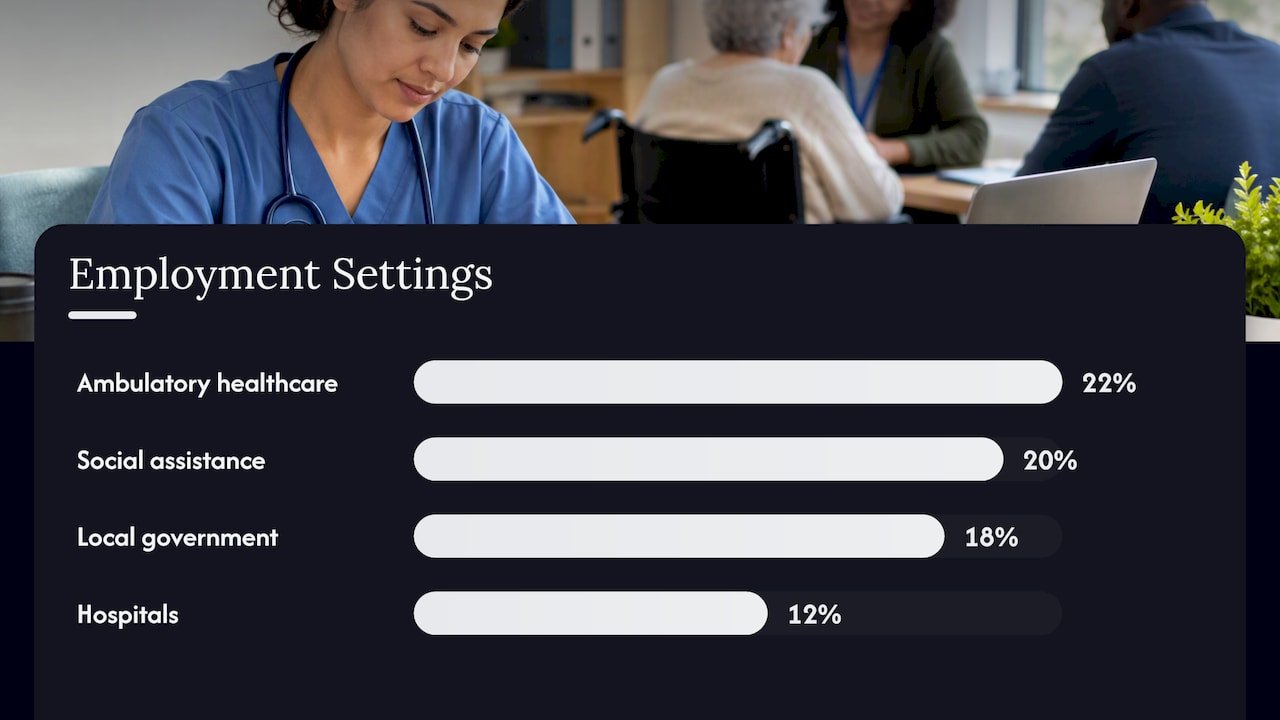
Where do these jobs sit? According to the same BLS page, community health worker positions are spread across ambulatory healthcare services (22%), social assistance (20%), local government (18%) and hospitals (12%). That spread is a benefit in itself: you can move between clinical, nonprofit and public settings without leaving the field.
Broader wellness roles reach into the private sector. UW Online Collaboratives notes that wellness professionals may work in hospitals, government agencies, or private businesses that run workplace wellness programs.
Work that connects you to people
The day-to-day is relational. The CHW Core Consensus Project from the C3 Council lists cultural mediation among individuals, communities and health and social service systems as a core role. The NHLBI adds that community health workers usually share language, background and life experience with the people they serve, which is why trust builds quickly.
The model travels. In the UK, the NHS describes social prescribing link workers who listen to what motivates a person and connect them with local activities such as gardening clubs or exercise groups. That is the same idea a good studio community runs on: movement plus belonging.
A low barrier to entry
For community health workers, the BLS says a high school diploma is typically the minimum, some employers prefer postsecondary education, and training is often given on the job. Skills it highlights include communication, cultural sensitivity, instructional, interpersonal and problem-solving abilities. The BLS also says candidates can gain hands-on experience through apprenticeships or other programs, and that some states require certification, so check your own state's rules.
A Massachusetts public health careers page adds a useful self-check: people motivated by health equity and comfortable in public-facing roles tend to do well in community health positions.
Research from a national survey of community health workers found that they generally share similar training and job activities regardless of where they work. In practice, your skills transfer from city to city.
Skills that are growing
UW Online Collaboratives points to digital literacy as a growing requirement, since wellness professionals increasingly engage remote and hybrid workforces. If you can lead a livestream session or run a virtual workshop, you are ahead of the curve.
What community wellness professionals earn
Pay depends on the role, employer and region. These are the published benchmarks:
| Role | Figure | Source |
|---|---|---|
| Community health worker | $51,850 median annual pay, May 2025 | BLS |
| Health education specialist | $64,070 median annual wage, May 2025 | BLS |
| Social worker | $61,780 median annual wage, May 2025 | BLS |
| Wellness coach | $58,906 to $90,664 (2024 salary calculator range) | UW Online Collaboratives |
| Wellness program manager | $78,153 to $137,244 (2024 salary calculator range) | UW Online Collaboratives |
Benefits employers in this field may offer
Pay is only part of an offer. Wellness employers vary widely, so treat the following as things to look for, not promises.
Health coverage and retirement plans. Job listings for community wellness centers commonly mention medical, retirement and wellness programs alongside the salary.
Wellness programs for staff. The CDC says workplace health programs can improve health behaviors and reduce health risks for individuals, and can lower health care costs, reduce absenteeism and aid recruitment and retention for organizations. An employer in this field that runs its own program is showing you what it values.
Schedule realities. The BLS says most community health workers are employed full-time, though they may work evenings and weekends for community events. Ask how that time is compensated.
Mission and funding. Job titles can change with the employer's mission, project and funding source, according to a resources guide for community health workers and promotores. Grant-funded roles may differ in stability from roles funded by operating budgets, so ask how the position is funded.
A short checklist for comparing offers
Confirm the exact title and what the day-to-day tasks are.
Ask how the position is funded and for how long.
Get the expected weekly schedule, including evening and weekend events.
Compare health coverage, retirement contributions and paid time off, not just base pay.
Ask about training, certification support and room to move up.
Check whether the employer offers wellness benefits to its own staff.
Benefits of joining a wellness community as a working professional
Now the second meaning. You may not want a career change at all. You may just want a week that includes something other than screens and meetings.
Structure you do not have to invent
A class on the calendar beats a good intention. Showing up to a set time, with a teacher and a room of familiar faces, removes the daily negotiation with yourself. Our own write-ups on why join a yoga community and on the role of group classes go deeper on how shared practice builds consistency.
Connection outside your work circle
Most professionals know colleagues and clients, and little else of their neighborhood. A studio gives you a second circle of people who are there for the same reason you are. Community yoga is built for exactly this: a lower price, an open door and no pressure to perform.
Recovery for people who sit and think all day
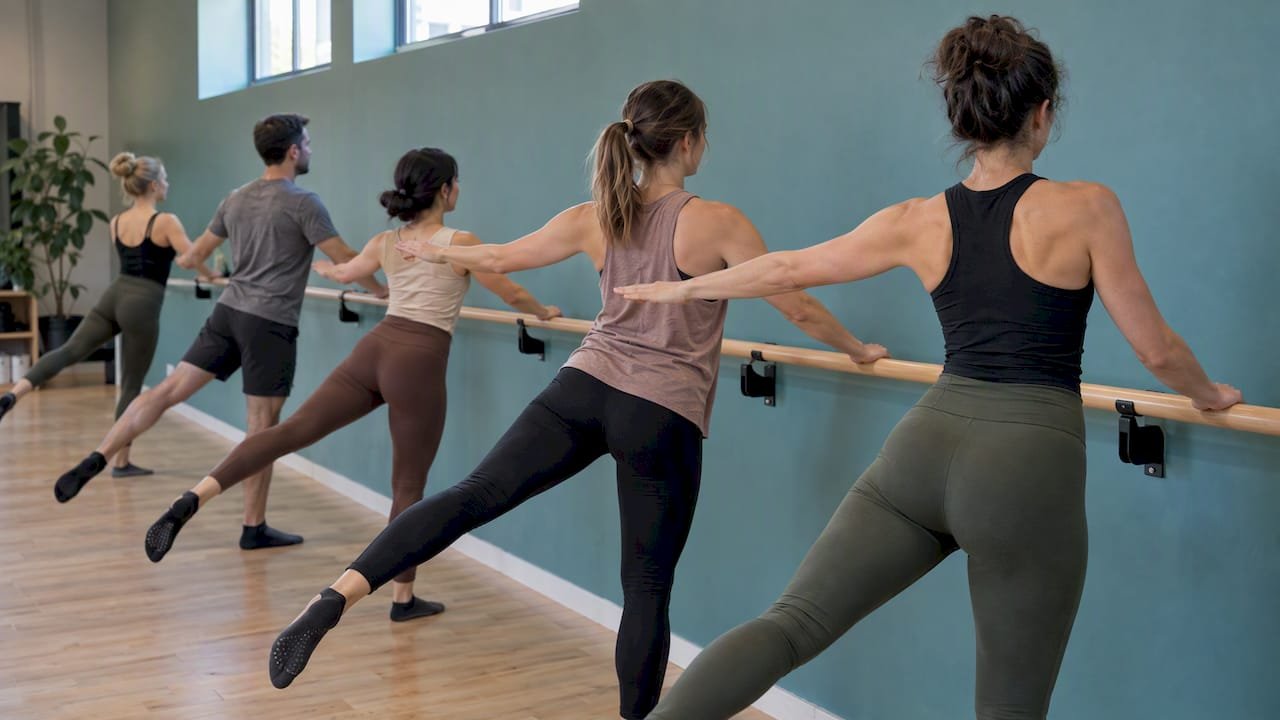
If your job is mostly seated, a mix of mobility, strength and breathing work gives your body something different from your workday. We teach yoga in several styles including hot yoga and aerial yoga, mat and group reformer Pilates, barre and tai chi, so you can try what suits your energy that week. Our class descriptions explain each style and level, from beginner to advanced.
Learning that adds to your own skills
Workshops such as breathwork and tarot readings give you a structured evening of something new. If you are curious why people keep coming back to them, we explain the case in why attend wellness workshops.
A path toward teaching
Some members start as busy professionals and end up wanting to teach. We offer teacher trainings for dedicated yoga practitioners and for Pilates enthusiasts who want to become instructors, including fitness professionals, massage therapists and rehabilitation specialists who want to add Pilates to their client care. Our piece on the impact of a hot yoga trainer shows what a teacher means to a community.
Community does not have to be in one room, either. Peers who ride, run or hike together get many of the same benefits from the group around them. A club platform such as Coffeeride shows how local group rides can bring people together around a shared activity, and the same logic holds for a studio.
Perspective: why we build community first
We started from a simple observation: people stay with a practice when they feel known. A beginner who is greeted by name on the second visit is far more likely to come to a third.
That is why our studio is built around inclusivity, beginner approachability and community. Our class structures and detailed guidance are designed to support safety, personal growth and connection across all experience levels, from a first-timer to a long-time practitioner.
For professionals, we think the most useful thing we offer is flexibility. Drop-in classes, a low-cost community class, livestream and on-demand options, and monthly memberships let you fit practice around deadlines and travel instead of the other way around. Add massage therapy, Ayurvedic treatments and workshops, and the studio becomes a place to recover as well as train.
Whether you want to feel better at your desk, build a team habit, or one day teach, we believe the people around you matter as much as the poses.
Juiced
How to start at our Philadelphia studio
If you live or work in Philadelphia, here is a simple way in, with our published prices:
Community class drop-in: $11. The lowest-cost way to meet the room.
Group class drop-in: $28. Try any in-person group class.
Livestream class drop-in: $19. For days you cannot get across town.
Nurtured Beginnings pass: $35. Designed for first-timers.
Monthly memberships: Earth at $119 per month, Water at $139, Air at $149, or one month of unlimited group classes at $169. A Livestream Class Membership is $49 per month and On Demand is $25 per month.
Private sessions: One to One sessions start at $85 per hour, for focused work on posture, mobility or recovery.
See every option and current details on our class and membership page, or read how our $28 drop-in works for a first visit. For specials, check the in-studio and virtual pricing page.
If you want to bring wellness to your team, our corporate wellness programs are the place to start. Employers who want to thank staff can also look at our gift cards.
Choosing the right route
| If you are... | Start with |
|---|---|
| Exploring a career change | Entry-level community health worker roles and the BLS profile; look for apprenticeships and check state certification rules |
| Already in health or fitness | Adding a teaching credential, such as Pilates or yoga training |
| A busy professional wanting balance | A community class, then a flexible membership |
| An HR or benefits lead | A workplace program informed by the CDC model, with on-site or studio-based classes |
| Recovering or working on posture | A private one-to-one session to build a plan |
Whichever route you choose, begin small and repeat it. A weekly class or a single informational conversation with someone in the field will teach you more than weeks of reading.
FAQ
What are the benefits of a wellness community for professionals?
A wellness community gives you routine, social connection and access to people who can guide you, whether you work in the field or outside it. For employers, the CDC notes that workplace health programs can reduce absenteeism and help retention. For individuals, they can improve health behaviors and reduce health risks.
Do I need a degree to work in community wellness?
Not always. The BLS says community health workers typically need at least a high school diploma, with training often provided on the job, though some employers prefer postsecondary education. Some states require certification, so check the rules where you plan to work.
How much do community wellness professionals earn?
It depends on the role. The BLS reports a median of $51,850 for community health workers and $64,070 for health education specialists as of May 2025. Wellness program managers can earn considerably more, according to published salary calculator ranges.
I am a busy professional. How do I start with a wellness community?
Pick one recurring slot and keep it. At our studio, an $11 community class or a $28 group drop-in lets you test the room before choosing a membership. Livestream and on-demand options cover travel weeks.
Can I become a teacher through a wellness community?
Yes. We run teacher trainings for yoga and Pilates, and they suit practitioners, fitness professionals, massage therapists and rehabilitation specialists. Contact the studio through our website for current training details.
Sources
Community Health Workers, Occupational Outlook Handbook (BLS)
Health and Wellness Management Career Outlook (UW Online Collaboratives)
Establishing a professional profile of Community Health Workers (PMC)