The Amrita Journal
Explore thoughtful stories, practical wellness guidance and inspiring ideas to support your movement, mindfulness and everyday wellbeing at Amrita.
Discover Moksha Yoga principles for holistic wellness
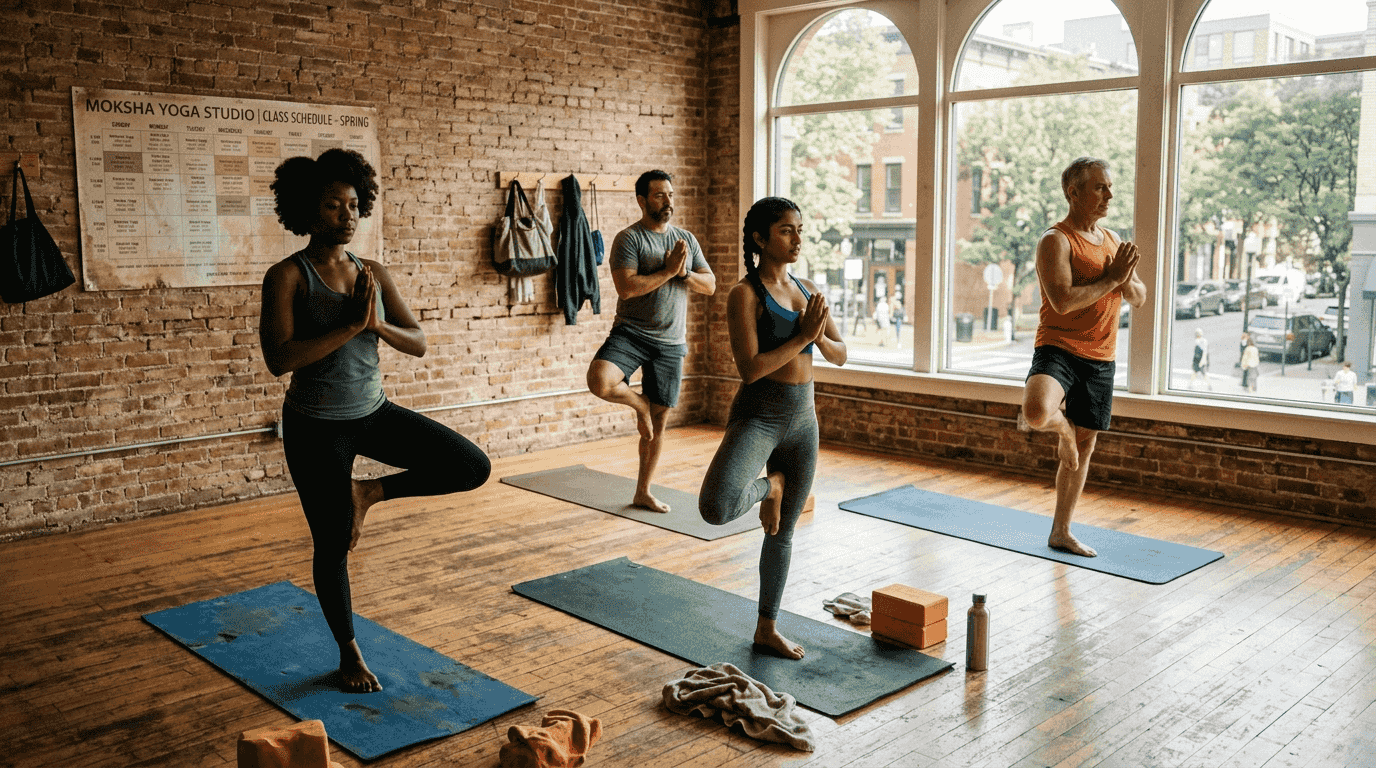
Many people assume Moksha Yoga demands advanced flexibility or years of practice, but this misconception overlooks its true purpose. Moksha Yoga integrates physical poses with mental clarity and spiritual growth, making it accessible to everyone regardless of experience. Whether you're seeking stress relief, improved flexibility, or deeper self-awareness, this practice offers a complete path to holistic well-being. This guide explores Moksha Yoga's foundational principles, its unique benefits for body and mind, and how Philadelphia residents can start their journey today with practical steps and local resources.
Table of Contents
Key takeaways
| Point | Details |
|---|---|
| Holistic approach | Moksha Yoga blends 40 traditional poses with mental and spiritual practices for complete wellness. |
| Stress reduction focus | The practice emphasizes stress management alongside physical strength and flexibility improvements. |
| Accessible to all levels | Beginners and advanced practitioners benefit equally from Moksha Yoga’s adaptable structure. |
| Philadelphia resources | Local studios offer classes, workshops, and guidance to help you start your practice easily. |
| Mind-body-spirit balance | The practice creates harmony between physical health, mental clarity, and spiritual awareness. |
What is Moksha Yoga and its foundational principles?
Moksha Yoga emerged as a distinct practice that honors traditional yoga while addressing modern wellness needs. The word "moksha" means liberation or freedom in Sanskrit, reflecting the practice's goal of releasing physical tension, mental stress, and spiritual blockages. Unlike purely physical fitness routines, this approach treats your body, mind, and spirit as interconnected systems requiring equal attention.
The practice incorporates 40 different poses rooted in traditional yoga sequences, but adds a crucial element that sets it apart: intentional stress reduction techniques woven throughout each session. These poses range from foundational standing postures to more challenging balance work, allowing practitioners to progress naturally while maintaining focus on breath and mindfulness. Each pose serves multiple purposes, building physical strength while creating space for mental stillness.
Moksha Yoga's core principles rest on three interconnected pillars. First, physical practice develops strength, flexibility, and endurance through deliberate movement. Second, mental cultivation uses breath work and present-moment awareness to quiet racing thoughts and reduce anxiety. Third, spiritual exploration invites practitioners to connect with something larger than daily concerns, whether through meditation, intention setting, or simple gratitude. These elements work together rather than competing for attention.
What distinguishes Moksha Yoga from other hot yoga styles is its balanced emphasis. While some practices prioritize athletic achievement or calorie burning, Moksha maintains equal focus on inner transformation. The heated environment supports physical benefits like improved circulation and muscle flexibility, but the real work happens in your relationship with discomfort, patience, and self-acceptance. You learn to observe sensations without judgment, creating skills that extend far beyond the yoga mat.
The practice adapts to individual needs rather than forcing everyone into identical molds. Teachers encourage modifications and variations, recognizing that bodies and minds arrive in different states each day. This flexibility makes Moksha Yoga sustainable as a lifelong practice rather than a temporary fitness trend. You can explore class and experience schedules to find sessions matching your current needs and goals.
Key components and benefits of Moksha Yoga practice
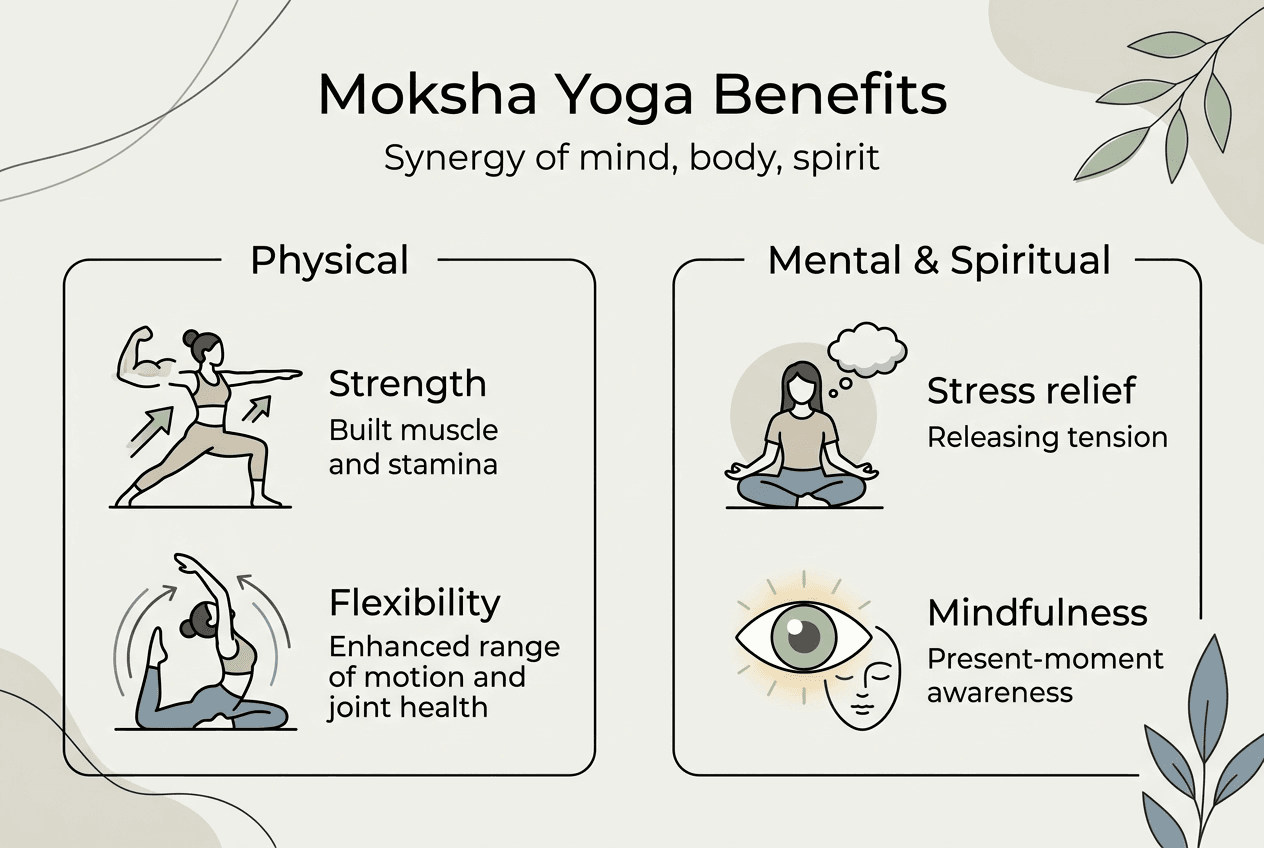
The 40 poses in Moksha Yoga create a comprehensive physical workout targeting every major muscle group and joint system. Standing poses build leg strength and balance while opening hips and shoulders. Floor sequences strengthen your core and spine while stretching hamstrings and hip flexors. Backbends counteract the forward-hunching posture most people develop from desk work and phone use. Twists massage internal organs and promote spinal mobility. This variety ensures balanced development rather than overworking certain areas while neglecting others.
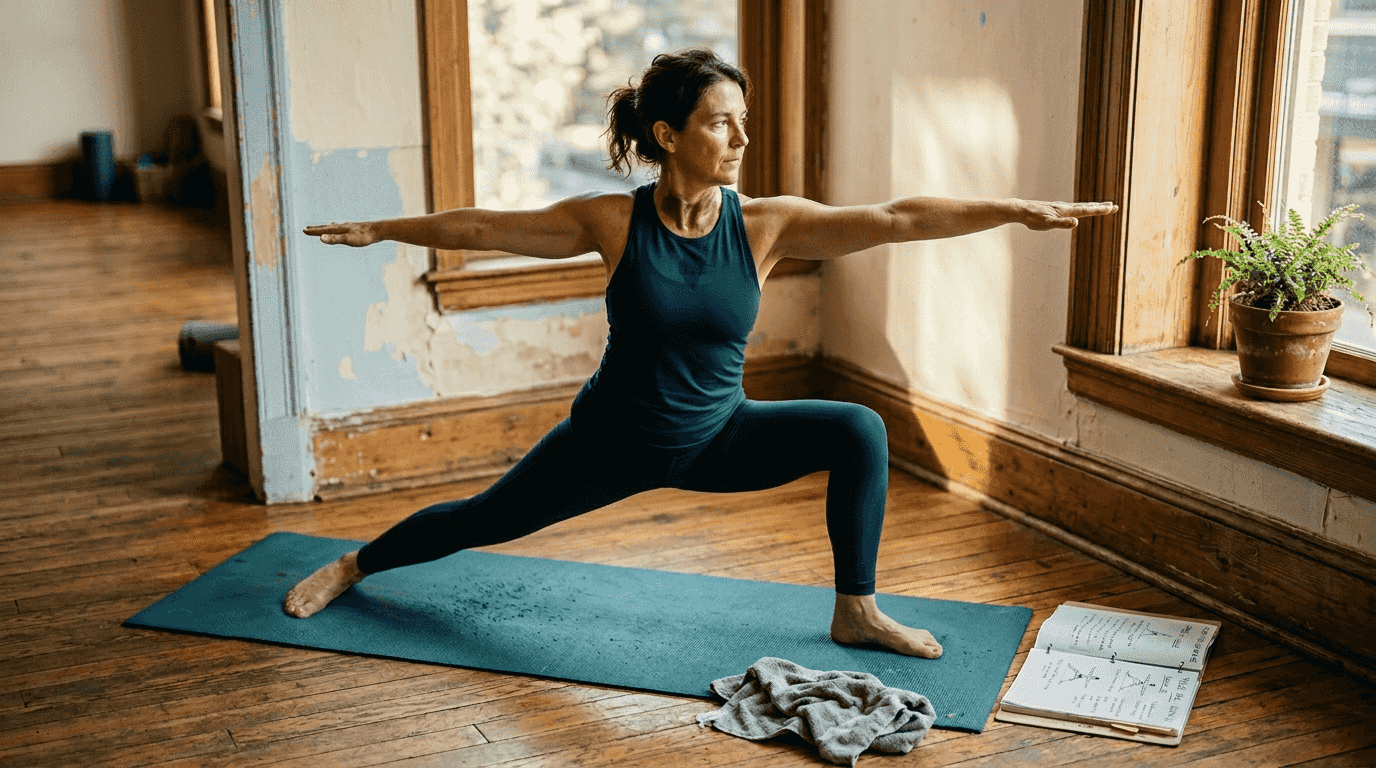
Mental health benefits emerge naturally from consistent practice. The combination of physical challenge and mindful breathing activates your parasympathetic nervous system, which counteracts stress responses. During class, you practice returning attention to breath and sensation whenever your mind wanders to worries or planning. This skill, repeated hundreds of times per session, strengthens your ability to manage anxiety and rumination in daily life. Many practitioners report sleeping better, feeling less reactive to stressors, and experiencing improved mood stability after several weeks of regular practice.
Spiritual well-being develops through the practice's meditative qualities. Unlike exercise that distracts you with music or entertainment, Moksha Yoga asks you to turn inward and observe what arises. You might notice patterns in how you respond to difficulty, discover unexpected emotions held in certain body areas, or experience moments of profound peace and connection. These insights don't require religious belief or mystical experiences. They simply reflect increased self-awareness and presence, which many people describe as spiritual growth regardless of their philosophical background.
The integrated approach benefits people at every experience level:
Complete beginners learn fundamental movement patterns while building strength and flexibility from scratch
Intermediate practitioners deepen their practice by exploring subtle alignment and breath control
Advanced yogis challenge themselves with longer holds and more complex variations while maintaining mindful awareness
People managing stress or anxiety find practical tools for nervous system regulation
Those seeking spiritual growth discover contemplative practices within an accessible physical framework
Pro Tip: Start with two classes per week rather than diving into daily practice. This frequency allows your body to adapt to the heat and physical demands while giving you time to integrate mental and emotional insights between sessions.
The combination of physical, mental, and spiritual elements creates synergistic effects. Physical strength supports longer meditation sits. Mental clarity improves body awareness and injury prevention. Spiritual practices reduce ego-driven pushing and promote sustainable effort. You can explore private yoga sessions for personalized guidance in developing all three dimensions of your practice.
How Moksha Yoga compares to other yoga styles
Understanding how Moksha Yoga relates to other popular styles helps you choose the right practice for your goals. Bikram Yoga, perhaps the most well-known hot yoga style, follows a rigid sequence of 26 poses performed identically in every class. The strict structure offers consistency but less variety. Moksha's 40 poses and stress reduction focus provide more diversity while maintaining the benefits of heated practice. Teachers can adjust sequences based on class needs rather than following an unchangeable script.
Vinyasa Yoga emphasizes flowing movement synchronized with breath, often practiced at room temperature. Classes vary widely depending on the teacher's style and creativity. While Vinyasa excels at building cardiovascular fitness and dynamic strength, it may not emphasize stress reduction and spiritual practices as deliberately as Moksha. The heated environment in Moksha also promotes deeper stretching and detoxification through sweating, benefits less pronounced in room-temperature Vinyasa.
Hatha Yoga, the umbrella term for physical yoga practices, typically moves more slowly with longer holds in each pose. This approach allows detailed exploration of alignment and sensation. Moksha incorporates Hatha's mindful pacing while adding heat and a specific philosophical framework around liberation and holistic wellness. The result feels more dynamic than traditional Hatha but less rushed than some Vinyasa styles.
Key differences emerge in several areas:
Temperature control: Moksha uses heated rooms like Bikram but with more moderate temperatures and humidity levels
Pose variety: Moksha's 40 poses exceed Bikram's 26 but follow more structure than freestyle Vinyasa
Mental focus: Moksha explicitly integrates stress reduction techniques rather than treating them as secondary benefits
Spiritual emphasis: Moksha weaves spiritual themes throughout while some styles focus primarily on physical fitness
Accessibility: Moksha's modifications and inclusive philosophy welcome beginners more actively than some traditional styles
| Feature | Moksha Yoga | Bikram Yoga | Vinyasa Yoga | | --- | --- | --- | | Number of poses | 40 traditional poses | 26 fixed poses | Varies by teacher | | Room temperature | Heated, moderate | Very hot, high humidity | Usually room temperature | | Sequence structure | Semi-structured, adaptable | Rigid, identical every class | Flowing, creative | | Stress reduction | Explicit focus | Secondary benefit | Varies by instructor | | Experience level | All levels welcome | Can be intense for beginners | Depends on class level |
Moksha Yoga's unique strengths shine for people seeking comprehensive wellness rather than purely physical results. The practice acknowledges that true health requires mental clarity and spiritual connection alongside physical fitness. This holistic perspective attracts practitioners who feel unfulfilled by exercise routines that ignore emotional and existential dimensions. You can explore semi-private yoga classes to experience these differences firsthand with personalized attention.
Getting started with Moksha Yoga in Philadelphia
Beginning your Moksha Yoga journey requires less preparation than you might expect. Follow these steps to set yourself up for success:
Research local studios offering Moksha or similar holistic hot yoga classes that emphasize mental and spiritual wellness alongside physical practice.
Check class schedules and choose beginner-friendly sessions, typically labeled as "all levels" or "gentle" to ensure appropriate pacing and instruction.
Contact studios directly to ask about first-timer specials, intro packages, or trial classes that let you explore the practice affordably.
Gather essential supplies including a yoga mat, water bottle, and towel, though many studios provide rental options for your first few visits.
Arrive 15 minutes early to complete paperwork, meet instructors, and familiarize yourself with the space before class begins.
Communicate any injuries, health concerns, or experience level to your teacher so they can offer appropriate modifications and support.
What to bring and wear makes a significant difference in your comfort level. Choose lightweight, moisture-wicking clothing that allows full range of motion without riding up or falling down during inversions. Avoid cotton, which absorbs sweat and becomes heavy and uncomfortable. Bring a large water bottle since you'll drink frequently during and after class. A yoga mat with good grip prevents slipping as you sweat. Many practitioners also bring a small towel for wiping face and hands, plus a larger towel to place over their mat for extra traction.
Preparation tips enhance your first experience significantly. Eat a light meal 2-3 hours before class rather than practicing on a full or empty stomach. Hydrate well throughout the day leading up to class, not just immediately beforehand. Remove jewelry that might catch on clothing or distract during poses. Set an intention for your practice, even something simple like "stay present" or "be kind to myself." This mental preparation helps you approach class with purpose rather than just going through motions.
Listening to your body becomes crucial in heated environments. The 40 poses and stress reduction approach works best when you honor your limits rather than pushing through pain. Rest in child's pose whenever needed. Take water breaks without waiting for permission. Exit the room briefly if you feel dizzy or nauseous. These choices demonstrate strength and self-awareness, not weakness. As you gain experience, you'll recognize the difference between productive challenge and harmful strain.
Pro Tip: Schedule your first few classes during less busy times like mid-morning or early afternoon. Smaller class sizes allow teachers to offer more individual attention and create a less intimidating environment for learning.
Philadelphia offers excellent resources for starting your Moksha Yoga practice. Local studios provide experienced teachers, welcoming communities, and facilities designed specifically for hot yoga practice. Many offer workshops, special events, and ongoing education to deepen your understanding beyond regular classes. You can contact Amrita Yoga Philly to learn about current offerings, schedule options, and how their approach supports holistic wellness through Moksha principles.
Explore Moksha Yoga at Amrita Yoga & Wellness in Philadelphia
Ready to experience how Moksha Yoga transforms your physical, mental, and spiritual well-being? Amrita Yoga & Wellness in Philadelphia provides the perfect environment for beginning or deepening your practice. The studio emphasizes the holistic principles central to Moksha Yoga, offering classes that balance physical challenge with stress reduction and spiritual growth. Experienced teachers guide practitioners of all levels through sequences designed to build strength, flexibility, and inner peace.
Amrita Yoga & Wellness makes starting easy with flexible studio and cancellation policies that accommodate busy schedules and changing needs. Whether you prefer group classes or more personalized attention, the studio offers options matching your learning style and comfort level. Beyond yoga, you can explore complementary wellness services like Tarot readings at Amrita that support your journey toward greater self-awareness and spiritual connection. Contact Amrita Yoga Philadelphia today to learn about intro specials, schedule your first class, and join a community committed to holistic well-being through mindful practice.
FAQ
What are the health benefits of Moksha Yoga?
Moksha Yoga reduces stress through breath work and mindful movement while improving flexibility and building strength throughout your body. The practice supports mental clarity by training your attention and reducing anxiety through regular meditation and present-moment awareness. Physical benefits include better circulation, increased joint mobility, improved posture, and enhanced cardiovascular health from the combination of heat and movement.
Do I need prior yoga experience to try Moksha Yoga?
No prior experience is necessary to begin Moksha Yoga, as classes accommodate complete beginners through advanced practitioners. Teachers offer modifications for every pose, allowing you to work at your own pace and ability level. The practice's emphasis on self-awareness and non-judgment creates a welcoming environment where you can learn foundational skills while respecting your current limitations.
What should I bring to my first Moksha Yoga class?
Bring comfortable, moisture-wicking clothing that allows full movement, a large water bottle for hydration, and a yoga mat with good grip. Many studios provide mat rentals if you don't own one yet. A small towel for wiping sweat and a larger towel to place over your mat can enhance comfort, though some studios include these in class fees.
How often should I practice Moksha Yoga to see results?
Practicing 2-3 times weekly provides enough consistency to experience physical improvements in strength and flexibility within a few weeks. Mental benefits like reduced stress and better sleep often appear even sooner, sometimes after just a few sessions. As your body adapts and your interest grows, you can increase frequency, but starting with 2-3 weekly classes prevents burnout while allowing adequate recovery time.