The Amrita Journal
Explore thoughtful stories, practical wellness guidance and inspiring ideas to support your movement, mindfulness and everyday wellbeing at Amrita.
Meditate in yoga for mental clarity and well-being
TL;DR:
Meditation is the eighth limb of Patanjali's eight-limbed yoga system, following physical and breathwork practices.Integrating yoga with meditation enhances mental health and brain structure more effectively than meditation alone.Community classes support consistent practice and amplify the benefits of yoga and meditation.
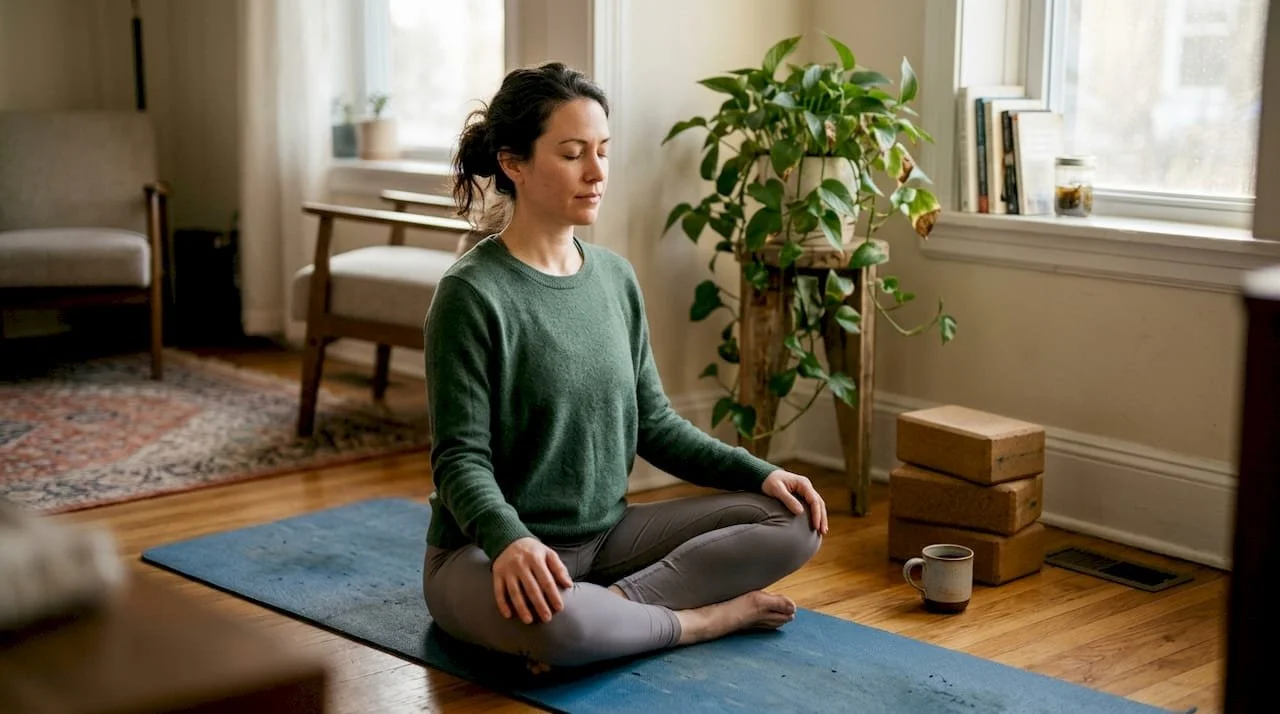
Most people walk into a yoga studio expecting a workout. They leave sweaty, stretched, and satisfied, but they often miss the deeper layer that makes yoga genuinely transformative. Meditation (Dhyana) is the seventh limb of Patanjali's Ashtanga Yoga, sitting at the heart of the entire system, not tacked on at the end. When you understand that postures and breathwork are actually preparation for meditation, the whole practice shifts. This guide breaks down exactly how meditation fits into yoga, what the science says about its effects on your brain and mood, and how Philadelphia's yoga community can help you make it real.
Table of Contents
Key Takeaways
| Point | Details |
|---|---|
| Meditation is yoga’s core | Meditation anchors yoga, unlocking deeper transformation beyond physical postures. |
| Mental clarity and well-being | Research shows yoga meditation reduces stress, sharpens focus, and increases emotional resilience. |
| Integrated practice works best | Combining movement, breath, and meditation yields stronger and more sustainable benefits than standalone routines. |
| Community amplifies progress | Practicing in supportive groups builds accountability and fosters emotional regulation. |
The role of meditation within the yoga path
Yoga is not a single thing. It is a system, and that system has eight distinct parts, known as the eight limbs of Ashtanga Yoga. Each limb builds on the one before it, creating a progression from outer behavior to inner stillness.
Here is a quick overview of all eight limbs:
Eight Limbs of Yoga
| Limb | Sanskrit name | Focus |
|---|---|---|
| 1 | Yama | Ethical restraints |
| 2 | Niyama | Personal observances |
| 3 | Asana | Physical postures |
| 4 | Pranayama | Breath control |
| 5 | Pratyahara | Withdrawal of senses |
| 6 | Dharana | Focused concentration |
| 7 | Dhyana | Sustained meditation |
| 8 | Samadhi | Integration, absorption |
Meditation is the seventh limb, following Yama, Niyama, Asana, Pranayama, Pratyahara, and Dharana. That placement is intentional. You cannot sustain deep meditation if your body is restless or your breath is scattered. Asana settles the nervous system. Pranayama calms the mind. Together, they create the conditions where Dhyana becomes possible.
There is also an important distinction between the three inner limbs. Dharana is the act of fixing your attention on a single point, like a candle flame or your breath. Dhyana is what happens when that focus becomes effortless and continuous. Samadhi is the state of complete absorption, where the boundary between observer and observed dissolves. These three together are called Samyama.
For practitioners exploring mindfulness for yoga, understanding this progression is a game changer. It reframes every pose you do. Suddenly, the warrior sequence is not just a strength exercise. It is preparation for stillness.
Asana reduces physical restlessness before sitting
Pranayama slows the nervous system and sharpens attention
Pratyahara turns attention inward, away from distractions
Dharana anchors the mind to a single focus
Dhyana sustains that focus without effort
You can read more about mindfulness techniques and see yoga mindfulness examples applied to real practice.
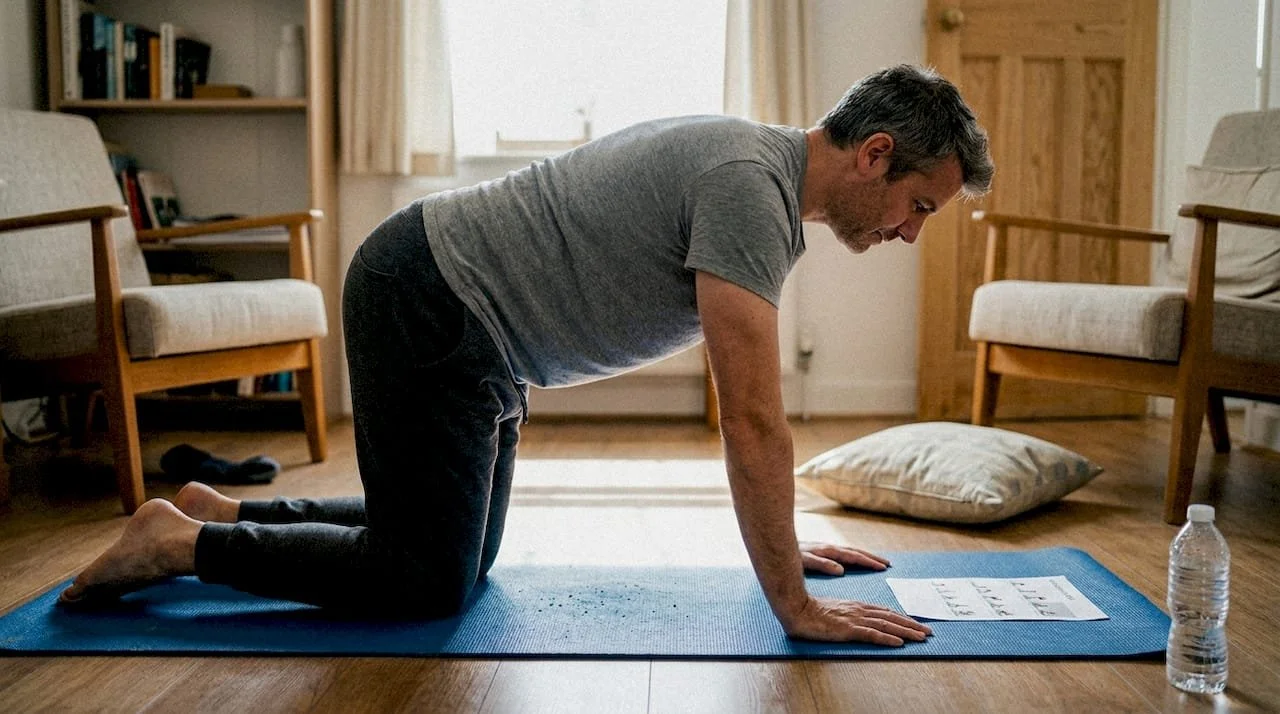
Pro Tip: If sitting meditation feels impossible, try five minutes of slow, mindful movement first. Even a few cat-cow stretches with conscious breathing can shift your nervous system into a state where stillness feels natural.
How meditation enhances mental clarity and brain health
The classical framework is compelling, but the science is what tends to convince skeptics. And the research on yoga meditation is genuinely striking.
Yoga meditation reduces anxiety, depression, and stress, increases brain gray matter, and lowers cortisol. Regular practice has been shown to increase the volume of the prefrontal cortex, the part of your brain responsible for decision-making, emotional regulation, and focus. At the same time, it modulates the amygdala, which is your brain's threat-detection center, making you less reactive to stress.
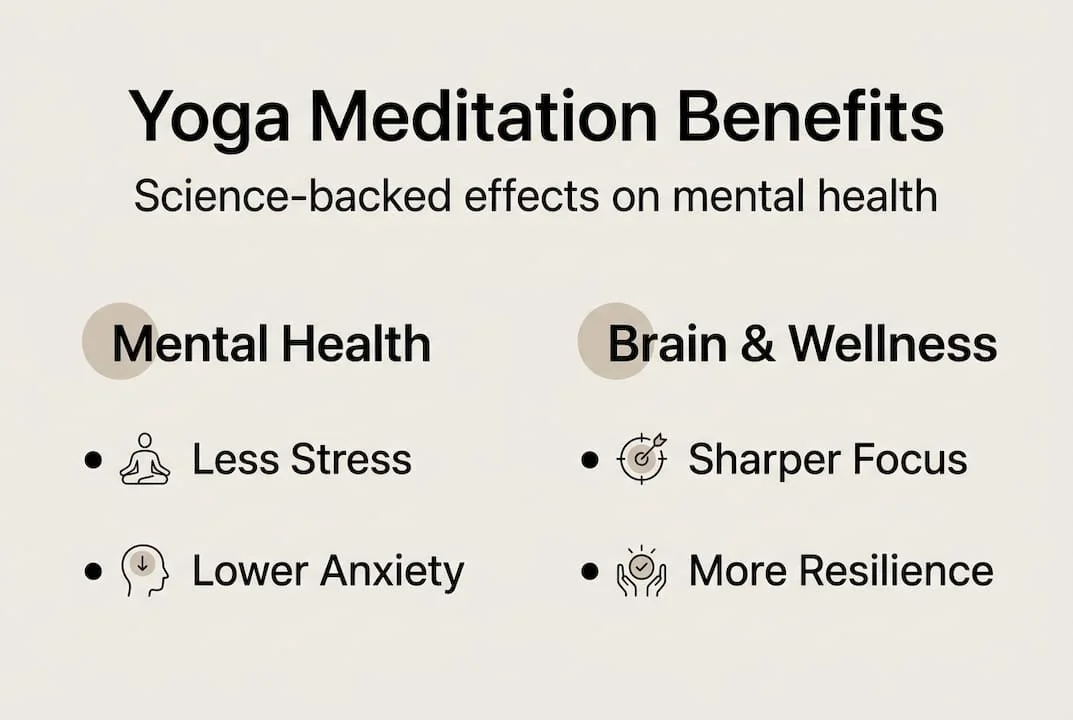
A 16-week yoga meditation intervention produced significant gains in emotional resilience, attention, and overall well-being among adult participants. That is not a small window of time, but it is not a lifetime either. Four months of consistent practice can produce measurable changes in brain structure and function.
Meta-analyses show moderate effect sizesfor yoga meditation on well-being, with standardized mean differences (SMD) ranging from 0.41 to 0.49 for anxiety and depression outcomes. In research terms, that is a meaningful and reliable result.
| Outcome | Effect size (SMD) | What it means |
|---|---|---|
| Anxiety reduction | 0.41 to 0.49 | Moderate, consistent improvement |
| Depression symptoms | 0.41 to 0.49 | Clinically meaningful reduction |
| Stress (cortisol) | Significant | Measurable hormonal change |
| Prefrontal cortex volume | Increased | Better focus and decision-making |
| Amygdala reactivity | Decreased | Reduced emotional reactivity |
Key mental health outcomes supported by yoga brain health research include:
Reduced anxiety and worry
Lower perceived stress
Improved emotional regulation
Greater sense of well-being
Better sleep quality
Increased self-awareness
One underappreciated finding is the group effect. Practicing in a community setting amplifies many of these benefits. The social support, shared intention, and collective energy of a studio class appear to boost outcomes beyond what solo practice alone produces. For those exploring advanced yoga practices or mindfulness in Pilates, these findings apply broadly across movement-based mindfulness disciplines.
Why integrate meditation into your yoga, not as a standalone
Here is a question worth sitting with: if meditation is so powerful, why not just meditate without the yoga?
It is a fair question. Apps like Headspace and Calm have made standalone meditation wildly popular. And yes, those tools offer real short-term relief. But RCTs show combining yoga with meditation leads to maximized and sustained benefits, while standalone meditation offers short-term relief only.
The reason comes back to the body. Most adults carry significant physical tension, especially in the hips, shoulders, and lower back. When you sit down to meditate without first moving, that tension becomes noise. Your body keeps sending signals to your brain, and your brain keeps getting distracted. Asana clears that physical static.
"Isolating meditation yields short-term benefits only; integrated practice maximizes results over time."
Here is a practical comparison:
| Approach | Short-term benefit | Long-term sustainability | Body preparation | Community context |
|---|---|---|---|---|
| Meditation alone | Yes | Limited | None | Solo, typically |
| Yoga only | Yes | Moderate | Full | Group or solo |
| Integrated yoga and meditation | Yes | High | Full | Group or solo |
Steps to begin integrating meditation into your yoga practice:
Start with 20 to 30 minutes of asana, focusing on slow, deliberate movement.
Follow with 5 to 10 minutes of pranayama (breath control), such as alternate nostril breathing.
Transition to a comfortable seated position and set a timer for 5 minutes.
Anchor your attention to your breath or a simple mantra.
Gradually extend your meditation time as the practice becomes familiar.
For those drawn to deeper rest-based practices, Yoga Nidra meditation is an excellent bridge between asana and seated meditation. It guides you into a state between waking and sleep, making it far easier to access the stillness that Dhyana requires.
Pro Tip: Even a 10-minute yoga session before meditating is more effective than jumping straight onto the cushion. Use it as a mental transition ritual, not just a warm-up.
If you want to understand the fundamentals of sitting practice, how to meditate is a solid starting point for building the basics.
Community, support, and practical steps in Philadelphia studios
Knowing the theory is one thing. Applying it consistently is another. This is where Philadelphia's yoga community becomes genuinely valuable.
Group yoga and meditation classes create accountability in a way that solo home practice rarely does. When you show up to a class, you are surrounded by people who share your intention. That shared energy is not just motivational. Research supports that yoga rewires your brain more effectively in community settings, with group participants showing stronger emotional support networks and greater resilience over time.
Philadelphia studios typically offer several class formats that naturally support integrated meditation:
Yoga Nidra: A guided, deeply restful practice that bridges movement and meditation
Restorative yoga: Long-held, supported poses that calm the nervous system before stillness
Yin yoga: Slow, floor-based practice that targets connective tissue and promotes introspection
Breathwork workshops: Focused pranayama sessions that sharpen attention and reduce stress
Group meditation circles: Community-based sits with guided instruction
When choosing a local studio, look for these features:
Clear class descriptions that mention meditation or mindfulness integration
A welcoming, non-competitive environment
Instructors trained in both asana and meditation traditions
Offerings that include restorative or Nidra formats
A sense of genuine community, not just drop-in foot traffic
Here is a simple four-step approach to building your integrated practice with studio support:
Attend one group yoga class per week that ends with a guided meditation or Savasana (final resting pose).
Ask your instructor for one breathwork technique to practice at home between classes.
After each home asana session, sit quietly for five minutes before checking your phone.
Connect with one other student in class. Shared commitment to practice dramatically improves follow-through.
Exploring community yoga wellness and understanding group yoga benefits can help you find the right fit. You can also browse group yoga sessions to see what formats resonate with you.
Our take: The uncomfortable truth about yoga and meditation 'shortcuts'
Here is something we see regularly at the studio that most yoga content will not say out loud: the people who get the most from meditation are almost never the ones who started there.
They are the ones who spent months, sometimes years, building a movement practice first. They learned to feel their breath. They worked through physical tension in their hips and shoulders. They showed up consistently, even when the class felt like just exercise. And then, one day, the meditation clicked.
Quick-fix meditation apps and weekend retreats have their place. But jumping straight to deep meditation without the groundwork of asana and pranayama is like trying to read a novel before learning the alphabet. You might get fragments. You will not get the full story.
The most sustainable gains we observe come from practitioners who treat movement and stillness as one practice, not two. Patience is not optional here. It is the method. Community accelerates that process because it keeps you honest and keeps you coming back. Blend tradition with whatever modern flexibility works for your life, but do not skip the foundation. Explore what community yoga wellness looks like in practice, and you will see this pattern everywhere.
Ready to deepen your practice?
If this article has shifted how you think about yoga and meditation, the next step is putting it into practice in a space that supports you. At Amrita Yoga & Wellness, we offer a full range of classes designed to integrate movement, breath, and meditation in exactly the way the research supports. From Yoga Nidra and restorative sessions to community workshops, every offering is built around genuine well-being, not just a good stretch.
We also offer tarot readings for clarity as a unique complement to your wellness journey, helping you reflect on where you are and where you want to go. Whether you are brand new to meditation or looking to go deeper, our Philadelphia community is here to support every step. Come find your practice with us.
Frequently asked questions
Can I meditate before or after yoga?
Meditating after yoga postures and breathwork is most effective, as postures and breathwork lay the foundation for effective meditation by settling the body and calming the nervous system first.
How does meditation in yoga impact stress?
Yoga meditation significantly reduces stress, anxiety, and depression, with yoga meditation linked to lower cortisol levels and measurable improvements in overall mental health.
Is group meditation more effective than solo?
Group practice supports accountability and emotional regulation, and community yoga fosters stronger emotional support networks and resilience, though personal preference still plays a role.
Why not just practice meditation without yoga?
Standalone meditation can offer short-term relief, but integrated yoga meditation produces more sustained mental and physical benefits by combining body preparation with mindfulness practice.