5 Minutes to a Breathwork Habit: Daily Checklist and Amrita Support
Yes, brief daily breathwork is effective, and five minutes is a real, usable minimum backed by research. A randomized study found that five minutes of daily cyclic sighing improved mood and lowered respiratory rate more than an equivalent amount of mindfulness meditation over the course of one month. Start with the checklist below today rather than waiting for a longer block of free time.
TL;DR:
Short daily breathwork sessions of five minutes, especially cyclic sighing, are supported by research to improve mood and reduce respiratory rates.
Techniques such as diaphragmatic, box, 4-7-8, cyclic sighing, and resonant breathing serve different purposes, with exhale extension providing the main calming effect.
Practice can be integrated into morning, midday, and evening routines, and consistency over 30 to 45 days builds a lasting habit more than session length.
Beginners should start with comfortable counts, shorten breath holds if needed, and prioritize safety to avoid dizziness, hyperventilation, or anxiety.
Guided instruction and real-time feedback from instructors can accelerate learning, with options for group classes or private sessions at wellness centers.
Amritayogawellness
Explore Guided Breathwork Support
Amrita Yoga & Wellness offers breathwork workshops alongside yoga, Pilates, barre, tai chi, massage therapy, and other wellness services.
Table of Contents
1. Your daily breathwork checklist, step by step
You do not need thirty minutes or a special room to get something out of breathwork. You need a few minutes and a chair.
Warm up (30 to 60 seconds). Sit tall, feet flat on the floor, shoulders soft. Take three normal breaths through the nose and notice where you feel tension.
Pick one 5-minute core practice. Cyclic sighing is the technique with the strongest direct evidence for a short daily dose: two inhales through the nose (a short one followed by a deeper top-up), then one long, slow exhale through the mouth. Repeat this pattern for five minutes.
Cool down and reflect (30 to 60 seconds). Return to normal breathing, then rate your mood on a 1 to 5 scale before you started and again now. Write one line about how your body feels.
If box breathing suits your schedule better than cyclic sighing, swap it in: inhale for four counts, hold for four, exhale for four, hold for four, and repeat for a short session of around five minutes. Either choice satisfies the daily minimum.
Once the core five minutes feels automatic, you can extend the session:
Add some extra slow, resonant breathing before bed to support wind-down.
Add a short energizing round, like three cycles of faster diaphragmatic breathing, before a morning workout or a demanding meeting.
Pair your breathwork with a one-line journal entry to track patterns over a week.
The one-line mood rating matters more than it sounds. The same study behind cyclic sighing built its protocol around a short scripted routine, a posture check, one exhale-focused technique, and a before-and-after mood score, which is exactly what makes a five-minute habit both trackable and repeatable.
2. How to do each core breathing technique correctly
Different techniques serve different goals, and knowing which one to reach for matters more than mastering all six at once.
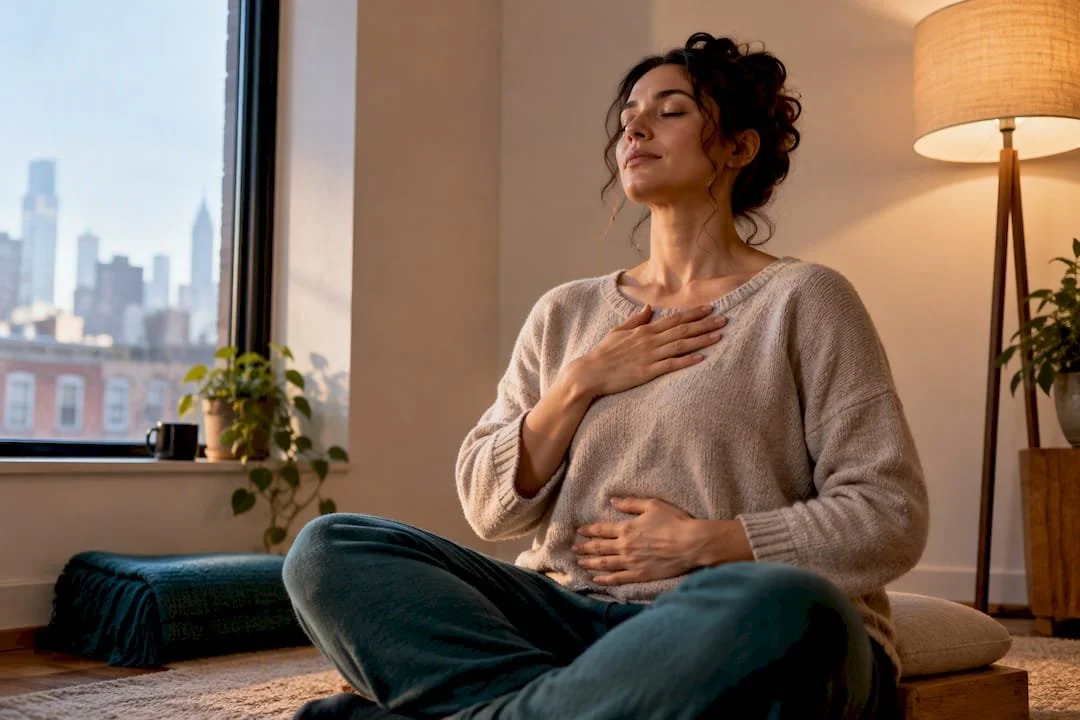
Diaphragmatic (belly) breathing is the foundation for almost everything else. Lie down or sit comfortably, place one hand on your chest and one on your belly, and breathe in slowly through your nose so the belly hand rises while the chest hand stays still. Exhale slowly through pursed lips. The NHS's abdominal breathing guide walks through this hand placement and posture in more detail and is a good reference for beginners learning the sensation for the first time. Use this technique any time you want a baseline reset, especially before trying a more structured pattern.
Box breathing works well when you need focus without a strong sedative effect. Inhale for four counts, hold for four, exhale for four, hold for four, and repeat for four to six rounds. It suits pre-meeting nerves or a midday reset better than bedtime.
4-7-8 breathing is inhale for four counts, hold for seven, exhale for eight, repeated for four breath cycles. The Cleveland Clinic's guide to the 4-7-8 method notes that the long breath hold can feel uncomfortable for beginners, and recommends a modified 2-3.5-4 ratio (a two-count inhale, a three-and-a-half-count hold, a four-count exhale) until the longer version feels manageable. This technique fits best at bedtime, since the extended exhale tends to slow things down rather than sharpen focus.
Cyclic sighing is the double-inhale, long-exhale pattern described in the checklist above. It is worth defaulting to this one when time is short, since it carries the most direct evidence for a five-minute daily dose.
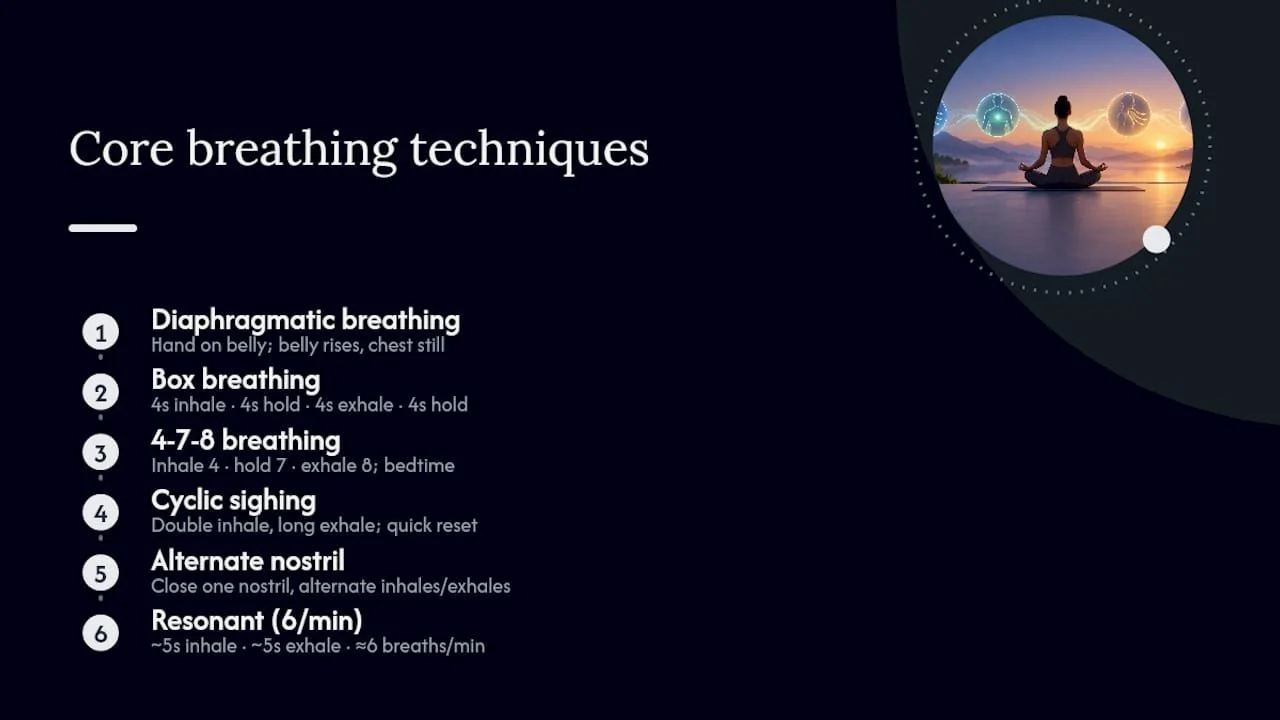
Alternate nostril breathing involves closing one nostril with a thumb, inhaling through the open side, closing that side, releasing the other nostril, and exhaling through it, then reversing the pattern. It is commonly used to settle a scattered mind before focused work, though it takes more coordination than the other techniques listed here.
Resonant or slow-paced breathing targets roughly six breaths per minute, meaning about a five-second inhale and a five-second exhale. A pilot study using resonant slow-paced breathing in long-COVID patients found measurable symptom improvements with repeated daily practice, which supports resonant breathing as a legitimate option for a regular routine rather than a novelty technique.
If breath holds trigger anxiety or dizziness, shorten every count proportionally rather than skipping the technique altogether: a 2-3.5-4 version of 4-7-8, or a two-count box breath instead of a four-count one, still delivers the pattern without the strain.
Pro Tip: Whichever technique you choose, extend the exhale beyond the inhale wherever the pattern allows it. A longer exhale is the main driver of the calming, parasympathetic response that makes breathwork feel effective.
3. When and how often you should practice each day
You do not need a perfect schedule to see a benefit. The Cleveland Clinic recommends five to 10 minutes of daily practice, using the breath as an anchor to gradually retrain the nervous system toward a calmer baseline rather than as a one-time fix.
One longer session tends to be easier to remember, while several short micro-sessions can fit into a day that has no single free block. Neither is objectively better: pick whichever you will actually repeat tomorrow.
Morning (right after waking): a short diaphragmatic or box breathing round to set a steady tone before the day's demands start.
Midday (before or after lunch): cyclic sighing for five minutes as a reset between tasks.
Evening (30 to 60 minutes before bed): 4-7-8 or resonant breathing, since the longer exhale supports wind-down.
A simple weekly structure might be a regular practice most mornings and several evenings when you have the time. Tie the practice to something you already do daily, which does more for adherence than the exact time of day.
4. Safety signs to watch for and how to adjust
Breathwork is generally low-risk for healthy adults practicing at a comfortable pace, but a few transient sensations are common enough to expect.
Lightheadedness or tingling in the hands or face can appear during longer breath holds or fast-paced rounds. Stop, sit still, and return to slow, normal nasal breathing until it passes.
Increased anxiety mid-session is a signal to shorten your counts rather than push through, since reduced counts and immediate cessation are the recommended response when adverse symptoms appear.
A modified 2-3.5-4 ratio works as a gentler substitute for standard 4-7-8 breathing when the seven-count hold feels too long.
Pregnant practitioners or people with respiratory or cardiovascular conditions should check with a healthcare provider before adopting breath holds or fast-paced patterns, since individual tolerance varies.
If a session brings on hyperventilation-like symptoms, sit down, plant your feet on the floor, and breathe slowly through the nose at a comfortable, unhurried count. This grounding sequence helps stabilize carbon dioxide levels and calm the nervous system faster than trying to finish the original pattern.
5. Turning five minutes into a lasting daily habit
Consistency matters more than length. Short daily sessions tend to build automatic habit behavior within roughly 30 to 45 days, and a brief practice done every day will outperform a longer one done sporadically.
Track it simply. A single line in a notebook, a checkbox in a habit app, or a before-and-after mood score is enough; you do not need detailed logs.
Stack it onto an existing habit. Practice right after brushing your teeth or right after your first cup of coffee, so the cue is already built into your day.
Shrink it when you slip. If you miss a few days, cut the session to two minutes and pick the simplest technique you know rather than trying to restart at full length.
Pro Tip: A missed day is not a failed habit, it is just a missed day. Restart at whatever length feels easy tomorrow, even if that means one minute.
6. Learning technique safely at Amrita Yoga & Wellness
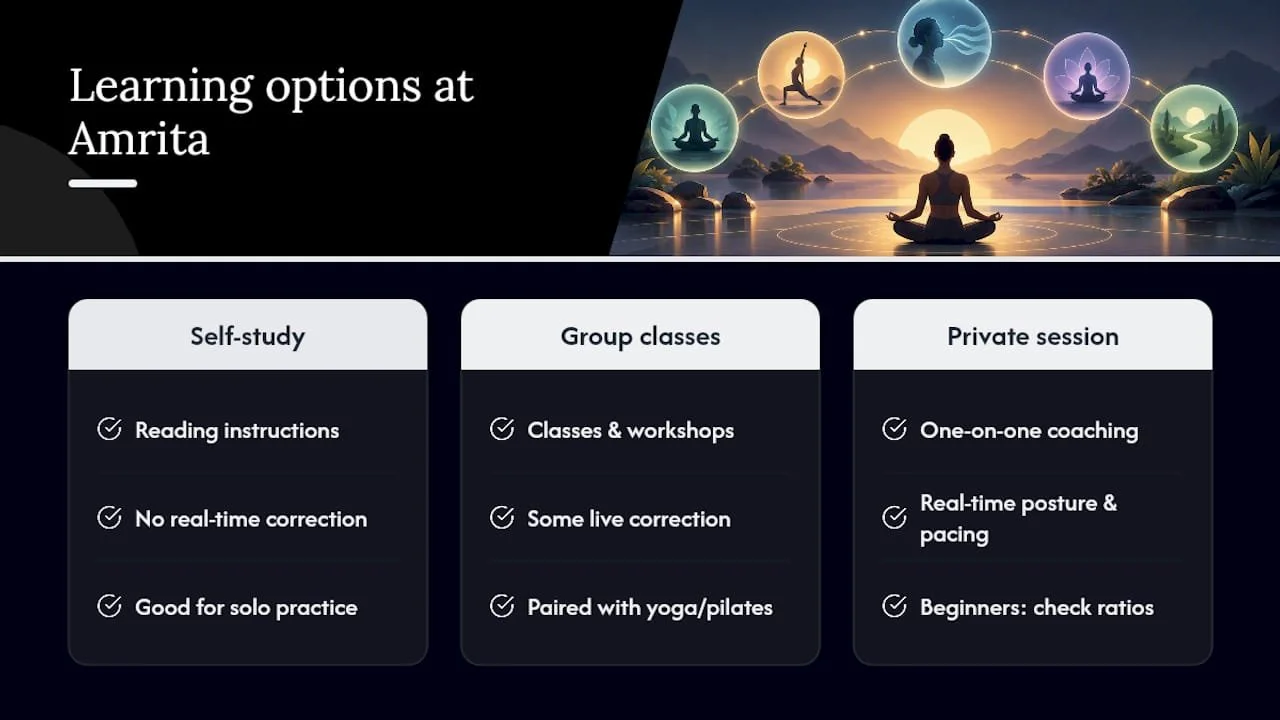
Reading instructions is a fine start, but watching your posture and pacing get corrected in real time speeds up the learning curve. Various studios offer group classes, workshops, and private sessions where breathwork and pranayama show up alongside yoga, pilates, and other movement practices. Our breathwork in Pilates guide and aerial yoga breathing techniques article go deeper into technique pairing for readers who want more than a standalone breath practice. A private session offers a chance to have your ratios and modifications checked one-on-one, which matters most for beginners still finding their comfortable breath-hold length.
7. What an instructor wants beginners to know
Most people expect breathwork to feel effortless the first time, and it usually does not. The most common adjustment beginners need is simply shortening their counts, not abandoning the technique altogether. A ragged five minutes done daily will teach you more about your own breath than one perfect session done once a month.
Start with the checklist above, keep the counts comfortable, and let the practice get easier on its own timeline.
— Juiced
8. Practice breathwork with guided support in Philadelphia
Learning a new breathing pattern from a page is one thing. Having someone watch your shoulders, catch a rushed exhale, and adjust your count in the moment is another, and it tends to shorten the time it takes to feel confident. Amrita Yoga & Wellness builds breathwork into its class offerings and private sessions so you are never guessing whether you are doing it right.
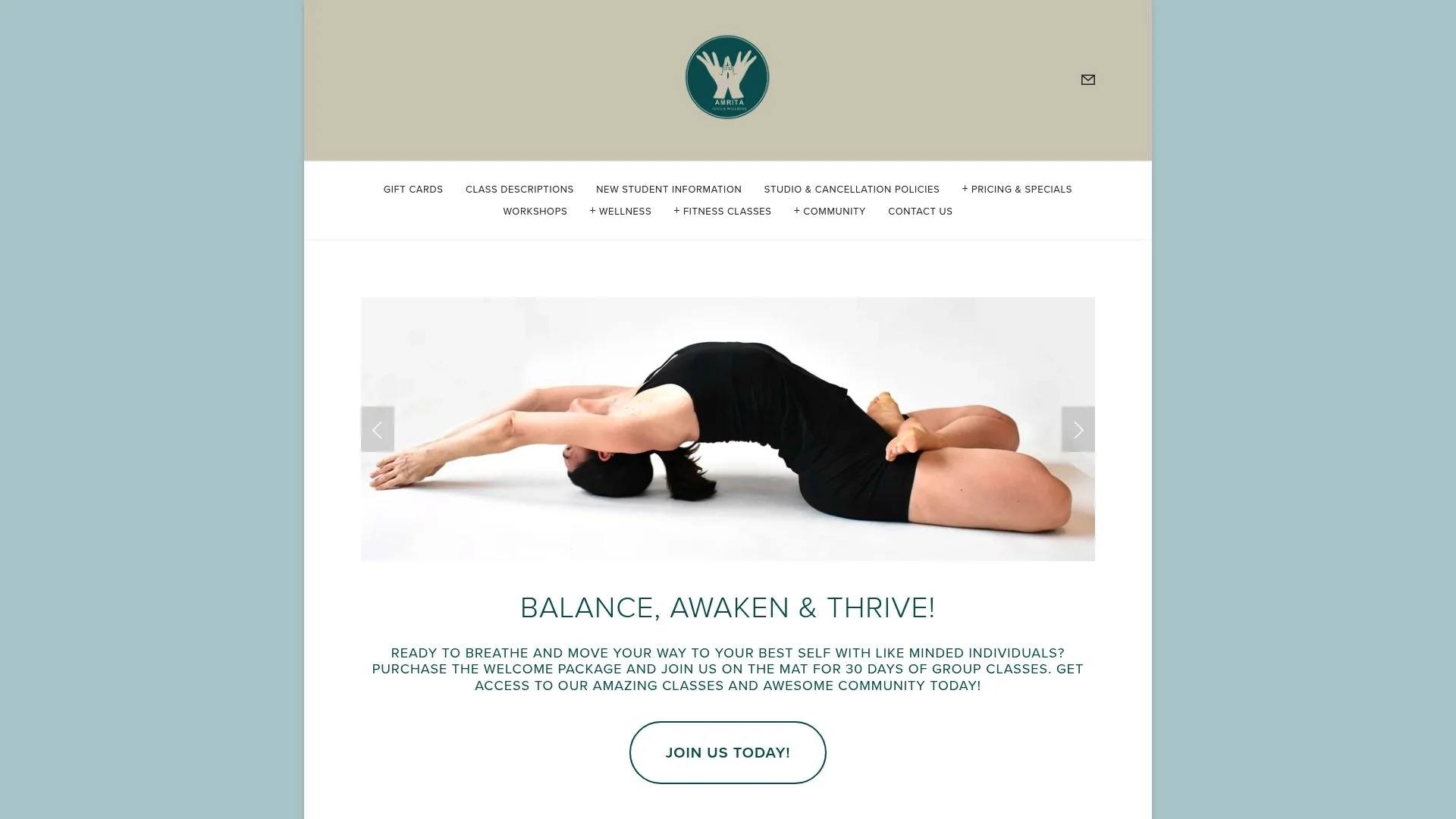
A Community Class Drop In at $11 per session is a low-cost way to build the daily habit alongside a group.
A One to One Session starting at $85 per hour gives you focused, individual coaching on technique, pacing, and safe modifications.
The full class and membership schedule lets you find recurring sessions that fit your week, from Air Monthly Membership at $149 per month down to Earth Monthly Membership at $119 per month.
If you would rather build ritual cues at home first, Well In Spirit carries products for daily wellness routines that pair naturally with a breathwork practice. When you are ready for guided instruction, book a class or private session through the links above.
Sources
Brief structured respiration practices enhance mood and reduce physiological arousal
Abdominal breathing - Overview | Guy's and St Thomas' NHS Foundation Trust
What is the 4-7-8 breathing method? Science and benefits | Cleveland Clinic
FAQ
Is it okay to do breathwork every day?
Yes, for most healthy adults, daily breathwork is considered safe and is the pattern with the best evidence behind it. A randomized study found daily five-minute cyclic sighing improved mood and lowered respiratory rate over one month, and the Cleveland Clinic recommends five to 10 minutes daily as a starting routine.
What is the 4-7-8 rule for breathing?
The 4-7-8 method involves inhaling through the nose for four counts, holding the breath for seven counts, and exhaling slowly through the mouth for eight counts. The Cleveland Clinic notes that beginners who find the hold uncomfortable can use a shorter 2-3.5-4 ratio instead.
What is Gary Brecka's breathwork routine?
This routine is associated with a specific public figure rather than a clinically standardized protocol, and it is not covered by the sources used in this article. If you want a well-documented daily technique instead, cyclic sighing and diaphragmatic breathing both have direct research support behind them.
Does the Bible say anything about breathwork?
Breathwork as a structured wellness technique is a modern practice, and the sources used here focus on clinical and physiological evidence rather than religious texts. Readers interested in the spiritual dimensions of breath are better served by a theological resource than a wellness guide.
How long should a beginner practice breathwork each day?
Five minutes is a well-supported starting point, matching both the cyclic sighing study protocol and the Cleveland Clinic's five-to-10-minute recommendation. Consistency at this shorter length tends to build the habit faster than attempting longer sessions from the start.