The Amrita Journal
Explore thoughtful stories, practical wellness guidance and inspiring ideas to support your movement, mindfulness and everyday wellbeing at Amrita.
Fusion Pilates Explained: Benefits, Classes, and Results
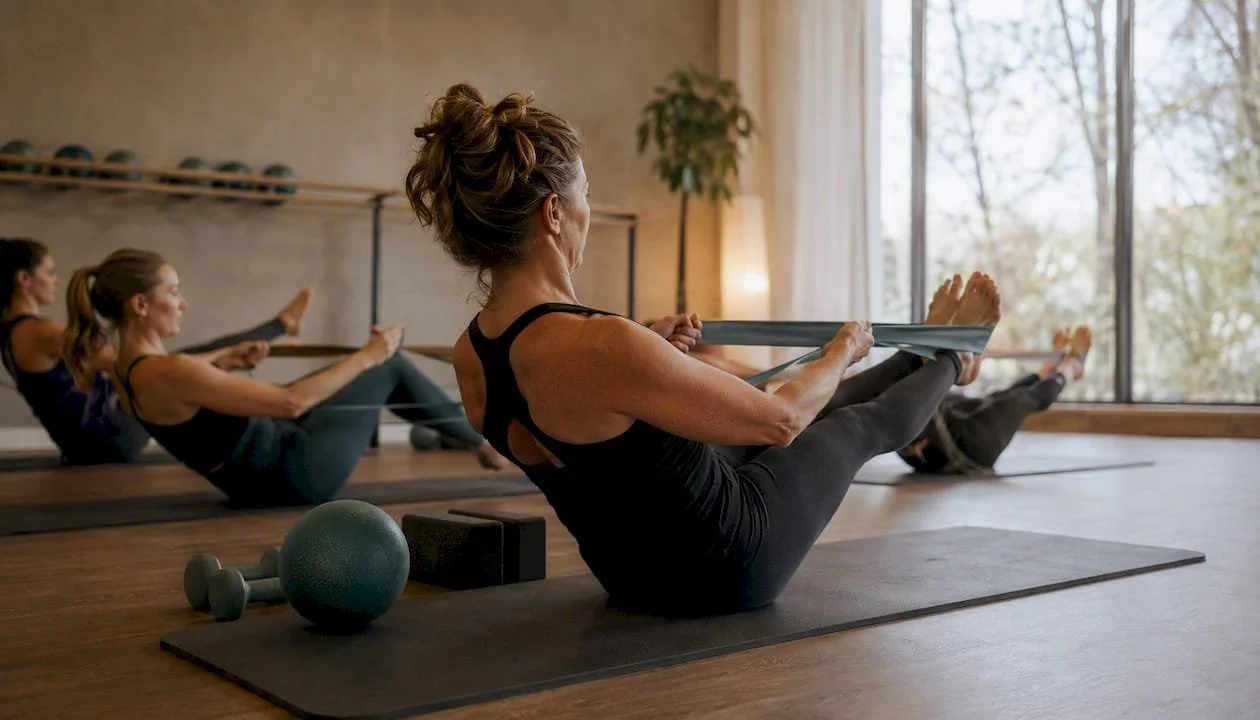
Fusion Pilates is a workout format that layers traditional Pilates principles — centering, breath, control, precision, and flow — on top of elements drawn from other disciplines like barre, yoga, HIIT, and strength training, producing a total-body conditioning experience that builds core stability, improves flexibility, and stays genuinely low-impact. According to a comprehensive overview of the method, the goal is a versatile full-body workout that keeps the structural integrity of Pilates while expanding what a single class can accomplish. Studios like Amrita Yoga & Wellness in Philadelphia have built their fusion programming around exactly that balance.
| Point | Details |
|---|---|
| Core definition | Fusion Pilates blends Pilates principles with other modalities for total-body, low-impact conditioning. |
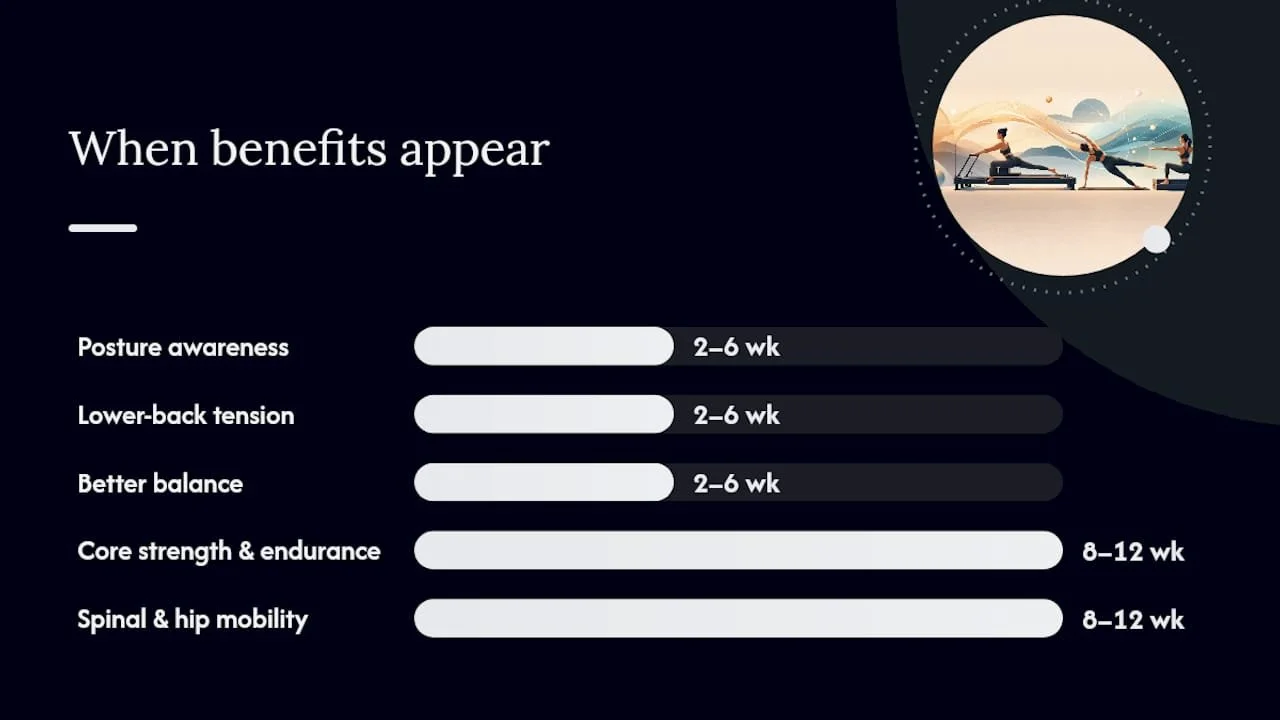
| Realistic timeline | Early neuromuscular gains appear in weeks 2–6; visible strength changes typically follow by weeks 8–12. |
| Ideal frequency | Two to four sessions per week suits most goals; pair with weight-bearing exercise for bone health. |
| Who it fits | Beginners, older adults, athletes, and returning exercisers all benefit; modifications make it widely accessible. |
| Amritayogawellness | Amrita Yoga & Wellness in Philadelphia offers fusion Pilates classes with certified instructors and individual cueing. |
Table of Contents
Who is fusion Pilates for, and who should modify or avoid it?
How often should you practice, and when will you see results?
What does fusion Pilates actually mean?
The word "fusion" does the heavy lifting here. Classical Pilates follows a defined repertoire developed by Joseph Pilates, with specific sequences on the mat or reformer. Fusion Pilates keeps the foundational principles but opens the door to other movement vocabularies within the same session.
The six Pilates principles that well-designed fusion classes preserve:
Centering: every movement initiates from the deep core
Breath: coordinated inhale and exhale drive each exercise
Control: quality of movement outranks quantity of reps
Precision: joint alignment and muscle engagement are specific, not approximate
Flow: transitions between exercises are smooth and intentional
Awareness: the practitioner stays attentive to body position throughout
Preserving these principles matters for two practical reasons: safety and results. Pilates-based cueing on breath and alignment protects the spine during higher-intensity segments, and the precision focus is what drives neuromuscular adaptation that generic cardio classes skip.
What does a typical fusion Pilates class look like?
Class formats vary more than in traditional Pilates, which is part of the appeal.
Mat-based fusion is the most accessible entry point. You work on a standard Pilates mat, often with small props: a resistance band, a Pilates ball, or light hand weights (typically 1–3 lbs). The instructor layers barre-style standing sequences or yoga-influenced stretches between core sets.
Reformer circuits use the spring-loaded carriage as the base, rotating through footwork, long-box rows, and plank progressions, then adding standing balance or band work between reformer rounds. These classes tend to run in small groups of four to eight people so the instructor can adjust spring resistance individually.
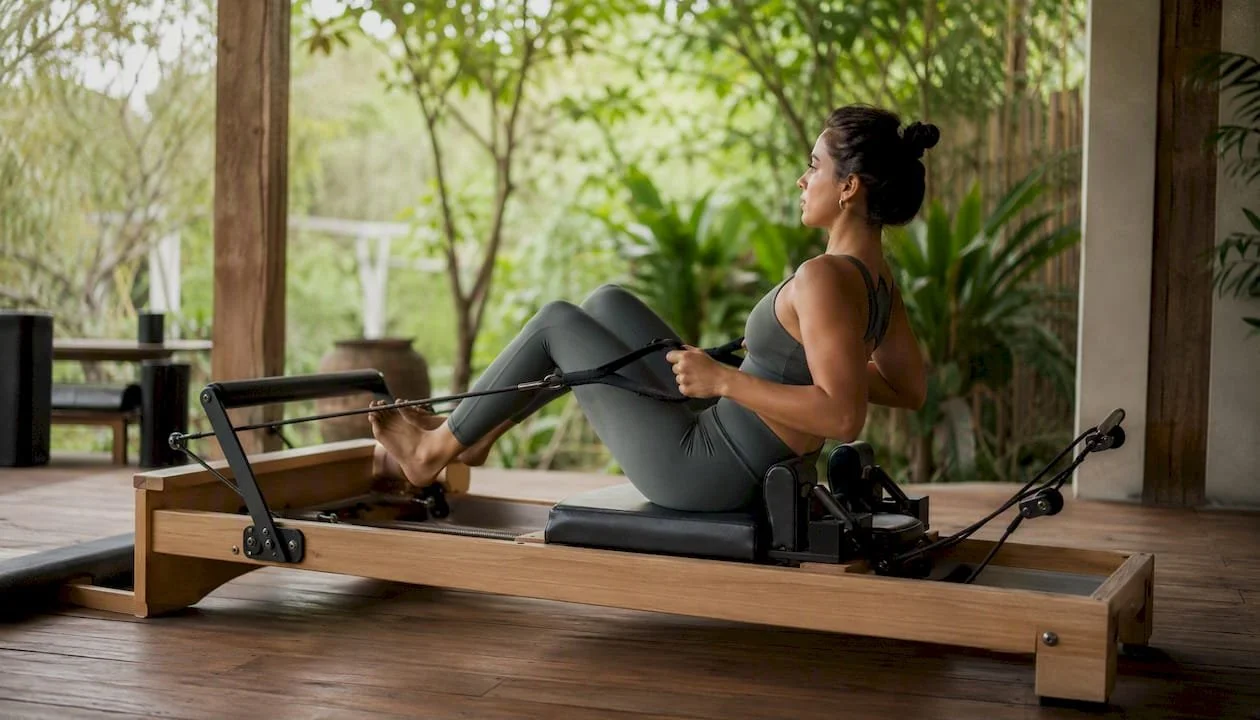
Hybrid classes mix mat and reformer work in a single session, sometimes adding a Pilates chair or tower. Online and streamed options have expanded access significantly, though they typically default to mat-based formats with minimal equipment.
A rough session timeline looks like this: arrival and briefing (2–3 minutes), breath and joint-prep warm-up (5–10 minutes), main work block (30–40 minutes), and a mobility-focused cooldown with breathwork (5–10 minutes). That structure is consistent whether the class is labeled "Pilates Barre," "Pilates HIIT," or simply "Fusion."
How a fusion Pilates session flows from start to finish
Knowing the shape of a class before you walk in reduces the intimidation factor considerably.
Warm-up (5–10 minutes): The instructor opens with diaphragmatic breathing, then moves into joint circles, cat-cow variations, and glute activation. The goal is to wake up the deep stabilizers before any load is added.
Main segment (30–40 minutes): This is where the fusion element shows up. A typical sequence might include:
Pelvic curl variations (Pilates base, 8–10 reps with breath cues)
Plank-to-downward-dog transitions (yoga influence, 4–6 reps)
Band-resisted rows in a seated V-sit (strength element, 12 reps)
Standing barre-like relevé pulses with core engagement (barre influence, 30 seconds)
Short HIIT burst: lateral step-touches or modified jumping jacks (20–30 seconds)
Return to mat: single-leg stretch series (Pilates reset)
The instructor cycles through two or three rounds of a similar structure, adjusting tempo and resistance as the class progresses. Pilates technique cues ("zip up through the low belly," "exhale as you press") appear throughout, even during the cardio bursts.
Cooldown (5–10 minutes): Spinal rotation, hip flexor stretches, and a final breathwork sequence bring the nervous system down. Some instructors end with a short supine relaxation.
What physical and mental benefits can you expect?
Physical benefits build in layers. In the first two to six weeks, most people notice improved posture awareness, reduced lower-back tension, and better balance during everyday movement. The core engagement required in every exercise starts retraining the deep stabilizers quickly.
By weeks eight through twelve, the changes become more visible and measurable:
Increased core strength and endurance
Improved spinal mobility and hip flexibility
Better functional movement patterns (squatting, reaching, rotating)
Low-impact cardiovascular stimulus from the HIIT and barre elements
Reduced joint stress compared to high-impact formats
The mental benefits are less discussed but equally real. Mindful movement practices like Pilates-based fusion require sustained attention to breath and alignment, which pulls focus away from external stressors. Many practitioners report reduced anxiety and improved body awareness after consistent practice. The variety in fusion formats also prevents the mental flatness that comes from repeating the same routine, which helps with long-term adherence.
One important nuance: low-impact does not mean easy. Slow, precise movements targeting deep stabilizers can produce significant fatigue, especially for beginners who expect a light workout. Pacing matters.
Who is fusion Pilates for, and who should modify or avoid it?
Fusion Pilates suits a wide range of peoplebecause the format is inherently scalable. Ideal candidates include:
Beginners who want a structured, low-impact introduction to fitness
Older adults focused on mobility, balance, and joint health
Athletes adding cross-training variety without high injury risk
People returning to exercise after a period of inactivity
Anyone who finds traditional gym workouts monotonous
That said, certain situations call for caution or medical clearance before starting:
Recent abdominal or spinal surgery (consult your surgeon first)
Unstable spine conditions or acute disc herniation
Active joint inflammation or acute injury in the hips, knees, or shoulders
Postpartum recovery, particularly after cesarean delivery (a staged recovery plan is worth reviewing before joining a group class)
Common modifications include reducing range of motion, using lighter resistance or no props, staying on the mat rather than the reformer, and slowing the tempo. A good instructor will offer these without being asked. If you have any of the above conditions, booking a private session before joining a group class lets the instructor assess your baseline and build appropriate modifications into your practice from day one.
Pro Tip: Ask the studio whether their instructors hold a recognized Pilates certification (BASI, STOTT, or PMA-certified programs) in addition to any fusion-specific training. That combination signals someone who can keep the Pilates principles intact when the class gets more dynamic.
What are the most common fusion Pilates styles?
Fusion formats incorporate barre, yoga, strength, cardio, and dance while retaining Pilates' emphasis on core and alignment. Here is how the main styles break down:
Pilates + Barre: Small isometric movements at the barre or mat edge; best for lower-body toning and hip stability
Pilates + Yoga: Longer holds, deeper stretches, and breath synchronization; best for flexibility and stress relief
Pilates + HIIT: Short cardio bursts between Pilates sets; best for cardiovascular conditioning and calorie output
Pilates + Strength: Light-to-moderate resistance added to classic Pilates moves; best for building functional muscle endurance
Dance-influenced fusion: Rhythmic movement patterns layered over Pilates core work; best for coordination and enjoyment
To spot a class's emphasis before you book, read the description for words like "intervals" (HIIT lean), "flow" (yoga lean), "sculpt" or "tone" (barre or strength lean), and "rhythm" or "groove" (dance lean). If the description is vague, ask the instructor directly what percentage of the class is Pilates-based versus the added modality.
How does fusion Pilates differ from traditional Pilates?
The differences are real but not as dramatic as the marketing sometimes suggests.
| Dimension | Traditional Pilates | Fusion Pilates |
|---|---|---|
| Repertoire | Fixed classical or contemporary sequence | Open; varies by instructor and class theme |
| Tempo | Controlled, deliberate throughout | Varies; can include faster cardio intervals |
| Equipment | Mat, reformer, Cadillac, chair, tower | Mat, reformer, bands, balls, light weights |
| Rep structure | Low reps, high precision | Mixed; higher reps in strength/cardio segments |
| Cueing focus | Alignment, breath, muscle activation | Same, plus tempo and rhythm cues |
| Primary goal | Postural correction, core development | Total-body conditioning, variety, adherence |
What stays the same: the breath, the centering, the emphasis on quality over quantity. A fusion class that drops those elements is not really Pilates-based at all.
Choose traditional Pilates over fusion when you are working through a specific rehabilitation protocol, developing technical Pilates skill from scratch, or following a structured therapeutic program. Fusion is the stronger choice when you want variety, a broader conditioning stimulus, or a format that keeps you coming back consistently.
How often should you practice, and when will you see results?
Two to three sessions per week is the practical starting point for most people. That frequency allows adequate recovery while building the neuromuscular patterns that Pilates-based work depends on.
Four sessions per week suits people with a fitness base who want faster conditioning progress, provided the sessions vary in intensity (not four high-intensity fusion classes back to back).
Pair fusion with weight-bearing exercise at least once a week if bone density is a priority. Fusion formats are not a substitute for heavier resistance training in that specific regard.
Watch for overtraining signals: persistent muscle soreness beyond 48 hours, declining performance, or disrupted sleep suggest you need more recovery, not more classes.
Progressive overload applies here too. Increase spring resistance, add a light weight, or extend the HIIT interval duration every three to four weeks to keep the stimulus fresh.
Early gains after starting Fusion Pilates are mostly neuromuscular: your body learns to recruit the right muscles in the right sequence. Visible strength and conditioning changes tend to appear after consistent attendance over time. The variety in fusion programming helps prevent the plateau that often stalls progress in single-modality training.
How do you choose a safe, effective fusion Pilates class?
Questions to ask before you book:
What certifications do your instructors hold, and do they include a recognized Pilates program?
How do you scale exercises for beginners or people with injuries?
What is the maximum class size, and how is equipment maintained?
Is there a beginner orientation or demo session available?
How do you handle modifications during a live class?
Checklist of features worth confirming:
Instructor holds a recognized Pilates certification (BASI, STOTT, or equivalent) plus any fusion-specific training
Class size is small enough for individual feedback (typically under 12 for reformer, under 16 for mat)
Equipment is inspected and maintained regularly (springs, straps, and carriage pads)
The class description specifies the modality blend, not just a vague "fusion" label
A trial class or drop-in option is available before committing to a package
Red flags: no breath or alignment cues during class, no progressions or regressions offered, equipment that looks worn or poorly maintained, and an instructor who cannot explain how they would modify for a specific limitation.
How experienced instructors structure safe fusion sessions
Skilled fusion instructors treat the Pilates principles as non-negotiable anchors, not optional add-ons. The modality elements (the barre sequence, the HIIT burst, the resistance band row) get layered on top of that foundation, not in place of it.
In practice, this means:
Opening every class with breath and centering, regardless of how dynamic the main segment will be
Grouping students by ability when possible, or offering two clear versions of each exercise simultaneously
Rotating equipment (reformer springs, band resistance levels) between rounds rather than mid-exercise, so transitions stay smooth
Watching for form breakdown during the cardio segments and calling a reset before injury risk rises
Ending with a cooldown that returns the nervous system to a parasympathetic state, not just a quick stretch
Pro Tip: The best fusion instructors cue the breath during the HIIT segments, not just the Pilates sets. If your instructor goes silent on breath during the fast intervals, that's a signal the Pilates foundation is slipping.
Scaling tools available to a prepared instructor include spring resistance adjustments, band tension swaps, tempo changes, and prop substitutions (a folded blanket instead of a Pilates ball, for example). These let a single class plan serve a room with genuinely different fitness levels without anyone feeling singled out or left behind.
A studio perspective on teaching fusion well
Teaching fusion Pilates well comes down to one discipline: never let the "fusion" part crowd out the Pilates part. At Amrita Yoga & Wellness, the instructors approach every class by setting the Pilates principles first, then asking which modality element serves the session's goal that day. A class designed around hip mobility gets a yoga-influenced cooldown. A class aimed at cardiovascular conditioning gets a short HIIT interval, but the breath cues stay on throughout. The result is a session that feels varied and energizing without ever losing the structural integrity that makes Pilates-based work effective for the long term. Amrita Yoga & Wellness serves practitioners across Philadelphia, from complete beginners to experienced movers looking for a smarter cross-training option.
Try a fusion Pilates class at Amrita Yoga & Wellness
Amrita Yoga & Wellness in Philadelphia offers fusion Pilates classes built around the principles this guide describes: Pilates fundamentals preserved, modality elements chosen with intention, and every session scaled to the room. Whether you are stepping onto a mat for the first time or adding fusion to an existing training plan, the studio's instructors provide the individual cueing and progressions that make the difference between a workout you tolerate and one you return to.
Check availability and book a trial class directly at Amrita Yoga & Wellness. The studio also offers group Pilates sessions and wellness workshops for those who want to explore the full range of offerings before committing to a regular schedule.
Sources
What is Fusion Pilates: A Comprehensive Guide to This Unique Fitness Method
Fusion Pilates for Everyone: Full-Body Workout for All Ages & Fitness Levels (2026)