What to Bring to a Pilates Reformer Class: 9 Essentials
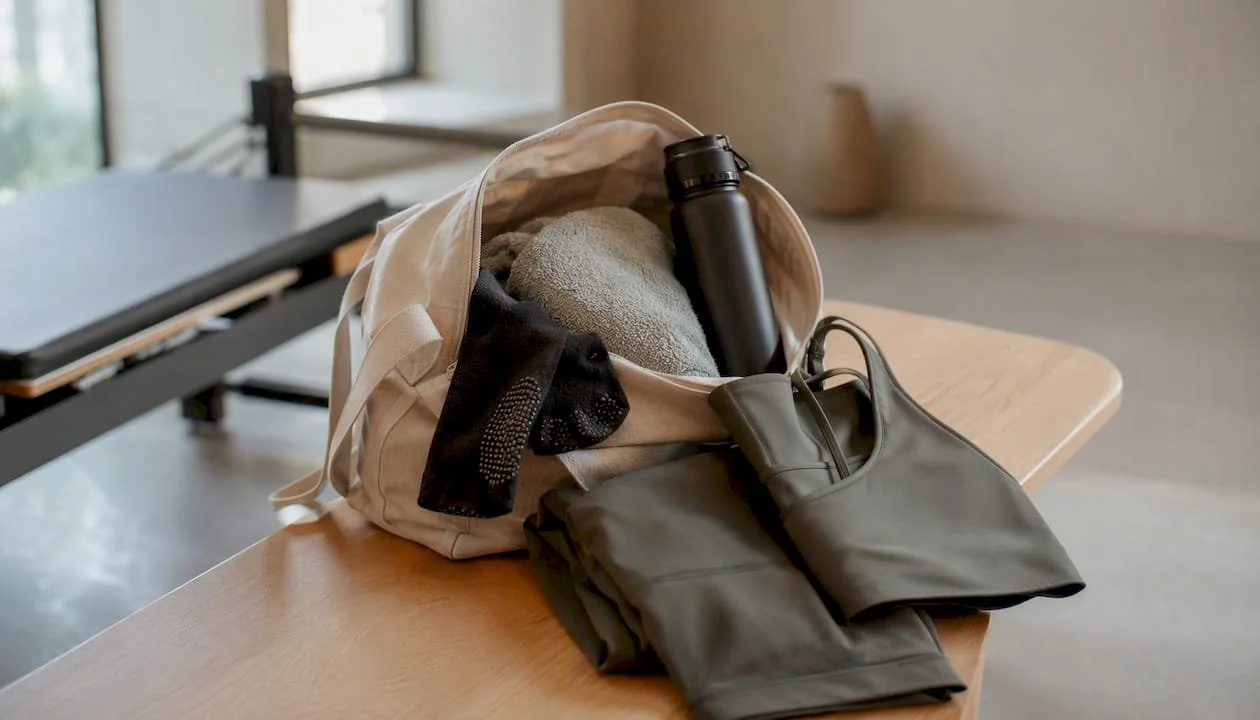
Bring grip socks, a reusable water bottle, a small towel, and form-fitting workout clothes. That covers the non-negotiables for your first reformer class. Most studios in the United States require non-slip socks, and Familydoctor recommends sipping fluids before, during, and after exercise to stay safe and perform well.
Here's what goes in your bag:
Grip (non-slip) socks
Reusable water bottle with an easy-open top
Small workout towel
Form-fitting leggings or bike shorts and a fitted top
Hair tie, deodorant, minimal jewelry
Pro Tip: Check the studio's website before you go. Some locations sell grip socks at the front desk, but studio retail prices tend to run higher than buying a pair online in advance.
Key Takeaways
Grip socks, a water bottle, a small towel, and form-fitting activewear are the four items every reformer class requires, and arriving 10–15 minutes early to brief your instructor makes every session safer and more effective.
| Details | |
|---|---|
| Grip socks are non-negotiable | Most U.S. studios require them for traction and hygiene on the moving carriage. |
| Hydrate throughout class | Sip before, during, and after your session; an easy-open bottle helps. |
| Fitted clothing helps your instructor | Instructors need to see your spine and pelvis to give accurate corrections. |
| Arrive 10–15 minutes early | Use that time to check in, stow belongings, and brief your instructor on injuries. |
| Tell your instructor your goals | One or two specific goals lets them adjust springs and cues for your body. |
Table of Contents
1. What to bring to a Pilates reformer class: the full item breakdown
2. What to wear to Pilates class so your instructor can actually help you
3. Do you need socks for Pilates? What studios actually require
4. Studio etiquette: what to do when you arrive and after class ends
1. What to bring to a Pilates reformer class: the full item breakdown
Every item below earns its spot in your bag for a specific reason, not just habit.
Water bottle. Sip before class, during rest moments, and after. An easy-open or flip-top lid lets you hydrate without fumbling mid-session. A 20–24 oz bottle fits most studio cubbies without taking up the whole shelf.
Small workout towel. Studios expect you to wipe down the reformer carriage after class. A microfiber hand towel works better than a full gym towel because it dries fast and folds small.
Grip socks. These are the one item most studios will turn you away without. More on why in the next section.
Form-fitting activewear. Leggings, bike shorts, and a snug top let your instructor see your spine and pelvis clearly. Loose clothing hides the alignment cues instructors need to correct your form safely.
Hair tie. Long hair loose on the carriage is a distraction and a safety issue. One elastic band solves it.
Deodorant. You will sweat. Bring it.
Minimal jewelry. Rings, bracelets, and dangling earrings can catch on springs, straps, or the footbar. Leave them at home or drop them in a small zip pouch in your bag before class starts.
Lock or small wallet. Most studios offer lockers. Bring a lock or keep valuables in a compact pouch you can stash easily.
Optional: change of clothes. If you're heading straight to work or lunch after class, a fresh outfit makes the transition far easier.
2. What to wear to Pilates class so your instructor can actually help you
Wear form-fitting, breathable activewear. That's the short answer. The longer one matters because clothing directly affects the quality of instruction you receive.
Instructors watch your spine curvature, shoulder position, and pelvic tilt throughout every exercise. Baggy shorts or an oversized tee makes that nearly impossible. A fitted tank or compression top and a pair of full-length leggings or longer bike shorts give your teacher a clear picture of what your body is doing, which means better corrections and safer cues for you.
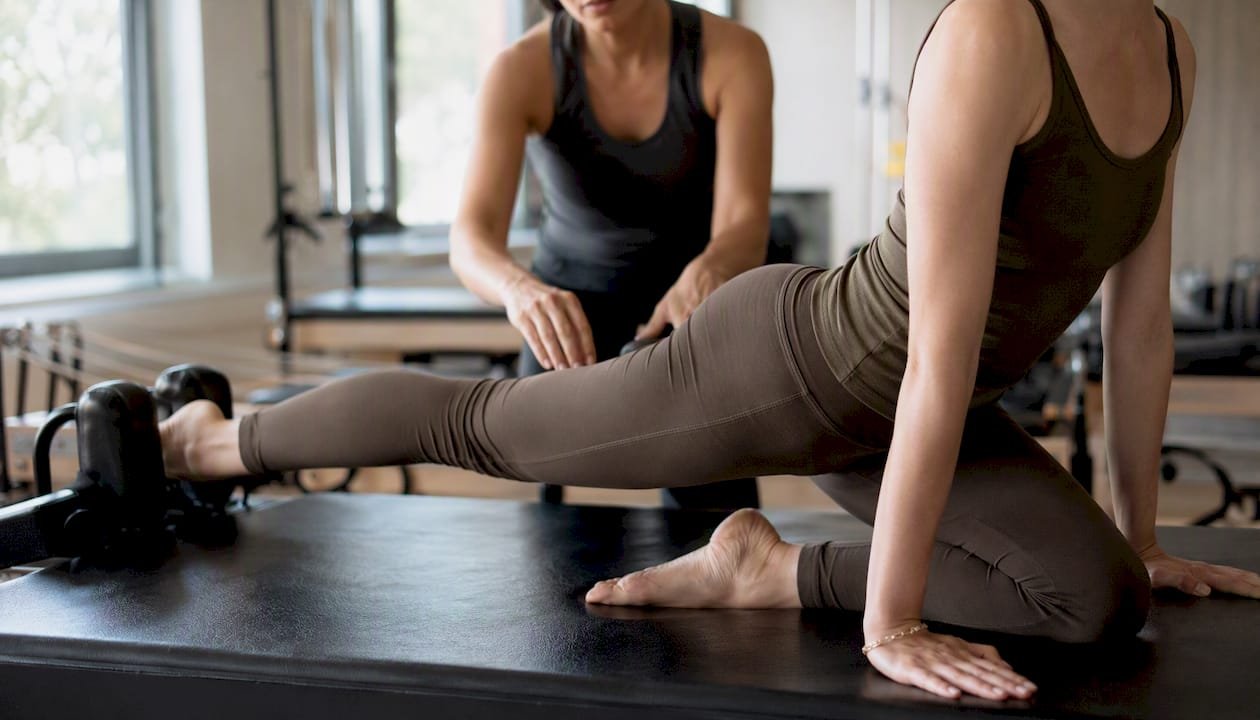
Fabric matters too. Moisture-wicking materials pull sweat away from your skin and keep you comfortable through a full session. Avoid anything with exposed zippers, metal buttons, or bulky hardware. Those details can dig into your skin when you're lying on the carriage or damage the reformer's upholstery over time.
Clothing dos and don'ts:
Do wear a low-impact sports bra with full coverage
Do choose leggings that stay put through leg circles and footwork
Don't wear loose running shorts, which ride up on the carriage
Don't wear jeans, denim, or any stiff fabric that limits range of motion
Don't layer a baggy hoodie over your workout clothes and leave it on during class
Pro Tip: Before you leave home, do a slow forward fold and a full roll-down. If your top slips over your face or your waistband gaps, swap the outfit. Five seconds at home saves an awkward adjustment mid-class.
3. Do you need socks for Pilates? What studios actually require
Yes, and most U.S. studios won't let you on the reformer without them. Grip socks with rubber or silicone dots on the sole provide traction on the moving carriage and the studio floor, which is a genuine safety issue, not just a policy preference.
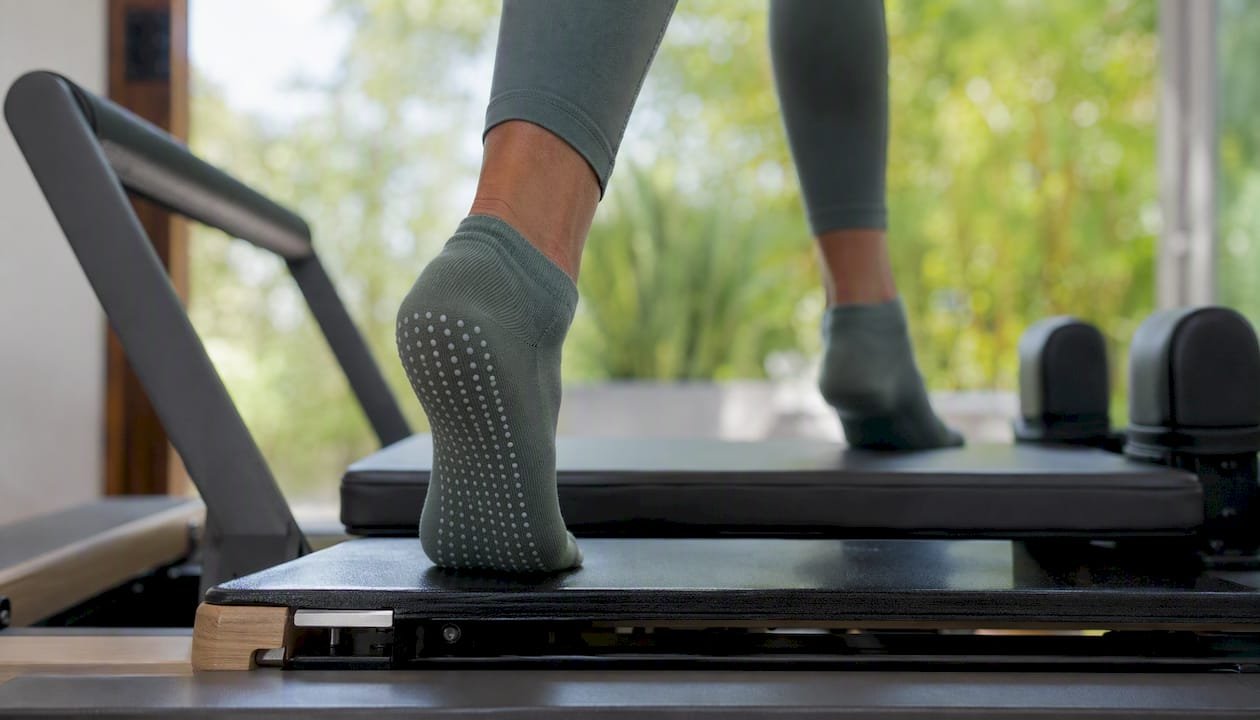
The reformer's carriage, springs, and footbar create a dynamic surface that shifts under your feet during footwork and jumping exercises. Bare feet on that surface increase slip risk. Grip socks also address hygiene in a shared training space where multiple clients use the same equipment daily.
What if you forget them?
Ask the front desk. Most studios sell grip socks at reception.
Studio retail prices are typically higher than online, so buying a pair in advance is smarter.
Some locations offer rentals, though this varies by studio.
Can you go barefoot? Occasionally a studio allows it, but treat that as the exception. Always check your specific studio's policy before assuming barefoot is fine. The gear guidance from Moonchild Yogawear also points to grip gloves as an optional add-on for hand stability during certain exercises.
4. Studio etiquette: what to do when you arrive and after class ends
Arrive 10–15 minutes before your class starts. That window gives you time to check in, stow your shoes and bag in a locker, and have a quick word with your instructor before the room fills up.
After class, wipe down the reformer carriage, footbar, and any props you used with the studio's provided spray and cloth. Return springs, boxes, and straps to their default positions unless the instructor tells you otherwise. Keep conversation low in shared spaces, especially if another class is starting nearby.
Post-class checklist:
Wipe the carriage and footbar
Return all props to their storage spots
Collect your belongings from the locker promptly
Refill your water bottle if the studio has a station
Pro Tip: Before class begins, tell your instructor about any aches, recent injuries, or surgeries. Even a quick "my lower back has been tight this week" lets them adjust spring resistance and modify exercises before you're already in a position that aggravates it.
5. Optional extras worth packing if you want them
None of these are required. All of them are useful in the right situation.
Light layer for before and after class, especially in air-conditioned studios
Ankle or wrist bands if you prefer extra joint support during footwork
Post-workout snack or protein bar for back-to-back classes or long commutes home
Travel-size sunscreen if you're heading outside immediately after
Foam roller or massage ball for home recovery after class, not for studio use
Small microfiber towel with fast-dry fabric for longer commutes or double sessions
The Global News reformer gear roundup covers additional accessories for home practice if you're building out a personal setup alongside studio sessions.
6. What to tell your instructor before class starts
Your instructor can only work with what you give them. A 30-second conversation before warm-up makes a real difference in how the session is tailored to your body.
State any injuries or recent surgeries. Mention which movements bother you specifically. If cervical flexion aggravates your neck, say so. If supine bridging bothers your lower back, name it. That detail lets the instructor adjust spring setup and hand placement immediately.
Share your fitness level. First class ever or returning after a break? Both affect how the instructor sequences exercises and sets spring resistance.
Name one or two goals. "I want to work on lower back stability" or "I'm trying to improve hamstring flexibility" gives the instructor a direction for modifications and verbal cues.
Flag any pregnancy or mobility limits. These require specific modifications that instructors need to plan for before class, not during it.
Pro Tip: Keep your pre-class note to two or three sentences. Instructors appreciate specifics over a long medical history. "Right shoulder impingement, overhead movements are uncomfortable" is more useful than a five-minute explanation.
A note from Amrita Yoga & Wellness
At Amrita Yoga & Wellness, we supply the reformers, the props, and the instruction. You bring the essentials: grip socks, a water bottle, a small towel, and fitted activewear. Arriving 10–15 minutes early gives you time to settle in, meet your instructor, and share anything we should know before we begin.
Our studio is built for community, and that starts with showing up prepared and respectful of the shared space. If you're new to reformer work, our complete beginner's guide to reformer Pilates walks you through what to expect from your first session, including how exercises are structured and what instructors watch for.
Curious about everything Amrita Yoga & Wellness offers beyond reformer classes? Explore our full range of wellness services, including tarot readings and other studio offerings, at Amritayogawellness.
Sources
Everything you need for Reformer Pilates at home — Global News
Modern Reform® MRX™ Pilates Essentials Reformer — ModernReform
Reformer Pilates — a guide to equipment and gear you need | Moonchild Yogawear
Studio policies on grip socks, rentals, and locker availability vary by location. Always check your specific studio's rules before your first visit.